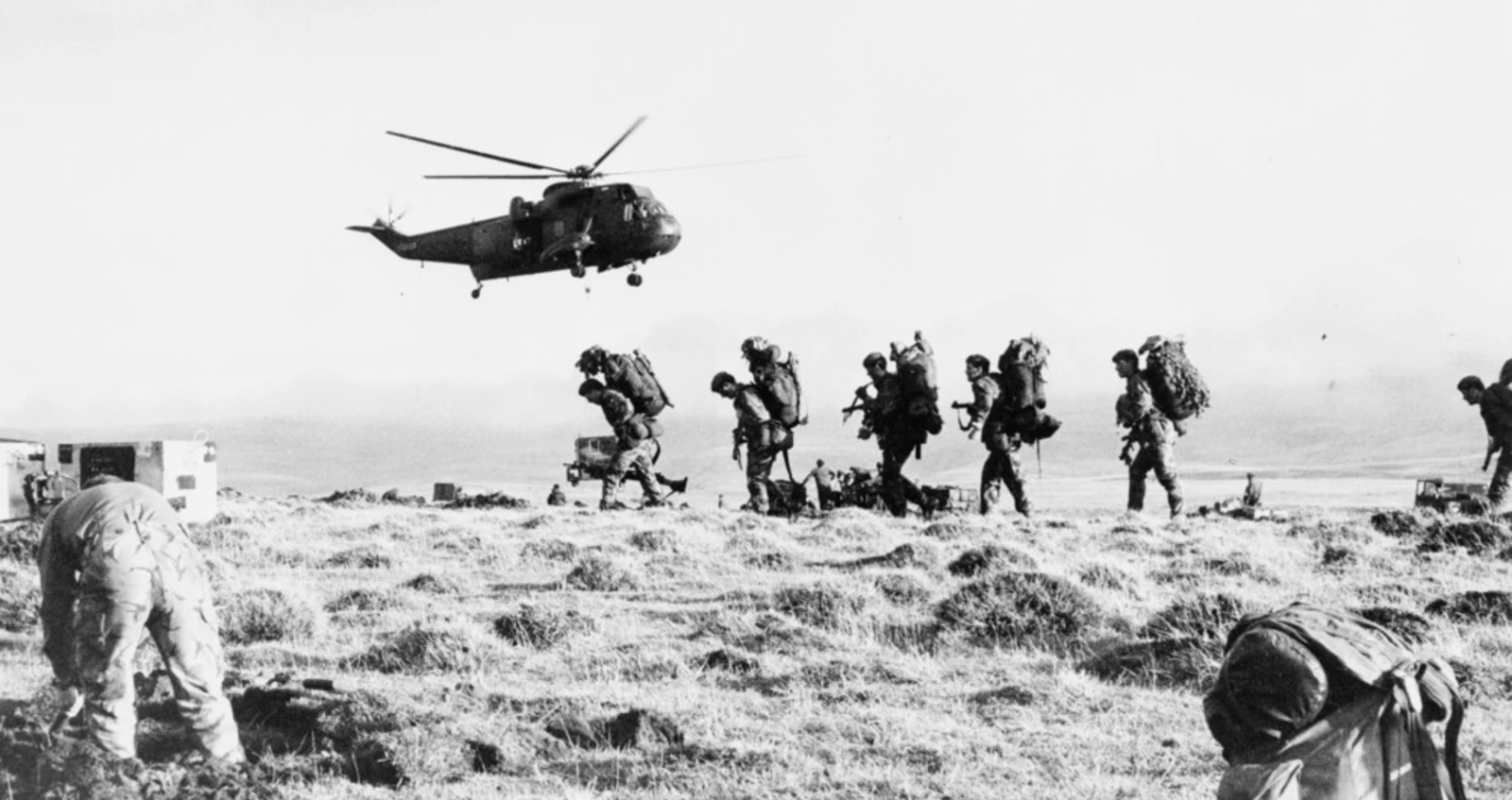
The Argentine air campaign during the 1982 Falklands War involved a diverse fleet of aging subsonic strike fighters, supersonic interceptors, and domestically produced turboprops. Facing the British Task Force, the Argentine Air Force (FAA) and Naval Aviation (COAN) relied on low-level penetration tactics, French-made Exocet missiles, and the remarkable skill of pilots operating at the absolute limit of their aircrafts' combat radius.
The conflict in the South Atlantic remains a landmark in modern aerial warfare, representing one of the few instances where land-based aircraft engaged a modern carrier strike group in high-intensity combat. In 1982, the Argentine military aviation branches possessed a mix of sophisticated European technology and rugged American-built veterans. Despite being hampered by an international arms embargo and significant geographical disadvantages, these aircraft inflicted heavy losses on the Royal Navy. Understanding these planes requires looking beyond their technical specifications to the tactical innovations and logistical hurdles that defined their operational history.
The Strategic Challenge: Distance and Logistics
To understand the performance of Argentina's Falklands War planes, one must first recognize the "tyranny of distance." Most Argentine strike aircraft operated from mainland bases such as Río Gallegos, San Julián, and Trelew. The distance to the islands meant that many aircraft, particularly the Mirage III and IAI Dagger, arrived over the combat zone with only minutes of fuel remaining for engagement.
Unlike the British Sea Harriers, which operated from carriers positioned relatively close to the islands, Argentine pilots had to navigate hundreds of miles of open, frigid water. This necessitated a heavy reliance on aerial refueling for the A-4 Skyhawks and Super Étendards, while the delta-wing fighters often had to fly without the ability to use afterburners, significantly limiting their performance in dogfights.
The Backbone of the Strike Force: Douglas A-4 Skyhawk
The A-4 Skyhawk was the primary workhorse for both the Argentine Air Force and the Navy. In 1982, Argentina operated three main variants: the A-4B and A-4C (Air Force) and the A-4Q (Navy).
A-4B and A-4C Skyhawks (Fuerza Aérea Argentina)
The Air Force Skyhawks were tasked with the most dangerous missions: low-level attacks against British warships in San Carlos Water (later known as "Bomb Alley"). These aircraft were modified with additional avionics but lacked modern air-to-air radar.
The pilots utilized a "sea-skimming" profile, flying as low as 50 feet above the waves to stay beneath the radar lobes of British Type 42 destroyers. While effective at penetration, this tactic required nerves of steel. The primary weapon was the "iron bomb"—usually 500lb or 1,000lb unguided munitions. Many of these bombs failed to explode because they were released at such low altitudes that their fuzes did not have time to arm before impact.
A-4Q Skyhawks (Comando de Aviación Naval)
The Naval Skyhawks operated from the aircraft carrier ARA Veinticinco de Mayo early in the war. After the carrier returned to port following the sinking of the ARA General Belgrano, the A-4Qs operated from mainland bases. These planes were instrumental in the sinking of HMS Ardent, demonstrating that even older subsonic platforms could be lethal when flown with aggression.
The Supersonic Interceptors: Mirage III and IAI Dagger
Argentina entered the war with a potent force of delta-wing fighters designed for high-altitude interception and ground attack. However, the nature of the conflict forced these "high-fast" jets into roles for which they were not optimally suited.
Dassault Mirage IIIEA
The Mirage IIIEA was Argentina’s premier supersonic interceptor. Equipped with Cyrano II radar and Matra R530 missiles, it was theoretically a match for the Sea Harrier. However, the Mirage suffered from two major flaws in the South Atlantic:
- Fuel Consumption: It could not refuel in mid-air. To reach the islands and return, it had to fly at high altitudes, making it visible to British radar.
- Maneuverability: While fast, the Mirage could not turn with the Sea Harrier at the lower altitudes where most engagements occurred. After an initial clash on May 1st, where a Mirage was shot down by an AIM-9L Sidewinder, the FAA largely withdrew the Mirage from the air superiority role to preserve them for mainland defense.
IAI Dagger (Nesher)
The Dagger was an Israeli-built version of the Mirage 5, optimized for ground attack. The Dagger squadrons (Las Avutardas Salvajes) were perhaps the most prolific Argentine units. Lacking radar and air-to-air refueling, Dagger pilots flew "suicide" profiles—high-speed dashes at low level to drop bombs on the fleet and then escape before Sea Harriers could intercept. Despite their speed, they were vulnerable to the superior British AIM-9L missiles, losing several aircraft during the landings at San Carlos.
The High-Tech Threat: Dassault Super Étendard
If one aircraft haunted the British Admiralty, it was the Super Étendard. Argentina had received only five of these modern French naval strike fighters and five AM39 Exocet missiles before the embargo took effect.
The Super Étendard/Exocet combination was a "fire and forget" threat that changed the face of naval warfare. Operating in pairs, the "SuE" pilots would fly low to avoid radar, pop up briefly to acquire a target with their Agave radar, launch the Exocet, and immediately turn back.
This tactic resulted in the loss of HMS Sheffield and the merchant vessel Atlantic Conveyor. The latter was a devastating blow to the British, as it carried vital helicopters and supplies. The technical integration of the Exocet was achieved by Argentine technicians working without French assistance, a feat of engineering that remains highly regarded in military circles even as of 2026.
The Indigenous Defender: FMA IA-58 Pucará
The IA-58 Pucará was the only Argentine combat aircraft to operate directly from the islands' improvised airfields, such as Goose Green and Port Stanley. A rugged, twin-turboprop COIN (Counter-Insurgency) aircraft, the Pucará was designed for close air support and grass-strip operations.
While the Pucará was agile and well-armed with 20mm cannons and 7.62mm machine guns, it was hopelessly outclassed by the Sea Harrier and vulnerable to shoulder-launched Stinger and Blowpipe missiles. Many Pucarás were destroyed on the ground by SAS raids or in the air by Harriers. However, they remained a persistent nuisance to British ground troops, providing the only immediate air cover the Argentine Army had on the islands.
Support and Logistics: The Unsung Heroes
The strike aircraft could not have functioned without the support of the transport and tanker fleet.
- KC-130H Hercules: The FAA operated two tankers that were the lifeblood of the A-4 and Super Étendard missions. Without the "Point Juno" refueling orbits, the Argentine strike force would have been toothless.
- C-130 Hercules (Transports): These planes maintained a "bridge" to the islands until the very last night of the war, flying daring low-level blockade-running missions to bring in supplies and evacuate the wounded.
- Canberra B.62: The aging British-built bombers were used for high-altitude night bombing. Though they lacked precision, they forced the British to maintain expensive CAP (Combat Air Patrol) coverage even after dark.
Technical Specifications Comparison
The following table compares the primary combat aircraft utilized by Argentina during the conflict.
| Aircraft Type | Role | Max Speed | Combat Radius (Estimated) | Primary Armament (1982) |
|---|---|---|---|---|
| A-4B/C Skyhawk | Light Attack | 670 mph | 600 miles (with refueling) | 2x 20mm Cannon, 1,000lb Bombs |
| Mirage IIIEA | Interceptor | Mach 2.2 | 300 miles (no refueling) | 2x 30mm Cannon, Matra R530 |
| IAI Dagger | Strike Fighter | Mach 2.1 | 350 miles (no refueling) | 2x 30mm Cannon, 1,000lb Bombs |
| Super Étendard | Anti-Ship | 730 mph | 450 miles (with refueling) | AM39 Exocet Missile |
| IA-58 Pucará | CAS / COIN | 310 mph | 230 miles (internal) | 2x 20mm Cannon, 4x 7.62mm MG |
| Canberra B.62 | Bomber | 540 mph | 800 miles | Up to 8,000 lbs of bombs |
Tactical Analysis: Why Bravery Wasn't Enough
The Argentine air campaign is often cited as a study in the limitations of 1950s/60s technology against late-70s defense systems. Several factors contributed to the high attrition rate of Argentine planes:
- Electronic Warfare: The British fleet possessed advanced (for the time) electronic countermeasures and the Sea Wolf point-defense missile system.
- The AIM-9L Sidewinder: The "All-Aspect" Sidewinder allowed British Harriers to fire at Argentine planes from the front, rather than needing to get behind them. This decimated the Dagger and Skyhawk formations.
- Fuze Settings: As mentioned, many Argentine bombs were dropped too low. If the fuzing issues had been resolved early in the conflict, the Royal Navy's ship losses could have been doubled, potentially altering the outcome of the war.
- Lack of Coordination: There was often a lack of synchronization between the Air Force and the Navy, leading to fragmented attacks that allowed British defenses to focus on one group at a time.
FAQ
Which Argentine plane was the most successful in the Falklands War?
The Super Étendard is generally considered the most successful in terms of strategic impact per sortie. With only five missiles and a handful of missions, it sank two major vessels and forced the Royal Navy to move its carriers further east, complicating British air operations. However, the A-4 Skyhawk pilots are often recognized for the greatest sustained bravery, flying repeatedly into high-density anti-aircraft fire.
Did Argentina have any planes that could match the Sea Harrier in a dogfight?
On paper, the Mirage III was faster and had a higher ceiling. However, in the humid, low-altitude environment of the Falklands, the Sea Harrier’s vectored thrust (VIFFing) and superior AIM-9L missiles gave it a definitive edge. The Argentine pilots were skilled, but their aircraft were optimized for a different type of war (supersonic interception) rather than the low-level "knife fights" they encountered.
Why didn't Argentina use its aircraft carrier more effectively?
The ARA Veinticinco de Mayo was aging and suffered from mechanical issues that limited its speed, which in turn limited its ability to launch fully-loaded Skyhawks in low-wind conditions. After the British nuclear submarine HMS Conqueror sank the General Belgrano, the Argentine Navy withdrew the carrier to the safety of the shallow coastal waters to avoid losing its most prized asset to the submarine threat.
Are any of these planes still in service in 2026?
By 2026, almost all of the original Falklands-era airframes have been retired. The Super Étendards were retired by the Argentine Navy after years of maintenance struggles. The A-4 Skyhawks were replaced by the A-4AR Fightinghawk (an upgraded version) in the late 1990s, though even those have faced significant serviceability issues. Many of the original 1982 veterans are now preserved in museums like the National Aeronautics Museum in Morón, Argentina.
How many planes did Argentina lose in the conflict?
Argentina lost approximately 75 to 100 aircraft during the conflict (sources vary slightly on those destroyed on the ground vs. in the air). This included 22 A-4 Skyhawks, 11 Daggers, and 24 Pucarás. These losses represented a significant portion of Argentina's total air power at the time.
Recommendations for Further Research
For those interested in a deeper technical or historical dive into Argentina's Falklands War planes, the following steps are recommended:
- Visit the Museo Nacional de Aeronáutica (Morón): This is the definitive location to see surviving airframes, including the Mirage III and A-4 Skyhawk, in their 1982 liveries.
- Study Pilot Memoirs: Books by pilots like Pablo Carballo (Dios y los Halcones) provide invaluable first-hand accounts of the technical difficulties of flying these aircraft in combat.
- Analyze the San Carlos Landings: Researching the specific "orders of battle" for May 21-25, 1982, provides the best technical overview of how different aircraft types were integrated into a single strike package.
The legacy of Argentina's Falklands War planes is one of technical ingenuity under pressure. While the conflict ended in defeat for Argentine forces, the performance of their aviators and the resilience of their aircraft remain a significant chapter in 20th-century military history.