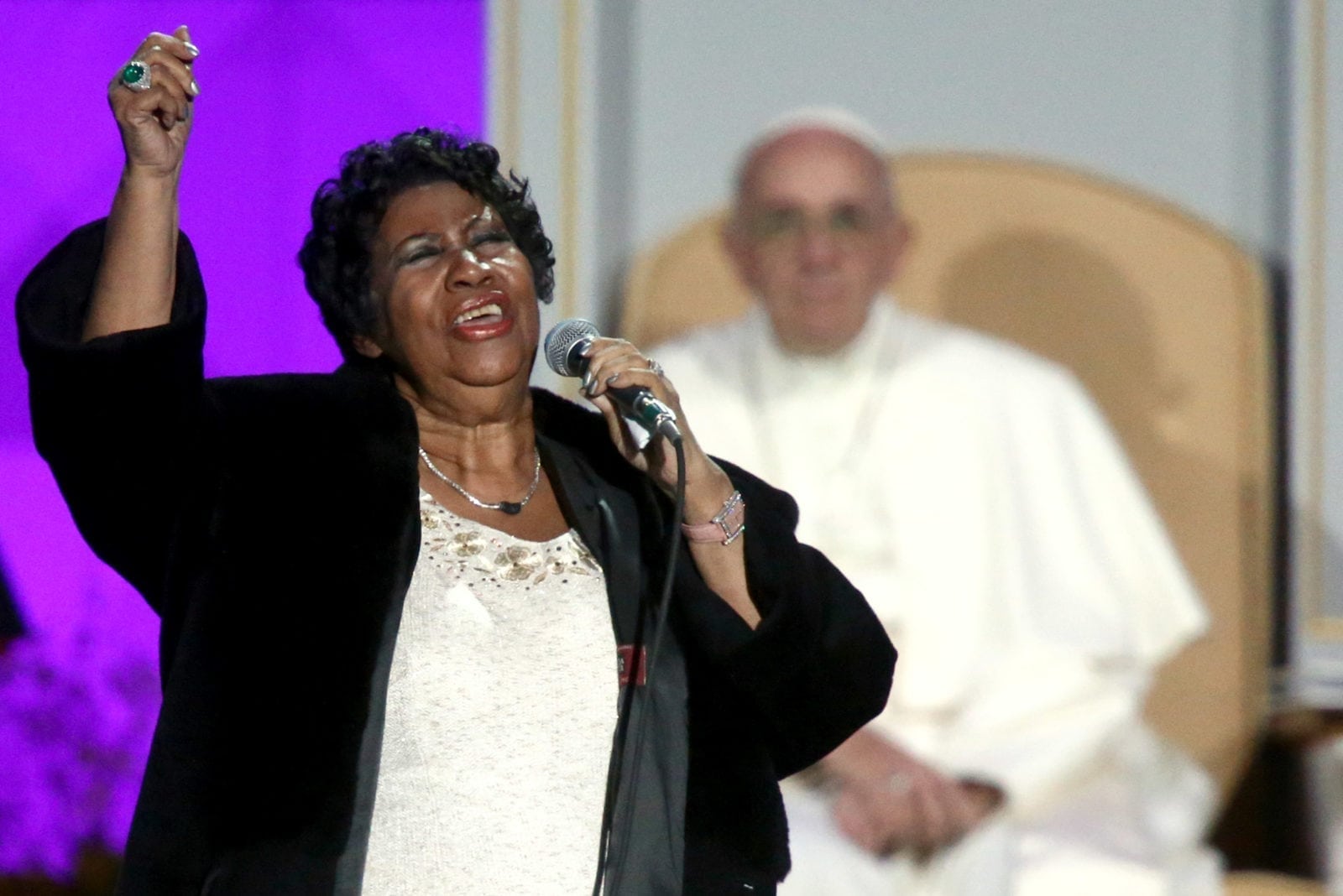
Aretha Franklin and Elton John shared a professional relationship spanning nearly five decades, defined by mutual respect and a bridge between gospel-infused soul and melodic rock. Their primary collaboration is the 1989 hit duet "Through the Storm," though their connection began in 1970 when Franklin covered John’s "Border Song," significantly boosting his early career.
The intersection of Aretha Franklin, the "Queen of Soul," and Elton John, the "Rocket Man," represents one of the most significant cross-genre alliances in 20th-century music. While they only recorded one formal studio duet together, their influence on each other’s careers and their sporadic live performances created a narrative of artistic kinship that lasted until Franklin's passing in 2018. As we look back from 2026, their shared history remains a blueprint for how legacy artists can successfully navigate shifting musical landscapes through strategic collaboration and genuine stylistic appreciation.
The Genesis of the Connection: "Border Song" (1970)
The foundation of the Franklin-John relationship was not a duet, but a cover. In 1970, Elton John was a rising singer-songwriter in the United Kingdom, struggling to find a foothold in the massive American market. His self-titled second album featured "Border Song," a gospel-tinged plea for tolerance and peace written with his long-time lyricist Bernie Taupin.
When Aretha Franklin heard the track, she recognized the inherent gospel structure that mirrored her own roots in the Baptist church. She recorded her version for the 1970 album Young, Gifted and Black (though it was first released as a single and appeared on several later compilations). Franklin added the subtitle "(Holy Moses)" to the track, emphasizing the spiritual weight of the lyrics.
Impact on Elton John’s Career
Franklin’s endorsement of John’s songwriting was a pivotal moment for the young British artist. In 1970, Aretha Franklin was at the height of her cultural power. By choosing to record a song by an unknown white English pianist, she provided John with an "authenticity stamp" in the realms of soul and R&B. Her version reached number 37 on the Billboard Hot 100 and number 5 on the R&B charts, marking the first time an Elton John composition became a significant hit for another artist in the United States. John has frequently cited this cover as one of the greatest honors of his life, noting that hearing the "Queen of Soul" sing his lyrics gave him the confidence to pursue his unique blend of rock and soul.
"Through the Storm" (1989): The Studio Collaboration
By the late 1980s, the music industry had shifted toward high-gloss production and star-studded collaborations. Under the guidance of Arista Records founder Clive Davis, Aretha Franklin experienced a massive commercial resurgence by recording duets with contemporary icons like George Michael ("I Knew You Were Waiting (For Me)") and Whitney Houston.
In 1989, Davis paired Franklin with Elton John for the title track of her album Through the Storm. The song was produced by Narada Michael Walden, a hit-maker known for his work with Whitney Houston and Starship.
Musical and Production Characteristics
"Through the Storm" is a quintessential late-80s adult contemporary ballad. It features heavy use of digital synthesizers, a programmed drum beat, and a polished, mid-tempo arrangement designed for Top 40 radio. Despite the era-specific production, the vocal performances remain the centerpiece.
- Vocal Dynamics: The song follows a traditional duet structure, with John taking the first verse, Franklin the second, and their voices intertwining during the choruses.
- Thematic Content: The lyrics focus on resilience, friendship, and mutual support—themes that resonated with both artists' long-standing careers.
- Chart Success: The single reached number 16 on the Billboard Hot 100 and was a Top 10 hit on the Adult Contemporary charts. It served its purpose of keeping both artists relevant in a market increasingly dominated by younger pop and hip-hop acts.
Live Performances and Shared Stages
While their studio output was limited to a single track, Franklin and John appeared together on several high-profile television specials and charity events. These performances often highlighted their shared talent as pianists, an aspect of their artistry that is sometimes overshadowed by their vocal prowess.
The 1993 "Duets" Special
One of the most memorable televised moments occurred during the Aretha Franklin: Duets special, filmed at the Fox Theatre in Detroit. The event was a celebration of Franklin's career and her penchant for collaboration. John joined her on stage to perform "Through the Storm." The live setting allowed for more improvisational flourishes than the studio recording, with both artists feeding off each other's energy.
The 2017 AIDS Foundation Gala
The most poignant chapter in their collaborative history took place on November 7, 2017, at the Cathedral of St. John the Divine in New York City. The event marked the 25th anniversary of the Elton John AIDS Foundation. Despite being visibly frail and battling the illness that would claim her life less than a year later, Franklin insisted on performing at John’s request.
She performed a set that included "I Say a Little Prayer" and "Brand New Me." Elton John sat in the audience, visibly moved by the performance. This would ultimately be Aretha Franklin’s final public performance. In subsequent interviews, John described the evening as a "miracle," noting that even in her weakened state, Franklin’s voice retained its transcendent power.
A Comparison of Collaborative Milestones
The following table outlines the key professional intersections between Aretha Franklin and Elton John.
| Year | Collaboration Type | Title | Context/Outcome |
|---|---|---|---|
| 1970 | Songwriting/Cover | "Border Song (Holy Moses)" | Franklin covers John/Taupin; gives John R&B credibility. |
| 1989 | Studio Duet | "Through the Storm" | Title track of Franklin’s album; Top 20 Billboard hit. |
| 1993 | Live Performance | "Through the Storm" | Performed for Franklin’s televised Duets special. |
| 1993 | Live Performance | "I Knew You Were Waiting" | Occasional shared stage performances at various benefits. |
| 2017 | Final Tribute | Live Set at EJAF Gala | Franklin’s final public performance at Elton's charity event. |
The Technical Influence: Two Masters of the Piano
To fully explore the collaboration between these two giants, one must look at their technical approach to the piano. Both Franklin and John are "percussive" players whose styles are rooted in the rhythm and blues tradition, though they branched out in different directions.
The Gospel Foundation
Franklin’s piano playing was the rhythmic heart of her greatest Atlantic Records recordings. Her style was defined by heavy syncopation and a deep understanding of gospel chord voicings. Elton John, while influenced by early rock-and-roll pioneers like Little Richard and Jerry Lee Lewis, frequently cited Franklin as the definitive piano influence for his slower, soulful ballads.
When they collaborated, there was a silent understanding of musical "language." In their live appearances, you can hear the way they use the piano to "talk" to one another—using specific trills and chord extensions that signify their shared roots in the American South's musical traditions, despite John being from the London suburbs.
Cultural and Industry Impact
The collaborations between Franklin and John were more than just musical footnotes; they represented a shift in how the industry handled "legend" status.
- Genre Blurring: By working together, they helped break down the rigid formatting of "Black music" and "White music" that plagued the radio industry in the 1970s and 80s.
- Legacy Preservation: Elton John has been a vocal advocate for the preservation of soul music history. His frequent public praise of Franklin ensured that younger generations of his fans were introduced to her catalog.
- The "Event" Single: "Through the Storm" was a precursor to the modern "event" collaboration, where the pairing of two superstars is as important as the song itself for marketing purposes.
Common Obstacles in Their Collaborations
Despite their mutual affection, a full-length collaborative album never materialized. Several factors contributed to this:
- Geographic and Schedule Constraints: For much of the 70s and 80s, John was a constant touring entity, while Franklin famously had a fear of flying that limited her travel primarily to the United States (and specifically the Detroit/New York corridor).
- Label Affiliations: Franklin was a cornerstone of Arista, while John moved between MCA, Rocket, and Geffen. Navigating the legalities of cross-label superstar albums was significantly more difficult in the pre-digital era.
- Creative Focus: Both artists were prolific solo performers with strong visions for their own albums. Duets were often seen as "special projects" rather than a primary creative direction.
Frequently Asked Questions
Did Aretha Franklin and Elton John ever win a Grammy for their work together?
No, they did not win a Grammy specifically for a collaboration. "Through the Storm" received airplay and chart success but did not secure a trophy. However, both artists are multi-Grammy winners individually, and Elton John has received the Grammy Legend Award, an honor Franklin also shared in spirit through her Lifetime Achievement Award.
How many songs did Aretha Franklin and Elton John record in the studio?
They only recorded one official studio duet: "Through the Storm," released in 1989. While they performed other songs live during televised specials, those were never released as official studio tracks.
Is there any unreleased material from their sessions?
According to records from Arista and the estates of the artists as of 2026, there are no known "lost" studio tracks. Most of their interactions outside of "Through the Storm" were centered around live events and private rehearsals.
Why did Aretha Franklin choose to cover "Border Song"?
Franklin was reportedly drawn to the song's spiritual lyrics and its potential for a gospel arrangement. At the time, she was actively seeking out songs by contemporary songwriters (including The Beatles and Simon & Garfunkel) to reinterpret through her soul lens.
What was Elton John's reaction to Aretha Franklin's death?
Elton John was among the first to release a statement in 2018, calling her "the greatest soul artist of all time." He frequently mentions her in his memoir and during his "Farewell Yellow Brick Road" tour, often dedicating songs to her memory.
Did they ever perform "Don't Go Breaking My Heart" together?
No. While that is one of Elton John's most famous duets (originally with Kiki Dee), he never performed it with Aretha Franklin. Their collaborative live performances were usually restricted to "Through the Storm" or gospel standards.
Final Recommendation for Listeners
To truly appreciate the depth of the Aretha Franklin and Elton John connection, start by listening to Franklin’s 1970 version of "Border Song (Holy Moses)." It captures the raw energy of their spiritual connection before the polish of 1980s production took over. Following that, watch the live footage of their 1993 Detroit performance to see their chemistry as dual pianists. While their recorded output is small, the historical weight of their mutual respect remains a cornerstone of 20th-century music history.