Applied finance in practice is the systematic application of financial theories and mathematical models to solve real-world problems in investment, corporate finance, and risk management. It transforms abstract concepts like the Capital Asset Pricing Model (CAPM) into concrete tools for valuing assets, managing portfolios, and making strategic capital allocation decisions within complex, often irrational, market environments.
The distinction between theoretical finance and applied finance lies in the shift from the "ideal" to the "operational." While academic finance often relies on the Efficient Market Hypothesis (EMH) and the assumption of rational actors, practitioners in 2026 operate in a landscape characterized by data saturation, algorithmic volatility, and the increasing integration of non-financial metrics like ESG (Environmental, Social, and Governance) data. To succeed in this field, one must bridge the gap between high-level formulas and the messy reality of quarterly reports, fluctuating interest rates, and geopolitical shifts.
The Evolution of Financial Modeling and Valuation
In the realm of applied finance, valuation is the cornerstone. However, the textbook version of a Discounted Cash Flow (DCF) analysis rarely survives contact with the real world without significant adjustment. In 2026, practitioners have moved beyond static spreadsheets toward dynamic, probabilistic modeling.
Advanced DCF and Sensitivity Analysis
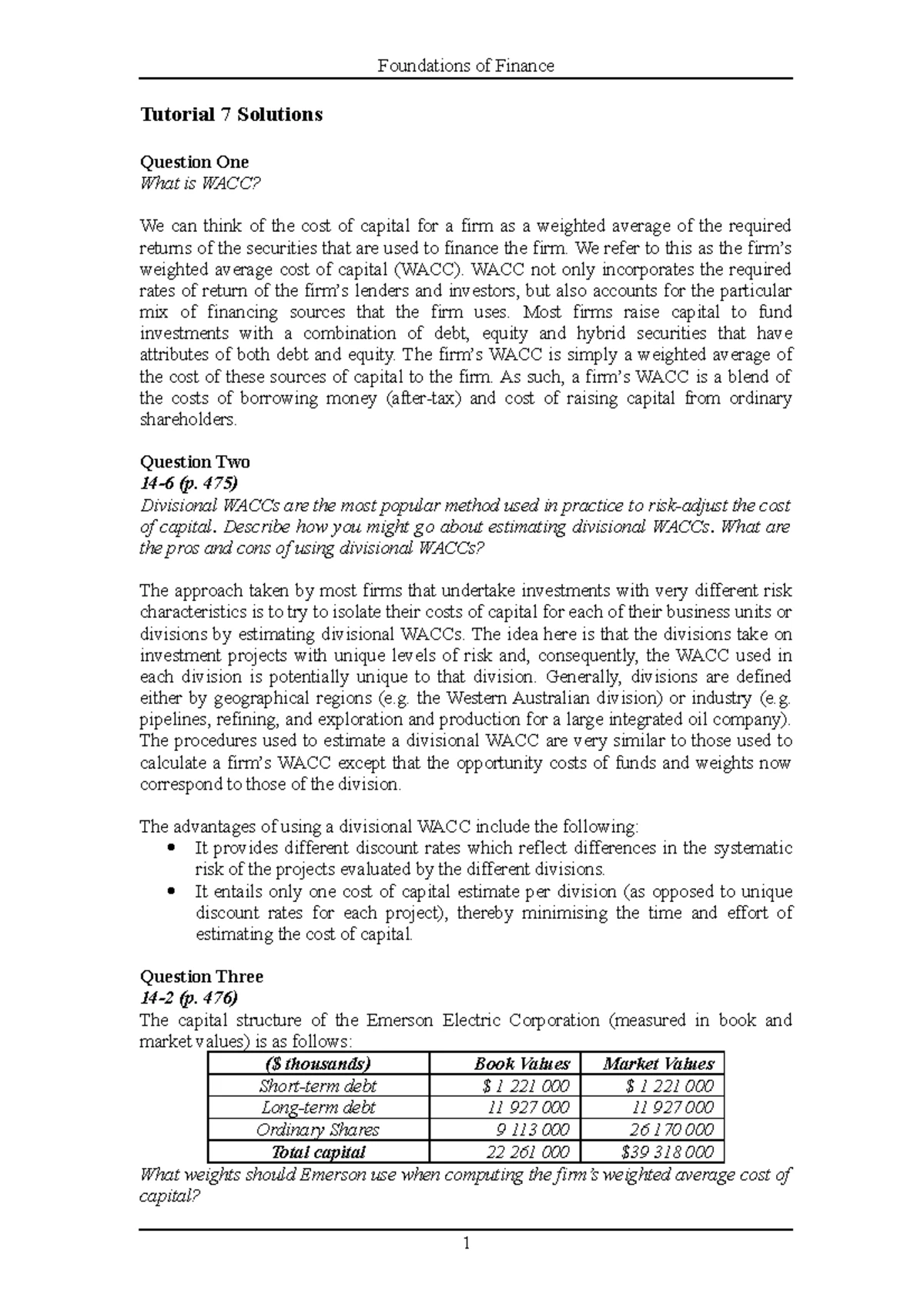
The traditional DCF model assumes a predictable stream of future cash flows discounted back to the present value using a Weighted Average Cost of Capital (WACC). In practice, the "Weighted Average" component is often the most contentious. Practitioners must determine the appropriate "Beta" for a company, which measures its volatility relative to the market. While textbooks suggest using historical data, applied finance professionals often use "Forward-Looking Betas" or "Fundamental Betas" that account for changes in the company’s leverage and industry positioning.
Furthermore, the Terminal Value—the value of the business beyond the explicit forecast period—often accounts for more than 60% of the total valuation. In practice, relying on a single perpetual growth rate is considered risky. Instead, practitioners utilize "Exit Multiple" methods alongside perpetuity growth models to cross-check results. They then apply Monte Carlo simulations to these models, running thousands of iterations to see how changes in interest rates or revenue growth impact the final valuation.
Relative Valuation and Market Multiples
While DCF provides an "intrinsic" value, the market rarely trades at that exact point. Applied finance requires a deep understanding of relative valuation—comparing a firm to its "comps" (comparable companies). Professionals look at multiples such as P/E (Price-to-Earnings), EV/EBITDA (Enterprise Value to Earnings Before Interest, Taxes, Depreciation, and Amortization), and P/S (Price-to-Sales). The art of applied finance here is selecting the right peer group. A tech firm specializing in AI in 2026 cannot be compared to a legacy hardware manufacturer, even if they are in the same broad sector. Adjustments must be made for growth rates, margins, and risk profiles.
Corporate Finance and Capital Allocation Strategies
For a Chief Financial Officer (CFO) or a corporate treasurer, applied finance is about making decisions that maximize shareholder value while maintaining liquidity. This involves two primary tasks: capital budgeting and capital structure management.
Capital Budgeting in Uncertain Markets
Capital budgeting is the process of deciding which long-term projects to fund. Practitioners use Net Present Value (NPV) and Internal Rate of Return (IRR) as their primary metrics. However, in practice, a positive NPV is not always a "green light." Companies face "Capital Rationing," where they have more profitable projects than they have cash to fund.
Applied finance professionals must also account for "Real Options." This concept acknowledges that management has the flexibility to expand, defer, or abandon a project based on how market conditions evolve. For example, a mining company might have the "option" to pause operations if commodity prices fall below a certain threshold. Valuing this flexibility is a key component of sophisticated corporate finance in 2026.
Optimizing Capital Structure
The Modigliani-Miller theorem suggests that in a perfect market, the mix of debt and equity doesn't affect a firm's value. In practice, taxes, bankruptcy costs, and agency problems make capital structure one of the most critical levers for a firm.
- Cost of Debt: In 2026, with interest rates stabilizing after the volatility of the early 2020s, companies are meticulously timing their bond issuances to lock in lower coupons.
- Equity Dilution: Practitioners must weigh the cost of issuing new shares (which dilutes current owners) against the risk of taking on too much debt (which increases the probability of financial distress).
- Optimal Leverage: Finding the "sweet spot" where WACC is minimized requires constant monitoring of credit ratings and market sentiment.
Modern Risk Management and Mitigation
Risk management in applied finance has evolved from a defensive posture to a strategic advantage. It is no longer just about buying insurance or hedging currency; it is about quantifying uncertainty.
Value at Risk (VaR) and Expected Shortfall
Value at Risk (VaR) is a statistical technique used to measure the amount of potential loss that could happen in an investment portfolio over a specified timeframe. For instance, a "95% one-day VaR of $1 million" means there is only a 5% chance the portfolio will lose more than $1 million in a single day.
However, practitioners have increasingly turned to Expected Shortfall (ES), also known as Conditional VaR. While VaR tells you the threshold of a loss, ES tells you the average loss that occurs beyond that threshold. This provides a better picture of "tail risk"—the extreme events that can bankrupt a firm.
Hedging with Derivatives
In practice, derivatives (options, futures, and swaps) are used to mitigate specific risks. A multinational corporation might use currency swaps to protect against fluctuations in the Euro, or a manufacturer might use commodity futures to lock in the price of aluminum. The challenge in applied finance is ensuring the "hedge ratio" is correct. Over-hedging can be just as expensive as not hedging at all, as it eats into profit margins through transaction costs and missed opportunities.
The Role of Technology and Quantitative Analysis
By 2026, the "Applied" part of finance is inseparable from technology. Quantitative finance, once the domain of "quants" on Wall Street, has moved into the mainstream of corporate finance departments.
Python and SQL in Financial Analysis
The days of relying solely on Excel are fading. Applied finance professionals now use Python for data manipulation and SQL for querying vast financial databases. Python libraries like Pandas, NumPy, and Scipy allow for more complex statistical analysis and automated reporting. This shift allows practitioners to analyze "Alternative Data"—such as satellite imagery of retail parking lots or sentiment analysis of social media—to gain an edge in forecasting.
AI and Machine Learning Integration
Machine Learning (ML) is being applied to credit scoring, fraud detection, and algorithmic trading. In practice, this means models can now identify non-linear relationships in data that traditional linear regressions would miss. For example, an ML model might find that a specific combination of inflation rates and consumer debt levels is a better predictor of loan defaults than either metric alone.
Regulatory Compliance and Ethical Standards
Applied finance does not exist in a vacuum. It is constrained by legal frameworks and accounting standards. In 2026, the regulatory environment is more stringent regarding transparency and climate-related disclosures.
- IFRS and GAAP: Practitioners must stay updated on the International Financial Reporting Standards (IFRS) and Generally Accepted Accounting Principles (GAAP). Discrepancies between these two can lead to significant differences in reported earnings and valuations for multi-national firms.
- SEC Oversight: The U.S. Securities and Exchange Commission (SEC) continues to refine rules around "Short-Selling" and "Dark Pools," impacting how institutional investors execute large trades.
- ESG Integration: Institutional investors now demand that applied finance models incorporate ESG risks. This isn't just about ethics; it's about financial materiality. A company with poor environmental standards faces higher regulatory risks and potential litigation costs, which must be reflected in the discount rate used in valuations.
Comparison of Theoretical vs. Applied Finance
| Feature | Theoretical Finance | Applied Finance (Practice) |
|---|---|---|
| Primary Goal | Developing universal laws/theories. | Solving specific business problems. |
| Market View | Markets are generally efficient. | Markets have friction and inefficiencies. |
| Data Usage | Historical data for proof. | Real-time and alternative data for prediction. |
| Assumptions | Rational actors, no taxes, no costs. | Behavioral biases, tax implications, fees. |
| Success Metric | Statistical significance (p-values). | Return on Investment (ROI), Alpha, NPV. |
| Decision Speed | Long-term academic review. | Near-real-time operational decisions. |
Practical Challenges in Applied Finance
Despite the advanced tools available, several hurdles remain for practitioners:
- Data Quality: "Garbage in, garbage out" remains the golden rule. Even the best AI model will fail if the underlying financial data is poorly scrubbed or contains errors.
- Model Risk: This is the risk that the model itself is wrong. Practitioners must constantly "back-test" their models against historical outcomes to ensure they remain valid.
- Human Bias: Overconfidence and "anchoring" (relying too heavily on the first piece of information received) often lead to poor investment decisions, regardless of what the quantitative model suggests.
Frequently Asked Questions
What is the difference between quantitative finance and applied finance? Quantitative finance is a subset of applied finance that focuses heavily on mathematical and statistical methods, particularly for pricing derivatives and managing high-frequency trading. Applied finance is broader, encompassing corporate strategy, capital budgeting, and financial planning, though it often uses quantitative tools to achieve its goals.
How has AI changed applied finance in 2026? AI has moved from being a niche tool to a standard part of the financial toolkit. It is used to automate repetitive tasks like data entry and basic reporting, but more importantly, it provides predictive analytics for market trends, credit risk, and customer behavior that were previously impossible to calculate manually.
Is a CFA or an MBA better for a career in applied finance? Both have value, but they serve different purposes. The CFA (Chartered Financial Analyst) designation is highly focused on investment management, ethics, and technical valuation skills, making it the gold standard for portfolio managers and analysts. An MBA provides a broader view of business operations, leadership, and strategy, which is often preferred for corporate finance and C-suite roles.
How do practitioners handle extreme market volatility? Practitioners use a combination of stress testing and scenario analysis. Rather than looking at "average" outcomes, they model "worst-case" scenarios, such as a sudden 20% market drop or a 300-basis-point interest rate hike. This allows them to ensure the organization has enough liquidity to survive a "Black Swan" event.
What are the most common errors in financial modeling? The most frequent errors include hard-coding numbers instead of using dynamic references, failing to check for "circular references" that can break a spreadsheet, and using inconsistent units (e.g., mixing nominal and real growth rates). Additionally, over-complicating a model can make it difficult for decision-makers to understand the underlying drivers.
Practical Recommendation for Practitioners
To excel in applied finance in 2026, professionals should prioritize model auditability and transparency. As models become more complex with the integration of AI and Python, it is easy for them to become "black boxes" where inputs go in and results come out without anyone understanding the logic in between. Always document your assumptions clearly and perform "sanity checks"—comparing your model's output to simple, back-of-the-envelope calculations. If a valuation looks too good to be true, it usually is. Continuous learning in data science and staying abreast of IFRS standards will ensure your technical skills remain relevant in an increasingly automated industry.