Applied DORIS is a legacy insurance agency management system (AMS) and CRM developed by Applied Systems, specifically tailored for small to mid-sized independent agencies. While it provided essential policy, client, and financial management tools for decades, by 2026, it is primarily viewed as a sunset product, with most agencies transitioning to modern cloud-based platforms like Applied Epic or Applied EZLynx.
The Evolution and Role of Applied DORIS in the Insurance Industry
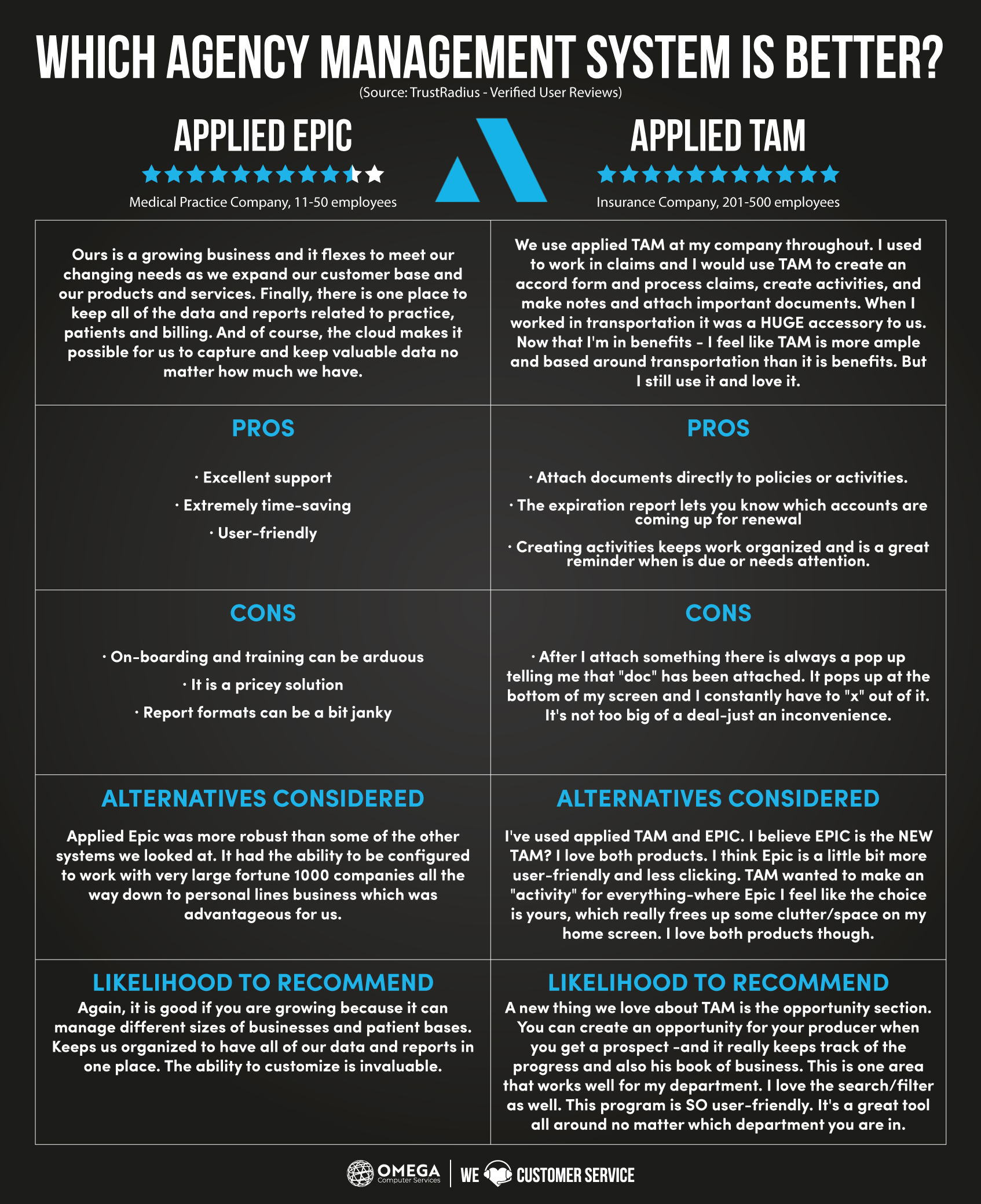
For decades, the insurance industry relied on robust, albeit functionally rigid, software to manage the complex lifecycle of an insurance policy. Applied DORIS (originally an acronym for Data Online Retrieval Information System) emerged as a streamlined alternative to more complex systems like Applied TAM (The Agency Manager). Its primary goal was to provide independent agents with a simplified interface to manage their "book of business" without the high overhead of enterprise-level software.
In the landscape of 2026, Applied DORIS occupies a unique space. It represents the "old guard" of insurance technology—systems that were built on reliable, transaction-heavy frameworks. For the agencies still utilizing it, DORIS remains a symbol of operational consistency. However, as the digital transformation of the insurance sector accelerates, the limitations of legacy CRM frameworks have become more pronounced. Understanding Applied DORIS requires looking at it through two lenses: its historical utility as a foundational CRM and its current status as a candidate for digital migration.
The Shift from CRM to AMS
While many users search for "Applied DORIS CRM software," it is technically an Agency Management System (AMS). In the insurance world, an AMS does everything a CRM does—managing contact details, notes, and interactions—but it adds layers of industry-specific functionality. This includes managing ACORD forms, tracking policy renewals, processing commissions, and handling carrier downloads via IVANS. Applied DORIS was one of the first systems to make these complex tasks accessible to smaller agencies that did not have dedicated IT departments.
Core Features and Capabilities of Applied DORIS
To understand why Applied DORIS remained popular for so long, one must examine its core feature set. Even in 2026, the architectural simplicity of the software provides a blueprint for what an insurance professional needs to function daily.
Client and Policy Management
At its heart, Applied DORIS acts as a centralized database for all client information. This includes basic demographic data, communication history, and a detailed record of every policy associated with the account. The system allows users to:
- Track Renewals: Automated alerts notify agents of upcoming policy expirations, ensuring that no client is left uncovered.
- Manage Endorsements: Users can record changes to existing policies, creating a digital paper trail of coverage adjustments.
- Cross-Selling Identification: By viewing a client’s entire portfolio, agents can identify gaps in coverage, such as a homeowner who does not have an umbrella policy.
Integrated Accounting and Commission Tracking
One of the strongest selling points of Applied DORIS was its integrated general ledger. Unlike generic CRM software, DORIS was built to handle insurance-specific accounting. This includes:
- Direct Bill and Agency Bill Processing: The system tracks how premiums are paid and ensures that the agency’s cut is accurately recorded.
- Commission Reconciliation: DORIS allows agencies to verify that the commissions received from carriers match the expected amounts based on written premiums.
- Trust Accounting: Ensuring that premium dollars are kept separate from agency operating funds—a critical legal requirement in many jurisdictions.
Document Management and ACORD Integration
The insurance industry runs on forms. Applied DORIS integrated with ACORD (Association for Operations symbols, Research and Development) standards to allow for the digital completion and storage of standard industry forms. This reduced the need for physical filing cabinets and allowed agents to email or fax applications directly from the software. In 2026, while modern systems use dynamic web forms, the foundational "form-filling" logic of DORIS remains a point of reference for many veteran agents.
Technical Architecture: Local vs. Hosted Environments
Originally, Applied DORIS was a "on-premise" solution, meaning the software and the data lived on a physical server located within the insurance agency. This required the agency to manage their own backups, hardware upgrades, and networking.
As technology evolved, Applied Systems introduced a hosted version of DORIS. This moved the data to Applied’s secure data centers, effectively turning DORIS into a "private cloud" solution. In 2026, agencies still using DORIS almost exclusively use the hosted version. The technical benefits of the hosted environment include:
- Security: Centralized data centers offer higher levels of encryption and physical security than a typical small-office server closet.
- Accessibility: Agents can log in via a thin-client or remote desktop protocol (RDP) from different locations, facilitating a basic level of remote work.
- Data Protection: Automatic backups reduce the risk of catastrophic data loss due to hardware failure or local disasters like fires or floods.
Comparing Applied DORIS to Modern Alternatives
By 2026, the gap between Applied DORIS and contemporary platforms like Applied Epic or EZLynx has widened significantly. Agencies evaluating their current use of DORIS often use the following comparison to determine if a migration is necessary.
| Feature | Applied DORIS (Legacy) | Applied Epic (Modern Enterprise) | Applied EZLynx (Cloud-Native) |
|---|---|---|---|
| User Interface | Menu-driven, older Windows style | Browser-based or modern desktop app | Fully responsive web-based |
| Automation | Limited to basic alerts | Advanced workflow automation | High-level marketing automation |
| Integrations | Limited third-party API support | Extensive marketplace/API access | Strong comparative rater integration |
| Reporting | Standard static reports | Customizable BI and data analytics | Real-time performance dashboards |
| Customer Portal | Minimal or via add-ons | Integrated client self-service | Strong consumer-facing tools |
| Mobile Access | Very limited | Comprehensive mobile app | Full mobile web functionality |
The Challenges of Maintaining Applied DORIS in 2026
While Applied DORIS is "stable," staying on a legacy platform in 2026 presents several operational risks. Agencies must weigh the comfort of a familiar system against these growing challenges.
Security and Compliance
Legacy systems are often harder to patch against modern cybersecurity threats. As state and federal regulations (such as the NYDFS Cybersecurity Regulation or various data privacy acts) become more stringent, the cost of "hardening" an old system like DORIS can exceed the cost of moving to a modern, secure cloud platform. Multi-factor authentication (MFA) and advanced encryption standards are standard in 2026, and retrofitting these onto older software architectures is often inefficient.
Integration Bottlenecks
Modern insurance agencies rely on a "stack" of tools—VOIP phone systems, e-signature platforms (like DocuSign), and specialized marketing tools. Applied DORIS was not built with modern APIs (Application Programming Interfaces). This means that getting DORIS to "talk" to a new marketing automation tool often requires manual data entry or messy, unreliable workarounds.
The "Knowledge Gap"
As veteran agency staff members retire, finding new hires who are comfortable with the menu-driven, non-intuitive interface of Applied DORIS becomes difficult. Younger employees expect software that mirrors the usability of modern web applications. Training a new hire on DORIS in 2026 can take twice as long as training them on a modern, intuitive system.
The Migration Path: Moving from DORIS to Applied Epic or EZLynx
For most agencies, the question is not if they will leave DORIS, but when and how. Applied Systems has created well-defined migration paths to help agencies move their data into Applied Epic (for larger or more complex agencies) or Applied EZLynx (for smaller, personal-lines-focused agencies).
The Data Conversion Process
The most significant hurdle in any CRM migration is data integrity. When moving from DORIS, agencies must ensure that:
- Policy History: Decades of policy notes and versions must be mapped correctly to the new database schema.
- Claims Records: Open and closed claims data must remain accessible for reporting and loss-run analysis.
- Document Attachments: Thousands of PDF and image files must be moved from the DORIS file structure into the new system’s document management module.
Applied Systems typically uses a "Conversion Team" to handle this. They run test conversions to identify "orphan data" or formatting errors before the final "Go-Live" date.
Operational Change Management
Moving off Applied DORIS is as much a cultural shift as a technical one. Agencies must prepare for a period of reduced productivity as staff learns new workflows. However, the long-term gains—such as automated renewals and better data visibility—usually outweigh the initial friction of the transition.
Frequently Asked Questions
Is Applied DORIS still supported by Applied Systems in 2026?
Applied Systems provides "maintenance" support for existing DORIS users, but active development of new features has largely ceased. The company focuses its research and development resources on Applied Epic and EZLynx. Agencies on DORIS should expect support for critical bugs but should not expect significant functional updates or new integrations.
Can I run Applied DORIS on a Mac?
Native support for macOS does not exist for Applied DORIS. However, because most agencies use the hosted version of DORIS in 2026, it can be accessed on a Mac via Remote Desktop Protocol (RDP) or Citrix. This allows the software to run on a Windows server while being controlled by a Mac user.
How much does Applied DORIS cost compared to modern AMS?
In 2026, DORIS is often one of the most affordable options in the Applied Systems portfolio, which is why some smaller agencies hesitate to switch. However, the "total cost of ownership" must include the time lost to manual tasks and the potential costs of security vulnerabilities. Most modern systems use a per-user, per-month subscription model that includes support, hosting, and updates.
Does Applied DORIS handle commercial lines as well as personal lines?
Yes, Applied DORIS was designed to be a general-purpose agency management system. It supports both personal lines (auto, home) and commercial lines (GL, Workers Comp, Property). It includes the necessary ACORD forms for both sectors, although the workflow for complex commercial accounts is much more streamlined in newer systems like Applied Epic.
What is the difference between Applied DORIS and Applied TAM?
Both are legacy systems from Applied Systems. Applied TAM (The Agency Manager) was historically a more robust, feature-rich, and expensive system intended for mid-to-large agencies. DORIS was the "lighter" version, designed for ease of use and lower cost. In 2026, both systems are being phased out in favor of the unified Applied Epic platform.
Practical Recommendation for Insurance Agencies
If your agency is still utilizing Applied DORIS in 2026, the recommended course of action is to perform a Digital Audit. Evaluate how much time your staff spends on manual data entry that could be automated in a newer system. Specifically, look at your renewal process and your client communication tools.
While Applied DORIS has served the industry faithfully for years, the technical demands of 2026—ranging from AI-driven data analysis to seamless mobile client portals—are beyond its original scope. Contact Applied Systems to request a demo of Applied EZLynx if you are a smaller agency, or Applied Epic if you manage a high volume of commercial business. The goal should be to schedule a migration within the next 12 to 18 months to ensure your agency remains competitive, secure, and efficient in an increasingly digital marketplace.