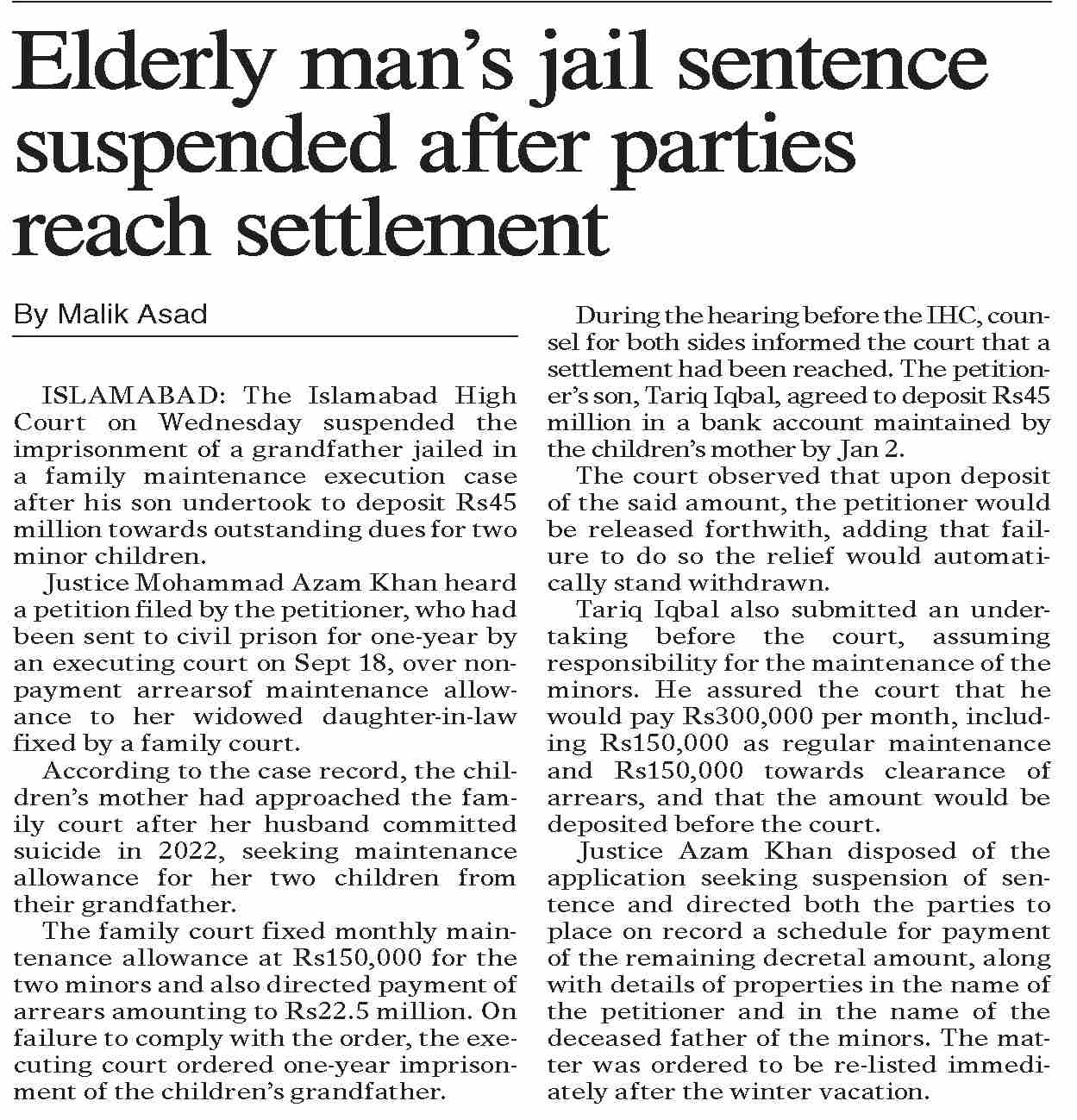
A suspended sentence is a legal arrangement where a judge finds a defendant guilty of a crime but delays the requirement to serve jail or prison time. Instead of immediate incarceration, the defendant is typically placed on probation; if they successfully fulfill all court-ordered conditions, the prison term may never be served.
A suspended sentence represents one of the most critical tools in the judicial system's restorative justice toolkit. While the term "suspended" might sound like a cancellation of punishment, it is more accurately described as a conditional delay. The threat of incarceration remains "hanging" over the defendant, serving as both a deterrent against future crimes and an incentive for rehabilitation. In the legal landscape of 2026, these sentences are increasingly used to manage prison populations and focus on recidivism reduction for non-violent offenders.
The Mechanics of How a Suspended Sentence Works
When a court issues a suspended sentence, it acknowledges that a crime has been committed and that a specific term of imprisonment is warranted. However, the judge determines that the interests of justice, the community, and the defendant are better served by allowing the individual to remain at large under strict supervision.
The process typically begins at the sentencing hearing. After a plea of guilty or a conviction at trial, the judge will announce a specific sentence—for example, "three years in state prison." The judge then immediately "suspends" that sentence. This means the clock on the prison term does not start. Instead, the defendant is redirected to the probation department.
The suspension is almost always "contingent." This means the delay of jail time is a privilege, not a right, and it is granted only on the condition that the defendant adheres to a set of rules. These rules are not mere suggestions; they are court orders. If the defendant remains law-abiding and fulfills every requirement for the duration of the suspension period, the case eventually concludes without the person ever entering a cell.
Two Primary Forms: Imposition vs. Execution
Not all suspended sentences are structured the same way. The legal distinction between the "imposition" of a sentence and the "execution" of a sentence has significant consequences for a defendant’s criminal record and their future if a violation occurs.
Suspended Imposition of Sentence (SIS)
In a Suspended Imposition of Sentence, the judge finds the defendant guilty but does not actually pronounce a specific prison term. Instead, the entire act of sentencing is put on hold. The primary advantage of an SIS is that if the defendant successfully completes probation, many jurisdictions allow the conviction to be "set aside" or the case to be dismissed. This can be vital for employment and civil rights, as it may prevent a permanent felony conviction from appearing on a public record.
Suspended Execution of Sentence (SES)
In a Suspended Execution of Sentence, the judge actually sentences the defendant to a specific amount of time (e.g., five years) but stays the "execution" of that sentence. Unlike an SIS, the conviction is final and remains on the record regardless of whether the probation is completed successfully. If the defendant violates their terms, the judge does not have the discretion to change the sentence; the pre-determined five-year term is simply "activated," and the defendant is sent to prison.
Standard Conditions and Requirements
For jail time to remain delayed, the defendant must navigate a minefield of requirements. These conditions are tailored to the specific crime and the defendant's history, but they generally fall into several categories:
- Supervised Probation: Regular check-ins with a probation officer (PO). This often involves home visits, workplace checks, and detailed reporting of activities.
- Restitution and Fines: The defendant may be required to pay back victims for financial losses or pay court costs and fines to the state.
- Community Service: A specific number of hours of unpaid labor for non-profit or government agencies.
- Behavioral Programs: This includes mandatory drug and alcohol counseling, anger management classes, or vocational training.
- Travel and Association Restrictions: Defendants are often restricted from leaving a specific geographic area without permission and may be barred from contacting victims or co-defendants.
- Drug and Alcohol Testing: Random screenings to ensure the defendant is maintaining sobriety, especially in cases involving substance abuse.
Comparison of Sentencing Outcomes
The following table compares a suspended sentence with other common judicial outcomes to clarify how the "delay" of jail time differs from other forms of leniency or punishment.
| Feature | Suspended Sentence | Standard Probation | Deferred Adjudication | Straight Jail Time |
|---|---|---|---|---|
| Conviction Status | Usually recorded (unless SIS) | Recorded | Not recorded initially | Recorded |
| Jail Time | Pre-determined but delayed | Not necessarily determined | Not determined | Served immediately |
| Supervision | Strict (Probation) | Strict (Probation) | Moderate to Strict | None (Post-release) |
| Risk of Violation | Immediate jail/prison | New sentencing hearing | Conviction & sentencing | N/A |
| Rehabilitation Focus | High | High | Very High | Low |
The Consequences of Violating the Delay
A suspended sentence is often described as a "sword of Damocles." If the defendant fails to meet even one condition of their release, the "delay" can be revoked. This process is known as a Probation Violation (PV) or a Revocation Hearing.
The legal standards at a revocation hearing are lower than at a criminal trial. Instead of "beyond a reasonable doubt," the prosecution only needs to prove a violation by a "preponderance of the evidence" (meaning it is more likely than not that the violation occurred).
Technical vs. Substantive Violations
Violations are generally split into two categories:
- Technical Violations: These are failures to follow the rules of probation, such as missing a meeting with a PO, failing a drug test, or failing to pay a fine. While they are not "new crimes," they are breaches of the court's trust.
- Substantive Violations: These occur when a defendant is arrested for a completely new crime while serving their suspended sentence. This is the most severe type of violation and almost always results in the activation of the original jail time plus additional time for the new offense.
If the judge finds that a violation occurred, they have several options. They can "continue" the probation with a warning, add more restrictive conditions, or revoke the suspension entirely and order the defendant to serve the original sentence in its entirety.
Why Do Courts Use Suspended Sentences?
The widespread use of suspended sentences in 2026 is driven by several socio-economic and judicial factors. Understanding the "why" helps explain why this legal mechanism is so prevalent.
Economic Considerations
Incarceration is expensive. The cost of housing, feeding, and providing medical care to an inmate can exceed $40,000 to $60,000 per year, depending on the jurisdiction. Suspended sentences shift the financial burden of supervision to the probation department, which is significantly cheaper for taxpayers. Furthermore, a person on a suspended sentence can continue to work, pay taxes, and support their family, preventing their dependents from needing state assistance.
Rehabilitation and Recidivism
Research consistently shows that for many non-violent offenders, exposure to prison can actually increase the likelihood of future criminal behavior (a concept known as "criminogenic effect"). By delaying jail time and focusing on community-based treatment, the court hopes to address the root causes of the behavior—such as addiction or lack of education—thereby reducing the chance that the individual will re-offend.
Case Management and Overcrowding
Many prison systems operate at or near capacity. Suspended sentences serve as a "pressure valve," ensuring that limited cell space is reserved for the most dangerous or violent offenders, while those who pose a lower risk are monitored in the community.
Legal and Practical Limitations
It is important to note that suspended sentences are not available for every crime. Most jurisdictions have statutory limits on which offenses qualify for a suspension.
- Mandatory Minimums: Many violent crimes, sexual offenses, or high-level drug trafficking charges carry "mandatory minimum" sentences. In these cases, the law forbids a judge from suspending the sentence; the defendant must serve the time.
- Prior Record: A defendant with an extensive criminal history is far less likely to receive a suspended sentence, as the court may view them as a "poor candidate for probation."
- Jurisdictional Differences: Legal frameworks vary. For example, the Legal Information Institute at Cornell Law provides a general overview, but state-specific statutes (like those in California or New York) dictate the exact eligibility criteria.
Impact on Future Employment and Rights
Even if jail time is delayed, a suspended sentence can have lasting impacts. Because a suspended sentence (particularly an SES) often results in a formal conviction on a person's record, it can trigger "collateral consequences." These may include the loss of the right to possess firearms, the loss of voting rights (in some states), and significant hurdles in passing background checks for employment or housing.
However, many states have introduced "Clean Slate" laws and expungement reforms that allow individuals who successfully complete a suspended sentence to eventually have their records sealed. This incentive is a primary driver for defendants to remain compliant with their probation terms.
Frequently Asked Questions
Does a suspended sentence show up on a background check?
Yes, in most cases. A suspended sentence is still a part of a criminal court record. Unless the sentence was a "Suspended Imposition of Sentence" that resulted in a dismissal, or the record has been officially expunged, an employer will likely see the conviction and the fact that the sentence was suspended.
Can a suspended sentence be shortened?
Yes. If a defendant shows exemplary behavior and completes all substantive requirements (like paying all restitution and finishing classes) ahead of schedule, their attorney can petition the court for "early discharge" from probation. If granted, the threat of the suspended jail time is removed entirely.
What is the difference between a suspended sentence and a stay of execution?
While the terms are often used interchangeably, a "stay of execution" is typically a temporary delay of a sentence while an appeal is being processed. A "suspended sentence" is a long-term alternative to incarceration conditioned on good behavior.
Can I travel while on a suspended sentence?
Generally, no—at least not without explicit permission. Most probation terms require the defendant to stay within the county or state. You must usually obtain a travel permit from your probation officer for vacations or work-related trips.
What happens if I move to another state?
Moving while on a suspended sentence is complicated and requires an "Interstate Compact" transfer. Both your current state and the new state must agree to the transfer of supervision. If you move without permission, it is considered a violation, and a warrant will likely be issued for your arrest.
Is a suspended sentence the same as "time served"?
No. "Time served" refers to the credit given for time you already spent in jail awaiting trial. A suspended sentence refers to time you would have to serve in the future if you violate the terms of your release.
Summary and Practical Next Steps
A suspended sentence is a powerful opportunity to avoid incarceration, but it requires a high degree of discipline and adherence to court-ordered rules. It is not a "get out of jail free" card; it is a legal contract with the state.
If you or a loved one are facing a sentencing hearing where a suspended sentence is a possibility:
- Consult a Criminal Defense Attorney: Ensure you understand whether you are being offered an SES or an SIS, as the long-term record implications are vastly different.
- Review the Terms of Probation: Before accepting a plea deal involving a suspended sentence, make sure the conditions (such as fees or travel restrictions) are actually achievable for you.
- Document Compliance: Keep meticulous records of every meeting attended, every payment made, and every class completed. Do not rely solely on the probation department's records.
- Prioritize Communication: If an emergency arises that might cause you to miss a meeting or a payment, notify your probation officer immediately. Proactive communication is often the difference between a warning and a revocation.