Whether black and white gods are "different" is a question of perspective, rooted in the evolution of religious iconography, color symbolism in antiquity, and the way human cultures project moral frameworks onto the divine. In mythology and theology, the distinction is rarely based on literal skin color but rather on the symbolic associations linked to light, darkness, purity, decay, and the natural duality of the universe.
Understanding the Symbolic Dichotomy
When discussing "black and white" gods, it is essential to distinguish between race as a modern social construct and color as an ancient theological shorthand. In nearly every historical pantheon, color has been used to communicate the nature of a deity’s domain.
White is universally associated with light, daytime, clarity, and the heavens. Deities characterized as "white" are frequently linked to the sun, justice, purity, and the ordering of the physical world. For example, in many Indo-European traditions, the sky father is often described as having white hair or wearing white robes, signaling his position as an overarching, luminous force of law and wisdom.
Conversely, black is frequently—though not exclusively—associated with the earth, the night, the underworld, the mystery of the afterlife, and the fertile silt of riverbeds (such as the Nile). In ancient Egyptian theology, the god Anubis was often depicted as black, not as a sign of evil or racial distinction, but as a representation of death, the night, and the transformative potential of the soil. To categorize these gods as "different" based on color is to misread the ancient semiotics that intended to convey function rather than division.
Historical Context and Iconography
The perception of a "difference" often arises from a modern misunderstanding of how ancient societies interpreted aesthetics. In the Greco-Roman world, the use of white marble became an aesthetic ideal, influencing how later European art depicted the gods. However, the original statues were frequently polychromatic.
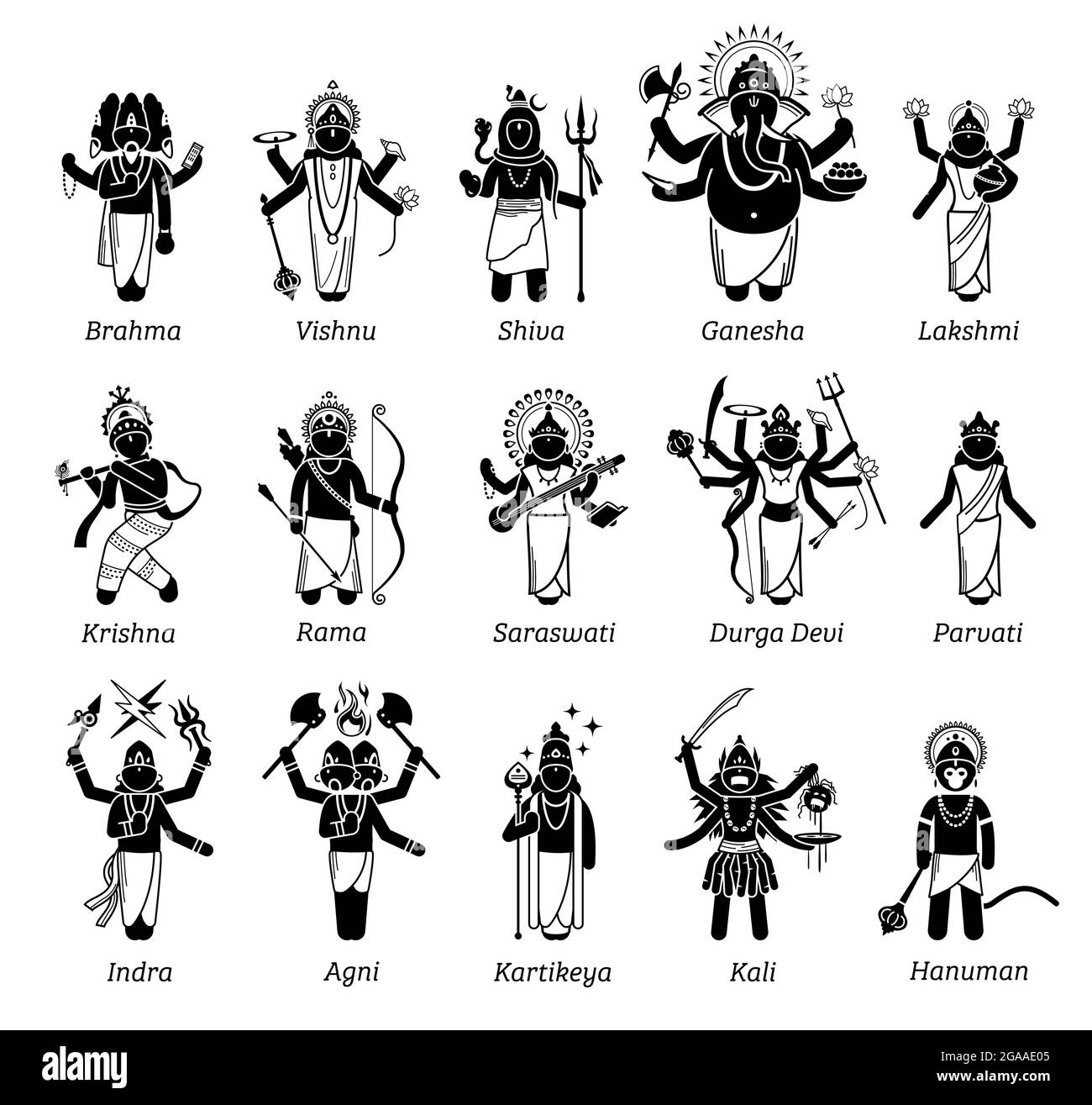
If we look at deities like the black-skinned forms of the Hindu goddess Kali or the dark-complexioned figures in various indigenous mythologies, the color signifies an "infinite" or "transcendent" nature. In these contexts, dark colors represent the void or the womb of the universe—the source from which all creation emerges. This is profoundly different from the European-centric habit of associating white with "good" and black with "bad." For many cultures, the black god represents the ultimate power of creation, a force that is far more expansive than the light of the sun.
Comparative Framework: Nature vs. Morality
To determine if these entities are truly different, we must analyze the roles they occupy. The following table illustrates how these archetypes frequently function across diverse cultures, focusing on the domain of the deity rather than the superficial color.
| Symbolic Color | Primary Association | Domain/Role | Cultural Example |
|---|---|---|---|
| White | Illumination | Law, Truth, Heavens | Jupiter (Roman), Heimdall (Norse) |
| Black | Depth/Mystery | Death, Fertility, Time | Anubis (Egyptian), Kali (Hindu) |
| White | Order | Purity, Sacrifice | Various Solar Deities |
| Black | Transcendence | The Void, Regeneration | Shiva (as Mahakala) |
As evidenced by the table, the "difference" lies in the functionality. White gods are often "extroverted"—they act upon the world to maintain order, provide heat, or judge actions. Black gods are often "introverted"—they govern the transitions of the soul, the hidden secrets of the earth, and the cycles of life and death that occur beneath the surface.
The Role of Anthropomorphism
Human beings naturally create gods in their own image. Consequently, historical depictions of gods were influenced by the demographics of the civilizations that worshipped them. In the 2026 academic climate, theologians and anthropologists agree that the "color" of a god is often a reflection of the environment.
In arid, sun-scorched climates, solar (white or gold) gods often take precedence. In regions where the afterlife or subterranean knowledge is a central cultural pillar, darker or black-coded gods hold the highest prestige. The difference is not one of inherent divinity but of geographical and social necessity. When a culture is centered on agriculture, the "black" earth is the source of all life. Therefore, the god of the black earth is the most vital, life-giving entity in that pantheon.
Does Moral Duality Exist in Divine Color?
A common point of confusion is the assumption that white gods are moral and black gods are malevolent. This is a significant error in historical interpretation. In many systems, such as the Norse, the Aesir (often depicted with light attributes) are not purely "good," and the Jotunn or figures associated with the dark are not purely "evil."
Even in systems that explicitly contrast light and darkness, such as Zoroastrianism, the conflict is between Asha (truth/order) and Druj (the lie/chaos). While light is aligned with truth, it is the nature of the god’s action, not their color, that dictates their moral alignment. A god of the deep, dark sea can be as vital to the ecosystem as a god of the clear, blue sky. The perceived difference is a result of later, often polarized, literary traditions that favored a binary worldview.
Common Misconceptions
- Color as Race: Ancient gods were rarely defined by race. Assigning modern racial labels to deities from antiquity is an anachronism that ignores the symbolic intent of the original worshippers.
- Black as Evil: This is a localized evolution, largely influenced by post-classical literary tropes. In global mythology, black represents fertility and potential, not sin.
- White as Perfection: While white symbolizes light, it also symbolizes emptiness or coldness in certain contexts. It is not inherently superior to the depth offered by darker representations.
Investigating the "Difference"
When you ask if these gods are "really" different, the answer is "yes, but not for the reasons often assumed." They are different in their utility. A god that governs the lightning strike (often white/bright) requires a different theological narrative than a god that governs the slow decomposition of organic matter (often black).
The difference is structural. If a culture possesses a pantheon, it is designed to cover all aspects of human existence. Because human existence is both light and dark, visible and hidden, active and passive, the pantheon must reflect this with deities that represent those distinct facets.
Frequently Asked Questions
Are black gods considered more powerful than white gods? No. Power in mythology is context-dependent. A "black" god of the underworld is all-powerful within the realm of the dead, while a "white" god of the sun is the supreme authority in the sky. Their power levels are defined by their specific jurisdictions.
Why are so many modern portrayals polarized by color? Modern media and artistic traditions often rely on simplified tropes to convey "good" and "evil" quickly. Using white for heroism and black for villainy is a cinematic shorthand, not an accurate reflection of ancient theological systems or mythological complexity.
Did ancient cultures worship these gods differently? Yes. Rites for "white" gods often involved offerings of light, incense, or daytime rituals in high places. Rites for "black" gods were frequently held in the evening or involved earth-based offerings, such as burying sacrifices or using libations poured directly into the ground.
Is it possible for one god to be both black and white? Yes. Many deities are multifaceted. In Hindu iconography, for example, a deity may have different manifestations (avatars) that represent different colors and roles. The totality of the deity encompasses both the light and the dark, suggesting that the divide is human-made rather than inherent to the divine nature.
How should one approach these deities today? Approach them through the lens of their historical function. By understanding the specific needs and environments of the culture that created the deity, you move past the aesthetic skin-deep comparison and into the deeper symbolic reality of what the god represented to its original followers.
Recommendation for Further Inquiry
If you are interested in exploring this topic further, move away from generalized comparisons and focus on a specific, geographically bounded pantheon. For example, examine the role of the Egyptian god Osiris (often associated with the green and black colors of the Nile silt) versus Ra (the golden/white sun god). By comparing these two within the context of a single civilization, you can see clearly how both colors are essential to the same worldview, acting as necessary complements rather than opposing forces. Focus your research on primary archaeological reports or reputable, peer-reviewed religious studies to avoid the pitfalls of modern pop-culture bias.