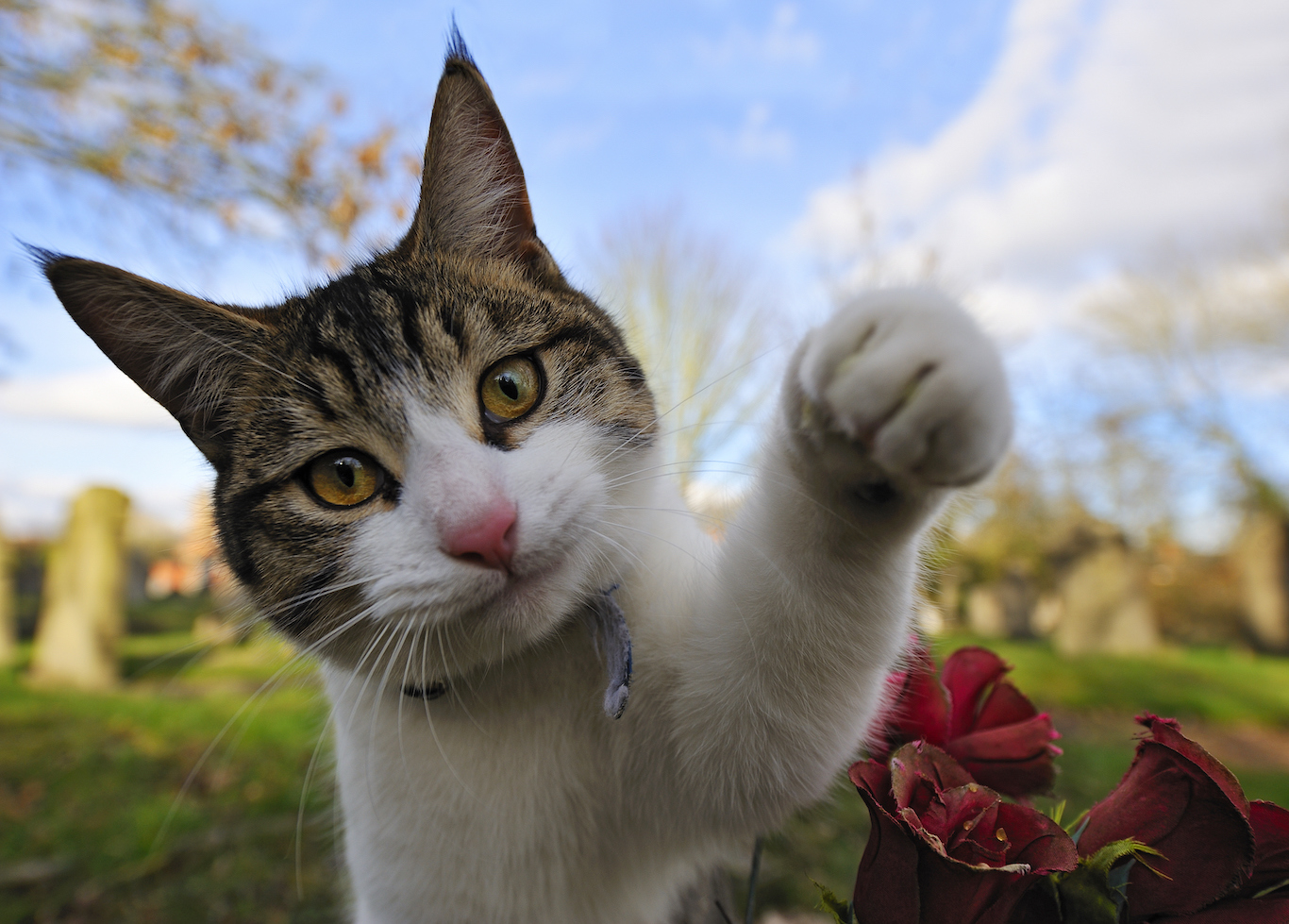
Cats do exhibit distinct paw preferences, though the phenomenon is more complex than human handedness. Research indicates that while humans are overwhelmingly right-handed (about 90%), cats are more evenly split, with roughly 75% to 80% of the population showing a clear preference for one side. Interestingly, this preference is strongly linked to biological sex: male cats are significantly more likely to be "left-pawed," while female cats typically favor their right paw.
The Science of Feline Laterality
In the world of animal behavior and neuroscience, "handedness" is referred to as lateralization. This term describes the tendency for some neural functions or cognitive processes to be specialized to one side of the brain or the other. Because the brain’s motor cortex operates contralaterally—meaning the right hemisphere controls the left side of the body and the left hemisphere controls the right side—a cat's paw preference provides a direct window into how its brain is organized.
For decades, scientists believed that lateralization was a uniquely human trait, likely tied to the development of language. However, as we move through 2026, a wealth of longitudinal data has confirmed that lateralization is common across the animal kingdom, from primates and whales to birds and household cats. In felines, this isn't just about which paw they use to bat at a toy; it reflects deep-seated neurological patterns that influence how a cat processes information, manages stress, and reacts to its environment.
The split in feline populations is far more balanced than in humans. While approximately 10% of humans are left-handed, studies from institutions like Queen’s University Belfast have shown that cats are nearly equally divided between left-pawed and right-pawed individuals, with a smaller percentage (roughly 20-25%) being ambilateral, or showing no significant preference. This suggests that the evolutionary pressures shaping feline brains followed a different path than those of humans, where right-handedness became a dominant social or biological norm.
Sex Differences: Why Males and Females Differ
One of the most striking findings in feline laterality research is the correlation between biological sex and paw preference. Multiple studies have consistently shown that male cats tend to favor their left paw (sinistral), while female cats lean toward the right paw (dextral). This sexual dimorphism in motor preference is one of the strongest seen in any non-human species.
Researchers believe this difference is primarily hormonal. The exposure to different levels of prenatal hormones—specifically testosterone—during brain development likely influences the lateralization of the motor cortex. In many mammals, higher levels of testosterone are linked to a more developed right hemisphere, which controls the left side of the body. This would explain why the male feline population skews toward the left paw.
It is important to note that these preferences are most visible during spontaneous movements or complex tasks, such as reaching for food in a narrow container. When performing simple, low-effort movements, a cat might use whichever paw is closest. However, when a task requires focus or physical dexterity, the underlying neurological bias takes over. This sex-based difference persists even in neutered and spayed cats, suggesting that the "hard-wiring" occurs very early in development, likely in utero, and is not solely dependent on adult hormone levels.
How to Determine Your Cat’s Paw Preference
If you want to know if your cat is left or right-handed, you cannot simply watch them walk. Paw preference is most evident during "forced-choice" tasks that require the cat to exert effort or solve a problem. To get an accurate result, you should conduct multiple trials over several days to ensure the behavior isn't just a coincidence.
The Food Retrieval Test
This is the most common method used by researchers. Place a small piece of high-value treat (like tuna or a commercial lickable treat) inside a narrow glass or a specialized feline puzzle toy that is too small for the cat’s head to enter. The cat must reach in with a paw to retrieve the treat. Record which paw they use first. To achieve statistical significance, you should repeat this at least 50 times over a week. If they use the left paw 70% of the time or more, they are considered left-pawed.
The Step-Over Test
Observe your cat as they descend stairs or step into a litter box. Which paw do they lead with? Scientific studies, including those published in Animal Behaviour, often look for the "leading limb" during initial movement. Consistency is key here; a cat that leads with the right paw 80% of the time across various obstacles is showing clear right-side dominance.
The Play/Target Test
Dangle a toy or a wand directly in front of your cat’s nose, ensuring it is centered so as not to bias them toward one side. Note which paw they use to swat at the toy. This test is often less "stable" than the food test because cats may use both paws in the excitement of play, but it provides additional data points for determining their overall lateralization.
The Connection Between Paw Preference and Personality
Feline paw preference is not just a biological quirk; it may offer insights into your cat’s emotional state and personality. In the field of animal psychology, researchers have long explored the "valence" of brain hemispheres. Generally, the left hemisphere (controlling the right paw) is associated with "approach" behaviors and processing positive emotions. The right hemisphere (controlling the left paw) is more closely linked to "withdrawal" behaviors, fear, and the processing of negative stimuli.
This has led to several interesting hypotheses regarding cat behavior:
- Left-Pawed Cats: Some research suggests that left-pawed cats (mostly males) may be more "reactive" to stress. They might show higher levels of fear or aggression when faced with new environments or loud noises. This is thought to be because their right-brain dominance makes them more attuned to potential threats.
- Right-Pawed Cats: Conversely, right-pawed cats (mostly females) are often found to be more confident, playful, and less reactive to stressful stimuli. Their left-brain dominance may help them process information more analytically and with less emotional volatility.
- Ambilateral (Ambidextrous) Cats: Cats with no clear paw preference are sometimes found to be the most "jittery" or easily startled. Scientists theorize that a lack of strong lateralization means the two hemispheres are constantly competing for control, which can lead to increased anxiety or a lack of cognitive efficiency in stressful situations.
| Feature | Human Handedness | Feline Paw Preference |
|---|---|---|
| Dominance Split | ~90% Right / ~10% Left | ~40-45% Right / ~40-45% Left |
| Ambidexterity | Very Rare (<1%) | Common (~15-20%) |
| Sex Correlation | Weak / None | Strong (Males: Left / Females: Right) |
| Neural Link | Language & Motor Control | Emotion & Sensory Processing |
| Test Reliability | High (Self-reported) | Moderate (Requires 50+ trials) |
Evolutionary Perspectives: Why Does It Matter?
From an evolutionary standpoint, having a preferred "hand" or "paw" is an advantage. If an animal can automate certain tasks using one side of the body, it frees up the other hemisphere of the brain to perform different functions simultaneously. For a predator like a cat, this might mean using one hemisphere to focus on the mechanics of catching prey while the other hemisphere remains vigilant for larger predators in the area.
This "parallel processing" capability is a hallmark of complex nervous systems. As we observe feline behavior in 2026, we see that lateralization likely helped the ancestors of modern cats survive in highly competitive environments. Even though our domestic cats no longer need to hunt for survival, these neurological pathways remain.
Furthermore, understanding lateralization helps in the development of better animal welfare standards. If a veterinary clinic or a shelter knows that a specific cat is "left-dominant," they might treat that cat as potentially more vulnerable to stress, adjusting their handling techniques accordingly to provide a more supportive environment.
Common Misconceptions About Cat Handedness
Despite the growing body of scientific evidence, several myths persist regarding cat paw preference.
Myth 1: You can tell a cat's handedness by how they sit. While some people believe the "tucked" paw indicates dominance, this is usually just a matter of comfort or temperature regulation. Handedness is defined by active, goal-oriented movement, not static posture.
Myth 2: Ambidextrous cats are smarter. There is no evidence that a lack of paw preference correlates with higher intelligence. In fact, some studies in other species suggest that strong lateralization (being either left or right-handed) is more efficient for the brain than being ambidextrous.
Myth 3: Left-handed cats are "unlucky" or aggressive. While left-pawed cats might process fear differently, this does not make them aggressive by nature. A cat's personality is a complex mix of genetics, early socialization, and their current environment. Paw preference is just one small piece of the puzzle.
Why Pet Owners Should Care
Understanding your cat’s paw preference is more than just a fun parlor trick. It allows for a deeper bond between the owner and the pet. By recognizing that a left-pawed cat might be more sensitive to changes in the household or more prone to anxiety during travel, an owner can take proactive steps to mitigate that stress.
For breeders and trainers, this information is invaluable. If a cat is being trained for agility or as a therapy animal, knowing their dominant side can help in positioning cues and rewards. It also provides a baseline for health monitoring; if a cat suddenly switches their paw preference, it could be a sign of neurological issues, injury, or cognitive decline that warrants a visit to the veterinarian.
Frequently Asked Questions
Does a cat's paw preference change as they get older?
Generally, no. Once a cat reaches adulthood, their paw preference remains stable throughout their life. It is rooted in the physical structure and hormonal development of the brain. However, injuries or arthritis in a dominant limb may force a cat to use their "non-dominant" paw, which can lead to a behavioral shift but does not change their underlying neurological bias.
Are big cats, like lions and tigers, also left or right-handed?
Yes, research into large felids has shown similar patterns of laterality. Much like domestic cats, lions and tigers show paw preferences when manipulating objects or initiating movement. The sex-based split is also observed in several wild feline species, suggesting this is an ancient trait within the Felidae family.
Can I train my cat to be right-pawed?
While you could theoretically reward a cat for using a specific paw, you cannot change their innate neurological preference. Attempting to "force" a cat to use their non-dominant paw for complex tasks could lead to increased frustration and stress. It is better to work with your cat’s natural inclinations rather than against them.
Is paw preference linked to certain cat breeds?
Current research has not found a definitive link between specific breeds (like Siamese or Maine Coons) and paw preference. The sex of the cat remains the strongest predictor of laterality across all breeds and mixed-breed populations.
Why is the human population so much more "right-handed" than cats?
The extreme right-handedness in humans is thought to be a side effect of the evolution of language, which is primarily housed in the left hemisphere of the brain. Since the left hemisphere also controls the right side of the body, the development of complex speech may have "pulled" the motor system along with it. Cats, lacking verbal language, have a more distributed and balanced brain organization.
Final Recommendation for Cat Owners
To truly understand your cat’s unique behavior, spend a week conducting the Food Retrieval Test. Record at least 50 attempts in a notebook to see if a clear pattern emerges. If you discover your cat is left-pawed, especially if they are male, pay extra attention to their stress triggers and provide them with plenty of "safe spaces" to retreat to. If your cat is right-pawed, you may find they are more adventurous and open to learning new tricks. Regardless of the result, recognizing these subtle biological traits will help you provide a more tailored and supportive environment for your feline companion.