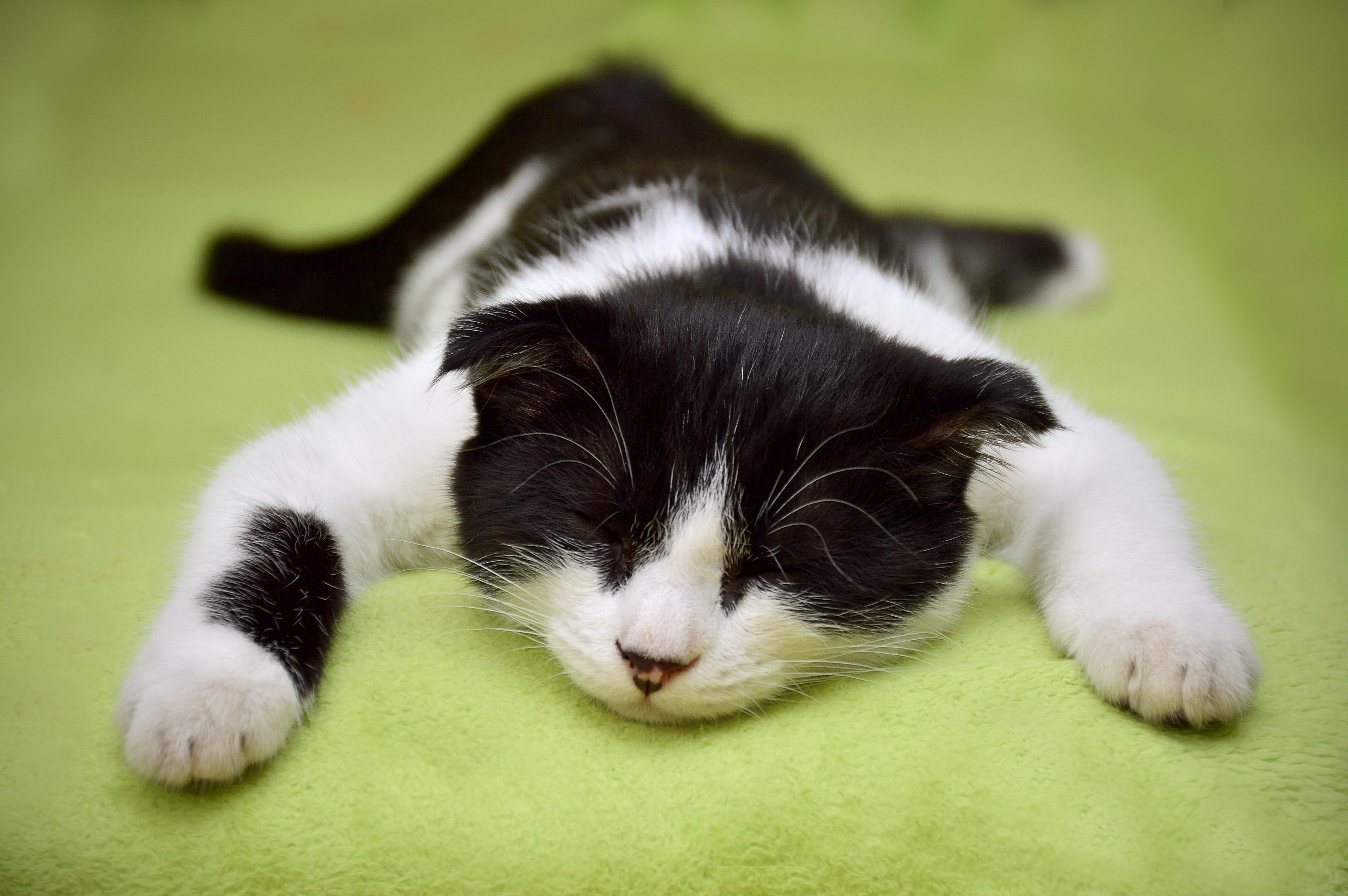
Most cats exhibit a distinct preference for using either their right or left paw when performing complex tasks. While approximately 90% of humans are right-handed, cats are more evenly split, with about 75% displaying a clear "pawedness." Interestingly, this preference is frequently tied to gender, with males often being left-pawed and females right-pawed.
The Science of Behavioral Lateralization in Cats
In the field of animal behavior, "handedness" is technically referred to as behavioral lateralization. This term describes the tendency for an organism to use one side of its body more frequently or more effectively than the other. Lateralization is not merely a physical habit; it is a direct reflection of how a cat's brain is organized.
When a cat consistently uses its left paw, the right hemisphere of its brain is taking the lead for that motor function. Conversely, a right-pawed cat is primarily utilizing its left brain hemisphere. For decades, scientists believed that lateralization was a uniquely human trait, tied to our complex language development. However, research conducted through 2026 confirms that lateralization is widespread across the animal kingdom, serving as an evolutionary tool to increase neural efficiency. By "specializing" certain tasks to one side of the brain, cats can process information faster and multitask more effectively, such as scanning for predators while simultaneously focused on catching prey.
The Role of Hemispheric Dominance
The brain is divided into two halves, each responsible for different types of processing. The left hemisphere is typically associated with routine behaviors, fine motor control, and "pro-social" or calm emotions. The right hemisphere is more involved in processing novel stimuli, emergency responses, and "flight or fight" emotions like fear and aggression.
In cats, the strength of this lateralization can vary. Some cats are strongly lateralized (using one paw almost exclusively), while others are ambilateral, meaning they use both paws with equal frequency. Studies have suggested that cats with strong paw preferences—regardless of whether they are right or left—often perform better on cognitive tasks than those who are ambilateral. This suggests that a specialized brain is, in many ways, a more efficient brain.
Gender Differences in Feline Paw Preference
One of the most striking findings in feline lateralization research is the correlation between biological sex and paw preference. Several major studies, including landmark research from Queen’s University Belfast, have consistently shown a gender split that does not exist in the same way in humans.
Why Males Favor the Left and Females Favor the Right
Research indicates that roughly 70-80% of female cats are right-pawed, while a similar percentage of male cats are left-pawed. Scientists believe this is likely due to the influence of prenatal hormones, specifically testosterone.
Hormonal exposure in the womb can influence the development of the brain's hemispheres. Higher levels of testosterone are often linked to a more dominant right hemisphere, which controls the left side of the body. This phenomenon is not exclusive to cats; similar patterns have been observed in other mammalian species, including dogs and horses. However, it is important to note that while the trend is statistically significant, it is not an absolute rule. You will still find many right-pawed male cats and left-pawed female cats, but they represent the minority within their gender groups.
The Link Between Pawedness and Personality
As we move through 2026, animal behaviorists are increasingly looking at how paw preference serves as a window into a cat’s emotional state and temperament. Because pawedness is tied to brain hemisphere dominance, it can provide clues about how an individual cat perceives the world.
Left-Pawed Cats and Stress Sensitivity
Since the right hemisphere of the brain processes negative emotions and fear, cats that are strongly left-pawed may be more prone to stress. Research published in journals like Animal Behaviour has found that left-lateralized animals often show higher levels of vigilance and take longer to recover from stressful events.
If your cat is left-pawed, they might be:
- More reactive to loud noises or sudden changes in the environment.
- More prone to "stranger danger" when new people enter the home.
- Slightly more aggressive or defensive when feeling cornered.
Right-Pawed Cats and Exploratory Behavior
Right-pawed cats, governed by the left hemisphere, are often associated with more "approach" behaviors. These cats tend to be more confident, playful, and adventurous. They may adapt more quickly to new surroundings, such as moving to a new house or the introduction of a new pet. Because the left hemisphere processes "pro-social" information, these cats are sometimes perceived as more affectionate or outgoing by their owners.
Ambilateral Cats (The "Both-Pawed" Felines)
Cats that do not show a clear preference (ambilateral) occupy a unique space. Some studies suggest that these cats may experience higher levels of anxiety because their brains aren't "specialized." Without a dominant hemisphere to take charge of emotional processing, they may struggle more with sensory overstimulation. However, this area of feline neurology is still being actively researched, and individual personality remains a significant factor regardless of lateralization.
How to Determine Your Cat's Paw Preference
Determining whether your cat is a "southpaw" or a "righty" requires more than just a single observation. To get an accurate result, you must observe "spontaneous" behavior over a long period. Scientists recommend at least 50 to 100 observations to achieve statistical significance.
1. The Food Reach Test (The Jar Test)
This is the most common method used in scientific studies. Place a small piece of high-value treat (like tuna or a piece of chicken) inside a narrow glass jar or a puzzle feeder that is too small for the cat’s head but large enough for a paw.
- Method: Place the jar directly in front of the cat.
- Observation: Record which paw the cat uses to hook the food out.
- Repetition: Perform this test 10 times a day for a week.
2. The Step Test
Observe which paw your cat leads with when navigating obstacles. This is best done when the cat is moving at a natural, unhurried pace.
- Method: Watch your cat descend a flight of stairs or step over the threshold of a doorway or litter box.
- Observation: Note which paw touches the lower step or the floor first.
- Consistency: Because this is a low-effort task, the preference might be less obvious than in the food test, so more observations are needed.
3. The Play Test
Interactive play is a great way to see motor preference in action.
- Method: Dangle a feather wand or string toy directly above the cat’s head, equidistant from both paws.
- Observation: Note which paw the cat uses to swat or "bat" at the toy.
- Caution: If you hold the toy slightly to one side, you will bias the result. Precision in placement is key.
4. The Grooming/Resting Test
While less definitive than motor tasks, resting posture can sometimes reflect lateralization.
- Method: Observe which side your cat prefers to lie on when sleeping.
- Observation: Many cats have a "favorite side," though this can be influenced by the location of heat sources or the layout of the room.
Comparison of Feline Paw Preferences
The following table summarizes the general trends observed in feline lateralization research as of 2026.
| Characteristic | Right-Pawed Cats | Left-Pawed Cats | Ambilateral (No Preference) |
|---|---|---|---|
| Prevalence | ~35-40% of population | ~35-40% of population | ~20-25% of population |
| Gender Trend | Predominantly Female | Predominantly Male | No specific gender bias |
| Brain Dominance | Left Hemisphere | Right Hemisphere | Balanced/Mixed |
| Typical Temperament | Confident, outgoing, calm | Vigilant, reactive, cautious | Variable, potentially higher stress |
| Task Efficiency | High | High | Moderate to Low |
| Stress Recovery | Faster recovery | Slower recovery | Slower recovery |
Evolutionary Advantages of Handedness in Cats
You might wonder why it matters if a cat uses one paw over the other. From an evolutionary perspective, lateralization is an "energy-saving" mechanism for the brain.
Cats are both apex predators and potential prey for larger animals. Their survival depends on split-second decision-making. If a cat’s brain is lateralized, it can perform a routine task (like stalking a mouse) using the left hemisphere while keeping the right hemisphere "on guard" for the sound of an approaching coyote. This neural division of labor prevents the brain from becoming "bottlenecked" by processing too much information in the same space at the same time.
Furthermore, lateralization helps with spatial coordination. A cat that has a strong motor preference is often more precise in its movements—whether that’s landing a jump from a high shelf or pinning down a fast-moving insect.
Practical Implications for Cat Owners
Understanding your cat's paw preference isn't just a fun trivia fact; it can help you become a better caregiver. By recognizing the neurological underpinnings of your cat's behavior, you can tailor their environment to their needs.
Enrichment for Left-Pawed Cats
If you discover your male cat is strongly left-pawed, recognize that he may be more sensitive to environmental stressors. Ensure he has plenty of "safe spaces" or high perches where he can observe the room without feeling threatened. When introducing new toys or changes to the home, do so gradually.
Training and Interaction
When teaching your cat tricks (like "high-five" or "shake"), identifying their dominant paw will make the process much faster. Trying to teach a left-pawed cat to "shake" with their right paw is essentially like asking a right-handed human to write a novel with their left hand—it’s possible, but it’s unnecessarily difficult and frustrating for the cat.
Health Monitoring
Sudden changes in paw preference can be a clinical sign of health issues. If a lifelong right-pawed cat suddenly begins using their left paw exclusively, or starts limping, it may indicate arthritis, a neurological issue, or an injury. Being aware of their "normal" preference allows you to spot these changes early.
Frequently Asked Questions
Can a cat be ambidextrous?
Yes, approximately 20% to 25% of cats are considered "ambilateral," meaning they show no significant preference for one paw over the other. These cats use both paws interchangeably for tasks like reaching for food or playing. Interestingly, some research suggests these cats may be slightly more prone to noise phobias or separation anxiety compared to cats with a strong side preference.
Does paw preference change as a cat gets older?
Generally, paw preference is established in early adulthood and remains stable throughout the cat's life. However, physical conditions like feline osteoarthritis or injuries can force a cat to switch paws. If you notice a shift in your senior cat's paw usage, it is often a sign of physical discomfort rather than a change in brain lateralization.
Is there a link between pawedness and coat color?
While there have been anecdotal theories suggesting that "tortitude" (the feisty personality of tortoiseshell cats) or the calm nature of "ginger" cats might be linked to pawedness, scientific evidence has not yet found a direct correlation between coat color genetics and behavioral lateralization. Pawedness is primarily influenced by gender and prenatal hormone exposure.
Does "pawedness" affect how cats hunt?
Yes, a cat's dominant paw is usually the one they use for the initial "strike" or to hook prey out of tight spaces. A right-pawed cat will typically lead with the right when trying to snag a bird or a toy. This consistency allows the cat to build muscle memory and improve their success rate over time.
Are big cats, like lions and tigers, also right or left-handed?
Research into wild felids is more limited than domestic cats, but studies on captive lions and tigers have shown evidence of lateralization. Much like domestic cats, many of these large predators show a preference when performing complex tasks, such as manipulating a carcass or an enrichment object, suggesting that lateralization is a fundamental trait of the feline family.
Final Recommendation: Observe and Respect Your Cat's Nature
Knowing whether your cat is right or left-handed offers a fascinating glimpse into their neurological makeup and emotional world. To get the most accurate result, start a "Paw Log" and record their behavior during mealtime and play over the next month. If you find your cat is a "southpaw," be mindful that they may require a bit more patience and a calmer environment to thrive. Regardless of which paw they lead with, recognizing these individual traits strengthens the bond between you and your feline companion by allowing you to view their unique personality through the lens of science.