The most precise synonyms for constant change or flux include mutability, volatility, fluidity, and vicissitude. While "flux" describes a state of continuous transition or movement, "mutability" emphasizes the capacity for change, "volatility" suggests rapid or unpredictable shifts, and "vicissitude" often refers to the natural alternating cycles of fortune or circumstances.
The term "flux" originates from the Latin fluxus, meaning "to flow." In contemporary 2026 English, it remains a cornerstone word for describing systems, environments, or emotional states that refuse to remain static. However, relying solely on one word can lead to repetitive prose and a failure to capture the specific "flavor" of the change occurring. Whether you are navigating the high-stakes environment of global finance, describing the shifting tides of a political landscape, or detailing the evolution of biological organisms, selecting the correct synonym is essential for clarity and impact.
The Philosophical Roots of Constant Change
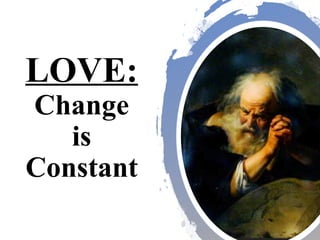
To understand the linguistic alternatives for flux, one must first appreciate the philosophical foundation of the concept. The ancient Greek philosopher Heraclitus is most famously associated with the doctrine of "Panta Rhei," or "everything flows." He famously remarked that a person cannot step into the same river twice, for it is not the same river, and they are not the same person.
In this context, synonyms like impermanence and evanescence come to the forefront. These words do not just mean "change"; they imply a fundamental law of the universe where nothing is permanent. When a writer chooses "impermanence" over "flux," they are signaling a contemplative or philosophical depth, often associated with Buddhist thought or existential reflection.
By 2026, our understanding of systemic change has evolved to include concepts like dynamic equilibrium. This term, borrowed from physics and biology, describes a state where constant changes are occurring, yet the overall system remains stable. It is a more technical, precise way to describe "flux" in a controlled environment, such as a steady-state economy or a biological ecosystem.
Formal and Literary Synonyms for Flux
When writing for an academic or literary audience, the word "flux" might feel too common or physically rooted. In these instances, more sophisticated vocabulary can provide the necessary nuance.
Mutability and Transience
Mutability refers to the inherent tendency of something to change. It is often used in discussions of human nature or the physical world. For example, the "mutability of the soul" suggests an internal capacity for growth or degradation. Transience, on the other hand, focuses on the brevity of a state. If flux is the movement, transience is the realization that the movement will soon end or pass.
Vicissitudes
The word vicissitudes (usually plural) is perhaps the most elegant way to describe the "ups and downs" of life. It implies a sequence of changes, often including both favorable and unfavorable events. Unlike "flux," which can be a neutral flow, "vicissitudes" carries the weight of lived experience and the inevitability of hardship followed by recovery.
Protean Nature
Derived from the Greek sea-god Proteus, who could change his shape at will, the adjective protean describes something that is constantly changing shape or character. This is an excellent alternative when describing a person's talents, a versatile technology, or a political situation that refuses to be pinned down to a single definition.
Technical and Professional Contexts for Change
In professional settings, the word "flux" may be replaced by terms that imply specific causes or consequences. As of 2026, these terms are standard in corporate reporting and technical documentation.
Volatility and Instability
In finance and chemistry, volatility is the preferred term. It describes a state of flux that is specifically rapid and often dangerous or unpredictable. A "volatile market" is in a state of flux, but the word "volatile" warns the reader of the potential for loss. Instability is similar but suggests a lack of structural integrity. While "flux" can be a natural and healthy flow, "instability" suggests that the change might lead to a collapse.
Churn and Attrition
In business, specifically regarding customer bases or employees, the word churn describes constant change. If a company is in a "state of flux" regarding its staff, a business analyst would say the company has high "labor churn." This identifies the specific movement—people leaving and being replaced—rather than just a general sense of movement.
Transition and Transformation
Transition is a purposeful, goal-oriented form of flux. It suggests a movement from State A to State B. Transformation, meanwhile, suggests a change in the very nature or structure of the entity. In 2026, "digital transformation" is no longer a buzzword but a historical era, representing a permanent shift in how data and humans interact.
Comparison of Synonyms for Constant Change
Choosing the right word requires comparing the connotation (emotional weight) and the typical field of use. The following table provides a quick reference for selecting the most appropriate term.
| Word | Context | Connotation | Nuance |
|---|---|---|---|
| Mutability | Philosophy / Science | Neutral | The inherent ability to be altered. |
| Volatility | Finance / Chemistry | Negative/Cautiounary | Rapid, unpredictable, and potentially violent change. |
| Fluidity | Art / Sociology | Positive/Neutral | Smooth, graceful, or effortless transition. |
| Vicissitudes | Literature / History | Serious/Reflective | The alternating turns of fortune or luck. |
| Oscillation | Physics / Engineering | Technical | Change that moves back and forth between two points. |
| Metamorphosis | Biology / Mythology | Transformative | A complete change in form or structure. |
| Turbulence | Aviation / Politics | Negative/Chaotic | Irregular, violent movement or agitation. |
| Innovation | Business / Tech | Positive | Change driven by new ideas and improvements. |
The Role of Entropy in Describing Flux
In a more scientific or pessimistic context, entropy is a powerful synonym for a specific kind of change. In thermodynamics, entropy is the measure of a system's thermal energy per unit temperature that is unavailable for doing useful work. In a general sense, it represents the inevitable decline into disorder.
If you describe a social system as being in a state of "entropy" rather than "flux," you are suggesting that the constant change is leading toward chaos or a loss of energy rather than a new form of order. This distinction is vital for writers in the fields of sociology, environmental science, and systems theory. By 2026, "social entropy" has become a common term to describe the fragmentation of digital communities where the speed of change outpaces the ability to form coherent structures.
Using "Flux" as a Verb vs. a Noun
The word "flux" itself is versatile because it can function as both a noun and a verb. As a noun, it describes the state: "The industry is in flux." As a verb, it describes the action of flowing or melting: "The materials fluxed together under high heat."
When seeking synonyms for the action (the verb), consider:
- Fluctuating: Rising and falling irregularly in number or amount.
- Morphing: Changing smoothly from one image or state to another.
- Evolving: Developing gradually, especially from a simple to a more complex form.
- Gyring: Moving in a circle or spiral (often used in poetic or meteorological contexts).
Practical Examples in Professional Writing
To demonstrate how these synonyms function in practice, consider the following sentences and how the meaning shifts with each word choice:
- Original: "The CEO's strategy is in a state of flux." (Neutral, suggests things are still being decided.)
- Revision A: "The CEO's strategy is characterized by volatility." (Suggests the strategy changes too fast and is perhaps unreliable.)
- Revision B: "The CEO's strategy is undergoing a metamorphosis." (Suggests a profound, positive evolution is taking place.)
- Revision C: "The CEO's strategy is marked by fluidity." (Suggests the strategy is adaptable and responsive to new information.)
In each case, the core concept remains "constant change," but the "why" and "how" are vastly different.
Frequently Asked Questions
Is "flux" a negative word?
No, "flux" is generally considered a neutral term. It simply denotes change and movement. However, because human beings often crave stability, being "in a state of flux" can imply a lack of certainty, which some people perceive as stressful or negative. In scientific and artistic contexts, flux is often seen as a necessary and productive state.
What is the difference between "flux" and "transition"?
"Flux" usually describes a continuous, ongoing state of change without a definitive end point. "Transition" implies a specific period of change between two stable states. For example, a caterpillar in a cocoon is in transition toward becoming a butterfly. A river, however, is in a state of flux because it never reaches a "final" static state.
What word should I use for change in a business resume?
On a resume, you should avoid "flux" or "instability." Instead, use words that imply progress and control, such as evolution, transformation, optimization, or pivoting. For example: "I led the team through a strategic pivot that increased efficiency by 20%."
What is the most formal word for constant change?
Mutability or vicissitudes are typically the most formal options. Mutability is best for scientific or philosophical discussions, while vicissitudes is best for describing life experiences, history, or literature.
Can "churn" be used outside of business?
While "churn" is most common in business (customer churn), it is also used in physical sciences to describe the agitation of a liquid. In a social sense, it can describe a community where people are constantly moving in and out, preventing the formation of deep roots.
Recommendation for Effective Communication
When you find yourself reaching for the word "flux," take a moment to analyze the nature of the change you are describing. If the change is graceful and adaptive, use fluidity. If it is a natural part of life's cycles, use vicissitudes. If it is a scientific or inherent quality of a substance, use mutability. By matching the synonym to the specific context, you provide your readers with a clearer, more evocative picture of the situation. In 2026, precision in language is more valuable than ever as we navigate an increasingly complex and rapidly shifting global information landscape.