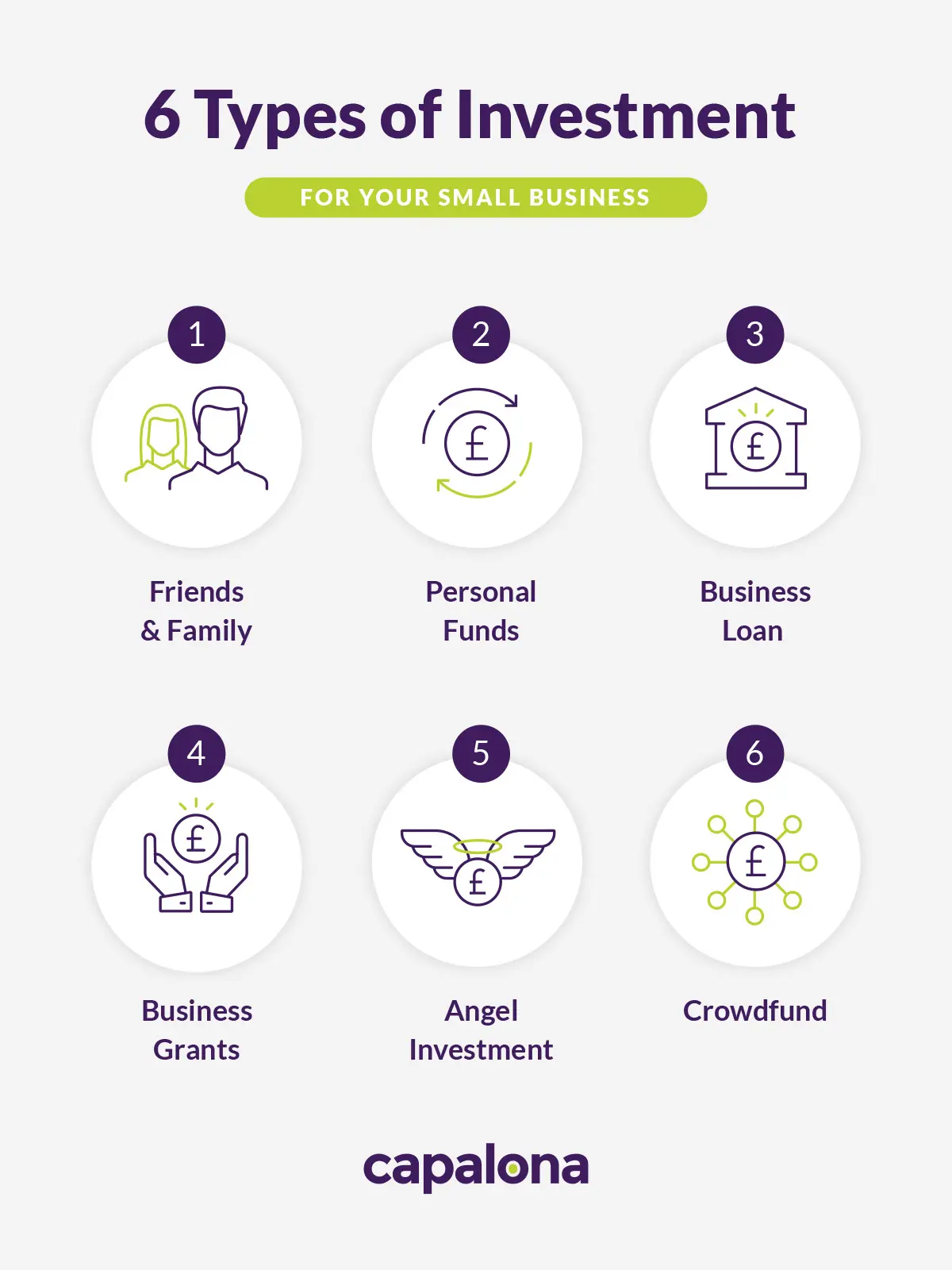
Personal investors, often referred to as angel investors or private equity individuals, can provide transformative capital and mentorship for small businesses, but they are not universally the "best" option. While they offer faster decision-making and flexible terms compared to traditional banking, they also require giving up equity, sharing control, and aligning with specific personal expectations that may differ from long-term corporate goals.
The Dynamics of Personal Investment in Small Business
When entrepreneurs consider funding, they often face a spectrum of choices ranging from self-funding (bootstrapping) to institutional venture capital and government-backed loans. Personal investors occupy a unique space in this landscape. These individuals are typically high-net-worth professionals or successful entrepreneurs who invest their own liquid capital into private companies.
Unlike institutional lenders, such as commercial banks or credit unions, personal investors are not bound by the rigid risk-assessment algorithms that govern traditional lending. This flexibility is often the primary selling point for small business owners who may lack the collateral or historical financial performance required for a business loan. However, this flexibility comes with a higher cost of capital—specifically, the dilution of ownership.
Understanding the Trade-offs of Private Equity
The decision to bring on a personal investor is rarely just about the cash infusion. It is an operational and legal partnership. To determine if this path is right for your business, you must weigh the benefits against the potential long-term liabilities.
1. Equity and Control
The most significant difference between a bank loan and a personal investor is the mechanism of repayment. A bank expects interest and principal, but the business owner retains full ownership of the entity. A personal investor, conversely, usually buys a percentage of the company. If the business succeeds, the investor gains a return on that equity; if the business struggles, the investor’s influence over management decisions can become a friction point.
2. Strategic Mentorship
Unlike a loan officer who is indifferent to the outcome of your business as long as payments are made, a personal investor is often incentivized to see your business thrive. Many angel investors provide "smart money," which includes industry contacts, technical expertise, and operational guidance. For a startup or a business in a growth phase, this human capital can be more valuable than the financial capital itself.
3. Operational Velocity
Institutional funding often involves complex application processes, site visits, and exhaustive documentation that can span months. Personal investors can perform due diligence and reach a decision in weeks. For a business that needs to bridge a sudden liquidity gap or capitalize on a rapidly shifting market opportunity, this speed can be the difference between survival and failure.
Comparing Funding Avenues for Small Business
The suitability of a funding source depends on your current business stage, the required amount of capital, and your tolerance for external influence.
| Funding Source | Repayment Structure | Control Retained | Speed of Access | Primary Risk |
|---|---|---|---|---|
| Personal Investor | Equity Sharing | Partial / Shared | High | Loss of autonomy |
| Commercial Bank | Fixed Interest | Total | Low | Collateral foreclosure |
| Government Grants | None (Non-dilutive) | Total | Very Low | Administrative burden |
| Micro-loans | Fixed Interest | Total | Medium | Higher interest rates |
| Bootstrapping | N/A | Total | Immediate | Personal financial risk |
When Personal Investors Are Not the Best Choice
While the narrative surrounding angel investment is often positive, there are scenarios where personal investors are demonstrably the wrong fit.
First, if your business model is focused on slow, steady growth rather than rapid scaling, an equity-based investor may find your returns insufficient. These investors are generally looking for a "liquidity event"—an acquisition or an initial public offering (IPO)—that turns their initial contribution into a multiple of the original investment. If your goals do not align with this exit-oriented philosophy, you may find yourself under constant pressure to make decisions that prioritize short-term valuation over long-term stability.
Second, the cost of capital can be deceptively high. While you do not make monthly payments, you are effectively paying the investor for the lifetime of your business. If your company becomes highly profitable, the dividends or equity value you forfeit to that investor will far exceed the interest payments you would have paid on a traditional bank loan.
Due Diligence: Evaluating Potential Investors
If you decide that personal investment is the correct route, the selection process is critical. The relationship between a founder and an investor is often compared to a marriage; it is difficult to exit if the partnership turns sour.
- Track Record: Look for investors who have worked in your industry. An investor who understands the nuances of your supply chain or regulatory environment is exponentially more useful than one who simply provides a check.
- Alignment of Values: Discuss your long-term vision. Does the investor want to exit in five years? Do they want to influence daily operations? Ensure your goals are documented in the legal agreements.
- Legal Protections: Always involve legal counsel when drafting shareholder agreements. You need to define "drag-along" rights, voting rights, and the specific circumstances under which an investor can demand a change in leadership.
Practical Steps for Seeking Funding
Before reaching out to personal investors, ensure your business is prepared for the level of scrutiny they will apply.
- Refine Your Financials: Have at least 24 months of historical financial data if available, or a highly detailed three-year projection.
- Define Your Exit Strategy: Even if you aren't planning to sell yet, investors need to know how they will eventually recoup their money.
- Prepare a Pitch Deck: Focus on the problem you are solving, the market size, your unique value proposition, and how the investment capital will be deployed to accelerate growth.
- Network Through Intermediaries: Personal investors rarely accept "cold" applications. Reach out through industry associations, legal advisors, or local business incubators to get a warm introduction.
Frequently Asked Questions
Are personal investors the same as venture capitalists? No. Venture capitalists (VCs) manage funds pooled from institutional investors (like pension funds or insurance companies). Personal investors (angels) invest their own money. Generally, VCs invest larger sums and have more formal, rigorous reporting requirements than individual angel investors.
Can a personal investor force me to sell my business? Yes, depending on the terms of your shareholder agreement. If they hold a significant portion of equity or have specific contractual rights, they can vote to force a sale or replace the board of directors. It is essential to protect your position in the company's bylaws.
What happens if the business fails? Usually, if a business fails, the investor loses their capital. Unlike a bank loan, there is typically no personal guarantee required for equity-based investment. This makes personal investment a "safer" route for your personal assets, provided the legal structure of your company protects you from limited liability.
How do I find reputable personal investors? The most reliable way is through local startup ecosystems, angel investor groups, and chambers of commerce. Avoid online platforms that require large upfront fees to "match" you with investors, as these are often predatory.
Do I need a lawyer for a private investment deal? Absolutely. Never sign an investment agreement without an attorney reviewing the terms of equity, voting rights, and anti-dilution clauses. The cost of legal counsel is an essential investment in protecting your long-term stake in the company.
Recommendation
If you are prioritizing total control and do not require massive immediate capital, explore low-interest small business loans or government-backed lending programs first. If, however, you have a high-growth model that requires expertise and capital to capture market share quickly, a personal investor can be an incredible asset—provided you perform thorough due diligence on who you are bringing into your business. Start by consulting with a financial advisor to audit your business’s current valuation and determine whether giving up equity is mathematically justifiable given your projected growth trajectory.