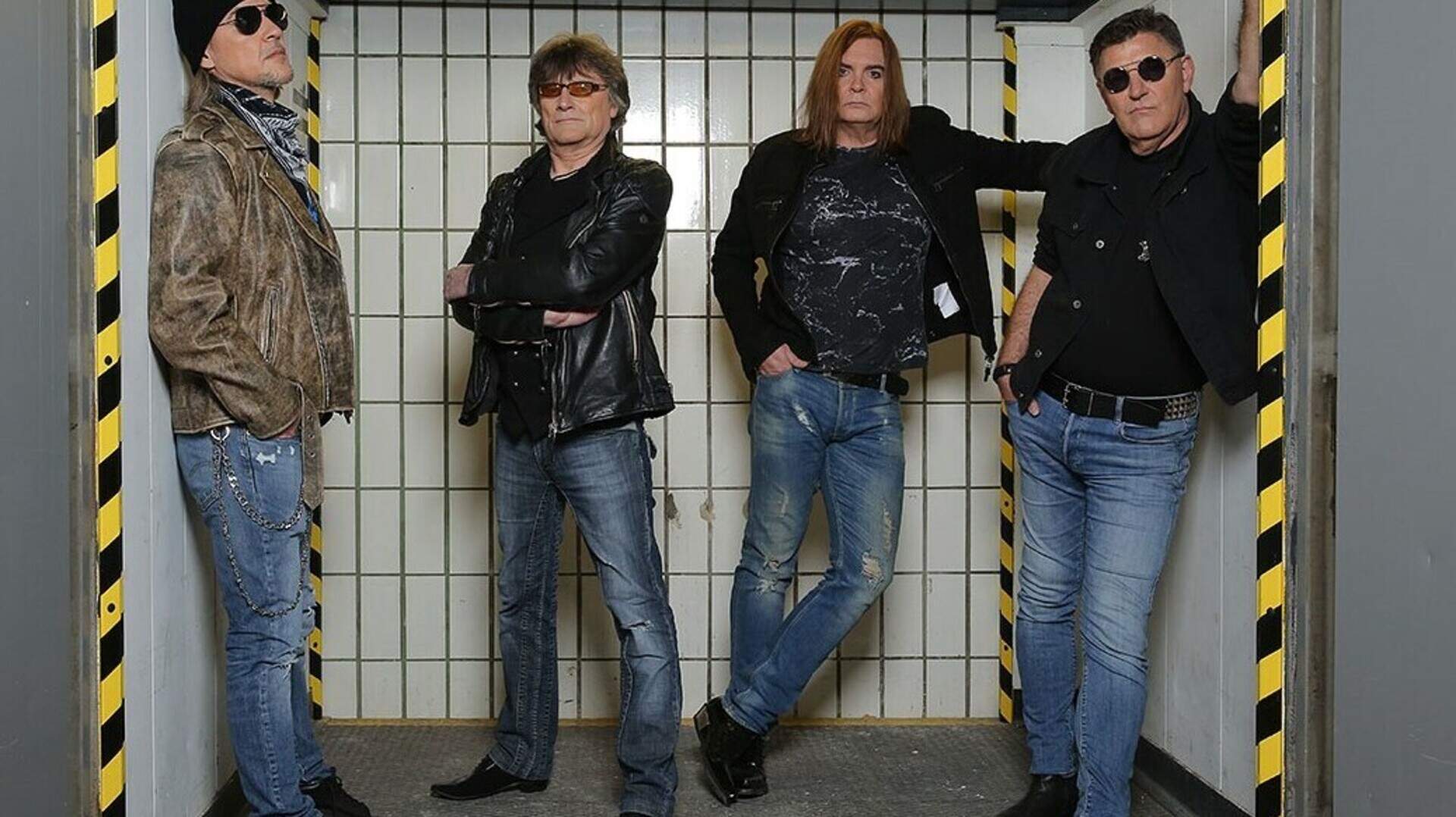
Attack Attack! is not a Christian band. Although the Ohio-based electronicore group emerged during the late-2000s metalcore boom alongside several faith-based acts and featured individual members with personal Christian beliefs, the band never identified as a Christian group, nor did they write explicitly Christian music or sign with a Christian record label.
Defining the Identity of Attack Attack!
Formed in Westerville, Ohio, in 2007, Attack Attack! became one of the most commercially prominent and polarizing bands in the heavy music scene of the late 2000s and early 2010s. Pioneering a fusion of post-hardcore, heavy metalcore breakdowns, auto-tuned clean vocals, and synth-driven electronic dance music—a subgenre commonly referred to as electronicore or colloquially as "crabcore"—the band rapidly gained worldwide attention.
Despite their rapid rise to fame on platforms like Myspace and YouTube with their 2008 debut full-length album, Someday Came Suddenly, confusion regarding the band's spiritual orientation has persisted among casual listeners for nearly two decades. This ongoing confusion primarily stems from the cultural climate of the heavy music scene at the time of their emergence. During the late 2000s, a significant portion of mainstream metalcore and post-hardcore bands held explicit Christian affiliations.
However, Attack Attack! maintained a strictly secular operational status. The band members never characterized their project as a Christian ministry, did not write worship music, and did not market themselves through faith-based music networks. While individual members over the years have held varying personal beliefs, the collective output and official identity of Attack Attack! remain secular.
Why Fans Mistook Attack Attack! for a Christian Band
The common misconception that Attack Attack! was a faith-based band did not arise in a vacuum. It was driven by several overlapping factors within the heavy music industry between 2007 and 2012.
1. The Late-2000s Midwestern Metalcore Boom
During the peak of the post-hardcore and metalcore era, the American Midwest—and Ohio in particular—served as an epicenter for heavy music. Bands like The Devil Wears Prada (from Dayton, Ohio) were openly Christian and achieved massive commercial success. Attack Attack! emerged from the exact same regional scene, shared regional venues, and frequently shared stages with prominent Christian acts. For listeners discovering bands through compilation CDs, festival lineups, or broad subgenre playlists, distinguishing between faith-based and secular bands from the same geographic region was often difficult.
2. Touring Lineups and Scene Crossovers
Attack Attack! toured extensively alongside heavy bands that were either explicitly Christian or contained strongly Christian themes, such as Underoath, August Burns Red, Haste the Day, The Devil Wears Prada, Blessthefall, and Memphis May Fire. Mainstay festivals like the Vans Warped Tour and multi-band packages like the "Scream It Like You Mean It" tour grouped these acts together continuously. Because heavy music fans frequently saw Attack Attack! performing on the same bills as Christian metalcore leaders, many assumed the band shared the same ideological backing.
3. Individual Members' Personal Faith
Several key members who passed through the Attack Attack! roster held personal Christian beliefs or later spoke openly about their faith:
- Johnny Franck: The original clean vocalist and rhythm guitarist was open about his personal Christian faith. Because clean vocalists in post-hardcore often write melodic hooks and emotional lyrics, Franck’s personal perspective occasionally influenced the tone of early tracks.
- Austin Carlile: The original harsh vocalist (screamer) on Someday Came Suddenly spoke in detail during his later life about his Christian faith and personal spiritual journey, particularly after his departure from Of Mice & Men.
- Caleb Shomo: The band's keyboardist who later stepped up as lead vocalist—and subsequently founded Beartooth—has discussed his complex upbringing, mental health challenges, and personal reflections on religion across multiple interviews.
While these individual backgrounds existed, the band consistently maintained that personal faith among certain members did not make Attack Attack! a Christian band.
- Misconception: "Attack Attack! is a Christian Band"
- Regional Origin: Ohio (Shared local scene with Christian metalcore acts)
- Heavy Touring Lineups (Toured with Underoath, August Burns Red, Devil Wears Prada)
- Individual Member Faith (Johnny Franck, Austin Carlile had personal faith backgrounds)
- Ambiguous Emotional Lyrics (Clean vocals touched on personal morality and internal struggles)
Lyrical Analysis: Spiritual Themes vs. Secular Metalcore
Evaluating a band's lyrics provides the clearest evidence of their primary intent and messaging. Analyzing the discography of Attack Attack! demonstrates a clear distinction between moral or personal introspection and dedicated Christian songwriting.
Someday Came Suddenly (2008)
The band's debut album features lyrics split between harsh vocalist Austin Carlile and clean vocalist Johnny Franck, with songwriting contributions from keyboardist Caleb Shomo. Tracks such as "Stick Stickly," "Dr. Shavargo Pt. 3," and "Catfish Soup" center predominantly on relational breakdown, emotional distress, youth culture, and personal frustration.
Lines written by Johnny Franck occasionally referenced broad moral themes, hope, or self-examination, which listeners accustomed to Christian metalcore interpreted as spiritual metaphors. However, unlike contemporary Christian acts like August Burns Red or For Today, Someday Came Suddenly contains no explicit invocations of Jesus Christ, Biblical scripture, or Christian evangelical messaging.
Attack Attack! (2010)
Following the departure of Austin Carlile, Caleb Shomo assumed harsh vocal duties while Johnny Franck remained on clean vocals. The self-titled sophomore album showcased a heavier, more aggressive musical direction. Lyrics on tracks like "Smokahontas" and "Renegade" shifted toward themes of personal betrayal, overcoming adversity, and self-reliance. While themes of redemption and personal growth appear, they are framed strictly through personal human experience rather than theological doctrine.
This Means War (2012)
By the release of This Means War, Johnny Franck had departed the band, leaving Caleb Shomo as the sole lead vocalist and primary songwriter. The album's tone turned significantly darker, focusing on battle metaphors, internal psychological struggles, anger, and disillusionment. Songs like "The Motivation" and "The Pitchfork" explore mental health struggles and cynicism, entirely devoid of religious commentary or Christian themes.
Key Members and Their Post-Attack Attack! Trajectories
The evolution of the band’s members after their time in Attack Attack! provides further clarity on how personal views shaped their respective musical careers.
- Attack Attack! Core Alumni
- Johnny Franck (Clean Vocals / Guitar)
- Post-Band: Bilmuri, The March Ahead (Explores genre-bending music, personal themes)
- Austin Carlile (Unclean Vocals)
- Post-Band: Of Mice & Men (Later publicly embraced Christian faith and baptism)
- Caleb Shomo (Keyboards / Vocals)
- Post-Band: Beartooth (Focuses heavily on mental health, self-expression, secular rock)
- Andrew Wetzel & Andrew Whiting (Drums / Guitar)
- Post-Band: Continued Attack Attack! revival (Focus on heavy electronicore sound)
- Johnny Franck (Clean Vocals / Guitar)
Johnny Franck
After departing Attack Attack! in late 2010, Johnny Franck formed The March Ahead and later created his highly successful solo project, Bilmuri. Franck has spoken openly in podcasts and interviews about his Christian upbringing and personal faith, while also emphasizing that his creative projects are meant to be inclusive, humor-infused, and emotionally genuine rather than preachy or dogmatically restricted.
Austin Carlile
Austin Carlile co-founded Of Mice & Men in 2009 after leaving Attack Attack!. In 2016, Carlile stepped away from Of Mice & Men due to severe health complications from Marfan syndrome. Following his departure, Carlile publicly shared his adult baptism and re-dedication to his Christian faith, often sharing spiritual reflections with his followers on social media. His faith journey, however, developed publicly long after his tenure with Attack Attack! had concluded.
Caleb Shomo
Caleb Shomo left Attack Attack! in 2012 and subsequently founded Beartooth, which became one of the most successful modern rock and hardcore bands of the 2010s and 2020s. Shomo’s songwriting in Beartooth focuses candidly on clinical depression, anxiety, substance abuse recovery, and emotional resilience. Shomo has frequently discussed how creating music serves as an outlet for processing complex emotional realities, operating entirely outside the boundaries of religious music.
Comparing Attack Attack! to Actual Christian Metalcore Bands
To understand why Attack Attack! is classified as a secular band, it is helpful to contrast their record labels, stated mission, and lyrical content with contemporary Christian metalcore and post-hardcore bands of the same era.
| Band Name | Active Era / Peak | Record Label Alignment | Official Christian Identity? | Primary Lyrical Themes |
|---|---|---|---|---|
| Attack Attack! | 2007–2013; 2020–Present | Rise Records (Secular) | No (Secular band with individual religious members) | Relationships, betrayal, mental health, party culture, electronicore aesthetics |
| The Devil Wears Prada | 2005–Present | Rise, Ferret, Solid State | Yes (Historically explicit Christian band) | Faith, salvation, spiritual warfare, morality, literary themes |
| August Burns Red | 2003–Present | Solid State, Fearless | Yes (Explicit Christian metalcore band) | Faith, perseverance, hope, spiritual redemption, grief |
| Underoath | 1997–Present | Tooth & Nail, Solid State, Fearless | Historically Yes (Evolved to open/secular in later years) | Faith struggles, inner turmoil, grace, existential doubt, relationships |
| Memphis May Fire | 2006–Present | Trustkill, Rise Records | Partially/Implicitly (Lead singer Matty Mullins is openly Christian) | Faith, overcome addiction, self-worth, Christian worldview |
| For Today | 2005–2016 | Facedown, Razor & Tie | Yes (Explicitly evangelical band) | Scriptural devotion, evangelism, gospel messages, spiritual warfare |
Industry Perspective: Rise Records vs. Faith-Based Labels
In the mid-2000s and early 2010s, record labels played a major role in defining whether a heavy band was part of the Christian music industry.
Faith-Based Labels
Labels such as Solid State Records, Tooth & Nail Records, and Facedown Records catered directly to the Christian retail market. Bands signed to these labels had distribution in Christian bookstores (such as Family Christian Stores and LifeWay), were eligible for Gospel Music Association (GMA) Dove Awards, and explicitly marketed their albums to church youth groups and Christian music festivals (e.g., Cornerstone Festival, Ichthus Festival).
Rise Records and Secular Distribution
Attack Attack! signed with Rise Records, an independent record label based in Oregon that focused on post-hardcore, electronicore, and pop-punk bands. Rise Records operated purely within the secular music distribution pipeline, distributing through major alternative music retailers, Hot Topic stores, and standard digital outlets.
Rise Records was instrumental in building the late-2000s "scene" sound, housing acts like Sleeping With Sirens, Pierce the Veil, and Memphis May Fire. While Rise Records signed bands regardless of the members' personal religious backgrounds, the label itself did not operate as a faith-based publisher or market its roster as Christian ministry.
Misconceptions in Scene Journalism and Myspace Culture
During the peak Myspace music era (2006–2010), online music journalism, fan forums, and peer-to-peer tagging systems heavily shaped band classifications. Music blogs often applied broad tags like Christian Metalcore or Spirit-Filled Hardcore to entire subgenres.
Because electronicore shared musical characteristics with faith-based bands—such as high-pitched clean choruses juxtaposed against heavy breakdowns—casual fans regularly lumped Attack Attack! into Christian metalcore playlists. Music video directors and scene publications also featured overlapping aesthetics, such as matching clothes, specific haircut styles, and similar stage setups, which reinforced the illusion that these groups were part of a unified, faith-driven movement.
When questioned by music journalists during press circuits for Someday Came Suddenly and their self-titled record, members of Attack Attack! routinely clarified that they were a secular rock band. They explicitly expressed a desire to play music for everyone, regardless of the listener's personal religious beliefs or lack thereof.
Frequently Asked Questions
Was "Stick Stickly" written as a Christian song?
No. "Stick Stickly," the band's breakout 2008 single, is not a Christian song. The track focuses on relationship conflict, emotional frustration, and youth culture. The song is best known for its electronic synth hooks, auto-tuned clean vocals, and heavy breakdowns, rather than any religious or theological content.
Is Johnny Franck's solo project, Bilmuri, a Christian band?
No. Bilmuri is an indie/post-hardcore/genre-bending musical project created by former Attack Attack! vocalist Johnny Franck. While Franck has discussed his personal faith background, Bilmuri is a secular creative project known for humorous song titles, genre experimentation, and introspective themes rather than Christian rock music.
Why did so many metalcore bands in the 2000s have Christian ties?
During the late 1990s and 2000s, labels like Tooth & Nail and Solid State Records pioneered a pipeline for heavy bands with Christian members to achieve mainstream success. Underground Christian hardcore scenes (such as the Cornerstone Festival ecosystem) provided a strong touring network, allowing faith-based heavy bands to gain massive popularity. This created a boom where Christian metalcore bands dominated alternative charts alongside secular acts.
Did Austin Carlile leave Attack Attack! because of religious differences?
No. Austin Carlile's initial departure from Attack Attack! in 2008 was driven by personal conflicts within the band, touring strain, and underlying health issues related to Marfan syndrome. Religion was not cited by Carlile or the band as a factor in his departure.
Does the revived lineup of Attack Attack! play Christian music?
No. When Attack Attack! re-formed in 2020 with core original members alongside new contributors, they continued as a secular electronicore band. Their recent singles and EPs focus on heavy riffs, modern electronic production, tongue-in-cheek humor, and classic post-hardcore themes.
Key Takeaways for Music Historians and Fans
When researching or cataloging Attack Attack!, consider the following summary points:
- Official Status: Attack Attack! is and has always been a secular post-hardcore/electronicore band.
- Member Beliefs: Individual former members (such as Johnny Franck and Austin Carlile) have personal Christian backgrounds or faith journeys, but these were personal views rather than a official band mandate.
- Label Affiliation: Signed to Rise Records, the band operated strictly within secular music distribution networks without faith-based marketing.
- Lyrical Focus: Their songs examine interpersonal relationships, emotional struggles, mental health, and party culture, lacking explicit religious or worship songwriting.
- Scene Overlap: Confusion surrounding their status was created primarily by their geographic origin in Ohio, their shared concert lineups with Christian metalcore bands, and general trends within the late-2000s heavy music scene.