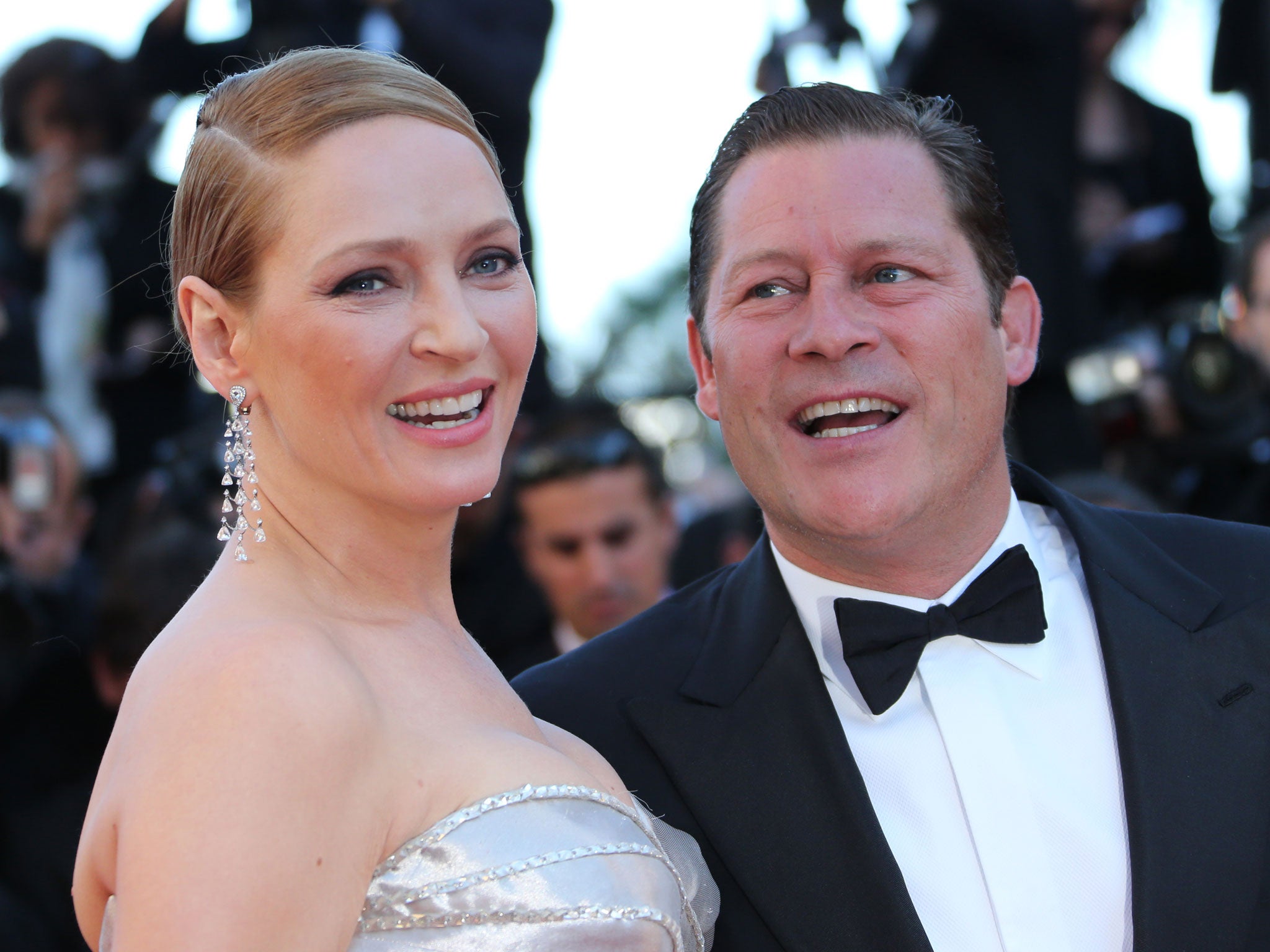
Arpad Busson is a prominent French financier and the founder of EIM Group, a pioneer in the hedge fund "fund of funds" investment model. While he achieved immense success and philanthropic acclaim, his firm became one of the high-profile institutional victims of Bernard Madoff’s $65 billion Ponzi scheme in 2008.
The Rise of EIM Group and the Multi-Manager Revolution
To understand Arpad Busson's impact on the financial world, one must examine the state of the hedge fund industry in the early 1990s. At that time, hedge funds were often seen as opaque, high-risk vehicles reserved for the ultra-wealthy. Busson, after gaining experience at firms like Dubin & Swieca, recognized a growing need among institutional investors for a more structured way to access these alternative investments.
In 1992, Busson founded EIM Group (originally Europe Institutional Management). His primary innovation was the aggressive promotion of the "fund of funds" (FoF) model. This strategy involved pooling investor capital and spreading it across a diverse selection of independent hedge fund managers. For institutional investors—such as pension funds and insurance companies—EIM offered a gateway to a diversified portfolio of hedge funds, managed by experts who claimed to perform rigorous due diligence on every underlying manager.
Under Busson’s leadership, EIM Group grew rapidly. By the mid-2000s, the firm managed billions of dollars and established offices in major financial hubs, including London, New York, and Geneva. Busson became a fixture in the "hedgie" elite, known for his charismatic networking and his ability to bridge the gap between European old money and the aggressive, new-world strategies of Manhattan's fund managers.
Understanding the Fund of Funds Model
The fund of funds model served a critical purpose in the evolution of the hedge fund industry. Before the 2008 financial crisis, the primary selling points for EIM and its competitors were access, diversification, and professional oversight.
- Access to "Closed" Funds: Many of the most successful hedge funds were closed to new investors. Large firms like EIM maintained long-standing relationships with these managers, allowing their clients to gain indirect exposure that would otherwise be impossible.
- Risk Mitigation through Diversification: By spreading capital across dozens of managers with different strategies (such as long/short equity, global macro, or distressed debt), EIM aimed to reduce the impact of any single fund's failure.
- Institutional-Grade Due Diligence: This was the most important pillar. Investors paid EIM an extra layer of fees (traditionally a "1 and 10" structure on top of the underlying managers' "2 and 20") specifically for the promise that EIM was vetting the managers' operations, audits, and performance records.
By 2026, the fund of funds model has largely evolved into bespoke advisory services, but in Busson's heyday, EIM was the gold standard for this intermediary role.
The Madoff Crisis: A Turning Point for EIM and Busson
The collapse of Bernard Madoff’s investment firm in December 2008 remains the most significant fraud in financial history. For Arpad Busson and EIM Group, it was a moment of profound reckoning. When the FBI arrested Madoff, it was revealed that his consistent, "steady-as-a-rock" returns were a complete fabrication—a Ponzi scheme where new investor money was used to pay out older investors.
The Mechanics of the Exposure
EIM Group was quickly identified as having exposure to Madoff. Initial reports suggested that approximately $200 million of EIM’s managed assets were invested in Madoff’s vehicles. While this represented only about 1% to 2% of EIM’s total assets under management at the time, the reputational damage was far more significant than the immediate financial loss.
The Madoff exposure was often held through "feeder funds"—intermediaries that did little more than funnel money directly to Madoff Securities. For a firm like EIM, whose entire value proposition was built on the quality of its due diligence, the discovery that it had funneled client money into a fraud was devastating. Critics argued that the very "experts" paid to spot red flags had missed the most glaring ones in the industry.
Repercussions and the Due Diligence Crisis
The fallout for Busson was multifaceted. Legally, EIM faced the same pressures as other Madoff victims, including potential "clawback" lawsuits from the court-appointed trustee, Irving Picard. These lawsuits sought to recover money that had been withdrawn from Madoff’s firm in the years preceding the collapse, intending to redistribute it more equitably among all victims.
Beyond the legalities, the Madoff scandal caused a systemic shift in how institutional investors viewed fund of funds. Many clients began to question the "double layer" of fees. If an intermediary couldn't detect a multi-decade Ponzi scheme, investors wondered why they shouldn't just invest directly or move toward lower-cost index funds. Busson spent much of 2009 and 2010 defending his firm’s processes, noting that Madoff had fooled some of the most sophisticated regulators and banks in the world.
Beyond Finance: ARK and Philanthropic Influence
Despite the financial turmoil of 2008, Arpad Busson remained a central figure in international philanthropy. In 2002, he founded Absolute Return for Kids (ARK). This charitable organization was unique because it applied hedge fund principles—efficiency, data-driven results, and high-impact scaling—to global problems such as education, healthcare, and child protection.
ARK's annual gala dinners in London became legendary, often raising tens of millions of pounds in a single evening from the world's wealthiest financiers. Busson used his social capital to ensure that even as the hedge fund industry faced public scrutiny, its leaders were contributing significantly to social causes. ARK eventually merged its operations with other entities, such as the Varkey Foundation, but its legacy as a model for "venture philanthropy" remains a key part of Busson's biography.
Consolidation and Evolution: The Gottex Merger and Beyond
As the hedge fund industry consolidated post-2008, independent fund of funds faced increasing pressure. The era of easy growth was over, replaced by a demand for greater transparency and lower fees.
In 2014, Arpad Busson orchestrated a major strategic shift by merging EIM Group with Gottex Fund Management, a Swiss-based alternative investment firm. This merger was seen as a defensive but necessary move to achieve the scale required to survive in a more regulated environment. Busson took on the role of Executive Chairman of the merged entity, which was later rebranded as LumX Group.
By 2026, the landscape of alternative investments has shifted further toward private equity and private credit. However, the legacy of Busson’s EIM remains a case study in both the innovation of the hedge fund era and the systemic risks that can hide within even the most "diversified" portfolios.
Comparative Analysis: EIM vs. Major Madoff Exposures
To provide context to Arpad Busson’s Madoff experience, it is helpful to compare EIM’s exposure with other major institutional "feeder funds."
| Firm Name | Estimated Madoff Exposure | Primary Consequence |
|---|---|---|
| Fairfield Greenwich Group | ~$7.5 Billion | Massive litigation; eventually shuttered major funds. |
| Tremont Group (Oppenheimer) | ~$3.3 Billion | Large settlements with the Madoff trustee. |
| Santander (Optimal Investment) | ~$2.3 Billion | Offered clients a €1.38 billion settlement in shares. |
| Kingate Management | ~$2.8 Billion | Involved in lengthy legal battles over recovery. |
| EIM Group (Arpad Busson) | ~$200 Million | Reputational damage; eventual merger with Gottex. |
While EIM’s exposure was smaller in absolute terms compared to giants like Fairfield Greenwich, it was a pivotal moment that forced the firm to redefine its value proposition to investors.
Investing Lessons for the Modern Era
Looking back from 2026, the Arpad Busson and EIM story offers several evergreen lessons for high-net-worth and institutional investors.
- The Limits of Due Diligence: No matter how sophisticated a firm's vetting process is, it can be circumvented by a sufficiently complex or long-running fraud. Investors should never rely solely on a third party’s "stamp of approval."
- The Danger of "Steady" Returns: Madoff’s hallmark was low volatility—he seemingly made money in every market environment. In finance, lack of volatility in a high-return strategy is often a red flag for hidden risks or fraud.
- Diversification vs. Correlation: Diversification only works if the underlying assets are truly independent. Many "diversified" fund of funds were actually highly correlated because so many of their managers were secretly using Madoff for their cash management or as a primary strategy.
- Fee Scrutiny: The "double fee" structure of the 1990s and 2000s has largely vanished. Today’s investors demand that intermediaries provide value-added services, such as specialized tax structuring or unique access, that justify their costs.
FAQs
Who is Arpad Busson?
Arpad Busson is a French financier and philanthropist who became famous for founding EIM Group and the charity ARK (Absolute Return for Kids). He is also known for his high-profile personal life and his role in popularizing the fund of funds investment model in the 1990s.
How much did Arpad Busson lose in the Madoff scandal?
EIM Group, the firm founded by Busson, had an estimated $200 million exposed to Bernard Madoff’s Ponzi scheme. While this was a small fraction of the firm's total assets, it caused significant reputational harm to the company's "due diligence" brand.
Does EIM Group still exist?
As an independent entity, EIM Group ceased to exist following its 2014 merger with Gottex Fund Management. The combined firm eventually operated under the name LumX Group.
What was the fund of funds model?
The fund of funds model involves an investment firm selecting a variety of different hedge funds to invest in, rather than investing directly in stocks or bonds. The goal is to provide investors with professional manager selection and diversification across multiple strategies.
Is Arpad Busson still active in finance in 2026?
By 2026, Arpad Busson has largely stepped back from day-to-day fund management, focusing more on strategic advisory roles and his long-standing philanthropic interests. His influence remains through the many proteges and firms that adopted his early multi-manager strategies.
What happened to the Madoff victims' money?
Under the guidance of court-appointed trustee Irving Picard and the Madoff Victim Fund, billions of dollars have been recovered through litigation and asset seizures. Most institutional victims who did not knowingly participate in the fraud have recovered a significant percentage of their original principal, though many lost the "fictional profits" they believed they had earned.
Practical Recommendation for Investors
For those evaluating alternative investment managers or fund-of-funds structures today, the Arpad Busson legacy serves as a reminder to prioritize transparency and custody. Always verify that a fund uses a reputable, independent third-party custodian and an "unaffiliated" auditor. Furthermore, ensure that the manager can explain exactly how their returns are generated in a way that is consistent with market realities. If a strategy appears to produce "all-weather" returns without the expected volatility, it requires a level of scrutiny that goes beyond standard paperwork.