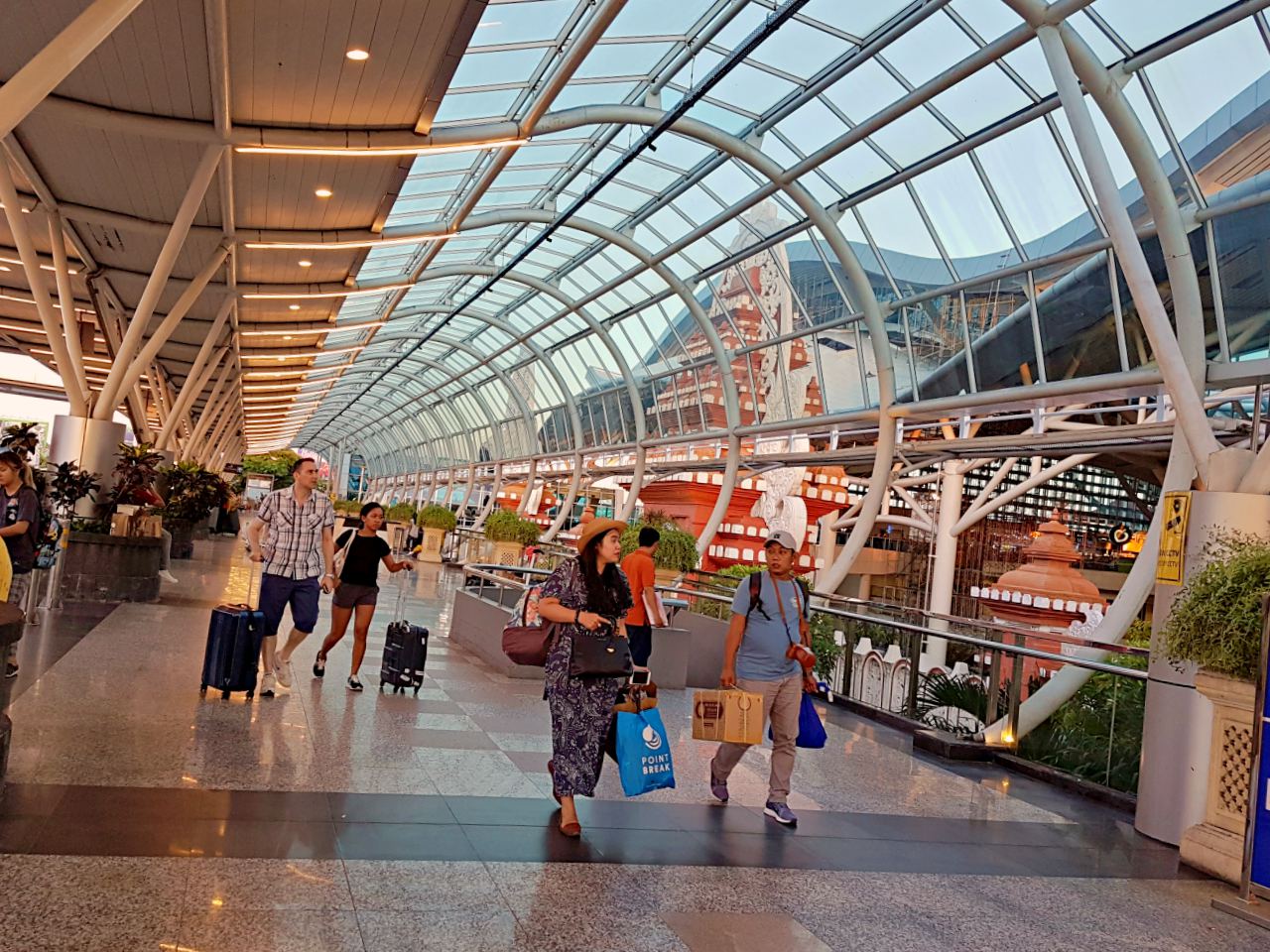
Arriving at Jakarta’s Soekarno-Hatta International Airport (CGK) involves four primary stages: completing the health declaration via the SATUSEHAT Health Pass, clearing immigration (via e-Gates or manual counters), retrieving luggage, and submitting the mandatory Electronic Customs Declaration (e-CD). In 2026, these processes are almost entirely digitized, requiring travelers to use official government portals for a seamless entry experience.
Navigating Indonesia’s primary international gateway can be a complex endeavor due to the sheer size of the terminals and the specific sequence of administrative requirements. Whether you are landing at the expansive Terminal 3 or the refurbished Terminal 2, understanding the logistics of immigration, customs, and onward transportation is essential for a stress-free start to your journey.
Pre-Arrival Digital Requirements
Before your flight touches down in Jakarta, several digital formalities should be completed to avoid significant delays in the arrival hall. In 2026, the Indonesian government has integrated most entry requirements into streamlined online platforms.
The SATUSEHAT Health Pass
The SATUSEHAT platform (formerly PeduliLindungi) remains the central hub for health monitoring. As of 2026, all international arrivals must complete an electronic Health Pass (SSHP) prior to check-in or during the flight. This form generates a QR code that is scanned by thermal scanners and health officials upon entry. It collects basic flight data and health status to monitor for any emerging global health concerns. Failure to have this QR code ready can result in being diverted to a manual screening line, adding 20–30 minutes to your arrival time.
Electronic Visa on Arrival (e-VoA)
While travelers from ASEAN countries often enjoy visa-free entry for short stays, most international visitors utilize the Visa on Arrival (VoA). To expedite the process, it is highly recommended to apply for an e-VoA through the official Directorate General of Immigration website (molina.imigrasi.go.id) at least 48 hours before departure.
- Cost: Approximately IDR 500,000 (subject to exchange rate fluctuations).
- Validity: 30 days, extendable once for another 30 days.
- Benefit: Allows the use of automated e-Gates at Terminal 3, bypassing long queues at the payment and processing counters.
Electronic Customs Declaration (e-CD)
Indonesia has phased out paper customs forms. Every passenger (or one representative per family) must fill out the Electronic Customs Declaration (e-CD). This can be completed up to three days before arrival at the official Indonesian Customs website (ecd.beacukai.go.id). Upon completion, you will receive a QR code. Save this to your mobile device or print it, as it is required to exit the baggage claim area.
Navigating the Terminal: Arrival and Health Screening
Soekarno-Hatta International Airport consists of three main terminals, but international flights are primarily consolidated in Terminal 3 and Terminal 2F.
Terminal 3 (The International Hub)
Most full-service carriers (e.g., Garuda Indonesia, Emirates, Singapore Airlines, Qatar Airways) operate out of Terminal 3. This terminal is one of the largest in Southeast Asia. Upon exiting the aircraft, follow the "Arrivals" or "Immigration" signs. The walk can be substantial—often exceeding 10–15 minutes—so utilize the moving walkways.
Terminal 2 (Low-Cost and Regional Carriers)
Terminal 2, specifically 2F, handles many international low-cost carriers (e.g., AirAsia, Scoot). The layout is more circular and older than Terminal 3, but the procedural flow remains identical.
The Health Quarantine Check
Immediately before immigration, you will pass through a health screening zone. Staff will monitor thermal scanners. If you have completed your SATUSEHAT Health Pass, you simply scan your QR code at the automated kiosks. If the scanner flags a high temperature, you may be pulled aside for a brief medical interview or a secondary non-invasive check.
Immigration Procedures and Visa Verification
Once through the health check, you will enter the immigration hall. This is often the most time-consuming part of the arrival at Jakarta airport procedures.
Using the e-Gates
In 2026, Jakarta has significantly expanded its e-Gate infrastructure. If you hold a biometric passport and have a pre-approved e-VoA or a KITAS/KITAP (residency permit), you can proceed directly to these machines.
- Place your passport photo page on the scanner.
- Look into the camera for facial recognition.
- The gate will open once your identity and visa status are verified.
- Note: No physical stamp is placed in your passport when using e-Gates; your entry is recorded digitally.
Manual Immigration Counters
If you do not have an e-VoA, or if you are traveling with children under a certain age who cannot use the e-Gates, you must queue for a manual counter.
- Payment Counter: If you need a Visa on Arrival and didn't pay online, go to the "VoA Payment" desk first. They accept major currencies (USD, EUR, AUD) and credit cards.
- Interview: The immigration officer may ask for your return flight details and the address of your accommodation. Ensure you have these saved offline.
Baggage Claim and Porter Services
After clearing immigration, follow the signs to the baggage carousels. Large digital screens will indicate which carousel corresponds to your flight number.
Baggage Handling
Jakarta airport is generally efficient with luggage, but during peak hours (late afternoon and early morning), wait times can reach 30–45 minutes. While waiting, you will find clean restrooms and currency exchange booths nearby, though rates inside the baggage area are often slightly less favorable than those in the public arrivals hall.
Authorized Porters
Authorized porters are available in the baggage claim area. They wear distinctive uniforms with ID badges. In 2026, the airport has moved toward a fixed-price digital payment or tipping system for porters to prevent overcharging. Always confirm the fee before they handle your bags. Most travelers find them helpful for navigating the final customs check with heavy trolleys.
Customs Clearance and IMEI Registration
This is the final administrative hurdle before you exit into the public area.
Scanning the e-CD
As you approach the exit, you will see several lanes. If you have nothing to declare, head toward the Green Channel. You must scan your e-CD QR code at the customs kiosks. Random X-ray checks are common, even in the Green Channel.
Restricted Items and Allowances
Indonesia maintains strict customs laws. In 2026, the standard allowances are:
- Alcohol: Up to 1 liter per adult. Excess will be confiscated and destroyed.
- Tobacco: Up to 200 cigarettes or 25 cigars.
- Value: Goods purchased abroad up to USD 500 per person are tax-free. Items exceeding this must be declared in the Red Channel.
Mobile Phone (IMEI) Registration
If you plan to stay in Indonesia for more than 90 days and wish to use a local SIM card, you must register your phone’s IMEI (International Mobile Equipment Identity) at the customs office located just after the baggage claim.
- If the phone's value is under USD 500, registration is free.
- If over USD 500, you are required to pay import taxes (around 30% for those without an Indonesian tax ID/NPWP).
- Tourists staying less than 90 days can usually get a "Tourist SIM" at booths in the arrivals hall without full IMEI registration, though these cards expire and cannot be easily renewed.
Transportation from Soekarno-Hatta to the City
Exiting the terminal can be overwhelming due to the number of transport touts. It is vital to use only official transportation channels.
| Transport Mode | Est. Cost (IDR) | Duration to Central Jakarta | Best For |
|---|---|---|---|
| Airport Rail Link | 70,000 - 100,000 | 45 - 55 Minutes | Avoiding traffic, solo travelers |
| Blue Bird Taxi | 180,000 - 250,000 | 60 - 90 Minutes | Families, reliable standard service |
| Silver Bird (Luxury) | 400,000 - 600,000 | 60 - 90 Minutes | Business travel, maximum comfort |
| Grab / Gojek | 150,000 - 220,000 | 60 - 90 Minutes | Budget-conscious, app users |
| DAMRI Bus | 50,000 - 80,000 | 90 - 120 Minutes | Extreme budget, multiple stops |
The Airport Rail Link (Kalaya)
The train is the most predictable way to reach Central Jakarta (BNI City or Manggarai stations). From Terminal 3 or 2, you must take the free Skytrain (Kalayang) to the Airport Railway Station. Tickets can be purchased via vending machines or the "Sudarco" app. The train is clean, air-conditioned, and provides free Wi-Fi.
Official Taxis
The most reputable taxi company in Indonesia is Blue Bird Group.
- Blue Bird: Standard sedans (Blue).
- Silver Bird: Premium executive cars (Black). Avoid independent drivers who approach you in the arrivals hall. Instead, go to the official taxi queues outside where a dispatcher will give you a printed queue number.
Ride-Hailing (Grab and Gojek)
Both Grab and Gojek have dedicated "Pick-up Points" at Terminal 3 and Terminal 2. You book through the app as usual, but you must meet the driver at the designated lounge. These lounges are air-conditioned and staffed by marshals who help coordinate the pick-up.
Post-Arrival Services: SIM Cards and Currency
Once you exit the customs area into the public arrivals hall, you will find essential services to help you settle in.
Purchasing a Local SIM Card
Major providers like Telkomsel and XL Axiata have large booths. In 2026, they offer specific "Tourist Packs" that include large data allowances and limited local minutes.
- Requirement: You must provide your passport for registration.
- Recommendation: Have the staff install and activate the SIM before you leave the booth to ensure the data connection is working.
Currency and Banking
ATMs are plentiful in the arrivals hall. Look for those from major banks like BCA, Mandiri, or BNI. These are generally safe and offer competitive exchange rates for international withdrawals. Always choose "Withdrawal without conversion" if the ATM asks, to allow your home bank to handle the exchange rate.
Common Pitfalls and Troubleshooting
Even with a clear understanding of the arrival at Jakarta airport procedures, issues can arise.
- Lost Luggage: If your bags do not appear, do not exit the customs area. Find the "Lost and Found" or "Baggage Inquiry" desk associated with your airline near the carousels. You will need your luggage tag (usually stuck to your boarding pass).
- Overstaying: Always check the date on your digital entry record. Overstaying a visa in Indonesia results in a fine of IDR 1,000,000 per day (as of 2026) and potential blacklisting.
- Touts: If someone offers you a "cheap" ride or claims the train is broken, ignore them. Proceed directly to official desks or app-based lounges.
- Connectivity Issues: The airport provides free Wi-Fi ("@airport.id"). Use this to access your e-CD QR code if you forgot to save it offline.
Frequently Asked Questions
Can I pay for my Visa on Arrival with a credit card?
Yes, the VoA payment counters at Soekarno-Hatta accept Visa and Mastercard. However, it is always wise to carry a small amount of cash (USD or IDR) in case the card machines are offline. If you pay in foreign currency, change is usually returned in Indonesian Rupiah at the airport's set rate.
How long does it typically take to get from the plane to the taxi?
On average, the process takes between 60 and 90 minutes. This includes the walk from the gate, the health check, immigration queues, baggage retrieval, and customs. During peak travel seasons or if multiple wide-body aircraft land simultaneously, this can extend to two hours.
Is there a way to skip the immigration lines in Jakarta?
The fastest way to clear immigration is to apply for an e-VoA in advance and use the e-Gates. For business travelers or those seeking premium service, some agencies offer "VIP Meet and Greet" services where an agent meets you at the gate and fast-tracks you through a dedicated diplomatic or crew lane.
Do I need to register my laptop with customs?
Generally, no. Personal electronics like laptops, tablets, and cameras that you intend to take with you when you leave Indonesia do not need to be declared unless they are brand new and still in original packaging, which might suggest they are for sale.
Where can I wait if I have a long layover after arriving?
Terminal 3 has several premium lounges (some accessible via Priority Pass) and a digital hub. If you have a layover exceeding six hours, consider the airport hotel (Anara Airport Hotel) which is directly connected to Terminal 3, allowing you to rest without leaving the airport precinct.
Is the SATUSEHAT Health Pass required for domestic transfers?
If you are arriving from an international flight and transferring to a domestic flight within Indonesia, your SATUSEHAT Health Pass completed for arrival is generally sufficient. However, always check the "Domestic Travel" section of the app as requirements can change based on local provincial health regulations.
Final Recommendation
To ensure the smoothest arrival at Jakarta airport, prioritize digital preparation. Complete your e-VoA and Electronic Customs Declaration (e-CD) at least 48 hours before your flight. Upon landing, ignore the unofficial porters and touts, and head straight for the e-Gates if you have the appropriate visa. For transportation into the city, the Airport Rail Link is your best defense against Jakarta’s notorious traffic, while Blue Bird taxis remain the most trusted choice for door-to-door service.