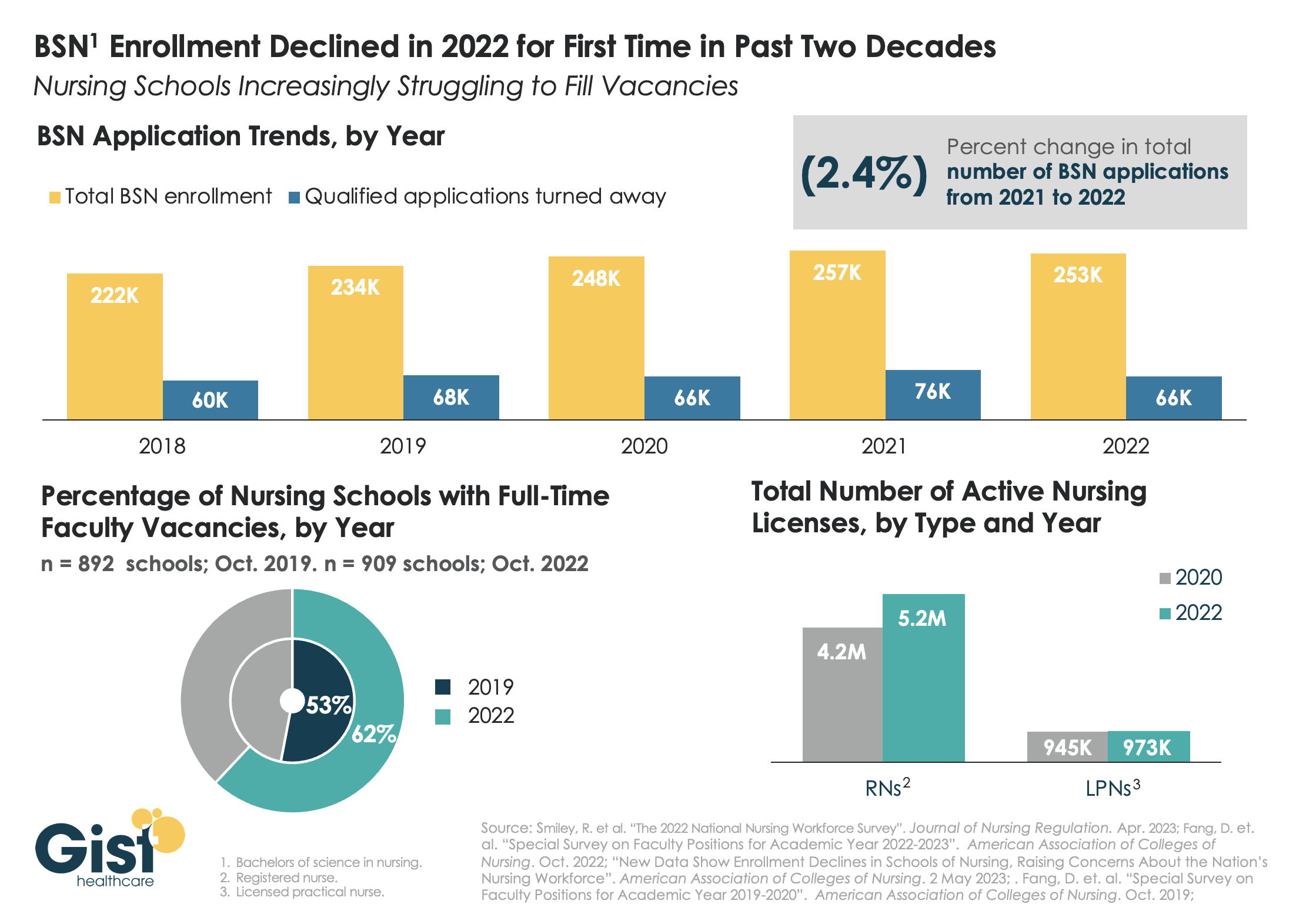
To identify approved nursing schools in the U.S. for the 2024 academic year, you must verify two distinct types of credentials: state board approval and national accreditation. In 2024, thousands of institutions held "approved" status from their respective State Boards of Nursing (SBON), which is the legal requirement for graduates to sit for the NCLEX-RN or NCLEX-PN exams.
Understanding "Approved" Nursing Schools: State vs. National Standards
When searching for approved nursing schools in the U.S. 2024, the term "approved" specifically refers to the legal authorization granted by a State Board of Nursing. However, for a student's long-term career viability, this is only half of the equation.
State Board of Nursing (SBON) Approval
Every state has an agency responsible for regulating nursing practice and education. For a nursing program to operate legally and for its graduates to be eligible for licensure, the program must be approved by the SBON in the state where the school is located. In 2024, state boards maintained lists of programs categorized as "Initial Approval," "Full Approval," or "Probationary Approval." Graduates from schools with full or initial approval were eligible to take the National Council Licensure Examination (NCLEX).
National Accreditation
While state approval is the legal minimum, national accreditation is the gold standard for quality. Most employers, particularly major hospital systems, and almost all graduate nursing programs (MSN or DNP) require that your undergraduate degree comes from a nationally accredited institution. In 2024, the two primary bodies were the Commission on Collegiate Nursing Education (CCNE) and the Accreditation Commission for Education in Nursing (ACEN).
How to Verify 2024 School Status
Verification is critical for students who were enrolled during 2024 or for employers conducting background checks on graduates from that cohort. Because the current year is 2026, many of these records are now part of the historical institutional data.
- The Nursys Database: Managed by the National Council of State Boards of Nursing (NCSBN), Nursys allows for the verification of nurse licensure and can often be used to trace the validity of the education programs from which those nurses graduated.
- U.S. Department of Education (DAPIP): The Database of Accredited Postsecondary Institutions and Programs provides a searchable history of accreditation. You can filter by the year 2024 to see if a specific school held valid accreditation during that timeframe.
- State Board Websites: Each state’s official .gov portal maintains an archive of nursing programs. For example, the California Board of Registered Nursing or the Texas Board of Nursing provides lists of programs that were active and approved in 2024.
Leading Accreditation Bodies in 2024
In 2024, the landscape of nursing education was largely governed by three major accrediting agencies. Understanding which body accredited a school helps determine the program's focus and its recognition across state lines.
Commission on Collegiate Nursing Education (CCNE)
The CCNE focuses primarily on baccalaureate (BSN), graduate (MSN), and residency programs. If you were looking at a major university’s four-year nursing program in 2024, it was most likely CCNE-accredited. This body is officially recognized by the U.S. Secretary of Education and focuses on program quality and effectiveness.
Accreditation Commission for Education in Nursing (ACEN)
The ACEN is more versatile, accrediting all levels of nursing education, including Practical (LPN/LVN), Diploma, Associate (ADN), Baccalaureate, and Master’s programs. Many community colleges offering ADN programs in 2024 relied on ACEN accreditation to ensure their students could transfer credits to four-year institutions.
NLN Commission for Nursing Education Accreditation (CNEA)
The CNEA is a newer body that accredits programs across the entire nursing education spectrum. While less common than CCNE or ACEN in 2024, it remained a rigorous alternative for schools seeking to demonstrate high educational standards.
Comparison of Nursing Program Types (2024 Status)
The following table compares the primary types of "approved" nursing programs available in 2024, highlighting their typical duration and the credentials they offered.
| Program Type | Typical Duration | Credential Earned | NCLEX Exam | Accreditation Body |
|---|---|---|---|---|
| LPN/LVN Certificate | 12–18 Months | Certificate/Diploma | NCLEX-PN | ACEN or CNEA |
| Associate Degree (ADN) | 2 Years | Associate of Science | NCLEX-RN | ACEN or CNEA |
| Bachelor of Science (BSN) | 4 Years | Bachelor's Degree | NCLEX-RN | CCNE or ACEN |
| Accelerated BSN (ABSN) | 11–18 Months | Bachelor's Degree | NCLEX-RN | CCNE |
| Direct-Entry MSN | 2–3 Years | Master's Degree | NCLEX-RN | CCNE |
Why Program Approval Was Critical in 2024
Choosing an unapproved program in 2024 would have resulted in several significant "roadblocks" for a nursing student. These consequences remain relevant for those reviewing their education history in 2026.
- Ineligibility for Licensure: The most severe consequence was the inability to sit for the NCLEX. Without passing this exam, an individual cannot legally practice as a registered nurse or practical nurse in the United States.
- Financial Aid Restrictions: Federal financial aid, including Pell Grants and Stafford Loans, is generally only available to students attending schools with recognized accreditation. Programs that lacked these approvals in 2024 often forced students to rely on high-interest private loans.
- Credit Transfer Issues: Most accredited institutions do not accept transfer credits from unapproved or unaccredited nursing programs. This became a major issue for students who attempted to transition from an ADN to a BSN program later.
- Employment Barriers: Highly sought-after employers, such as the Department of Veterans Affairs (VA) or Magnet-designated hospitals, strictly hire graduates from programs that held national accreditation in 2024.
Regional Highlights: Top-Tier Approved Schools in 2024
In 2024, certain institutions were recognized for their exceptionally high NCLEX pass rates and robust clinical partnerships. While hundreds of schools were approved, these examples represent the standards sought by the industry:
- Johns Hopkins University (Maryland): Consistently a top-ranked program, its MSN and DNP programs were gold standards for CCNE accreditation in 2024.
- University of Pennsylvania (Pennsylvania): Known for its research-heavy BSN programs, Penn Nursing maintained its status as a premier approved school with high NCLEX-RN pass rates exceeding 95% in 2024.
- Duke University (North Carolina): Duke’s ABSN program was a primary choice for career changers in 2024, offering an approved pathway for those who already held a degree in another field.
- University of Washington (Washington): A leader in the Pacific Northwest, this school provided comprehensive ACEN and CCNE-recognized tracks that served as a blueprint for public university nursing education.
The Role of NCLEX Pass Rates in Verification
When evaluating whether a school was "approved" in 2024, one of the most transparent metrics was its NCLEX pass rate. State Boards of Nursing monitor these rates annually. If a school's pass rate fell below a certain threshold (often 80%) for consecutive years, the board might have placed the school on probationary status.
In 2024, many prospective students used these pass rates as a proxy for program quality. A school could be "approved" but still be in danger of losing that approval if its students were not successfully passing the licensure exam. You can still access these 2024 pass rate reports through the NCSBN Statistics page.
Common Mistakes to Avoid When Checking 2024 Status
Even in 2026, students looking back at their 2024 education options often encounter confusion. Avoid these common pitfalls:
- Confusing Institutional with Programmatic Accreditation: A university might be accredited as a whole (e.g., by the Higher Learning Commission), but the nursing program specifically might not have been accredited by CCNE or ACEN in 2024. Both are necessary for career progression.
- Ignoring "Initial Approval" Risks: Schools that were brand new in 2024 may have only had "Initial Approval." While this allows for graduation and testing, it is not "Full Approval," which is only granted after a class graduates and passes the NCLEX.
- Assuming Online Means Different Standards: In 2024, online nursing programs were subject to the same state board approval and national accreditation requirements as brick-and-mortar schools. If an online school was not approved in the student's home state, they often could not complete clinical rotations there.
Costs and Financial Considerations for 2024 Programs
The cost of attending an approved nursing school in 2024 varied wildly based on the type of institution. Public community colleges offered the most affordable "approved" paths, with ADN programs often costing between $6,000 and $15,000 in total.
Conversely, private university BSN programs in 2024 could exceed $40,000 to $60,000 per year. Understanding the financial landscape of 2024 is essential for current nurses managing student loan repayments or seeking employer-based tuition reimbursement in 2026. Most reimbursement programs require proof that the school was accredited during the time of attendance.
Frequently Asked Questions
How do I check if a school was CCNE accredited in 2024?
You can use the CCNE specialized search tool on the American Association of Colleges of Nursing (AACN) website. Their directory allows you to see the history of accreditation for any member institution, including the specific dates when accreditation was granted or renewed.
Can I still get licensed if my school lost its board approval after 2024?
If the school was approved at the time you graduated in 2024, you are generally eligible for licensure. However, if the school lost its approval before you graduated, you may face significant hurdles. You would need to contact your State Board of Nursing to see if there was a "teach-out" agreement or if your credits can be transferred to a still-approved program.
What is the difference between "Initial" and "Full" board approval?
"Initial Approval" is granted to new programs that have met the state's standards on paper and are authorized to admit students. "Full Approval" is only granted after the first cohort of students graduates and achieves a satisfactory pass rate on the NCLEX. In 2024, many new programs operated successfully under initial approval.
Does it matter if a school was "For-Profit" in 2024?
While for-profit schools can be approved and accredited, they were under significant scrutiny in 2024 due to high costs and varying outcomes. As long as the school held ACEN or CCNE accreditation, its degree is technically valid, but some employers may prefer candidates from non-profit or public institutions.
How did the Nursing Licensure Compact (NLC) affect 2024 school choice?
In 2024, the NLC allowed nurses to practice in multiple states with one license. However, to get that license, you still had to graduate from a program approved by the state board where you initially applied for licensure. The NLC made it easier for 2024 graduates to move between states, provided their original school met the "approved" criteria.
Final Recommendation for Verification
If you are currently evaluating your professional status or planning to return to school in 2026 based on a 2024 educational foundation, your first step should be to obtain your official transcripts and a "Letter of Good Standing" from the institution. Verify their 2024 accreditation status through the U.S. Department of Education’s DAPIP database. This ensures that any future certifications or advanced degrees you pursue will be built on a legally recognized and professionally respected foundation.