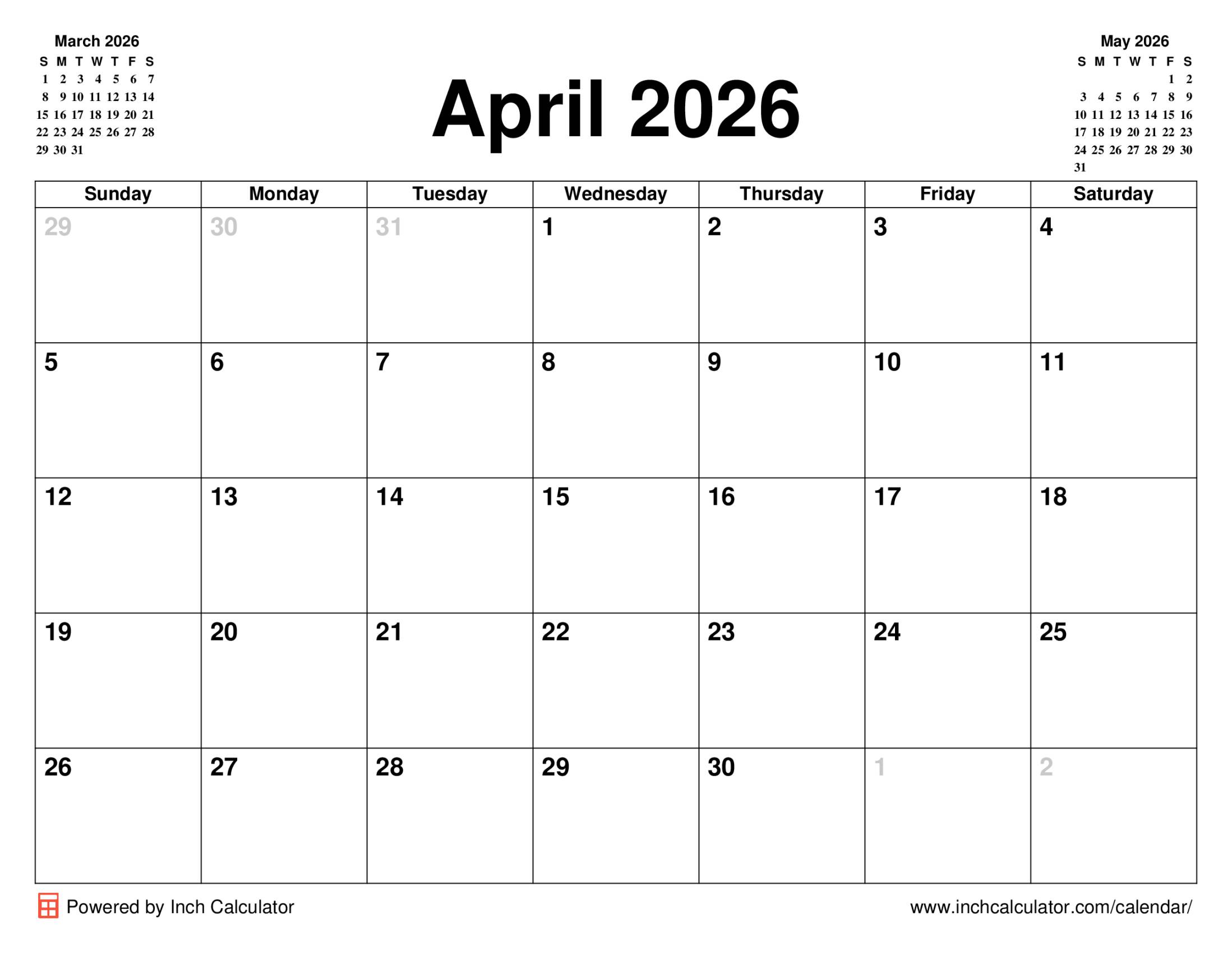
April 15, 2026, is the primary deadline for individual taxpayers to file federal income tax returns and pay any remaining balance due for the 2025 tax year. This date also serves as the final cutoff for making 2025 contributions to retirement accounts like IRAs and submitting first-quarter estimated tax payments.
As we navigate the 2026 tax season, understanding the specific timeline established by the Internal Revenue Service (IRS) is essential for avoiding penalties and optimizing financial planning. For the 2025 tax year (the returns for which are filed in 2026), several adjustments to tax brackets and standard deductions have taken effect due to inflation indexing. Unlike years where the deadline might shift due to weekends or holidays like Emancipation Day in Washington, D.C., April 15, 2026, falls on a Wednesday, making it a standard, non-extended deadline for most of the country.
The Significance of April 15, 2026
The mid-April deadline is more than just a date for submitting paperwork; it is a critical financial "settlement" day for the previous calendar year. For the majority of American taxpayers, the focus is on Form 1040, the U.S. Individual Income Tax Return. By midnight on April 15, 2026, the IRS expects either a completed return or a formal request for an extension, accompanied by a payment for any estimated taxes owed.
It is a common misconception that an extension to file provides an extension to pay. If you owe taxes for 2025 and do not pay by April 15, 2026, the IRS will begin accruing interest and "failure-to-pay" penalties, even if you have successfully filed for a six-month extension (Form 4868). This makes April 15 the most significant date for cash flow management for both individuals and small business owners.
Federal vs. State Deadlines
While April 15 is the federal standard, taxpayers must remain vigilant regarding state-level requirements. Most states align their filing deadlines with the federal government to simplify the process for residents. However, some states, such as Delaware or Iowa, have historically utilized different dates. Always verify with your specific State Department of Revenue to ensure you are not missing a local deadline that differs from the federal Wednesday, April 15, 2026, target.
Key Tax Deadlines for the 2026 Calendar Year
To remain compliant throughout the 2026 filing season, taxpayers should track several distinct milestones. The process begins long before April and extends into the autumn for those who utilize extensions.
| Date | Deadline Event | Affected Taxpayer Group |
|---|---|---|
| January 15, 2026 | 4th Quarter 2025 Estimated Tax Payment | Self-employed, freelancers, and investors |
| January 31, 2026 | Deadline for employers to mail W-2s and 1099s | All employees and independent contractors |
| March 16, 2026 | S-Corp (1120-S) and Partnership (1065) Returns | Business entity owners |
| April 15, 2026 | Tax Day: Individual Form 1040 Filing & Payment | Most individual U.S. taxpayers |
| April 15, 2026 | 1st Quarter 2026 Estimated Tax Payment | Self-employed and high-income earners |
| April 15, 2026 | Last day for 2025 IRA and HSA contributions | Individuals maximizing tax-advantaged savings |
| June 15, 2026 | 2nd Quarter 2026 Estimated Tax Payment | Business owners and 1099 earners |
| September 15, 2026 | 3rd Quarter 2026 Estimated Tax Payment | Business owners and 1099 earners |
| October 15, 2026 | Extended Individual Return Deadline | Taxpayers who filed Form 4868 in April |
The Pre-Filing Window: January through March 2026
The road to April 15 begins in January. By January 31, 2026, you should receive your wage and earnings statements. This includes Form W-2 from employers and various versions of Form 1099 (such as 1099-NEC for non-employee compensation, 1099-INT for interest, and 1099-DIV for dividends).
In 2026, taxpayers should pay close attention to the 1099-K reporting requirements. If you sold items on platforms like eBay or Etsy, or received payments via third-party processors like PayPal or Venmo, the threshold for receiving a 1099-K has been a subject of evolving IRS guidance. Ensuring these forms are in hand before filing is vital, as discrepancies between what you report and what the IRS receives via automated matching can trigger audits or "Letter CP2000" notices.
For business owners operating as Partnerships or S-Corporations, the deadline is March 16, 2026 (since March 15 falls on a Sunday). These entities are "pass-through" organizations, meaning the income "passes through" to the owners' individual returns via Schedule K-1. Individual taxpayers who are partners or shareholders cannot accurately complete their personal April 15 filings until they receive these K-1 documents.
Deep Dive: Requirements for April 15, 2026
The April 15 deadline encompasses three distinct actions: filing, paying, and contributing.
1. Filing Form 1040
The primary requirement is the submission of the federal income tax return. For the 2025 tax year, the standard deduction amounts have increased to account for inflation. For 2025, the standard deduction is $15,000 for single filers and $30,000 for married couples filing jointly. Taxpayers must decide whether to take this standard deduction or itemize their deductions on Schedule A. Itemizing is generally only beneficial if your total deductible expenses (mortgage interest, state and local taxes up to $10,000, medical expenses, and charitable gifts) exceed the standard deduction amount.
2. Tax Payments and "Safe Harbor" Rules
If you did not have enough tax withheld from your paychecks throughout 2025, you must pay the balance by April 15, 2026. To avoid underpayment penalties, the IRS generally requires you to have paid at least 90% of your current year's tax liability or 100% of the previous year's tax liability (110% for high-income earners). This is known as the Safe Harbor rule. If you find yourself owing a significant amount on April 15, you should evaluate your W-4 withholdings for the remainder of 2026 to avoid a similar situation next year.
3. Contributions to Retirement and Health Accounts
April 15, 2026, is the last opportunity to contribute to a Traditional or Roth IRA for the 2025 tax year. For 2025, the contribution limit is $7,000 (with an additional $1,000 catch-up contribution for those age 50 and older). Contributions to a Traditional IRA may be tax-deductible, potentially lowering your 2025 tax bill if you make the contribution before the April 15 deadline. Similarly, contributions to a Health Savings Account (HSA) for 2025 must be completed by this date.
Understanding the Extension Process
If you cannot gather all necessary documentation by April 15, 2026, you can request an automatic six-month extension by filing Form 4868. This moves your filing deadline to October 15, 2026.
Why File an Extension?
Extensions are useful for those waiting on late K-1s, corrected 1099s, or those dealing with complex international tax issues. It is important to note that an extension to file is not an extension of "time to pay." You are still required to estimate your total tax liability and pay that amount by the April 15 deadline.
Failure to pay at least 90% of your total tax due by April 15 can result in a late-payment penalty, which is typically 0.5% of the unpaid taxes for each month or part of a month the tax remains unpaid, up to a maximum of 25%. However, the penalty for failure to file is significantly higher (5% per month), making it imperative to at least file the extension form even if you cannot pay the full balance.
Estimated Tax Payments for 2026
For the self-employed, "gig economy" workers, and those with substantial investment income, tax "day" happens four times a year. While April 15, 2026, is the deadline for finishing the 2025 tax year, it is also the deadline for the first quarter (Q1) estimated payment for 2026.
These payments cover income earned from January 1 through March 31, 2026. Because the U.S. tax system is a "pay-as-you-go" system, the IRS requires these quarterly installments to ensure tax is being paid as income is earned. If you wait until April 2027 to pay your full 2026 tax liability, you will likely face underpayment interest charges.
Special Considerations for 2026
Digital Assets and Cryptocurrency
The IRS continues to prioritize the reporting of digital asset transactions. On your 2025 return (filed in 2026), you will encounter the standard question regarding whether you received, sold, exchanged, or otherwise disposed of any digital assets. Ensure you have consolidated your exchange reports and calculated capital gains or losses before the April 15 deadline.
Energy Credits
The 2025 tax year includes various incentives for energy-efficient home improvements and electric vehicle (EV) purchases under the Inflation Reduction Act. If you installed solar panels or purchased a qualifying EV in 2025, ensure you have the necessary manufacturer certifications and receipts to claim these credits on your April 2026 filing. These credits are often non-refundable, meaning they can reduce your tax liability to zero but will not result in a check for the excess.
Victims of Natural Disasters
The IRS frequently grants extensions to taxpayers in areas declared federal disaster zones. If your region experienced significant weather events in late 2025 or early 2026, check the IRS Disaster Relief page to see if your local April 15 deadline has been postponed.
Common Pitfalls and How to Avoid Them
- Mathematical Errors: Simple addition or subtraction mistakes remain a leading cause of IRS notices. Using e-file software significantly reduces this risk.
- Missing Signatures: If filing a paper return, forgetting to sign Form 1040 renders the return invalid. For e-filers, your Self-Select PIN or last year’s Adjusted Gross Income (AGI) serves as your digital signature.
- Incorrect Routing Numbers: If you are expecting a refund, double-check your bank's routing and account numbers. Direct deposit is the fastest way to receive funds, but a single typo can delay your refund by weeks as the IRS waits for the bank to reject the transfer.
- Waiting Until the Last Minute: IRS servers and professional tax preparers experience peak volume on April 14 and 15. Filing even one week early can prevent stress and provide time to resolve unexpected issues, such as a rejected return due to a typo in a dependent's Social Security Number.
Frequently Asked Questions
What happens if I miss the April 15, 2026, deadline and don't file an extension?
If you owe taxes and miss the deadline without filing an extension, you will be subject to both "failure-to-file" and "failure-to-pay" penalties. The failure-to-file penalty is particularly steep, starting at 5% of the unpaid tax for each month the return is late. If you are owed a refund, there is generally no penalty for filing late, but you must file within three years to claim the refund.
Can I change my IRA contribution after I've already filed my taxes?
Yes. If you file your taxes in February but decide to contribute to your IRA in March (before the April 15 deadline), you can file an amended return (Form 1040-X) to claim the deduction. However, it is much simpler to determine your contribution amount and include it in your initial filing.
Is April 15, 2026, the deadline for state taxes too?
In most cases, yes. Most states synchronize their tax deadlines with the federal government for the sake of administrative efficiency. However, states like Maine and Massachusetts sometimes observe holidays like Patriots' Day, which can push their state deadlines back a few days. Always confirm with your state's tax authority.
How do I pay my taxes if I don't have the money by April 15?
You should still file your return or an extension by April 15 to avoid the failure-to-file penalty. To manage the payment, you can apply for an IRS Online Payment Agreement. The IRS offers short-term extensions (up to 180 days) and long-term installment plans. While interest will still accrue, these plans prevent more aggressive collection actions like levies or liens.
Does the April 15 deadline apply to U.S. citizens living abroad?
U.S. citizens and resident aliens living abroad are granted an automatic two-month extension to file and pay, moving their deadline to June 15, 2026. However, interest will still accrue on any tax not paid by the April 15 deadline. If you need even more time, you can file Form 4868 to extend the filing deadline to October 15.
Next Steps for Taxpayers
To ensure a smooth tax season, start by organizing your 2025 financial records now. Create a dedicated folder for W-2s, 1099s, and receipts for deductible expenses. If you anticipate a complex filing—such as one involving cryptocurrency, rental properties, or a new small business—schedule an appointment with a Certified Public Accountant (CPA) or Enrolled Agent (EA) well before the April rush.
If you plan to file yourself, the IRS Free File program typically opens in late January, offering free brand-name software to taxpayers with an AGI below a certain threshold. For those above the threshold, Free File Fillable Forms provide an electronic version of paper forms. Regardless of your method, aiming to submit your return by late March or early April will ensure that you have fulfilled your obligations before the April 15, 2026, deadline.