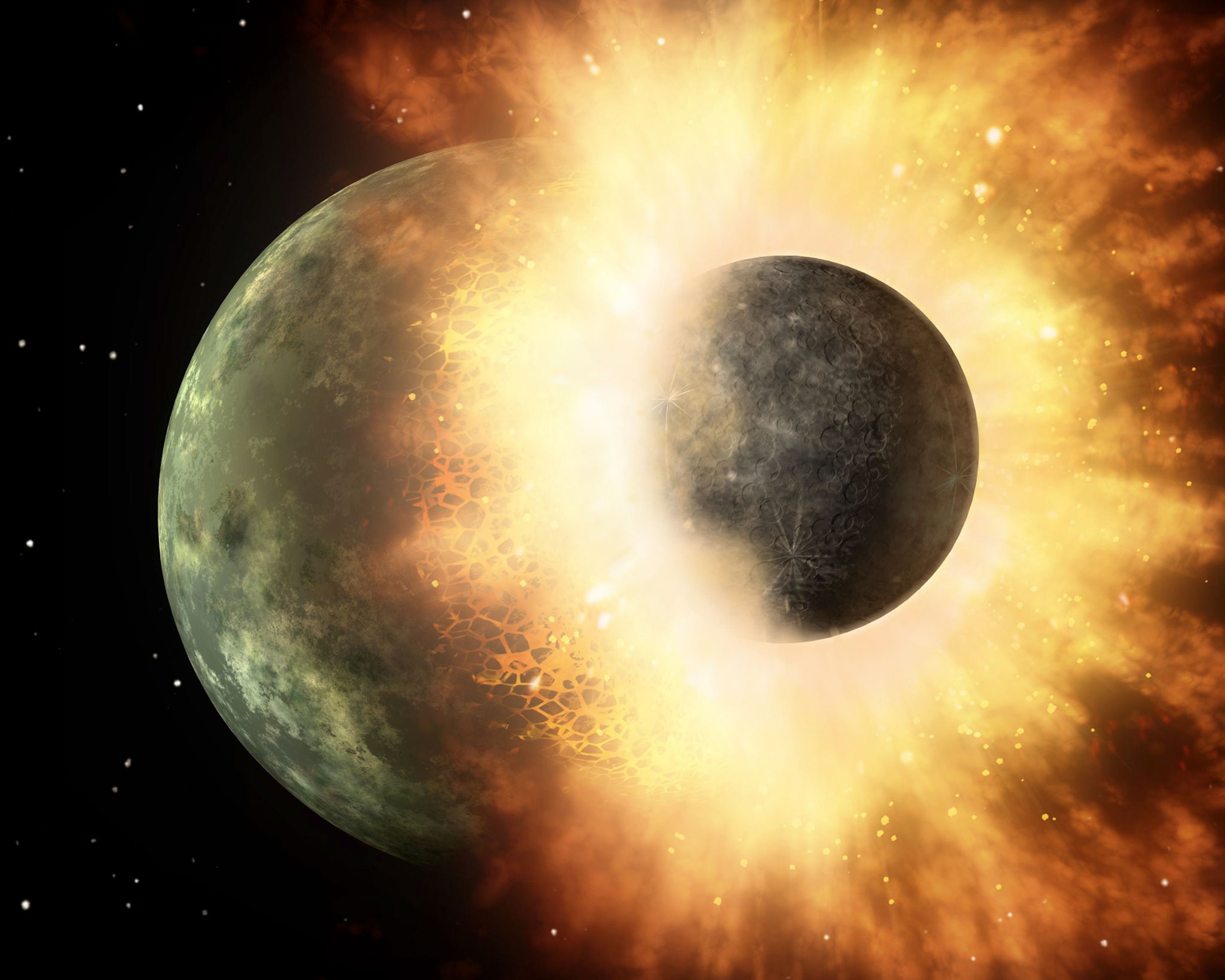
The April 23rd rapture claim refers to a viral apocalyptic prediction popularized in 2018 by Christian numerologist David Meade, who asserted that the "Rapture" and the end of the world would be triggered by the appearance of a mythical celestial body known as Planet X, or Nibiru. While the date passed without incident, the claim remains a significant case study in how fringe astronomical interpretations and biblical eschatology can merge to create widespread internet phenomena.
The Genesis of the April 23rd Prediction
The specific claim regarding April 23rd emerged primarily from the work of David Meade, an author who gained notoriety for blending biblical prophecy with alternative astronomical theories. Meade had previously gained international media attention for a similar prediction concerning September 23, 2017. When that date passed without the world ending, the focus shifted toward April 23, 2018, as the "real" start of the Tribulation period.
The foundation of the April 23rd claim was rooted in a specific reading of the Book of Revelation, specifically Chapter 12. This passage describes a "great sign" in heaven: a woman clothed with the sun, with the moon under her feet and a crown of twelve stars on her head. Numerologists like Meade argued that a specific alignment of the sun, moon, and the planet Jupiter within the constellation Virgo represented the fulfillment of this prophecy.
According to these theorists, April 23, 2018, represented a unique celestial "alignment" that hadn't occurred in millennia. They suggested that the "Woman" (Virgo) would be "clothed with the sun" and that the arrival of a hidden planet would cause global cataclysm, signaling the removal of the faithful from the Earth.
The Role of Planet X (Nibiru) in the Prophecy
A central pillar of the April 23rd rapture claim was the supposed existence of Planet X, also known as Nibiru. This hypothetical planet is a staple of modern conspiracy theories, originally popularized in the 1970s by Zecharia Sitchin, who claimed ancient Sumerian texts described a giant planet with a 3,600-year orbit that periodically passes through the inner solar system.
In the context of the 2018 claim, Meade and his followers suggested that Planet X was a "dark star" or a "brown dwarf" orbited by several planets. They argued that its gravitational pull would cause massive volcanic eruptions, tsunamis, and earthquakes on Earth. The theological "twist" added by Meade was that this scientific (or pseudo-scientific) event was the physical mechanism God would use to initiate the biblical Apocalypse.
Despite the fervor surrounding these claims, the scientific community remained resolute. NASA has repeatedly issued statements debunking the Nibiru myth. Astronomers point out that if a planet-sized object were on a collision course or a "close-pass" trajectory with Earth, it would be visible to the naked eye and its gravitational effects would have been disrupting the orbits of Mars and the outer planets for years prior to its arrival.
Theological Critiques and Mainstream Religious Response
The April 23rd claim was not only rejected by the scientific community but also by the vast majority of mainstream Christian denominations. The primary theological objection stems from the words of Jesus in the Gospel of Matthew: "But about that day or hour no one knows, not even the angels in heaven, nor the Son, but only the Father" (Matthew 24:36).
Theologians generally categorize these types of predictions as "date-setting," a practice that is historically frowned upon in Christian orthodoxy. Throughout history, numerous groups—from the Millerites in the 1840s to Harold Camping in 2011—have attempted to calculate the exact timing of the Second Coming, only to face "Great Disappointments" when the dates passed.
Critiques from the religious community often focused on three main points:
- Scriptural Misinterpretation: Critics argued that the "signs" in Revelation 12 are symbolic and historical rather than a literal map for 21st-century astronomical software.
- Focus on Fear: Mainstream leaders emphasized that the Christian message is intended to be one of hope and readiness, rather than anxiety-driven speculation about specific calendar dates.
- Credibility of the Faith: Many pastors expressed concern that failed "rapture" predictions damage the public perception of Christianity, making the faith appear synonymous with fringe conspiracy theories.
Comparing Notable Modern Rapture and End-Times Claims
To understand where the April 23rd claim fits into the broader history of eschatological predictions, it is helpful to compare it to other viral end-times movements of the 21st century.
| Prediction Date | Primary Proponent | Alleged Cause/Sign | Outcome |
|---|---|---|---|
| May 21, 2011 | Harold Camping | Biblical Numerology (7,000 years after the Flood) | No event; movement disbanded |
| Dec 21, 2012 | Various (Mayan Calendar) | Completion of the "Long Count" cycle | No event; cultural phenomenon |
| Sept 23, 2017 | David Meade | Revelation 12 Alignment & Planet X | No event; date revised to 2018 |
| April 23, 2018 | David Meade | Sun/Moon/Jupiter in Virgo & Planet X | No event; focus shifted to general "Tribulation" |
| 2014–2015 | John Hagee | "Blood Moon" Tetrad (Lunar Eclipses) | No apocalyptic event occurred |
The Mechanics of Viral Misinformation
The April 23rd rapture claim provides an excellent look into how misinformation spreads in the digital age. Unlike historical doomsday prophecies that relied on pamphlets or radio broadcasts, the 2018 claim was amplified by social media algorithms and tabloid "clickbait" journalism.
Websites would often run headlines such as "NASA Confirms Planet X is Real" or "Biblical Prophecy Points to April 23," only to include a small disclaimer deep in the article. This created a "filtered" reality for many users who were already inclined to believe in alternative theories. The use of astronomical software like Stellarium allowed proponents to show professional-looking star charts, which lent an air of technical legitimacy to an otherwise unsupported claim.
Furthermore, the "moving goalpost" phenomenon played a significant role. When the September 2017 date failed, proponents did not admit error; instead, they claimed they had miscalculated the "conception" versus the "birth" of the celestial sign. This allowed the momentum of the movement to continue until the April 2018 date also failed to produce the predicted results.
Scientific Reality vs. Pseudoscience
From an astronomical perspective, the claims surrounding April 23rd relied on a fundamental misunderstanding of how the solar system works. The "alignment" cited—Jupiter in Virgo—is a common occurrence. Because Jupiter takes approximately 12 years to orbit the sun, it spends roughly one year in each of the twelve zodiac constellations. Therefore, Jupiter appears in Virgo once every decade or so.
Regarding Planet X, the physics of the solar system are governed by gravity. If a large celestial body were entering our neighborhood, its presence would be detected by:
- Perturbations in Orbits: The path of satellites and planets would shift predictably.
- Infrared Detection: Even a "dark" planet emits heat that would be picked up by wide-field infrared surveys like WISE (Wide-field Infrared Survey Explorer).
- Visual Observation: Amateurs and professional astronomers worldwide would be able to track its coordinate changes against the background stars.
NASA's official position on Nibiru has remained consistent: it is a "cosmic hoax." The agency has pointed out that if such a planet existed, it would have already stripped the moon from Earth’s orbit.
The Psychological Impact of End-Times Predictions
Why do people continue to believe in claims like the April 23rd rapture even after repeated failures? Psychologists point to several factors, including cognitive dissonance and confirmation bias. When a deeply held belief is challenged by reality (e.g., the world doesn't end on April 23), the individual often experiences extreme discomfort. To alleviate this, they may find a reason why the "math was slightly off" rather than abandoning the belief entirely.
Additionally, these claims provide a sense of order and "inside knowledge" in an increasingly chaotic world. Believing that one understands the secret schedule of the universe can be a coping mechanism for modern anxieties. However, the fallout of these failed dates can be severe, leading to financial loss for those who quit jobs or sell assets, and spiritual disillusionment for those whose faith was tied to the specific prediction.
Analyzing the 2026 Context
As of 2026, the April 23rd claim of 2018 is viewed primarily as a historical footnote in the study of internet-era folklore. It serves as a reminder of the need for critical thinking and media literacy. While new "signs" and dates are periodically proposed by various internet personalities, the structural pattern remains the same: a combination of astronomical jargon, specific biblical verses taken out of context, and a sense of impending urgency.
The legacy of the 2018 claim is most visible in how modern platforms handle misinformation. Major social media sites have since implemented stricter fact-checking protocols for "imminent harm" or "false news" categories, partly in response to the panic and confusion caused by viral doomsday hoaxes.
Frequently Asked Questions
What was supposed to happen on April 23, 2018?
The claim suggested that the "Rapture" would occur, where believers would be taken to heaven, followed by the appearance of Planet X (Nibiru) and the start of a seven-year period of global catastrophe known as the Tribulation.
Who is David Meade?
David Meade is an American author known for his self-published books and YouTube videos that predict the end of the world using "biblical numerology." He rose to prominence between 2016 and 2018 for his theories regarding the "Planet X" system.
Does NASA believe in Planet X or Nibiru?
No. NASA has explicitly stated that Nibiru and other stories about wayward planets are an internet hoax. There is no factual basis for these claims. If Nibiru or Planet X were real and headed for an encounter with the Earth, astronomers would have been tracking it for at least the past decade.
What is the "Revelation 12 Sign"?
It is a specific astrological alignment involving the constellation Virgo, the sun, the moon, and planets (usually Jupiter). Proponents believe this alignment is a literal fulfillment of the imagery in the biblical Book of Revelation, Chapter 12.
Why do people keep setting dates for the Rapture?
Date-setting often stems from a desire to find certainty in religious texts or to gain attention in a crowded digital landscape. Despite the biblical injunction that "no one knows the hour," the allure of being the one to "decode" the end times remains a powerful motivator for fringe theorists.
Final Practical Guidance
When encountering "rapture claims" or "end-of-the-world" predictions involving specific dates like April 23rd, the most effective approach is to verify the information against reputable scientific and theological sources. Look for consensus among astronomers regarding celestial events and consult established religious authorities regarding scriptural interpretations.
Historically, every specific date set for the end of the world has passed without the predicted outcome. Maintaining a healthy skepticism toward "secret knowledge" found on social media or fringe websites is essential for avoiding the emotional and practical pitfalls associated with doomsday misinformation.