In 2025, April Fools' company pranks evolved from simple hoaxes into sophisticated market-testing vehicles and hyper-personalized community engagement tools. These campaigns revealed three dominant marketing trends: the strategic use of generative AI for rapid prototyping, the "fake-to-real" product pipeline where absurd concepts gauge genuine consumer demand, and a shift toward "inside-baseball" humor that prioritizes brand loyalists over mass-market reach.
The corporate landscape of April Fools' Day has undergone a radical transformation. No longer satisfied with grainy photos of "flying cars" or "taco-flavored toothpaste," the marketing departments of 2025 utilized the holiday as a low-stakes laboratory for experimental branding. Looking back from 2026, it is clear that the stunts pulled last year were not merely for laughs; they were calculated maneuvers designed to navigate an increasingly skeptical and AI-saturated consumer environment. By examining the anatomy of 2025’s most successful (and most disastrous) pranks, we can identify the architectural shifts in how brands communicate value and authenticity.
The Shift from Mass Deception to Strategic Engagement
Historically, April Fools' Day was a race to the most outlandish headline. However, the 2025 cycle proved that consumers are suffering from "hoax fatigue." With deepfake technology and AI-generated content making it harder to discern truth from fiction daily, the most successful brands moved away from trying to "trick" their audience. Instead, they leaned into transparent absurdity that signaled a shared joke between the brand and its community.
The primary trend identified in 2025 was the use of collaborative irony. Brands like Duolingo and IKEA didn’t just release a fake product; they released a narrative that mocked their own corporate tropes. This self-referential humor serves to humanize large organizations, breaking the "fourth wall" of traditional advertising. For marketers, the lesson from 2025 is that vulnerability and self-awareness are more effective at building brand equity than traditional, polished perfection.
Furthermore, 2025 saw the death of the "one-day prank." The most effective campaigns were teased weeks in advance and had "after-action" reports that transitioned the joke into a legitimate marketing campaign. This continuity reflects the broader trend of long-form narrative marketing, where a single event is just one beat in a larger, multi-channel story.
Generative AI as a Prank Catalyst and Risk Factor
The technological hallmark of the 2025 prank season was the seamless integration of generative AI. This allowed companies to produce high-fidelity visual and auditory assets for "fake" products at a fraction of the cost previously required. What used to take a creative agency months to produce—such as a 30-second trailer for a non-existent movie or a 3D-rendered prototype of a ridiculous gadget—was achieved in days.
However, this ease of production introduced a new marketing challenge: the Uncanny Valley of Authenticity. Some brands in 2025 faced backlash when their AI-generated pranks were "too real," leading to consumer confusion rather than amusement. The marketing trend here is the necessity of "signal-to-noise" calibration. In an era where AI can make anything look real, brands must intentionally leave "clues" of artificiality to ensure the joke lands without damaging consumer trust.
We also observed companies using AI to analyze real-time social media reactions during the prank window. This enabled them to pivot their messaging within hours. If a "joke" product received an unexpected amount of positive sentiment, AI sentiment analysis tools flagged it as a potential "Real World Opportunity," allowing R&D teams to take notice before the clock struck midnight on April 2nd.
The "Fake-to-Real" Pipeline: Market Testing via Satire
One of the most significant trends revealed in 2025 was the use of April Fools' as a massive, public-facing Beta Test. Several major consumer packaged goods (CPG) companies used the holiday to announce flavors or product iterations that seemed ridiculous but were actually under consideration.
For example, when a major beverage brand announced a "Spicy Pickle-Infused Electrolyte Water" in April 2025, the initial reaction was laughter. However, the company tracked "Add to Cart" clicks on their "Out of Stock" landing page. The data revealed a significant niche of Gen Z athletes who actually wanted the product for its functional benefits. By June 2025, the "prank" product was launched as a limited-edition summer run.
This reveals a pivot in market research methodology. Traditional focus groups are often plagued by social desirability bias—people say what they think they should say. In contrast, the "Fake-to-Real" pipeline captures raw, impulsive consumer data. If a customer is willing to click "Buy" on a prank, they are a high-intent lead for a future disruption in that category.
Analyzing the Performance Metrics of 2025 Pranks
To understand why these trends took hold, we must look at the data. The following table compares the different styles of April Fools' campaigns seen in 2025 and their primary marketing objectives.
| Campaign Archetype | Primary Trend Revealed | Engagement Metric Focus | Long-term Brand Impact |
|---|---|---|---|
| The Self-Mockery Stunt | Brand Authenticity & Humanization | Social Shares & Sentiment Score | Increased brand affinity and "likability." |
| The AI-Generated Illusion | Low-Cost Content Prototyping | Video Completion Rates | Established brand as "tech-forward" but risky for trust. |
| The Niche Insider Joke | Community-Centric Marketing | Comment Depth & Community Memes | Strengthened loyalty among core user base. |
| The "Fake-to-Real" Pivot | Data-Driven Product Development | Intent-to-Purchase (Clicks/Sign-ups) | Direct pipeline to R&D and revenue growth. |
| The Meta-Commentary | Post-Truth Navigation | Earned Media Mentions | Positions brand as a "thought leader" in industry trends. |
Niche-Community Targeting: The End of General Appeal
The 2025 season confirmed that the era of the "General Audience" prank is over. Mass-market stunts often fell flat or were ignored by the algorithms of platforms like TikTok and Threads. Instead, brands found success by targeting highly specific subcultures.
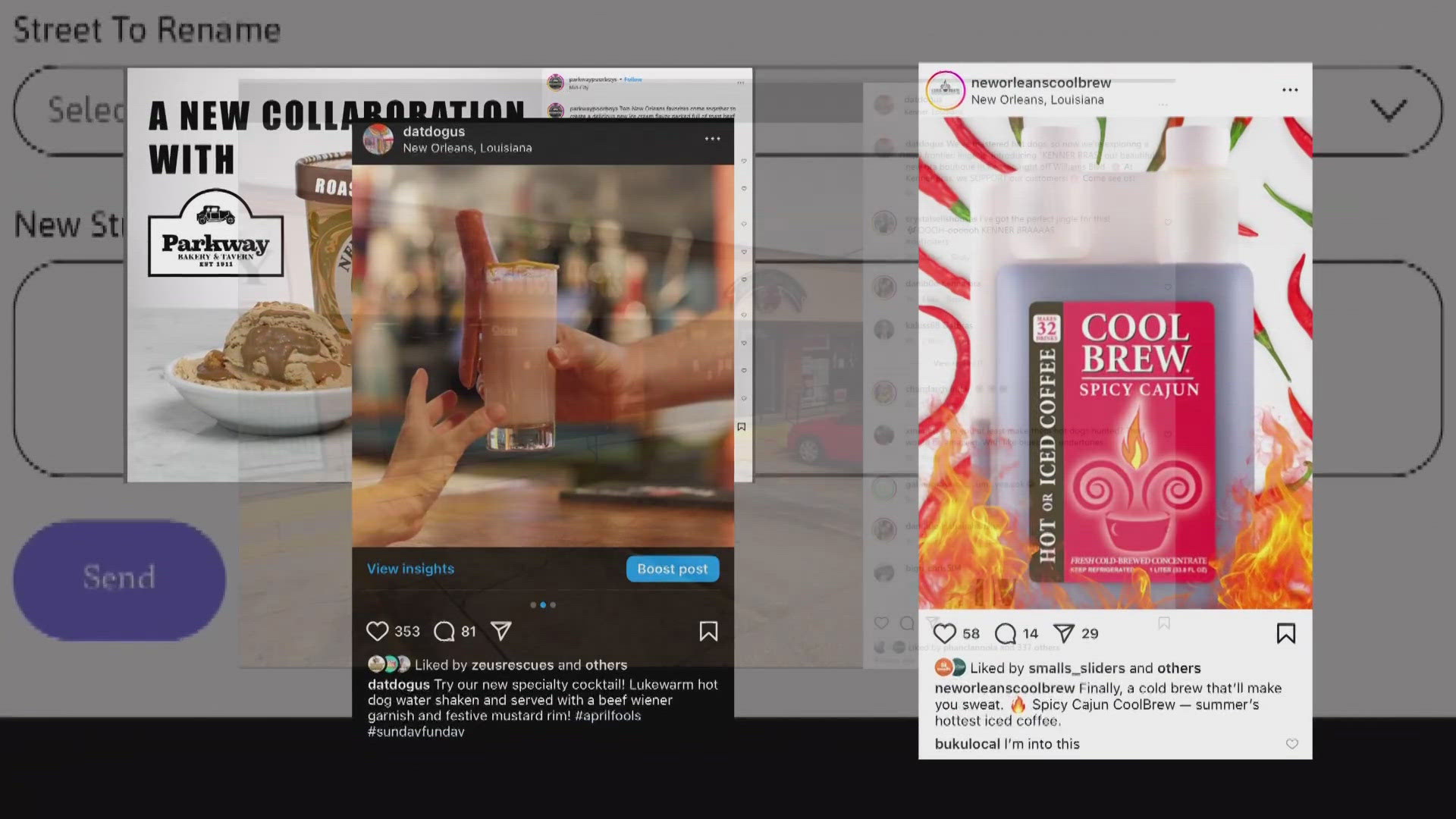
A tech hardware company, for instance, might have released a "mechanical keyboard that runs on steam power." To the general public, this is nonsensical. To the mechanical keyboard community (enthusiasts who value tactile feedback and retro-tech), it was a masterful "deep cut" that acknowledged their specific obsession.
This highlights the Micro-Community Trend. Modern marketing is moving away from broad demographics (e.g., "Men aged 18-35") toward interest-based clusters. Pranks in 2025 functioned as a "shibboleth"—a way for a brand to prove it truly understands the language and pain points of its most dedicated fans. If you "got" the joke, you belonged to the inner circle.
Risk Management and the "Boy Who Cried Wolf" Dilemma
While 2025 offered many success stories, it also highlighted the rising risks of corporate pranks. In an environment of economic volatility and political polarization, a poorly timed joke can result in a stock price dip or a massive PR crisis.
A key trend in 2025 was the inclusion of "The Safety Net" Strategy. This involved brands having a pre-drafted "We’re serious about [Issue]" statement ready to go if a prank was misconstrued as being insensitive to social or environmental causes.
Furthermore, marketers began to grapple with the "Boy Who Cried Wolf" effect. If a brand is constantly using irony and satire, when they have a legitimate, serious product announcement, the audience may treat it with skepticism. The 2025 trend for savvy marketers was to strictly separate "Brand Play" periods from "Product Launch" periods to protect the integrity of their genuine innovations.
Operational Guidance for Future Brand Campaigns
Based on the 2025 landscape, brands looking to engage in stunt-based marketing in 2026 should adhere to several refined principles. First, ensure the "prank" aligns with the core brand promise. If a luxury brand pranks its audience with a "budget line," it may inadvertently devalue its premium positioning.
Second, prioritize the Actionable Landing Page. Every prank should lead to a destination that captures value—whether that is a newsletter sign-up, a discount code for a real product, or a survey that feeds into R&D. In 2025, "empty" pranks that led nowhere were seen as a waste of the consumer's time.
Third, leverage the power of Influencer Co-Conspirators. The most successful 2025 campaigns didn’t start on the brand’s official page. They started with unboxing videos from trusted influencers who were "in on the joke," lending a veneer of third-party credibility that made the eventual reveal more satisfying for the audience.
Frequently Asked Questions
Are April Fools' pranks still effective for B2B companies?
Yes, but the 2025 trends showed that B2B pranks must be even more niche. Successful B2B pranks focused on "pain-point humor"—mocking common industry frustrations like "Endless Zoom Meetings" or "Legacy Software Compatibility." This builds rapport with professional buyers by showing the brand understands their daily struggles.
How did 2025 pranks address sustainability?
Many brands shifted toward "Green Satire." Instead of faking a product, they mocked the industry's own tendency toward "greenwashing." By poking fun at vague environmental claims, brands actually managed to highlight their real, verified ESG (Environmental, Social, and Governance) goals in the follow-up communications.
What is the biggest mistake brands made in 2025?
The biggest mistake was failing to consider global context. A joke that was funny in North America was sometimes seen as offensive or tone-deaf in other regions due to local economic or social conditions. The 2025 trend emphasized the need for "Cultural Sensitivity Audits" even for "lighthearted" campaigns.
Can a prank help with SEO?
Absolutely. The 2025 data showed that "absurd search terms" generated by pranks often led to massive spikes in organic search traffic. When consumers search for a fake product name, the brand has a unique opportunity to own the entire first page of search results and redirect that traffic to their core offerings.
Should small businesses attempt April Fools' stunts?
Small businesses often saw a higher ROI than large corporations in 2025 because they could be more daring. The trend for small businesses was "Hyper-Local Pranks"—jokes involving local landmarks or community figures that encouraged foot traffic or local social media engagement.
Strategic Recommendation
As we move through 2026, the primary takeaway from the 2025 prank cycle is that humor must be functional. Do not launch a campaign simply to be "funny." Instead, design your stunts to serve as high-engagement data collection points. Whether you are testing a new product concept, gauging the effectiveness of a new AI creative tool, or deepening your connection with a niche community, ensure that there is a clear path from the "joke" to your measurable business objectives. Authenticity is the currency of the current market; use April Fools' to prove you know your audience better than your competitors do.