Apache Commons IO is a specialized library within the Apache Commons ecosystem that provides a comprehensive suite of utility classes, filters, and stream implementations designed to simplify Java Input/Output (IO) operations. By abstracting the complex and often verbose standard Java IO and NIO APIs, it allows developers to perform file manipulation, stream management, and directory monitoring with significantly less boilerplate code and higher reliability.
In the landscape of Java development in 2026, the necessity for robust file and data handling remains a cornerstone of enterprise applications. While the standard Java libraries have evolved considerably with the introduction of NIO and NIO.2, Apache Commons IO continues to be an essential dependency for developers who prioritize readable, maintainable, and battle-tested code. This guide explores the library's architecture, core utilities, and advanced features, providing a roadmap for integrating it into modern software projects.
The Role of Apache Commons IO in Modern Java Environments
The primary objective of Apache Commons IO is to fill the functional gaps found in the standard Java Development Kit (JDK). Historically, Java's IO operations were notorious for being cumbersome, requiring multiple lines of code and explicit resource management just to read a simple text file. Although modern versions of Java have introduced streamlined methods in the java.nio.file package, Apache Commons IO maintains its relevance by offering high-level abstractions that are often more intuitive and feature-rich than their standard counterparts.
In a 2026 production environment, developers use this library not just for basic file reading but for its sophisticated file filtering capabilities, directory monitoring tools, and specialized stream implementations. It serves as a bridge between the low-level byte-pushing of the JDK and the high-level business logic required in complex applications.
Core Architecture and Packages
The library is organized into several distinct packages, each targeting a specific area of IO functionality. Understanding these divisions is the first step toward effective utilization:
- org.apache.commons.io: This is the root package containing the most frequently used utility classes like
FileUtils,IOUtils, andFilenameUtils. - org.apache.commons.io.filefilter: A robust set of classes designed to filter files based on names, dates, sizes, and attributes.
- org.apache.commons.io.input and output: These packages contain specialized stream implementations such as
TeeInputStream,CountingInputStream, andNullOutputStream. - org.apache.commons.io.monitor: This package provides a framework for tracking changes in the file system, such as file creation, deletion, or modification, using an observer pattern.
- org.apache.commons.io.comparator: Includes various
Comparatorimplementations for sorting lists and arrays of files based on different criteria.
Comprehensive Utility Classes: FileUtils and IOUtils
The "Big Two" of the library are FileUtils and IOUtils. These classes consist almost entirely of static methods that perform heavy lifting for common IO tasks.
Streamlining File Operations with FileUtils
FileUtils is arguably the most popular class in the library. It handles operations involving java.io.File objects. One of its greatest strengths is its ability to handle recursive directory operations—a task that is surprisingly complex in the standard JDK.
For instance, copying a directory and all its contents in standard Java requires a recursive function that walks the file tree, creates directories, and copies individual bytes. With FileUtils, the copyDirectory method handles this in a single call. Similarly, deleting a non-empty directory is performed via deleteDirectory, which automatically handles the recursive removal of all child files and folders.
Other critical features of FileUtils include:
- Reading and Writing: Methods like
readFileToStringandwriteStringToFileallow developers to move betweenStringdata and file storage with a single line of code, while explicitly specifying the character encoding to avoid platform-dependent bugs. - Space Management: The
byteCountToDisplaySizemethod converts raw byte counts (e.g., 1048576) into human-readable formats (e.g., "1 MB"), which is invaluable for logging and UI displays. - Verification: The
contentEqualsmethod provides a reliable way to check if two files are identical by comparing their actual content rather than just their metadata.
Mastering Data Streams with IOUtils
While FileUtils focuses on the file system, IOUtils focuses on InputStream, OutputStream, Reader, and Writer objects. Its primary mission is to simplify the transfer of data between these streams.
The copy method is the centerpiece of this class. It efficiently transfers bytes from an InputStream to an OutputStream using an internal buffer, eliminating the need for developers to write manual while loops to read and write chunks of data. In 2026, where cloud-native applications frequently stream data between services and storage buckets, the reliability of IOUtils.copy ensures that data integrity is maintained without unnecessary memory overhead.
IOUtils also provides the toString and toByteArray methods, which consume an entire stream and return the result as a String or a byte array. While these must be used carefully with large files to avoid OutOfMemoryError, they are incredibly convenient for processing configuration files, small payloads, and API responses.
Advanced File Filtering and Monitoring
Beyond simple data movement, Apache Commons IO excels at managing file system complexity through its filtering and monitoring sub-systems.
The Power of File Filters
The org.apache.commons.io.filefilter package provides a versatile way to select files. Standard Java IO filters are often limited or require custom implementations of the FileFilter interface. Apache Commons IO provides pre-built filters for almost every conceivable use case:
- Name-based filters:
WildcardFileFilter,PrefixFileFilter, andSuffixFileFilterallow for selecting files based on patterns like "*.log" or "backup-". - Attribute-based filters:
SizeFileFiltercan target files larger or smaller than a specific threshold, whileAgeFileFilterselects files based on their last modification timestamp relative to a specific date or another file. - Logic-based filters:
AndFileFilter,OrFileFilter, andNotFileFilterallow developers to combine multiple criteria. For example, you can create a filter that selects files that are "hidden," "ending in .tmp," and "older than 30 days."
Directory Monitoring with the Monitor Package
One of the most sophisticated parts of the library is the org.apache.commons.io.monitor package. In many enterprise applications, it is necessary to react to file system events—such as a user uploading a file to a specific folder or a system log being updated.
The system uses three main components:
- FileAlterationObserver: This component represents a specific directory and its subdirectories. It periodically checks the state of the file system against a previous snapshot.
- FileAlterationListener: This is an interface that the developer implements to define what should happen when a change is detected. It includes methods like
onFileCreate,onFileChange, andonFileDelete. - FileAlterationMonitor: This is the engine that runs the observers. It can be configured with a specific interval (e.g., check every 5 seconds) and managed as a background thread.
This observer-based approach is often preferred over the standard Java WatchService for certain legacy file systems or when a simpler, polling-based mechanism is more predictable than native operating system events.
Comparison of Standard Java vs. Apache Commons IO
To understand why Apache Commons IO remains a staple in 2026, it is helpful to compare how common tasks are handled in the standard JDK (NIO.2) versus the Commons library.
| Task | Standard Java (NIO.2 / Files) | Apache Commons IO |
|---|---|---|
| Copy Directory | Requires Files.walkFileTree and custom FileVisitor |
FileUtils.copyDirectory(src, dest) |
| Read Text File | Files.readString(path) |
FileUtils.readFileToString(file, encoding) |
| Clean Directory | Manual recursion to delete all children | FileUtils.cleanDirectory(directory) |
| Check File Equality | Files.mismatch(path1, path2) == -1 |
FileUtils.contentEquals(file1, file2) |
| Get File Extension | String manipulation or getFileName().toString() |
FilenameUtils.getExtension(filename) |
| Human Readable Size | Requires custom mathematical logic | FileUtils.byteCountToDisplaySize(size) |
| Stream Data | inputStream.transferTo(outputStream) |
IOUtils.copy(input, output) |
While Java 11 and later (up to Java 25 and 26 in the 2026 timeframe) have significantly improved the java.nio.file.Files class, Apache Commons IO still wins on readability and the breadth of specialized utility methods that prevent developers from "reinventing the wheel."
Specialized Stream Implementations
Apache Commons IO provides several "wrapper" streams that add functionality to existing InputStream and OutputStream objects without changing their core behavior.
TeeOutputStream and Counting Streams
The TeeOutputStream is named after the "T" pipe fitting used in plumbing. It allows a developer to split an output stream into two different branches. For example, as data is being written to a database or a remote server, a TeeOutputStream can simultaneously write that same data to a local log file or a cryptographic digest.
CountingInputStream and CountingOutputStream are invaluable for tracking progress. They maintain a internal counter of the total number of bytes that have passed through the stream. This is essential for building progress bars in UI applications or implementing rate-limiting and usage quotas in backend services.
ReversedLinesFileReader
Reading a file from the bottom up is a common requirement when processing log files, where the most recent and relevant entries are at the end. Standard Java reads from the beginning, which forces the developer to read the entire file into memory just to see the last ten lines. The ReversedLinesFileReader in Apache Commons IO solves this by reading the file blocks from the end, allowing for efficient "tailing" of large files without massive memory consumption.
Strategic Integration and Technical Requirements
As of 2026, Apache Commons IO is a mature and stable library. Integration is typically handled via build automation tools like Maven or Gradle.
Maven Dependencies
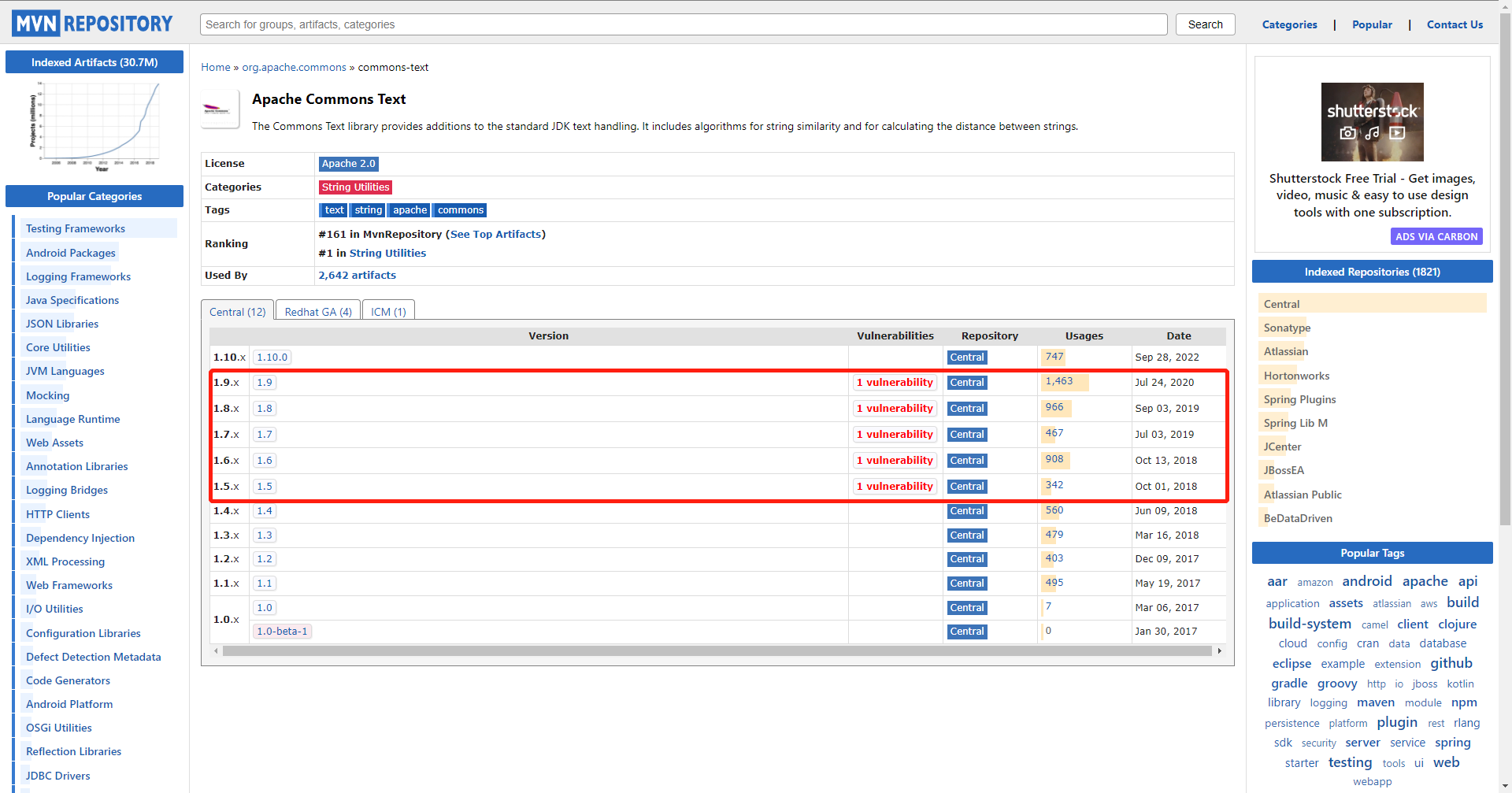
To include the library in a Maven project, developers should use the group ID commons-io and the artifact ID commons-io. While versions fluctuate, the 2.x branch remains the standard for compatibility. It is recommended to use the latest stable release to benefit from security patches and performance optimizations.
Compatibility and Performance
The library is compatible with all modern versions of the Java Virtual Machine (JVM). Its performance is generally comparable to standard Java implementations because it relies on the same underlying IO primitives. However, developers should be mindful of the "utility overhead"—using IOUtils.toString() on a 2GB file will still result in an OutOfMemoryError. The library provides the tools for efficiency, but it does not replace the need for sound architectural decisions regarding data size and memory management.
Frequently Asked Questions
Is Apache Commons IO still necessary with the improvements in Java NIO.2?
Yes. While Java NIO.2 introduced many powerful features, Apache Commons IO provides a higher level of abstraction and many specialized utilities (like ReversedLinesFileReader and FileAlterationMonitor) that are not present in the standard library. It simplifies common tasks from ten lines of code to one.
Is Apache Commons IO thread-safe?
Most utility classes in Apache Commons IO, such as FileUtils, IOUtils, and FilenameUtils, consist of static methods that are thread-safe because they do not maintain internal state. However, specialized stream implementations and the FileAlterationMonitor are stateful and must be managed carefully in multi-threaded environments according to their specific documentation.
How does Apache Commons IO handle large files?
For large files, developers should avoid methods that load the entire file into memory (like readFileToByteArray). Instead, they should use the streaming methods provided by IOUtils.copy or use the lineIterator in FileUtils, which allows for processing a file one line at a time without loading the whole content.
Can I use Apache Commons IO in an Android project? Yes, Apache Commons IO is a pure Java library and is widely used in Android development to simplify file and stream management. It is lightweight enough that it does not significantly impact the size of the final application package.
Does the library support modern character encodings?
Absolutely. Most methods in the library that involve text now require an explicit character encoding (using the Charset class or a string like "UTF-8"). This prevents the common "garbage text" issues caused by different operating systems using different default encodings.
Final Recommendations for 2026
For Java developers working in 2026, Apache Commons IO remains one of the first libraries that should be added to a new project. Its ability to turn complex IO logic into readable, single-line statements is a major contributor to code quality and developer productivity.
To get the most out of the library:
- Prioritize Stream Reuse: Use
IOUtils.copyto move data efficiently between different parts of your system. - Audit for Resource Leaks: Always use the library in conjunction with Java's try-with-resources statement to ensure that files and streams are closed correctly, even when an exception occurs.
- Leverage File Filters: Instead of manual
ifchecks in your file loops, use thefilefilterpackage to create clean, reusable selection logic. - Stay Updated: Regularly update the library via Maven or Gradle to ensure you are protected against any discovered vulnerabilities in file handling.
By following these practices and deeply understanding the utilities provided by Apache Commons IO, you can ensure that your application's IO layer is as efficient and reliable as possible.