Apache OFBiz is an open-source enterprise suite providing a flexible framework for ERP, e-commerce, and CRM. As of 2026, it serves as a robust platform for businesses requiring highly customized workflows, offering total control over data and business logic without the recurring licensing costs associated with proprietary enterprise software.
Understanding the Architecture of Apache OFBiz
Apache OFBiz (Open For Business) is not merely a software application; it is a sophisticated framework designed to provide a common data model and a rich set of business processes. To understand why it remains a top-tier choice for global enterprises in 2026, one must look at its foundational architecture. OFBiz is built on a "service-oriented" philosophy, utilizing the Java language and a multi-layered stack that ensures scalability and modularity.
The Entity Engine
At the heart of OFBiz lies the Entity Engine. Unlike traditional Object-Relational Mapping (ORM) tools that can sometimes obscure the database layer, the Entity Engine provides a transparent way to define and interact with data. It uses XML files to define the data model, which the engine then maps to the underlying relational database (such as PostgreSQL, MySQL, or Oracle). This abstraction allows developers to write business logic that is database-independent. In an era where data sovereignty and portability are paramount, the Entity Engine ensures that an organization’s most valuable asset—its data—remains accessible and structured according to industry standards.
The Service Engine
The Service Engine is the orchestration layer of OFBiz. It manages the execution of business logic, which is encapsulated in "services." These services can be invoked synchronously or asynchronously, scheduled for later execution, or even triggered by specific events in the system. Because services are defined in a standardized way, they are inherently reusable across different modules. For example, a service designed to calculate sales tax can be utilized by the e-commerce storefront, the point-of-sale (POS) system, and the manual order entry screen in the backend.
The Screen Widget and UI Engine
User interface consistency is managed through the Screen Widget system. OFBiz separates the data preparation (the "what") from the visual presentation (the "how"). By using XML-based screen definitions, developers can create complex dashboards and forms that are rendered using FreeMarker templates or other front-end technologies. This separation is crucial for maintaining a platform in 2026, as it allows companies to update their UI to modern standards without rewriting the underlying business rules.
Core Modules and Business Capabilities
One of the primary reasons organizations adopt Apache OFBiz as their open business platform is the breadth of its "out-of-the-box" functionality. While it is a framework, it comes pre-loaded with comprehensive modules that cover the entire lifecycle of a business.
Accounting and Financial Management
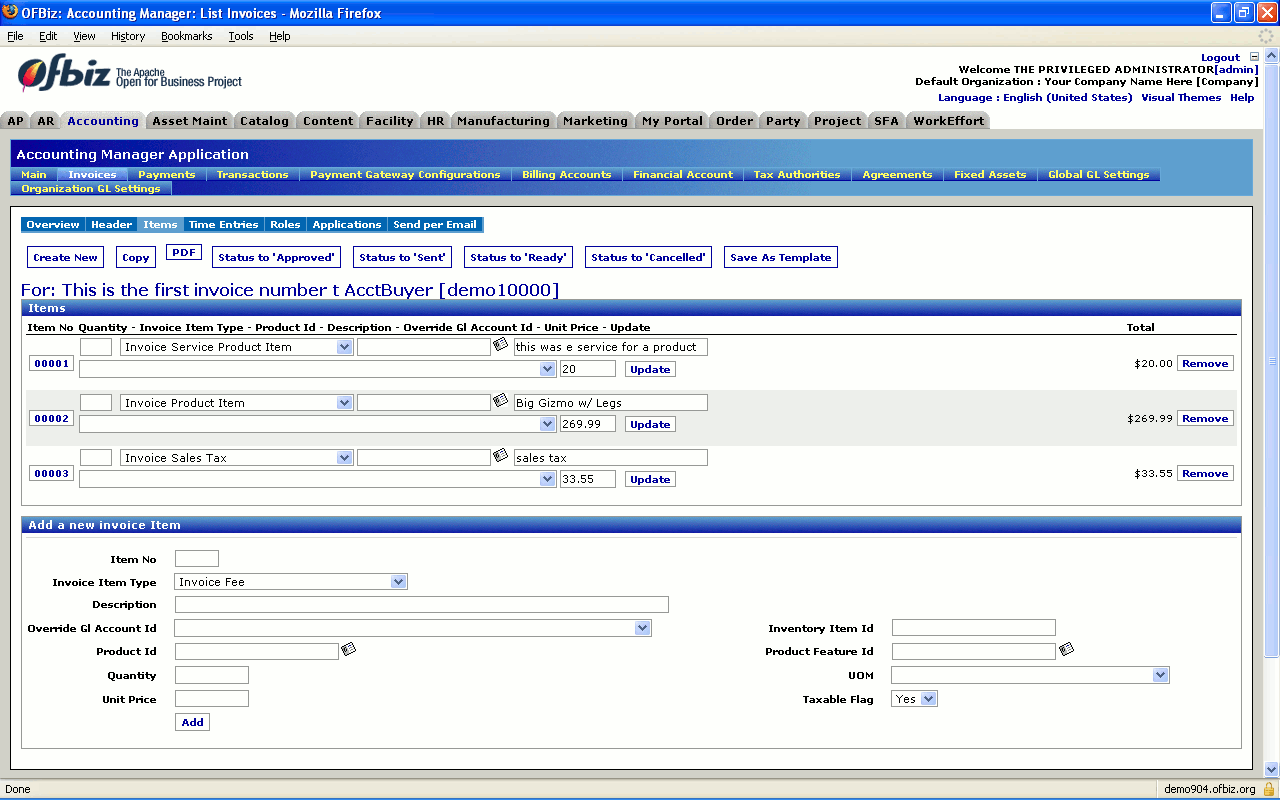
OFBiz provides a sophisticated Double-Entry General Ledger. Many open-source ERPs struggle with the complexity of global accounting standards, but OFBiz was designed with internationalization in mind. It supports multi-currency transactions, complex tax calculations, and automated financial reporting. The accounting module integrates seamlessly with order management, ensuring that every sale or purchase automatically generates the appropriate ledger entries. This reduces the risk of human error and provides real-time visibility into the organization’s financial health.
Supply Chain and Order Fulfillment
In 2026, supply chain resilience is a competitive necessity. The OFBiz Order Management System (OMS) handles the entire process from initial quote to final delivery. It supports complex inventory management across multiple warehouses, drop-shipping scenarios, and automated replenishment cycles. The platform's ability to handle "ATP" (Available to Promise) and "OATP" (Optimized Available to Promise) logic allows businesses to provide customers with accurate delivery dates, even when dealing with global logistics challenges.
Manufacturing and Resource Planning (MRP)
For industrial and manufacturing firms, OFBiz offers a robust Manufacturing Resource Planning suite. This includes Bill of Materials (BOM) management, production routing, task scheduling, and cost tracking. Because the manufacturing module is natively integrated with inventory and accounting, production managers can see the immediate impact of raw material price fluctuations on the final product's margin. This level of integration is often only found in high-cost proprietary systems like SAP or Oracle E-Business Suite.
The Strategic Value of Open Source in 2026
The shift toward open business platforms is driven by more than just cost savings. In the current technological landscape, agility and independence are the primary drivers of enterprise software selection.
Total Cost of Ownership (TCO)
While Apache OFBiz does not charge licensing fees, it is important to distinguish between "free software" and "zero-cost implementation." The TCO for OFBiz involves hosting, development, and maintenance. However, unlike proprietary SaaS models that increase in price as a company scales, the costs associated with OFBiz remain relatively linear. Businesses can invest their budget into customization and innovation rather than per-user license fees.
Avoiding Vendor Lock-in
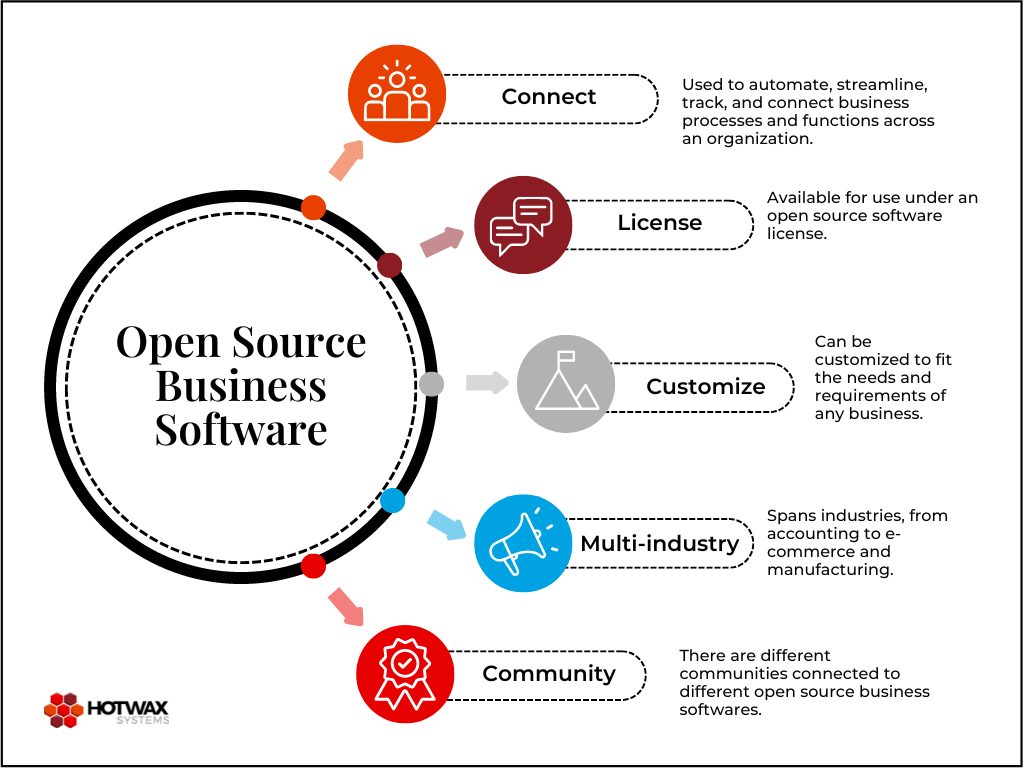
Proprietary software vendors often create ecosystems that make it difficult for customers to migrate away. By using a platform governed by the Apache Software Foundation (ASF), organizations ensure that they own their implementation. They have access to the source code, allowing them to modify the system to meet unique regulatory requirements or specific market niches without waiting for a vendor's roadmap to align with their needs.
Technical Prerequisites and Implementation Strategy
Implementing Apache OFBiz requires a disciplined approach and a specific set of technical competencies. It is not a "plug-and-play" solution but a foundation for building a bespoke business environment.
- Environment Preparation: OFBiz requires a Java Development Kit (JDK), typically version 17 or higher, depending on the specific release branch used in 2026. The build system is managed via Gradle, which handles dependencies and compilation.
- Database Selection: While OFBiz includes an embedded Derby database for testing, production environments should utilize a robust RDBMS like PostgreSQL or MariaDB.
- Deployment Architecture: Modern implementations often leverage containerization (Docker/Kubernetes). This allows for horizontal scaling, where different components of the platform—such as the e-commerce front-end and the backend administrative tools—can be scaled independently based on load.
- Customization via Plugins: The recommended way to extend OFBiz is through the "plugin" architecture. By keeping custom code in separate directories, businesses can more easily upgrade the core OFBiz framework when security patches or new features are released by the Apache community.
Comparative Analysis of Business Platforms
The following table compares Apache OFBiz against other common enterprise software models to help decision-makers evaluate its suitability for their specific needs.
| Feature | Apache OFBiz | Proprietary ERP (e.g., SAP) | Traditional SaaS (e.g., NetSuite) |
|---|---|---|---|
| Licensing Fees | None (Apache License 2.0) | High per-user/module fees | Ongoing monthly/annual subscription |
| Source Code Access | Full access to all code | Strictly prohibited | No access; configuration only |
| Customization | Unlimited; framework-level | Limited to vendor-approved hooks | Limited to API/UI configurations |
| Data Ownership | Complete control; on-prem or cloud | Controlled by vendor storage | Hosted on vendor's cloud |
| Implementation | Complex; requires Java expertise | Very complex; requires consultants | Moderate; guided setup |
| Scalability | High; depends on infrastructure | Very high; enterprise-grade | High; managed by provider |
Common Implementation Challenges and Troubleshooting
Despite its power, Apache OFBiz presents specific challenges that organizations must navigate to be successful.
- Steep Learning Curve: The complexity of the Data Model (with over 800 entities) can be overwhelming for new developers. It is recommended to start by mastering the Data Model Resource Book (which OFBiz follows closely) to understand how various business concepts are represented.
- Performance Tuning: Out of the box, OFBiz is configured for general use. In a high-traffic e-commerce environment, developers must tune the Entity Engine's cache settings and optimize database indexes.
- UI Modernization: The default back-office interface is functional but may not meet the UX expectations of all users in 2026. Many companies choose to build custom front-ends using modern frameworks like React or Vue.js, connecting to OFBiz via its REST API or GraphQL layer.
Future-Proofing with OFBiz in 2026
As we move through 2026, the Apache OFBiz project continues to evolve, integrating modern web standards and focusing on security. The project's longevity is a testament to the strength of the Apache Software Foundation's "community over code" mantra. By choosing OFBiz, a company is not just selecting software; it is opting into a global ecosystem of developers and consultants who contribute to a shared, high-quality codebase.
To ensure long-term success, organizations should contribute their non-proprietary bug fixes and enhancements back to the project. This "upstreaming" of code reduces the maintenance burden during upgrades and strengthens the platform for everyone.
Frequently Asked Questions
Is Apache OFBiz truly free for commercial use?
Yes. Apache OFBiz is released under the Apache License 2.0. This allows you to use, modify, and distribute the software for any purpose, including commercial ones, without paying royalties or licensing fees. You are, however, responsible for the costs associated with server infrastructure, security, and the professional services required to implement and maintain the system.
Can OFBiz handle high-volume e-commerce traffic?
Absolutely. OFBiz is designed for scalability. By using its distributed service engine and properly configuring database clusters, the platform can handle thousands of concurrent transactions. Many large-scale retailers have successfully used OFBiz as the "headless" commerce engine behind high-traffic web stores.
How does OFBiz compare to Odoo?
While both are open-source, they follow different business models. Odoo uses an "open core" model where many advanced features require a paid Enterprise subscription. Apache OFBiz is 100% open source; all features are available to everyone. OFBiz is often considered more of a "framework" for custom development, whereas Odoo is more of a "product" designed for quicker, simpler implementations with less customization.
What are the hardware requirements for running OFBiz in 2026?
For a small-to-medium deployment, a server with at least 8GB of RAM and 4 CPU cores is recommended, as Java applications and the underlying RDBMS are memory-intensive. For enterprise-scale production environments, it is common to use clusters with 32GB+ of RAM per node and high-performance SSD storage for the database layer.
Does OFBiz support RESTful APIs?
Yes, OFBiz has integrated support for exporting services as RESTful endpoints. This allows for easy integration with mobile apps, third-party logistics providers, and modern JavaScript front-ends. In recent years, the community has also made significant strides in supporting GraphQL for more flexible data querying.
Practical Recommendation for New Adopters
For organizations considering Apache OFBiz in 2026, the best first step is a Proof of Concept (PoC) focused on a single, well-defined business process, such as inventory tracking or a specific order workflow. Avoid trying to implement every module at once. Instead, leverage the platform's modularity to replace legacy systems incrementally. Engaging with an experienced OFBiz service provider or architect early in the process can prevent common pitfalls related to data modeling and system performance, ensuring a smoother transition to this powerful open business platform.