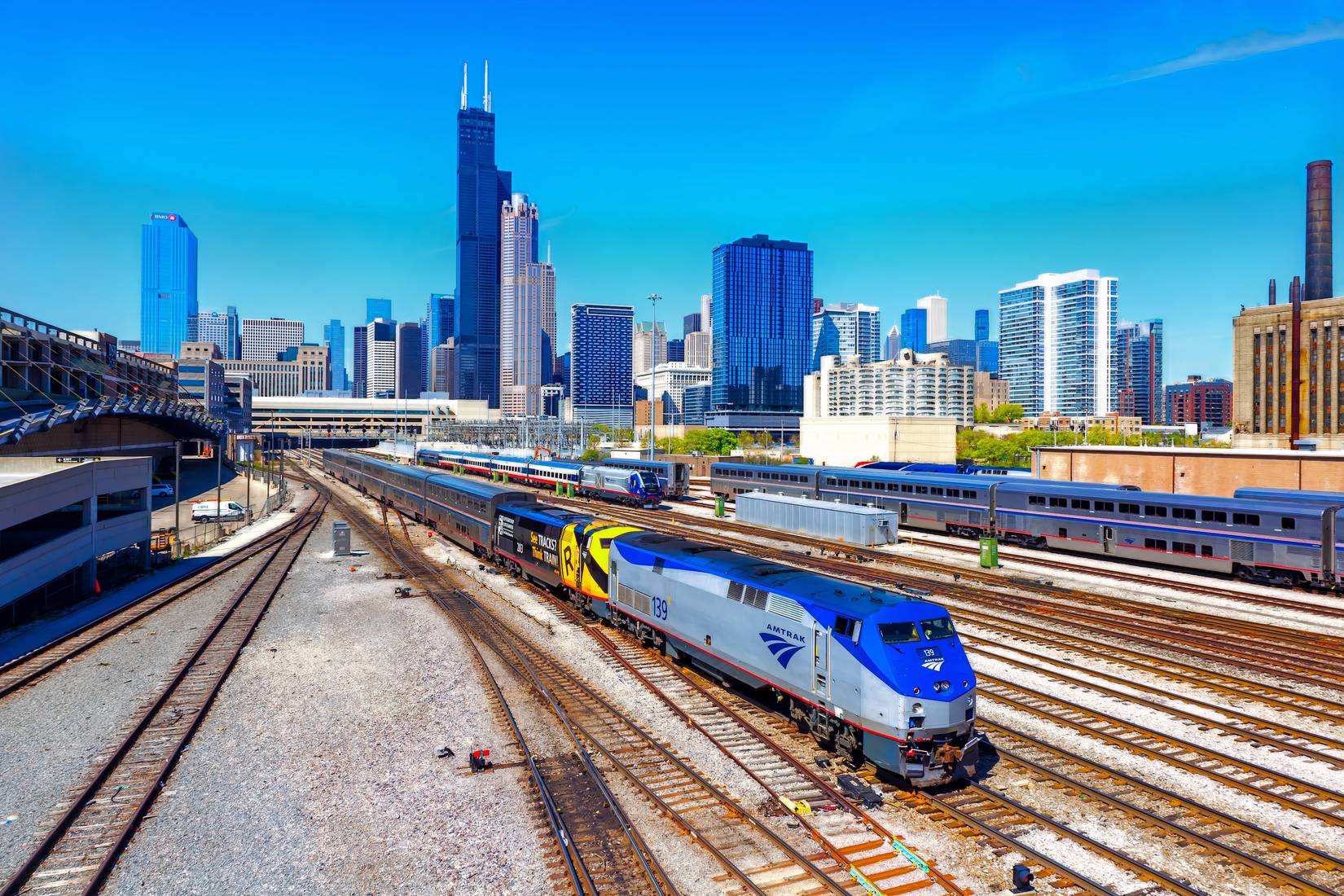
Chicago Union Station serves as the undisputed heart of the Amtrak national network, acting as the primary transfer point between Eastern and Western transcontinental routes and the high-frequency Midwest corridors. In 2026, Amtrak schedules in Chicago offer more than 50 daily arrivals and departures, connecting the "Windy City" to over 500 destinations across North America through a sophisticated web of regional and long-distance services.
Understanding Chicago Union Station (CUS) as a Hub
Chicago Union Station (CUS), located at 225 South Canal Street, is the fourth-busiest station in the Amtrak system. As of 2026, it remains the critical gateway for passengers traveling across the United States. Unlike many other major metropolitan stations that serve as pass-through stops, Chicago is a terminal hub for almost every route that enters the city. This means that for nearly all Amtrak passengers, Chicago is either the final destination or the location for a significant transfer.
The station's layout is divided into two main concourses: the North Concourse and the South Concourse, separated by the Great Hall. Understanding this layout is essential for interpreting your schedule. Regional trains, such as the Hiawatha and the Wolverine, typically depart from specific gate clusters, while long-distance trains like the Empire Builder or California Zephyr require earlier check-in times for baggage and sleeper car boarding.
By 2026, the Chicago Hub Improvement Program (CHIP) has reached several critical milestones, enhancing track capacity and reducing the "bottleneck" effect that historically impacted arrival and departure punctuality. Travelers should note that while schedules are more robust than in previous decades, the station's complexity requires arriving at least 45 to 60 minutes before departure, even for those with digital tickets.
Midwest Corridor Schedules: High-Frequency Regional Rail
The Midwest network represents the bulk of daily traffic at Chicago Union Station. These routes are designed for business travelers, students, and weekend tourists, offering multiple departures throughout the day. In 2026, these services are predominantly operated using the Siemens Venture trainsets and the new Amtrak Airo fleet, providing enhanced speed and modern amenities.
The Hiawatha Service (Chicago – Milwaukee)
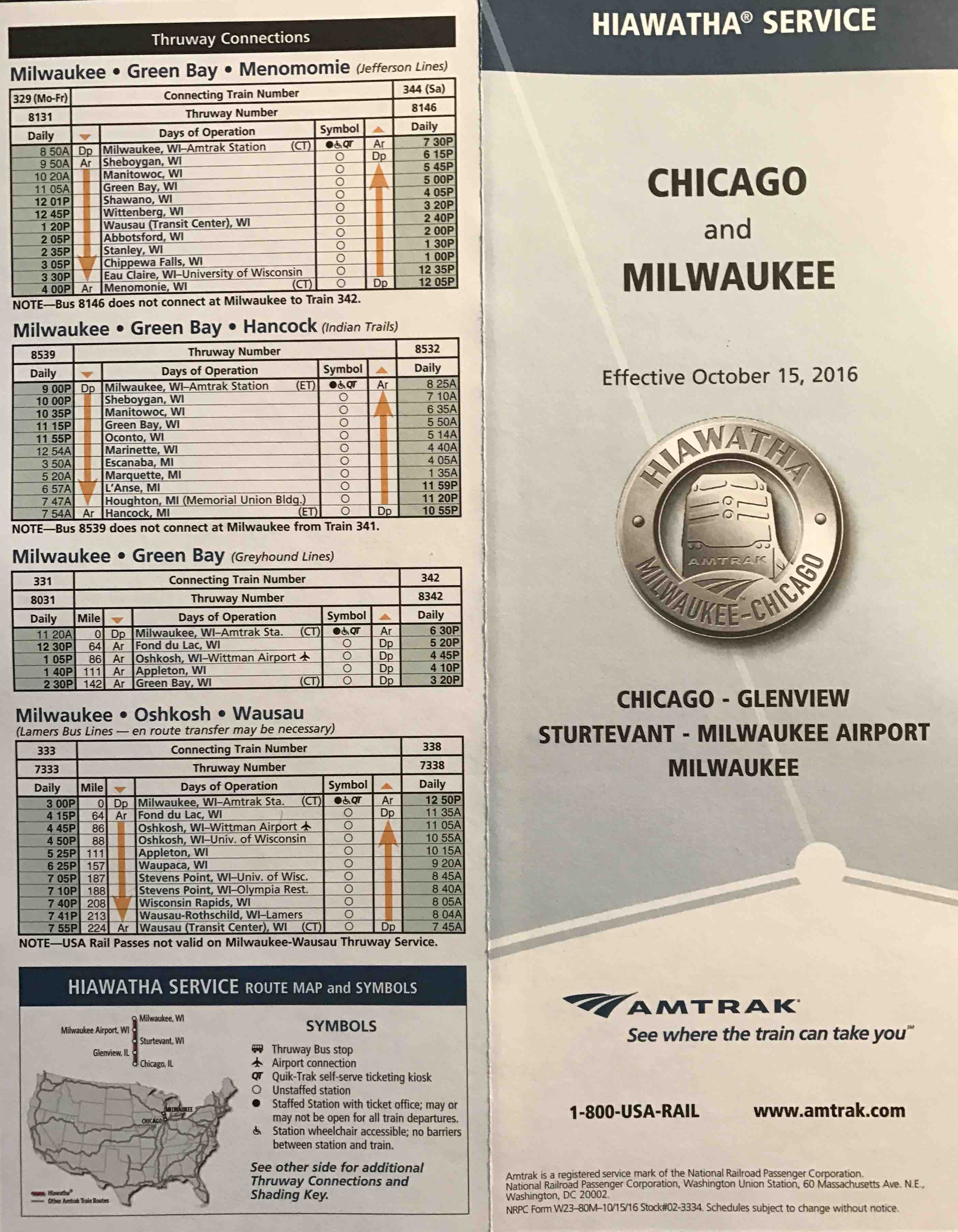
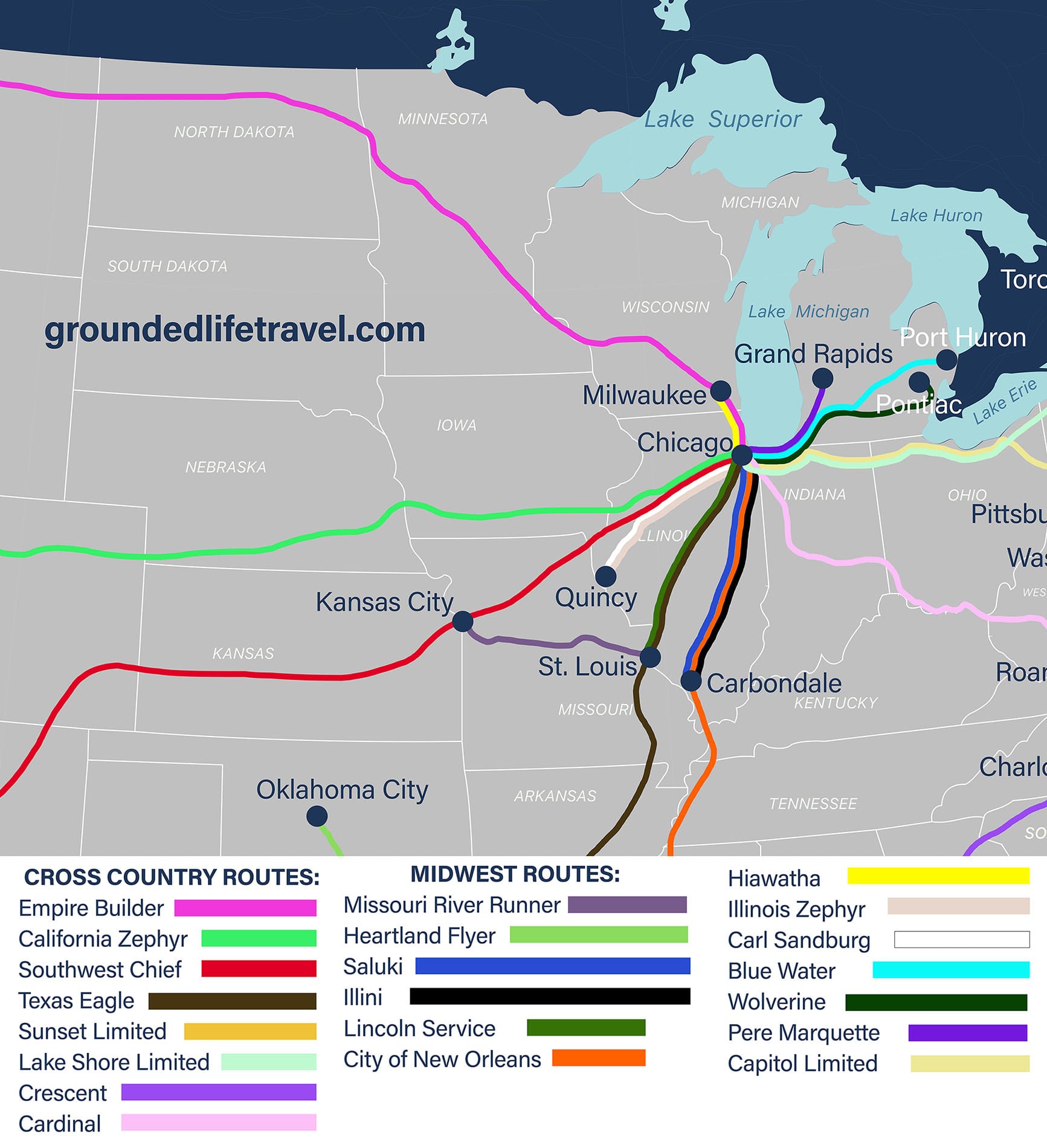
The Hiawatha remains one of the most frequent routes in the system. With seven daily round trips (and additional Friday/Sunday frequencies), it provides a critical 90-minute link between Chicago and Milwaukee. The schedule is optimized for commuters, with early morning departures from Milwaukee Intermodal and late evening returns from Chicago.
The Lincoln Service (Chicago – St. Louis)
A flagship of the Midwest high-speed rail initiative, the Lincoln Service operates four to five daily round trips. Following the full implementation of 110 mph tracks, the journey to St. Louis now takes approximately 4 hours and 45 minutes. Key stops include Joliet, Bloomington-Normal, and Springfield. This route often runs in tandem with the long-distance Texas Eagle, providing a total of six daily options between the two cities.
The Michigan Services (Wolverine, Blue Water, Pere Marquette)
The Michigan corridors connect Chicago to Detroit, Port Huron, and Grand Rapids.
- The Wolverine: Offers three daily departures to Detroit/Pontiac.
- The Blue Water: Provides a single daily morning departure to Port Huron via East Lansing.
- The Pere Marquette: Offers a daily late-afternoon departure to Grand Rapids, ideal for business travelers returning from Chicago.
Transcontinental Routes: Long-Distance Schedules from Chicago
Chicago is the origin and terminus for the legendary "Silver Starter" routes that cross the Great Plains and the Rocky Mountains. These trains usually depart Chicago in the afternoon, allowing passengers from East Coast arrivals (like the Lake Shore Limited) to make their connections.
| Route Name | Primary Destination | Frequency | Typical Chicago Departure | Typical Chicago Arrival |
|---|---|---|---|---|
| Empire Builder | Seattle / Portland | Daily | Mid-Afternoon | Late Afternoon |
| California Zephyr | Emeryville (San Francisco) | Daily | Early Afternoon | Late Afternoon |
| Southwest Chief | Los Angeles | Daily | Late Afternoon | Mid-Afternoon |
| Texas Eagle | San Antonio / Los Angeles | Daily | Mid-Afternoon | Early Afternoon |
| City of New Orleans | New Orleans | Daily | Late Evening | Morning |
| Lake Shore Limited | New York / Boston | Daily | Late Evening | Morning |
| Capitol Limited | Washington D.C. | Daily | Late Afternoon | Morning |
| Cardinal | New York / DC (via Cincinnati) | 3x Weekly | Late Afternoon | Morning |
The Western "Big Three"
The Empire Builder, California Zephyr, and Southwest Chief represent the pinnacle of American rail travel. Their schedules are meticulously timed to the "Chicago Window." For instance, the California Zephyr typically departs Chicago Union Station around 2:00 PM, climbing into the Rockies the following morning. These schedules are more susceptible to delays due to "host railroad" freight traffic, as they traverse thousands of miles of track owned by BNSF or Union Pacific.
The Eastern Connections
The Lake Shore Limited and Capitol Limited provide the primary links to the Northeast Corridor. These trains typically arrive in Chicago in the morning (between 9:00 AM and 10:30 AM), providing a buffer for passengers connecting to westbound trains. Conversely, they depart Chicago in the evening, allowing a full business day in the city before heading east.
How to Access and Verify Real-Time Schedules
In 2026, paper schedules have become nearly obsolete, replaced by dynamic digital tools that reflect real-time conditions. To ensure you have the most accurate information for your journey, use the following methods:
- The Amtrak Mobile App: This is the most reliable source for "live" scheduling. The app provides push notifications for gate assignments and delay alerts. In Chicago Union Station, the app's "Find My Train" feature is essential for navigating the complex boarding process.
- Amtrak.com Schedule Tool: For planning weeks in advance, the official website allows you to download PDF "Timetables" for specific routes. However, always re-verify these 24 hours before travel.
- Transit Display Systems: Once inside Union Station, the large digital boards in the Great Hall and the concourses are the definitive authority on gate assignments and "On Time" status.
- Third-Party Aggregators: While sites like Google Maps provide general Amtrak schedules, they may not reflect temporary "Service Alerts" or track maintenance schedules as accurately as Amtrak’s official Track Your Train tool.
Factors Influencing Schedule Punctuality in 2026
While Amtrak strives for on-time performance, several factors unique to the Chicago hub can influence the schedule.
Host Railroad Interference
Outside of the Northeast Corridor, Amtrak operates mostly on tracks owned by freight companies. In the Midwest, this includes BNSF, Union Pacific, and Norfolk Southern. Freight congestion in the "Chicago Choke Point"—the dense network of tracks surrounding the city—can cause 15-to-30-minute delays for inbound trains.
Seasonal Weather Patterns
Chicago’s climate is a significant variable. During winter months, heavy snowfall and "Polar Vortex" events can lead to modified schedules. Amtrak often implements a "Winter Schedule" for Midwest routes, slightly increasing dwell times to account for slower boarding and track inspections.
Infrastructure Modernization (CHIP)
As part of the Chicago Hub Improvement Program, certain platforms and tracks within Union Station undergo periodic closures for upgrades. These are usually planned months in advance and reflected in the booking system, but they may result in slightly longer travel times during high-construction periods in 2026.
Ticketing, Boarding, and Amenities
The type of ticket you hold determines how you interact with the Chicago schedule.
- Coach Class: Passengers should be at the gate at least 30 minutes before departure. Seating is generally first-come, first-served, though some Midwest routes have transitioned to assigned seating by 2026.
- Business Class: Available on most Midwest routes (Wolverine, Lincoln Service, etc.), this allows for priority boarding, which is a major advantage in the crowded Chicago concourses.
- Sleeper Class (Roomette/Bedroom): Passengers on long-distance trains have access to the Metropolitan Lounge at Union Station. This lounge provides a premium environment to wait for your departure, with complimentary refreshments and dedicated boarding agents who escort you directly to the train.
The Amtrak Airo Fleet Transition
By 2026, the transition to the Amtrak Airo fleet is well underway for routes originating in Chicago. These trains feature self-propelled digital diagnostics that help maintain schedule integrity by reducing mechanical failures. For passengers, this means more reliable departure times and improved onboard Wi-Fi, which is critical for those tracking their own connections via the app.
Connecting to Other Transit in Chicago
The Amtrak schedule is only one part of the journey. Most travelers need to connect to other systems within the city.
- Metra Commuter Rail: Sharing Union Station with Amtrak, Metra provides extensive service to the Chicago suburbs. Schedules are generally synchronized to allow for transfers, particularly on the BNSF and Milwaukee District lines.
- The "L" (CTA): The nearest CTA stations are the Quincy (Brown, Orange, Pink, Purple lines) and Clinton (Blue line) stops. Travelers should allow 15 minutes to walk from the Amtrak gates to these stations.
- O'Hare International Airport: The North Central Service (NCS) Metra line provides a direct link from Union Station to the O'Hare Transfer station, though frequency is limited. Most travelers prefer taking the Blue Line "L" from Clinton.
Strategic Tips for Managing Your Chicago Rail Schedule
- The 2-Hour Rule for Connections: If you are connecting from an inbound long-distance train (e.g., the Southwest Chief) to an outbound one (e.g., the Lake Shore Limited), never book a connection with less than a two-hour buffer. While Amtrak guarantees connections on the same ticket, a missed connection can result in a 24-hour wait for the next day's train.
- Peak Travel Times: Wednesday afternoons and Friday evenings are the busiest times at Chicago Union Station. During these windows, boarding lines can extend deep into the concourse. Plan to arrive earlier during these periods.
- Check Service Alerts: Before heading to the station, check the Amtrak Service Alerts page or their social media feeds for any sudden disruptions caused by track issues or extreme weather.
- Use the Metropolitan Lounge: If you have a long layover in Chicago and are traveling in a sleeper car or have a high-tier Amtrak Guest Rewards status, the Metropolitan Lounge is the best way to monitor the schedule in comfort.
Frequently Asked Questions
What time should I arrive at Chicago Union Station for an Amtrak train?
For regional Midwest trains, arrive at least 45 minutes before departure. For long-distance trains, especially if you are checking baggage or traveling in a sleeper car, arrive 60 to 90 minutes early. Chicago Union Station is large and navigating from the Great Hall to the correct gate can take more time than expected.
Is there a direct train from Chicago to O'Hare Airport?
There is no direct "Amtrak" train to O'Hare. However, you can take the Metra North Central Service from Union Station to the O'Hare Transfer station, or walk two blocks to the CTA Blue Line Clinton station for 24/7 service to the airport.
Are Chicago Amtrak schedules different on weekends?
Yes, many regional routes, particularly the Hiawatha and Lincoln Service, have modified schedules on weekends and holidays. Long-distance transcontinental trains typically maintain the same daily schedule seven days a week, with the exception of the Cardinal, which only operates three days per week.
Can I buy tickets at the station if the schedule shows a train is departing soon?
While there are kiosks and a ticket counter at Chicago Union Station, it is highly recommended to book via the Amtrak app. Some trains, particularly the long-distance routes and peak-hour regional trains, may sell out. Additionally, "unreserved" coach seating is increasingly rare in the 2026 system.
How do I find my gate at Chicago Union Station?
Gate assignments are posted on the large digital monitors located in the North and South concourses about 15 to 30 minutes before departure. You can also find your gate information on the Amtrak mobile app once it has been assigned by station staff.
Practical Recommendation for 2026 Travelers
To maximize your experience with the Amtrak train schedule in Chicago, treat the station as a destination rather than just a transit point. The 2026 upgrades have made Union Station more accessible, but its sheer volume of traffic remains high. Always download your ticket to your smartphone's digital wallet to avoid reliance on station Wi-Fi, and utilize the "Track Your Train" feature on the Amtrak website to see if your inbound equipment is running late. If your schedule allows, a meal in the historic Great Hall is a classic Chicago experience that provides a stress-free buffer before your gate is called.