Amtrak offers a diverse range of travel options including three primary seating classes (Coach, Business, and First Class), various private room configurations for long-distance journeys, and specialized service levels across its 21,000-mile network. Passengers can choose between high-speed Acela service, regional state-supported routes, or cross-country long-distance trains tailored to specific budgets and comfort needs.
Navigating the various Amtrak options is essential for any traveler looking to optimize their journey across the United States. Since the restructuring of its fare system and the continued rollout of new fleet equipment in recent years, the choices available to passengers have become more streamlined yet more specialized. Whether you are a daily commuter on the Northeast Corridor or a tourist embarking on a three-day journey across the Rockies, understanding the nuances of seating, sleeping, and dining options will significantly impact your experience and your wallet.
Understanding Amtrak Seating Classes
The foundation of the Amtrak experience lies in its seating classes. Unlike airlines, even the most basic "Coach" class on Amtrak provides significantly more legroom and comfort than a standard economy flight. However, the specific amenities vary depending on the route and the type of train equipment being used.
Coach Class
Coach class is available on almost all Amtrak routes, with the notable exception of the high-speed Acela. On long-distance trains, Coach seats are designed for overnight travel, featuring significant recline, fold-down leg rests, and padded footrests. In 2026, many of the older Amfleet and Superliner cars have undergone interior refreshes, providing cleaner aesthetics and more reliable power outlets at every seat.
One of the primary benefits of Coach is the lack of a middle seat; the configuration is almost always 2x2. This ensures that every passenger has either window or aisle access. For those traveling on state-supported routes like the Pacific Surfliner or the Lincoln Service, Coach provides a cost-effective way to travel with ample space for luggage in overhead racks or end-of-car shelving.
Business Class
Business Class is the intermediate option, providing a significant step up in amenities for a relatively modest price increase. On many regional routes, Business Class offers:
- Extra Legroom: Seats are spaced further apart than in Coach.
- Complimentary Beverages: Most Business Class tickets include free non-alcoholic drinks (and sometimes a dedicated café service).
- Bonus Points: Members of the Amtrak Guest Rewards program earn a 25% point bonus on Business Class fares.
- Refundability: Business Class tickets are often fully refundable if canceled before departure, providing a layer of flexibility that "Value" Coach fares lack.
On the Northeast Regional, Business Class is the highest tier of service available, often located in a dedicated car at the front or rear of the train to minimize foot traffic.
First Class (Acela Exclusive)
First Class is exclusively offered on the Acela, Amtrak’s flagship high-speed service connecting Boston, New York, and Washington, D.C. By 2026, the new Acela fleet (Avelia Liberty) has become the standard, offering a world-class premium experience. First Class passengers receive:
- At-Seat Dining: Complimentary high-quality meals served on real chinaware.
- Alcoholic Beverages: A selection of beer, wine, and spirits included in the ticket price.
- Lounge Access: Complimentary access to Metropolitan Lounges in major stations like New York Moynihan Train Hall, Philadelphia 30th Street, and Washington Union Station.
- Priority Boarding: Early access to the platform to secure luggage space and settle in.
Private Room Options for Long-Distance Travel
For journeys lasting more than 12 hours, Amtrak’s private rooms (Sleeper Class) are the gold standard. These options transform a seat into a bed and include all meals in the ticket price. The type of room available depends on whether the train uses Superliner (double-decker) or Viewliner (single-level) equipment.
The Roomette
The Roomette is the most economical private option. It features two comfortable seats that face each other during the day and convert into upper and lower berths at night.
- Viewliner Roomettes: These are found on Eastern routes (like the Lake Shore Limited or Silver Meteor). They feature two rows of windows, allowing both the top and bottom bunk passengers to see outside.
- Superliner Roomettes: Found on Western routes (like the Empire Builder or California Zephyr). These are slightly wider but lack the upper window.
- Key Benefit: All Roomette passengers receive "Traditional Dining" or "Flexible Dining" meals included in their fare. While Roomettes do not have en-suite showers, dedicated shower rooms are available at the end of each car.
The Bedroom
For those seeking more space and privacy, the Bedroom is double the size of a Roomette. It includes a large sofa that converts into a lower bed and a narrower upper berth that pulls down from the ceiling.
- En-suite Facilities: Every Bedroom features a private, self-contained "wet room" with a toilet, sink, and shower.
- Seating: A separate armchair is often included, allowing two people to sit comfortably without being cramped.
The Bedroom Suite
A Bedroom Suite is created by combining two adjoining Bedrooms. By removing a privacy partition, travelers get two of everything: two showers, two toilets, and four beds. This is the most luxurious way for a family of four or two couples to travel together across the country.
Family Bedrooms and Accessible Bedrooms
- Family Bedrooms: Exclusive to Superliner trains, these span the entire width of the car. They feature two adult-sized beds and two child-sized beds. They do not have in-room toilets or showers but are located close to the shared facilities.
- Accessible Bedrooms: Designed specifically for passengers with mobility devices. These rooms are located on the lower level of Superliner cars (eliminating the need for stairs) or at the end of Viewliner cars, featuring ample space for a wheelchair and private, accessible bathroom facilities.
Route-Based Options and Frequencies
Choosing the right Amtrak option also involves selecting the service type that matches your destination and schedule. Amtrak categorizes its routes into three distinct buckets.
1. The Northeast Corridor (NEC)
The NEC is the busiest rail corridor in the Western Hemisphere. Options here focus on frequency and speed.
- Acela: Stops only at major hubs and reaches speeds up to 150-160 mph.
- Northeast Regional: Stops at more local stations and is the most affordable way to travel the corridor.
- Keystone Service/Empire Service: These provide high-frequency links between Harrisburg-Philadelphia-New York and New York-Albany, respectively.
2. State-Supported Routes
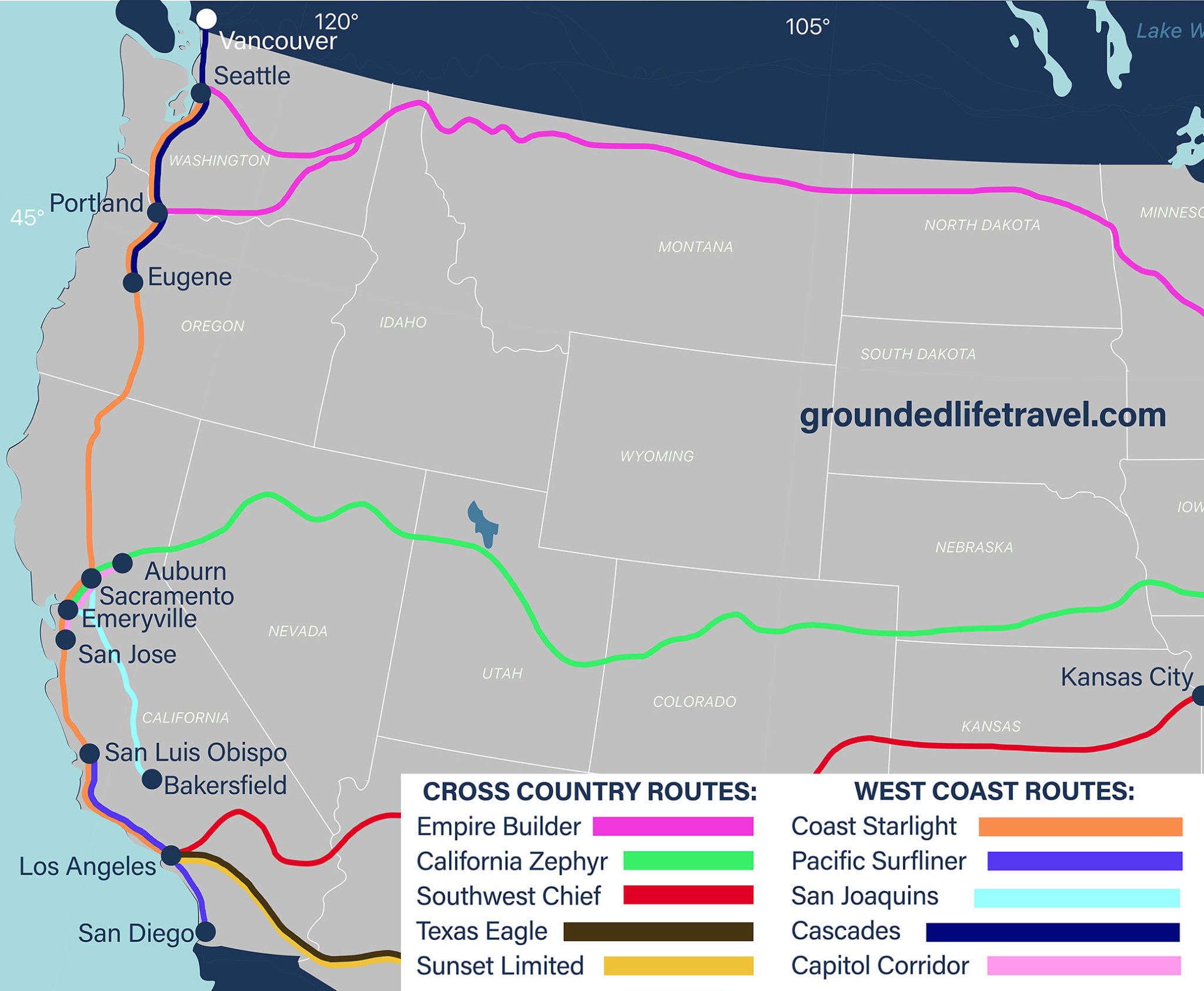
These are shorter routes (usually under 750 miles) funded in part by state departments of transportation. Examples include the Hiawatha (Chicago-Milwaukee), the Cascades (Eugene-Vancouver), and the Downeaster (Boston-Brunswick). These trains often feature "Café Cars" with local food and beverage options, reflecting the regions they serve.
3. Long-Distance Routes
These are the iconic overnight trains. Options on these routes are centered on the "journey as the destination." Because these trains travel through some of the most remote parts of the country, WiFi is often unavailable or spotty, making "unplugging" part of the travel option.
Comparison of Amtrak Travel Classes
The following table compares the primary features of the three main seating tiers and the sleeper class options.
| Feature | Coach Class | Business Class | First Class (Acela) | Sleeper Class (Rooms) |
|---|---|---|---|---|
| Legroom | Excellent (40-42") | Superior (42-45") | Premium (48"+) | Private Cabin |
| Meals Included | No (Available for purchase) | No (Available for purchase) | Yes (Hot Meals) | Yes (Full Dining) |
| Lounge Access | No | No | Yes | Yes |
| Baggage | 2 Carry-on + 2 Personal | 2 Carry-on + 2 Personal | 2 Carry-on + 2 Personal | 2 Carry-on + 2 Personal |
| Bedding | No | No | No | Yes (Turn-down service) |
| Power Outlets | Yes | Yes | Yes | Yes |
| Privacy | Open Cabin | Open Cabin | Open Cabin | Private Door/Curtain |
Additional Customization Options: Pets, Bikes, and Bags
Amtrak allows passengers to customize their trip further through several "add-on" options. These are subject to availability and should be booked as early as possible.
Traveling with Pets
Amtrak allows small dogs and cats (up to 20 pounds including the carrier) on many routes.
- Requirements: The pet must stay in a carrier under the seat at all times.
- Duration: Pet travel is limited to journeys under seven hours.
- Cost: Fees typically range from $29 to $39 depending on the route.
- Note: Only a limited number of "pet slots" are available per train, so early booking is mandatory.
Bringing a Bicycle
Cyclists have several options depending on the equipment:
- Carry-on/Trainside Valet: On many routes, you can hand your bike to a staff member who secures it in a dedicated rack in the luggage or café car.
- Checked Bicycle: On long-distance routes with a baggage car, bikes can be checked like luggage, often requiring a bike box (which Amtrak sells at major stations).
- Fees: Usually range from $5 to $20.
Baggage Policy
One of the best "hidden" options of Amtrak is the generous baggage policy. Most passengers can bring two carry-on bags and two personal items for free. Furthermore, on trains with a checked baggage car, passengers can check up to two bags for free, with additional bags costing approximately $20 each. This is significantly more generous than most 2026 airline policies.
Dining Options Onboard
Dining is a major part of the Amtrak experience, and the "options" here are split based on the type of ticket you hold.
- Traditional Dining: This is the classic white-linen service with a chef on board. As of 2026, it is available to Sleeper Class passengers on most Western long-distance routes. It includes breakfast, lunch, and a three-course dinner.
- Flexible Dining: A more streamlined meal service offered to Sleeper Class passengers on Eastern routes. It features high-quality pre-packaged hot entrées that can be eaten in the lounge car or your private room.
- The Café Car: Available to everyone. It serves snacks, sandwiches, pizza, and beverages (including craft beer and wine). In 2026, many Café Cars have transitioned to "touchless" payment systems and offer more plant-based and gluten-free options than in previous years.
How to Choose the Right Amtrak Option
Selecting the right option depends on your priorities. Use the following logic to decide:
- If you are on a tight budget: Choose Coach Class and bring your own food and a blanket for overnight trips.
- If you are a solo business traveler on the NEC: Choose Acela Business Class for the power outlets, WiFi reliability, and speed.
- If you are traveling with a partner for a special occasion: Book a Roomette or Bedroom on a scenic route like the California Zephyr. The inclusion of meals and the privacy of the room make it a "hotel on wheels" experience.
- If you have mobility issues: Ensure you specifically select the Accessible Bedroom or Lower Level Coach seating. Amtrak’s older Superliner cars require climbing narrow stairs to reach the upper level, which is where standard seats and rooms are located.
Frequently Asked Questions
Is WiFi available on all Amtrak options?
WiFi is available on most short-haul and medium-haul routes, including the Northeast Corridor, the Pacific Surfliner, and the Midwest Hub routes. However, WiFi is generally not provided on long-distance trains like the Empire Builder or Southwest Chief. On these routes, Amtrak encourages passengers to enjoy the scenery or download content before boarding.
Can I upgrade my Amtrak seat after booking?
Yes, passengers can use the Amtrak BidUp program. This allows you to place a "bid" on an upgrade to Business Class, First Class, or a Private Room. If your bid is accepted within 36 hours of departure, you pay the bid amount and receive the upgrade. Alternatively, you can pay the fare difference at any time through the Amtrak app or at a ticket window if space is available.
What is the difference between "Value" and "Flex" fare options?
In late 2023, Amtrak simplified its fare structure. Value fares are lower-priced but have significant cancellation fees (usually 25%) if you change your mind. Flex fares are slightly more expensive but are fully refundable and changeable without penalty up until the time of departure. Both options provide the same onboard seat or room.
Are meals included in Business Class?
On most regional routes, meals are not included in Business Class, though you may receive a complimentary non-alcoholic beverage. The only seating-only class that includes full meals is Acela First Class. All other passengers must purchase food in the Café Car unless they are traveling in a Sleeper Class private room.
Do I need to arrive early for my Amtrak trip?
Amtrak recommends arriving at least 30 minutes before departure for standard boarding. If you are checking bags or traveling with a pet or bicycle, arrive at least 45 to 60 minutes early. If you have access to the Metropolitan Lounge, you can arrive several hours early to enjoy the complimentary snacks and workspace.
Practical Recommendation for Travelers
For the best balance of value and comfort, aim for Business Class on regional day trips and a Roomette for overnight travel. If you are looking to save money, booking at least 14 to 21 days in advance is the most effective way to secure "Value" fares, which can be up to 50% cheaper than last-minute bookings. Always join the Amtrak Guest Rewards program before booking, as even a single long-distance trip can often earn enough points for a free regional "getaway" ticket in the future.