Chicago Union Station serves as the central hub of the Amtrak national network, hosting 15 distinct rail routes that connect the Midwest to every corner of the continental United States. Passengers can access 28 daily departures, ranging from high-speed regional corridors to iconic long-distance sleeper trains reaching Los Angeles, Seattle, New York City, and New Orleans.
Chicago’s status as the "Railroad Capital of America" is not merely a historical designation; it is a functional reality. For travelers in 2026, navigating these routes requires an understanding of the three primary service tiers: long-distance western routes, eastern corridor connectors, and the high-frequency Midwest regional network. This guide explains the nuances of each route, the onboard experience, and the logistics of departing from one of the busiest transit centers in the world.
The Strategic Importance of Chicago Union Station
Every major Amtrak cross-country line, with the exception of the Atlantic Coast routes, converges at Chicago Union Station. This creates a "hub-and-spoke" model where the station acts as the primary transfer point for passengers moving between the East and West Coasts.
In 2026, the station continues to undergo modernization to accommodate increased passenger volume and the integration of newer fleet technology. For travelers, this means improved accessibility and more robust lounge facilities, such as the Metropolitan Lounge, which provides a premium waiting area for sleeper car and business class passengers. Understanding the layout of the station is essential, as departures are split between North and South concourses depending on the route’s final destination.
Western Long-Distance Routes: The Great Transcontinental Journeys
The western routes departing from Chicago are the crown jewels of the Amtrak system. These lines utilize Superliner equipment—double-decker railcars designed for long-haul comfort and sightseeing.
1. The Empire Builder
The Empire Builder is Amtrak’s premier route to the Pacific Northwest. It departs Chicago daily, traveling through the upper Midwest and the northern Rockies.
- Route Path: Travels through Wisconsin, Minnesota, North Dakota, and Montana before splitting in Spokane, Washington.
- Destinations: One section terminates in Seattle, Washington, while the other continues to Portland, Oregon.
- Key Highlights: This route offers unparalleled views of Glacier National Park. In 2026, it remains a favorite for seasonal travelers looking for the "Big Sky" experience.
- Duration: Approximately 45 to 46 hours.
2. The California Zephyr
Widely regarded as the most scenic train ride in North America, the California Zephyr traverses the heart of the Rocky Mountains and the Sierra Nevada.
- Route Path: Chicago to Omaha, Denver, Salt Lake City, and Reno.
- Destination: Emeryville, California (with bus connections to San Francisco).
- Key Highlights: The segment between Denver and Glenwood Springs is a technical marvel of engineering, passing through the Moffat Tunnel and along the Colorado River.
- Duration: Approximately 51 hours.
3. The Southwest Chief
The Southwest Chief follows the historic Santa Fe Trail, offering a faster southern alternative to the California Zephyr for those heading to the West Coast.
- Route Path: Cuts through Iowa, Missouri, Kansas, Colorado, New Mexico, and Arizona.
- Destination: Los Angeles, California.
- Key Highlights: The train passes through the red cliffs of New Mexico and provides the closest rail access to the Grand Canyon via a connection in Williams, Arizona.
- Duration: Approximately 43 hours.
4. The Texas Eagle
This route provides a vital link between the Midwest and the Deep South, eventually merging with the Sunset Limited for through-service to the Pacific.
- Route Path: Travels south through Illinois, Missouri, Arkansas, and Texas.
- Destination: San Antonio, Texas (Daily); continues to Los Angeles three times per week.
- Key Highlights: It serves major Texas metros including Dallas and Austin, making it a critical corridor for regional business and leisure.
- Duration: 32 hours to San Antonio; 65 hours to Los Angeles.
Eastern Long-Distance Routes: Connecting to the Atlantic
Eastern routes from Chicago typically utilize Viewliner or updated single-level equipment to accommodate the tighter tunnel clearances found in older East Coast infrastructure.
5. The Lake Shore Limited
The Lake Shore Limited is the fastest rail connection between Chicago and the major Northeast metropolises.
- Route Path: Follows the southern shore of Lake Michigan and Lake Erie through Indiana, Ohio, and Pennsylvania.
- Destinations: The train splits in Albany, New York, with sections going to New York City (Penn Station) and Boston, Massachusetts.
- Key Highlights: It offers a direct water-level route, avoiding the steep grades of the mountains to provide a smoother, faster ride.
- Duration: 19 to 22 hours.
6. The Capitol Limited
This route connects the Great Lakes region to the nation’s capital, following the historic B&O Railroad path.
- Route Path: Travels through northern Ohio and Pennsylvania.
- Destination: Washington, D.C.
- Key Highlights: The journey through the Allegheny Mountains and alongside the Potomac River offers stunning forest scenery, especially during the autumn months.
- Duration: Approximately 18 hours.
7. The Cardinal
The Cardinal is known for its diversity of scenery, though it operates on a more limited schedule than the daily Lake Shore Limited.
- Route Path: Travels through Indianapolis, Cincinnati, and the New River Gorge in West Virginia.
- Destination: New York City via Washington, D.C., and Philadelphia.
- Key Highlights: The passage through the New River Gorge is often cited as one of the best views in the eastern U.S. rail system. Note that this train typically operates only three days per week.
- Duration: Approximately 28 hours.
Southern and Midwest Regional Routes
The "hub" aspect of Chicago is most visible in its regional services. These routes are often supported by state DOTs (Illinois, Michigan, Wisconsin) and offer higher frequencies and shorter travel times.
8. The City of New Orleans
Made famous by the song of the same name, this route provides a direct north-south artery through the Mississippi Valley.
- Destination: New Orleans, Louisiana.
- Key Highlights: This route is essential for travelers visiting Memphis and the musical heritage sites of the Delta.
- Duration: 19 hours.
9. The Hiawatha and Borealis
The Hiawatha is Amtrak’s busiest corridor in the Midwest, offering multiple round trips daily between Chicago and Milwaukee, Wisconsin. In 2024, the service was expanded with the Borealis route, which extends this corridor all the way to St. Paul, Minnesota, providing a much-needed daytime alternative to the Empire Builder.
10. The Lincoln Service and Missouri River Runner
The Lincoln Service is a high-speed success story. In 2026, most of this corridor supports speeds up to 110 mph, significantly reducing travel time between Chicago and St. Louis, Missouri. Many trains continue as the Missouri River Runner to Kansas City.
11. Michigan Services (Wolverine, Blue Water, Pere Marquette)
The Michigan line is another high-speed corridor, particularly the Wolverine service.
- Wolverine: Chicago to Pontiac/Detroit.
- Blue Water: Chicago to Port Huron.
- Pere Marquette: Chicago to Grand Rapids.
12. Illinois Regional (Illini, Saluki, Carl Sandburg, Illinois Zephyr)
These state-supported trains serve downstate Illinois communities.
- Illini/Saluki: To Carbondale.
- Carl Sandburg/Illinois Zephyr: To Quincy.
Comparison of Major Amtrak Routes from Chicago (2026 Data)
| Route Name | Major Destination | Frequency | Equipment Type | Approx. Duration |
|---|---|---|---|---|
| Empire Builder | Seattle / Portland | Daily | Superliner | 46 Hours |
| California Zephyr | Emeryville (SF) | Daily | Superliner | 51 Hours |
| Southwest Chief | Los Angeles | Daily | Superliner | 43 Hours |
| Lake Shore Limited | New York / Boston | Daily | Viewliner | 19 Hours |
| Capitol Limited | Washington D.C. | Daily | Superliner/Mixed | 18 Hours |
| City of New Orleans | New Orleans | Daily | Superliner | 19 Hours |
| Lincoln Service | St. Louis | 4-5x Daily | Venture / Airo | 5 Hours |
| Wolverine | Detroit / Pontiac | 3x Daily | Venture / Airo | 5.5 Hours |
| Cardinal | New York City | 3x Weekly | Viewliner | 28 Hours |
| Borealis | St. Paul/Minneapolis | Daily | Venture / Airo | 7.5 Hours |
Onboard Classes and Passenger Experience in 2026
By 2026, Amtrak has transitioned much of its short-haul fleet to the Siemens Venture and Amtrak Airo trainsets. These new cars offer enhanced Wi-Fi, larger windows, and improved accessibility. On long-distance routes, however, the traditional sleeper car experience remains the standard for overnight travel.
Coach Class
Coach class on Amtrak is significantly more spacious than economy class on an airline. Seats feature ample legroom, adjustable footrests, and fold-down trays. On long-distance trains (Superliners), coach seats also have a significant recline, making them a viable option for budget-conscious overnight travelers.
Business Class
Available primarily on regional routes like the Wolverine or Lincoln Service, Business Class offers dedicated seating sections, complimentary non-alcoholic beverages, and often a more flexible refund policy.
Private Rooms (Sleeper Service)
For routes exceeding 15 hours, booking a private room is highly recommended. There are three main types:
- Roomettes: Compact spaces with two berths (upper and lower) and access to a shared shower/restroom in the car.
- Bedrooms: Larger spaces featuring a private in-room toilet and shower, and a sofa that converts into a wider lower berth.
- Family Bedrooms: Available only on Superliner trains, these span the entire width of the car and can accommodate two adults and two small children.
Note: All sleeper car tickets are "First Class," meaning they include all meals in the Dining Car and access to station lounges.
Navigating Chicago Union Station: Expert Tips
Chicago Union Station is a complex facility with two main levels. The Great Hall is the iconic waiting area, but most boarding occurs in the subterranean concourses.
- Arrival Time: For long-distance departures, arrive at least 60 minutes early. If you need to check baggage, arrive 90 minutes early.
- Red Cap Service: If you have heavy luggage or mobility issues, look for "Red Cap" staff. They offer complimentary assistance (gratuities expected) and often provide early boarding via motorized carts.
- Baggage Policy: Most long-distance trains allow two checked bags (up to 50 lbs each) for free, plus two carry-ons. Always verify your specific train's baggage car availability, as some regional trains do not have checked baggage service.
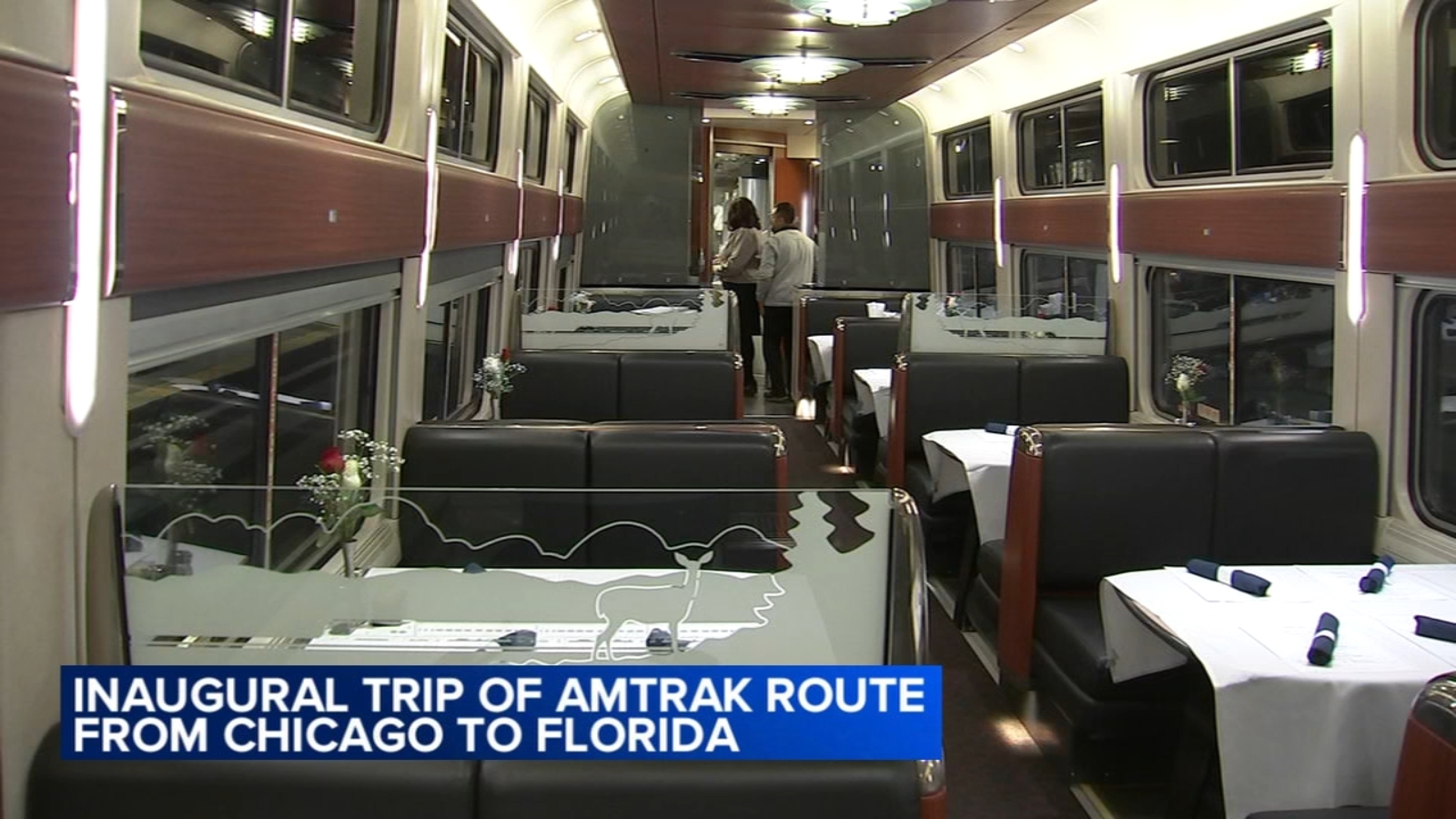
- Dining: While Union Station has a food court, long-distance passengers should note that "Traditional Dining" (chef-prepared meals) is available on western routes, while "Flexible Dining" (pre-packaged hot meals) is the standard for most eastern long-distance routes.
Frequently Asked Questions
What is the fastest Amtrak train from Chicago to New York?
The Lake Shore Limited is the fastest direct rail link, typically taking between 19 and 20 hours to reach New York Penn Station. For those looking for the most modern experience, this route utilizes Viewliner II cars, which feature full-size windows even in the upper berths of sleeper rooms.
Are there high-speed trains departing from Chicago?
While not "high-speed" in the sense of European or Asian bullet trains, the Lincoln Service to St. Louis and segments of the Wolverine to Detroit operate at speeds up to 110 mph. These corridors have seen significant infrastructure investment leading into 2026, making them competitive with driving times.
Can I see the Rocky Mountains on a train from Chicago?
Yes, the California Zephyr is the primary route for mountain viewing. You will board in Chicago, spend the first night crossing the plains, and wake up in Denver. The entire second day is spent traversing the heart of the Colorado Rockies, including the famous Glenwood Canyon.
Is food included in my Amtrak ticket?
If you are traveling in a sleeper car (Roomette or Bedroom), all meals are included in your fare. This includes breakfast, lunch, and dinner in the Dining Car. If you are traveling in Coach class, you must purchase food from the Cafe Car, which serves snacks, sandwiches, and beverages.
Which Chicago Amtrak route is the most scenic?
The California Zephyr is widely considered the most scenic for its mountain views. However, the Empire Builder (for Glacier National Park) and the Cardinal (for the New River Gorge) are also top contenders. For water views, the Lake Shore Limited provides long stretches alongside the Great Lakes.
Practical Recommendation for Travelers
For travelers planning a trip from Chicago in 2026, the best course of action is to book at least 8–12 weeks in advance. Amtrak utilizes a dynamic pricing model similar to airlines; as the train fills up, ticket prices increase significantly.
If you are planning a western transcontinental journey, prioritize the California Zephyr for scenery or the Southwest Chief for speed and reliability. For regional trips within the Midwest, take advantage of the Amtrak app, which provides real-time tracking and digital boarding passes. If your budget allows, the upgrade to a Roomette is the single most effective way to transform a long-distance rail trip from a mere transit method into a genuine vacation experience.