To access the current Amtrak schedule for Chicago, visit the official Amtrak website or mobile app, enter "Chicago, IL (CHI)" as your origin or destination, and select your travel date. Chicago Union Station serves as the primary national hub, hosting over 50 daily arrivals and departures across regional Midwest corridors and iconic long-distance transcontinental routes.
Chicago Union Station (CUS) is the undisputed crossroads of American rail travel. As of 2026, it continues to function as the primary gateway for travelers moving between the East Coast, the West Coast, and the sprawling Midwest. Because Chicago is a terminal or major waypoint for nearly all of Amtrak’s long-distance services, understanding the schedule requires looking at two distinct categories: regional "corridor" trains that run multiple times a day and "long-distance" trains that typically depart once daily.
The Role of Chicago Union Station in the National Network
Chicago Union Station is the fourth-busiest station in the Amtrak system and the busiest outside of the Northeast Corridor. Located at 225 South Canal Street, the station is a monumental structure that has undergone significant renovations leading into 2026 to improve passenger flow and accessibility. For travelers, the "schedule" is more than just a list of times; it is a complex orchestration of departures that utilize two sets of tracks—the North Tracks and the South Tracks—which do not connect directly within the station.
The schedule is built around the "hub and spoke" model. Regional trains act as the spokes, bringing passengers from cities like Milwaukee, Detroit, and St. Louis into the Chicago hub, where they can then connect to long-distance trains heading toward Seattle, Los Angeles, New Orleans, or New York City. In 2026, the synchronization of these schedules is tighter than ever, though travelers are still advised to maintain a minimum of a two-hour layover for guaranteed connections between regional and long-distance services.
Regional Midwest Corridor Schedules
The Midwest corridor services are characterized by higher frequency and shorter travel times. These routes are largely funded through partnerships between Amtrak and state departments of transportation, such as IDOT (Illinois) and WisDOT (Wisconsin).
The Hiawatha Service (Chicago to Milwaukee)
The Hiawatha service is the most frequent route operating out of Chicago. In 2026, it maintains a robust schedule with approximately seven to eight round trips daily. This route is essential for commuters and business travelers between Chicago and Milwaukee’s Intermodal Station, with a total travel time of roughly 90 minutes. Because this is an "unreserved" or "high-frequency" route, the schedule is relatively fixed throughout the year, with departures typically spaced every two to three hours.
The Lincoln Service (Chicago to St. Louis)
Following years of infrastructure upgrades, the Lincoln Service now routinely operates at speeds up to 110 mph on significant portions of the track. This has resulted in a more aggressive schedule, with four to five daily round trips that complete the journey to St. Louis in approximately five hours. For those searching for an Amtrak schedule to Chicago from central Illinois (Bloomington-Normal or Springfield), the Lincoln Service offers the most flexibility.
The Wolverine and Blue Water (Chicago to Michigan)
The Michigan services, including the Wolverine (Chicago to Pontiac/Detroit) and the Blue Water (Chicago to Port Huron), provide several daily departures. The Wolverine typically offers three daily frequencies. These schedules are often subject to "host railroad" delays, as they share tracks with freight carriers, although recent double-tracking projects have improved on-time performance as of 2026.
The Borealis (Chicago to St. Paul)
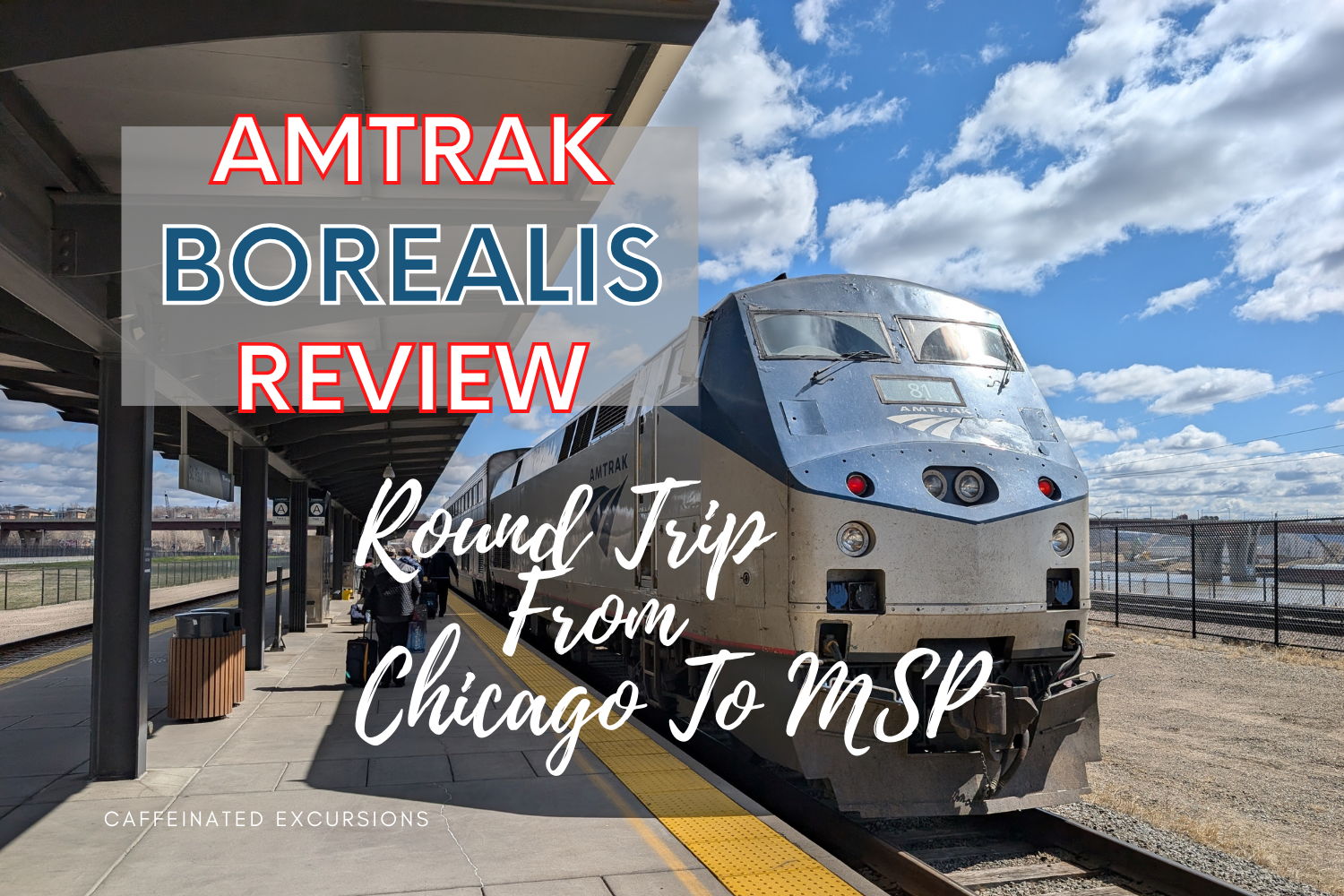
A newer addition to the regional schedule that has seen immense popularity by 2026 is the Borealis. This route complements the long-distance Empire Builder by providing an additional daily mid-day departure between Chicago and St. Paul, Minnesota. It offers a more reliable regional schedule for those not traveling the full distance to the West Coast.
Long-Distance Transcontinental Schedules
Long-distance trains departing from Chicago are the hallmark of the American rail experience. Unlike regional trains, these usually depart only once per day. If you miss your scheduled departure for a long-distance train, you will typically have to wait 24 hours for the next one.
Western Routes (The California Zephyr, Southwest Chief, and Empire Builder)
These three iconic routes depart Chicago in the afternoon, allowing passengers from the East Coast and Midwest to arrive in Chicago during the morning and make their connections.
- California Zephyr: Typically departs in the early afternoon, heading toward Denver, Salt Lake City, and Emeryville (San Francisco area).
- Southwest Chief: Usually departs in the mid-afternoon, following the historic Santa Fe trail through Kansas City, Albuquerque, and on to Los Angeles.
- Empire Builder: Departs in the early afternoon, splitting in Spokane to serve both Seattle and Portland.
Eastern and Southern Routes (Lake Shore Limited, Capitol Limited, and City of New Orleans)
- Lake Shore Limited: This train departs in the evening, providing a direct link to New York City and Boston. It is timed to arrive in the East the following morning.
- Capitol Limited: Connecting Chicago to Washington D.C. via Pittsburgh, this route also features an evening departure.
- City of New Orleans: Heading south through Memphis to New Orleans, this train typically departs Chicago in the evening, arriving in the "Big Easy" the following afternoon.
2026 Chicago Amtrak Route Overview
| Route Name | Major Destination | Frequency | Approx. Duration |
|---|---|---|---|
| Hiawatha | Milwaukee, WI | 7–8 Daily | 1h 30m |
| Lincoln Service | St. Louis, MO | 4–5 Daily | 5h 10m |
| Wolverine | Detroit/Pontiac, MI | 3 Daily | 5h 30m |
| Borealis | St. Paul, MN | 1 Daily | 7h 15m |
| Illini / Saluki | Carbondale, IL | 2 Daily | 5h 30m |
| Illinois Zephyr | Quincy, IL | 2 Daily | 4h 20m |
| California Zephyr | Emeryville, CA | 1 Daily | 52h 00m |
| Southwest Chief | Los Angeles, CA | 1 Daily | 43h 00m |
| Empire Builder | Seattle/Portland | 1 Daily | 46h 00m |
| Texas Eagle | San Antonio/LA | 1 Daily | 32h+ |
| Lake Shore Limited | New York / Boston | 1 Daily | 19h 00m |
| Capitol Limited | Washington D.C. | 1 Daily | 18h 00m |
| Cardinal | New York (via VA) | 3x Weekly | 28h 00m |
How to Read and Verify Your Schedule
In 2026, Amtrak has moved away from traditional printed paper schedules in favor of dynamic, real-time digital displays. To ensure you have the most accurate information, you should understand how to use the following tools:
The Amtrak Mobile App
The app is the most reliable way to check a Chicago schedule. It provides "Track a Train" features that show exactly where your train is in real-time. This is crucial because freight interference or weather can cause "cascading delays." If a train arriving from the West Coast is delayed, it may push back the departure of an East Coast train if equipment or crew members need to be transferred.
Schedule Codes and Symbols
When viewing the schedule, look for specific symbols:
- R (Reserved): Most trains out of Chicago are reserved. You must have a ticket for a specific train and seat/room.
- D (Discharge only): On some inbound Chicago trains, certain stops are "discharge only," meaning the train will stop to let people off but will not pick up new passengers.
- Seasonal Variations: Some routes, particularly those serving national parks (like the Empire Builder or Southwest Chief), may have slightly adjusted times during peak summer months or winter "snow schedules."
The "Cardinal" Exception
The Cardinal, which runs from Chicago to New York via Cincinnati and Washington D.C., is unique because it only operates three days a week. When checking the schedule for this route, you must verify the specific days of operation (typically Tuesday, Thursday, and Saturday departures from Chicago) to avoid planning for a day when the train does not run.
Logistics of Boarding at Chicago Union Station
Navigating the schedule also requires knowing when to arrive at the station. Unlike airports, you do not need to arrive three hours early, but Chicago Union Station is vast.
- Arrival Time: For regional trains (Hiawatha, Lincoln Service), arriving 30–45 minutes before departure is usually sufficient. For long-distance trains with checked baggage or sleeper car accommodations, arrive at least 60 minutes prior.
- The Metropolitan Lounge: If you are traveling in a Sleeping Car (Roomette or Bedroom) or have a Business Class ticket on certain routes, you have access to the Metropolitan Lounge. The lounge staff will provide boarding announcements, often allowing lounge guests to board 5–10 minutes before the general public.
- Boarding Gates: Boarding at CUS takes place in the Concourse Level. Always check the large digital monitors (the "Big Board") in the Great Hall or the Concourse to confirm your gate. Gates are typically divided by "North" and "South."
- Checked Baggage: If your train offers checked baggage (mostly long-distance routes), the cutoff for checking bags is strictly 45 minutes before the scheduled departure.
Factors That Influence the Chicago Schedule
Several external factors can impact the reliability of the Amtrak schedule in Chicago. In 2026, Amtrak works closely with host railroads like BNSF, Union Pacific, and Norfolk Southern, but challenges remain.
Freight Congestion
Chicago is the largest freight rail hub in the world. Almost all Amtrak trains must navigate the "Chicago Choke Point," a complex series of junctions where passenger and freight tracks intersect. Even if a train is on time across the plains of Nebraska, it can lose 30 minutes just entering the Chicago city limits due to freight congestion.
Seasonal Weather
Chicago winters are notorious for impacting rail schedules. Extreme cold can cause "track kinks" or frozen switches. During major winter storms, Amtrak may proactively cancel certain frequencies on regional routes to ensure that the remaining trains have enough crew and equipment to operate safely.
Infrastructure Projects
Under the Federal Railroad Administration’s ongoing modernization programs, track work is common between April and October. These projects may result in "service alerts" where a train's schedule is temporarily adjusted by 15–30 minutes to allow for maintenance windows. Always check the "Service Alerts" section on the Amtrak website 24 hours before your trip.
Frequently Asked Questions
What is the best way to find a PDF of the Chicago Amtrak schedule?
Amtrak no longer produces a single, comprehensive PDF for the entire national system. However, you can generate a custom timetable for a specific route (e.g., Chicago to St. Louis) on the Amtrak website. These "custom schedules" can be downloaded or printed for easy reference during your trip.
Does Amtrak run 24 hours a day in Chicago?
While trains arrive and depart from early morning (approx. 6:00 AM) until late at night (approx. 11:00 PM), the station concourse does not typically have departures in the middle of the night. However, late-arriving long-distance trains may reach Chicago in the early morning hours. Union Station itself has specific operating hours for its waiting rooms and ticketing counters.
Can I buy a ticket at Chicago Union Station right before the train leaves?
Yes, you can purchase tickets at the Quik-Trak kiosks or the ticket windows. However, because most Chicago routes are "reserved," the train may sell out, especially on Friday afternoons or holidays. It is always recommended to book in advance via the app to lock in the scheduled time and a lower fare.
Is there a commuter train schedule that overlaps with Amtrak in Chicago?
Yes, Metra (Chicago’s commuter rail) also operates out of Union Station. It is important not to confuse the two. Metra serves the Chicago suburbs (e.g., Naperville, Aurora, Joliet), while Amtrak serves intercity destinations. Their schedules are separate, although they often share the same platforms.
How do I track a train's status if the schedule is delayed?
Use the "Train Status" feature on Amtrak.com or the mobile app. You can search by train number or by the "Chicago" station code (CHI). This tool provides the estimated arrival and departure times based on the train’s GPS location, which is much more accurate than the static timetable during a delay.
Are there schedules for bus connections from Chicago Union Station?
Yes, Amtrak operates "Thruway Bus" services that connect Chicago Union Station to cities without direct rail service, such as Madison, Wisconsin, or various cities in Michigan. These bus departures are integrated into the Amtrak schedule and can be booked as part of a single itinerary.
Strategic Planning for Your Trip
When relying on the Amtrak schedule in Chicago, the most successful travelers build flexibility into their plans. If you are connecting from a long-distance train (like the California Zephyr) to an East Coast train (like the Lake Shore Limited), never book the tightest possible connection. While the schedule may suggest a two-hour window is sufficient, a four-hour window provides peace of mind in the event of freight-related delays.
For regional travelers, the 2026 schedule offers more "same-day" return possibilities than ever before. With multiple daily frequencies to Milwaukee, Springfield, and Kalamazoo, it is feasible to depart Chicago in the morning and return by mid-evening, making rail a viable alternative to the congestion of Interstate 90 or Interstate 55.
Before heading to the station, always verify your specific train number. Multiple trains may depart for the same general direction within an hour of each other (for example, a Lincoln Service train and a Texas Eagle both heading toward Joliet), and ensuring you are on the correct scheduled service is key to a smooth journey.