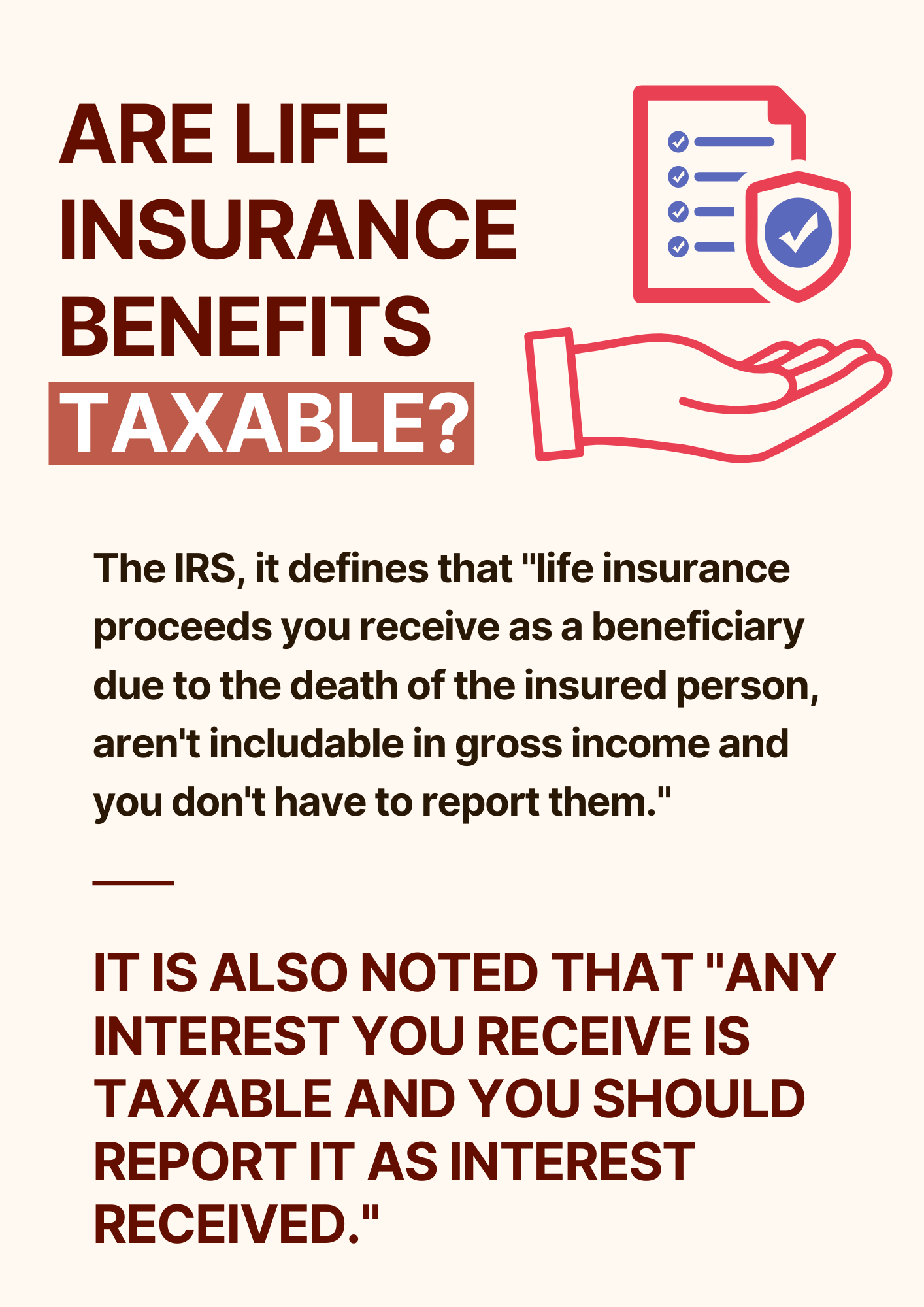
Generally, death benefits received from a life insurance policy are not subject to federal income tax for the beneficiary. However, exceptions exist based on how the policy was structured, whether the payout earned interest after the insured's passing, and whether the transfer involves certain types of retirement accounts or employer-sponsored plans.
When a loved one passes away, navigating the complex web of financial and legal responsibilities can feel overwhelming. Among the most pressing concerns for grieving families is understanding the financial implications of payouts received during this difficult time. While the primary purpose of a death benefit is to provide immediate financial security, tax laws dictate how these funds are ultimately treated by the government.
Understanding whether death benefits are taxable requires a close examination of the source of the funds, the timing of the distribution, and the structure of the policy or account. While life insurance proceeds enjoy a privileged tax-exempt status in most cases, other forms of post-mortem financial transfers—such as retirement accounts, annuities, and employer-sponsored death benefits—are subject to entirely different sets of federal and state tax rules.
The Baseline Rule: Life Insurance Death Benefits
For the vast majority of beneficiaries, the lump-sum payout received from an individual life insurance policy is completely free of federal income tax. Under United States tax code, Section 101(a), gross income typically does not include amounts received under a life insurance contract if paid out by reason of the death of the insured. This means that if your spouse, parent, or partner leaves you a $500,000 life insurance policy, you generally do not have to report that $500,000 as taxable income on your federal tax return.
This exclusion applies regardless of whether the payout is distributed as a single lump-sum check or through a structured settlement of periodic payments. However, it is vital to distinguish between income tax and estate tax. While the beneficiary rarely pays income tax on the principal amount, large estates may still be subject to federal or state estate taxes if the total value of the decedent's estate exceeds statutory thresholds.
Furthermore, this tax-free status applies primarily to the principal death benefit. If the insurance company holds onto the payout for a period of time before distributing it, allowing it to accrue interest, that subsequent interest income is taxable. The beneficiary must report the interest earned on their tax return for the year it was received.
Exceptions Where Life Insurance Payouts Become Taxable
Although individual life insurance proceeds are generally tax-free, several notable exceptions can alter this status. Failing to recognize these exceptions can lead to unexpected tax liabilities during an already stressful period.
1. The Transfer-for-Value Rule
If a life insurance policy is sold or transferred to another party for valuable consideration (such as cash or other property) before the insured's death, the tax-free status of the death benefit may be compromised. Under the transfer-for-value rule, the portion of the death benefit that exceeds the consideration paid, plus any subsequent premiums paid by the new owner, can be treated as taxable ordinary income.
2. Employer-Owned Life Insurance
Policies owned by a business on the life of an employee are subject to stringent disclosure and consent rules under Section 101(j) of the Internal Revenue Code. If the employer fails to properly notify and obtain consent from the employee before issuing the policy, the death benefit may lose its tax-free status, resulting in corporate tax liability for the payout.
3. Policies Owned by Trusts or Estates
If a life insurance policy names the deceased person's estate as the beneficiary rather than an individual, the funds flow into the estate. While the payout itself remains income-tax-free, it becomes part of the probate estate and may be subject to estate taxes, or it could be taxed if the estate distributes the funds to beneficiaries alongside other accumulated income.
Taxation of Retirement Accounts and Annuities
It is a common misconception that all death benefits are derived from traditional life insurance policies. Many individuals leave behind retirement accounts, pensions, or annuities, which carry entirely different tax implications for the beneficiaries who inherit them.
Inherited IRAs and 401(k)s
When a beneficiary inherits a traditional IRA, 401(k), or other tax-deferred retirement account, the distributions are generally treated as taxable ordinary income. Because the original owner contributed pre-tax dollars to these accounts, those funds were never taxed at the time of contribution. Consequently, when the beneficiary withdraws the money, the distributions are subject to income tax.
The Securing a Strong Retirement Act (SECURE Act) significantly altered the timeline for drawing down these accounts. Most non-spouse beneficiaries are now required to empty the inherited retirement account within a 10-year window following the year of the account owner’s death. Strategic planning is often required to spread these withdrawals across multiple tax years to avoid pushing the beneficiary into a higher tax bracket.
Roth IRAs
In contrast, inherited Roth IRAs offer more favorable tax treatment. Because original contributors fund Roth accounts with after-tax dollars, qualified distributions to beneficiaries are generally free from federal income tax. However, non-spouse beneficiaries must still adhere to the 10-year withdrawal rule, meaning the account must be fully liquidated by the end of the tenth calendar year following the death of the original owner, even though the withdrawals themselves are tax-free.
Annuity Death Benefits
Annuity contracts often include a death benefit guarantee, ensuring that a designated beneficiary receives a specific payout if the annuitant dies before the contract begins systematic payouts. The tax treatment of an annuity death benefit depends on the "earnings versus principal" rule. Any portion of the payout representing untaxed earnings or growth within the annuity is treated as ordinary income to the beneficiary, while the return of original principal is generally tax-free.
Employer-Provided Death Benefits and Group Term Life
Many employers offer group term life insurance as part of an employee benefits package. Under IRS regulations, the first $50,000 of group term life insurance coverage provided under a policy carried directly or indirectly by an employer is excluded from the employee's gross income.
However, if an employer provides more than $50,000 of group term life insurance coverage, the cost of coverage exceeding that threshold is considered taxable fringe benefit income (imputed income) and is reported on the employee's W-2 form during their lifetime. Upon the employee's death, the actual death benefit paid out to the beneficiary from a group term life policy is generally income-tax-free, mirroring the treatment of individual policies.
| Benefit Type | Primary Income Tax Status | Key Conditions & Exceptions |
|---|---|---|
| Individual Life Insurance | Tax-Free | Principal is tax-free; any interest accrued after the date of death is taxable. |
| Traditional IRA / 401(k) | Taxable | Distributions are taxed as ordinary income; subject to the 10-year rule for non-spouses. |
| Roth IRA | Tax-Free | Distributions are tax-free, but non-spouse beneficiaries must empty the account within 10 years. |
| Annuity Contracts | Partially Taxable | Growth and earnings are taxed as ordinary income; original principal is tax-free. |
| Group Term Life Insurance | Tax-Free | Payout is tax-free up to and exceeding the $50,000 employer-provided threshold. |
State-Level Taxes and Estate Considerations
While federal tax rules govern income and estate taxes at a national level, beneficiaries must also consider state-level tax laws. A handful of U.S. states levy their own estate taxes or inheritance taxes, which can impact the ultimate distribution of death benefits.
Estate Tax vs. Inheritance Tax
- Estate Tax: Levied on the overall estate of the deceased before distribution to beneficiaries. A few states have estate tax thresholds significantly lower than the federal exemption limit.
- Inheritance Tax: Levied directly on the individual receiving the inheritance. Depending on the state and the relationship between the deceased and the beneficiary (e.g., child vs. distant relative), tax rates can vary widely. Spouses are almost universally exempt from state inheritance taxes.
Reviewing the specific statutes of the state where the decedent resided at the time of death is essential for determining whether local tax obligations apply to any portion of the inherited assets.
Frequently Asked Questions
Do I need to report a life insurance payout on my federal tax return?
If the payout is from a standard individual life insurance policy and represents only the standard death benefit, you generally do not need to report it as taxable income, meaning it does not need to be listed on your Form 1040. However, if the payout included interest earnings, the insurance company will issue a Form 1099-INT, and that specific interest portion must be reported.
Are death benefits from accidental death policies taxable?
Accidental death and dismemberment (AD&D) insurance payouts follow the same general tax rules as traditional life insurance policies. The principal benefit paid upon death is typically income-tax-free for the beneficiary, provided the policy was purchased with after-tax dollars and does not fall under specific corporate or transfer-for-value restrictions.
What happens if the life insurance company pays interest on the death benefit?
When an insurance company delays the distribution of a death benefit and holds the funds in an interest-bearing account or settlement option, the principal remains tax-free, but the interest generated is considered taxable income. The recipient will receive tax documentation detailing the exact amount of interest earned during the tax year.
How are death benefits taxed if paid to a trust?
When a trust is designated as the beneficiary, the tax treatment depends on how the trust distributes the funds. If the trust immediately passes the tax-free life insurance proceeds through to the final human beneficiaries, those funds remain tax-free. However, if the trust retains the funds and invests them, any subsequent income generated by those assets inside the trust becomes subject to trust income tax rules.
Are veterans' death benefits subject to income tax?
Death gratuities, survivor benefit plans, and VA dependency and indemnity compensation (DIC) provided to the families of military service members and veterans are generally exempt from federal income tax. These benefits are designed to support surviving dependents without imposing additional financial or tax burdens.
Next Steps and Professional Guidance
Determining the exact tax implications of a death benefit requires careful review of the policy documents, account statements, and the relationship between the deceased and the beneficiary. Because tax laws are subject to legislative changes and individual financial situations vary significantly, consulting a certified public accountant (CPA), financial planner, or estate attorney is strongly recommended before making major financial decisions or liquidating inherited accounts.