The Dutch are fundamentally a Germanic people. This classification is primarily based on three pillars: their language, which belongs to the West Germanic branch; their ancestral descent from ancient Germanic tribes such as the Franks, Saxons, and Frisians; and their shared genetic and cultural heritage with other Northern European populations like the Germans and Scandinavians.
The Linguistic Foundation: Dutch as a West Germanic Language
To understand if the Dutch are Germanic, one must first look at the language. In the field of historical linguistics, Dutch is classified as a West Germanic language, placing it in the same family as English, German, Yiddish, and Afrikaans. As of 2026, linguistic research continues to affirm that Dutch occupies a unique middle ground between the "High" dialects of German and the "Insular" developments of English.
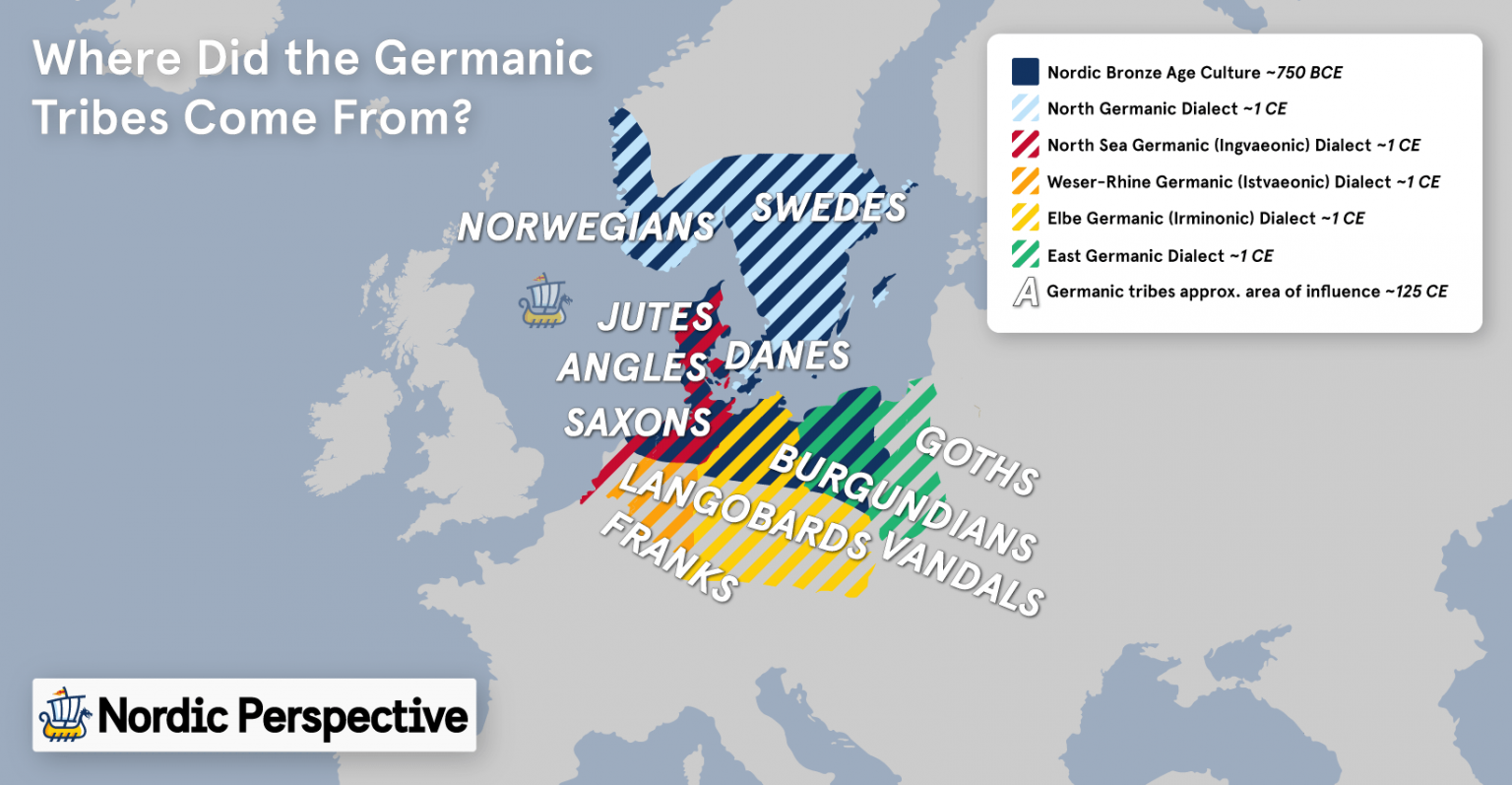
The Germanic language family is a branch of the broader Indo-European family. Thousands of years ago, a group of speakers used what scholars call Proto-Germanic. As these tribes migrated across Europe, the language split into three main branches: North Germanic (leading to Swedish, Danish, Norwegian, and Icelandic), East Germanic (now extinct, including Gothic), and West Germanic.
Dutch evolved from Old Frankish (Old Low Franconian), the language spoken by the Salian Franks. While High German underwent the "High German Consonant Shift" between the 3rd and 9th centuries—changing sounds like "p" to "pf" or "f" (e.g., the English "apple" became the German "Apfel")—Dutch did not participate in this shift. This makes Dutch phonologically more similar to English in many respects, even though its vocabulary and grammar often mirror German.
Comparison of Germanic Cognates
To illustrate the Germanic relationship, consider the following basic words across the three most prominent West Germanic languages:
| English | Dutch | German (High) |
|---|---|---|
| Water | Water | Wasser |
| Brother | Broeder | Bruder |
| House | Huis | Haus |
| Book | Boek | Buch |
| Ship | Schip | Schiff |
As seen in the table, Dutch often retains a middle position. It shares the "t" sound in "water" with English, whereas German shifted it to "ss." Yet, in terms of spelling and vowel structure, it frequently aligns more closely with German. This linguistic continuity is the most undeniable proof of the Dutch people's Germanic identity.
Historical Origins: The Germanic Tribes of the Low Countries
The ethnic identity of the Dutch is rooted in the tribal migrations of late antiquity. The region now known as the Netherlands was not a vacuum; it was a crossroads for several powerful Germanic groups. By the early Middle Ages, three primary groups had coalesced to form the base of the modern Dutch population.
The Salian Franks
The most influential group was the Franks, specifically the Salian Franks. Originating from the Lower Rhine region, they eventually expanded south into Gaul (modern France) and east into what is now Germany. While the southern Franks eventually adopted a Latin-based language (becoming the French), the northern Franks in the Low Countries retained their Germanic tongue. The Frankish legacy is the backbone of the Dutch state; the Dutch monarchy and many legal traditions can be traced back to the Merovingian and Carolingian periods of the Frankish Empire.
The Frisians
The Frisians are one of the few Germanic tribes mentioned by Roman historians, like Tacitus, that still exist today under the same name. They occupied the coastal regions of the North Sea. The Frisians were primarily a maritime people, and their influence remains strong in the northern province of Friesland, where West Frisian—a language even more closely related to English than Dutch is—is still spoken.
The Saxons
In the eastern parts of the Netherlands, the Saxons settled. These were the same tribes that migrated to Britain to become the "Anglo-Saxons." The Low Saxon dialects spoken in the eastern Netherlands today are part of a dialect continuum that stretches into Northern Germany. These tribes brought with them specific agricultural practices and social structures that distinguished the eastern Netherlands from the Frankish-dominated south.
Ethnic and Genetic Perspectives in 2026
Modern genomic science has provided a more granular look at the Germanic identity of the Dutch. As of 2026, large-scale DNA studies and biobank projects have mapped the genetic landscape of Europe with high precision. The Dutch population consistently clusters within the North Sea Germanic genetic group.
Genetically, the Dutch are characterized by high frequencies of certain Y-DNA haplogroups, most notably R1b-U106, which is often referred to as the "Germanic" branch of R1b. They also show significant levels of Haplogroup I1, which is most common in Scandinavia. This genetic makeup confirms that the Dutch share a common ancestor with people in Northern Germany, Denmark, and South East England.
However, it is important to note that the Netherlands has always been a hub for trade and migration. Throughout the centuries, particularly during the Dutch Golden Age in the 17th century, the Netherlands welcomed refugees and merchants from across Europe, including Huguenots from France and Sephardic Jews from the Iberian Peninsula. While these groups contributed to the cultural fabric, the core genetic "blueprint" of the Dutch population remains overwhelmingly Germanic.
Disambiguation: "Dutch" vs. "Deutsch"
A common source of confusion for English speakers is the similarity between the words "Dutch" and "Deutsch" (the German word for German). This is not a coincidence; it is a remnant of a shared Germanic past.
The term "Dutch" is derived from the Old Germanic word theodiscus, which literally meant "of the people" or "the popular language." This was used to distinguish the local Germanic dialects from the Latin used by the church and the elite. Until the late 16th and 17th centuries, English speakers used "Dutch" to refer to any West Germanic speaker, including those in modern-day Germany, Austria, and Switzerland.
Over time, as the Dutch Republic emerged as a global maritime power and established a distinct national identity separate from the Holy Roman Empire, the English language began to use "Dutch" specifically for the inhabitants of the Low Countries. Meanwhile, the people of Germany became known as "Germans" in English, though they continued to call themselves Deutsch. Thus, the "Dutch" are essentially the branch of the Germanic "people" who established an independent maritime republic in the Rhine delta.
Dutch Cultural Ties to the Germanic World
While the Dutch have a very distinct national identity, many of their cultural foundations are shared with other Germanic nations. These ties are visible in their legal systems, social values, and even architecture.
- The Polder Model and Consensus: Much like the Scandinavian "Nordic Model" or the German "Social Market Economy," the Dutch emphasize consensus and cooperation. This is often attributed to the historical need for Germanic tribes in the Low Countries to work together to build dikes and manage water, regardless of social status.
- Architecture: The traditional brick architecture found in Amsterdam or Delft is part of the "Brick Gothic" or "Northern Renaissance" style that stretches across the Germanic coastal regions from Bruges to Hamburg and up to Stockholm.
- Work Ethic: The "Protestant Work Ethic," a concept famously analyzed by Max Weber, is deeply ingrained in Dutch society. This emphasis on frugality, hard work, and pragmatism is a hallmark of the Northern Germanic, post-Reformation world.
Key Differences Between Dutch and Other Germanic Groups
While the Dutch are Germanic, they are not identical to their neighbors. Geography and history have shaped them into a unique subgroup.
| Feature | Dutch | German (High) | English |
|---|---|---|---|
| Language Branch | West Germanic (Low) | West Germanic (High) | West Germanic (Insular) |
| Consonant Shift | No (Retains hard 'p', 't', 'k') | Yes (Shifted to 'pf', 'ss', 'ch') | No |
| Historical Focus | Maritime/Global Trade | Continental/Industrial | Maritime/Imperial |
| Dominant Tribes | Franks, Frisians, Saxons | Alamanni, Bavarians, Saxons | Angles, Saxons, Jutes |
| Religious History | Mixed (Calvinist North/Catholic South) | Mixed (Lutheran North/Catholic South) | Anglican/Protestant |
The Dutch identity is uniquely defined by the struggle against water. While other Germanic groups focused on land expansion or mountain defense, the Dutch became masters of the sea. This maritime focus led to a more outward-looking, cosmopolitan version of Germanic culture compared to the historically more insular or continental Germanic states.
Frequently Asked Questions
Are Dutch people Vikings?
While the Dutch are not "Vikings" in the sense of the medieval Scandinavian raiders, they share common Germanic ancestors with the Norse. During the Viking Age, certain coastal parts of the Netherlands (especially Frisia) were frequently raided and occasionally settled by Danes. However, the Dutch are primarily descended from the West Germanic tribes (Franks/Saxons) rather than the North Germanic tribes (Norse).
Is Dutch closer to English or German?
Linguistically, Dutch is often considered a "bridge" between English and German. It is grammatically more similar to German (retaining some case-related structures and word order rules), but phonetically it sounds more like English because both languages opted out of the High German Consonant Shift. A person who speaks both English and German can usually read Dutch with a high degree of comprehension.
Do the Dutch consider themselves Germanic?
In a scientific, linguistic, and historical sense, yes. However, in everyday life, the term "Germanic" is rarely used as a self-identifier. Most Dutch people identify primarily as "Dutch" (Nederlands) or "European." The term "Germanic" sometimes carries unwanted political baggage from the 20th century, so it is more commonly used in academic or ancestral contexts rather than as a modern nationalist label.
Are the Flemish people also Germanic?
Yes. The Flemish people of northern Belgium speak a variant of the Dutch language and share the same Frankish ancestry as the Dutch. They are ethnically and linguistically Germanic. The primary historical difference is that the Dutch were largely influenced by the Protestant Reformation and the Dutch Republic, while the Flemish remained under Catholic Habsburg rule for much longer.
Is Dutch a "Low German" dialect?
Technically, Dutch is not a dialect of German; it is a separate language. However, it belongs to the "Low" side of the Germanic spectrum (Low Franconian), meaning it originated in the lowlands of the Rhine delta. It is closely related to "Low German" (Plattdeutsch) spoken in Northern Germany, to the point where speakers of both can often understand each other.
Recommendation for Further Exploration
For those interested in the deep roots of the Dutch Germanic identity, the best next step is to explore the National Museum of Antiquities (Rijksmuseum van Oudheden) in Leiden. Their exhibits on the Roman period and the "Dark Ages" provide physical evidence of the Germanic tribes—their jewelry, weapons, and tools—that eventually formed the Dutch nation. Additionally, for linguistic enthusiasts, comparing the Heliand (an Old Saxon epic) with modern Dutch and English offers a fascinating look at how these Germanic dialects once existed as a single, interconnected web of speech.