For the 2025 tax year, charitable donations are tax-deductible only for taxpayers who choose to itemize their deductions on Schedule A (Form 1040). While the temporary "above-the-line" deduction for non-itemizers available in previous years has expired, those who itemize can generally deduct cash contributions up to 60% of their Adjusted Gross Income (AGI).
Charitable giving is a cornerstone of American philanthropy, and the tax code continues to encourage this through various incentives. However, as we enter the 2026 filing season to report on the 2025 tax year, it is vital to understand that the rules governing these deductions are specific and rigid. Navigating the intersection of altruism and tax strategy requires a clear understanding of what qualifies as a "qualified organization," how to value non-cash gifts, and the rigorous documentation standards required by the Internal Revenue Service (IRS).
The Fundamental Requirement: Itemizing vs. the Standard Deduction
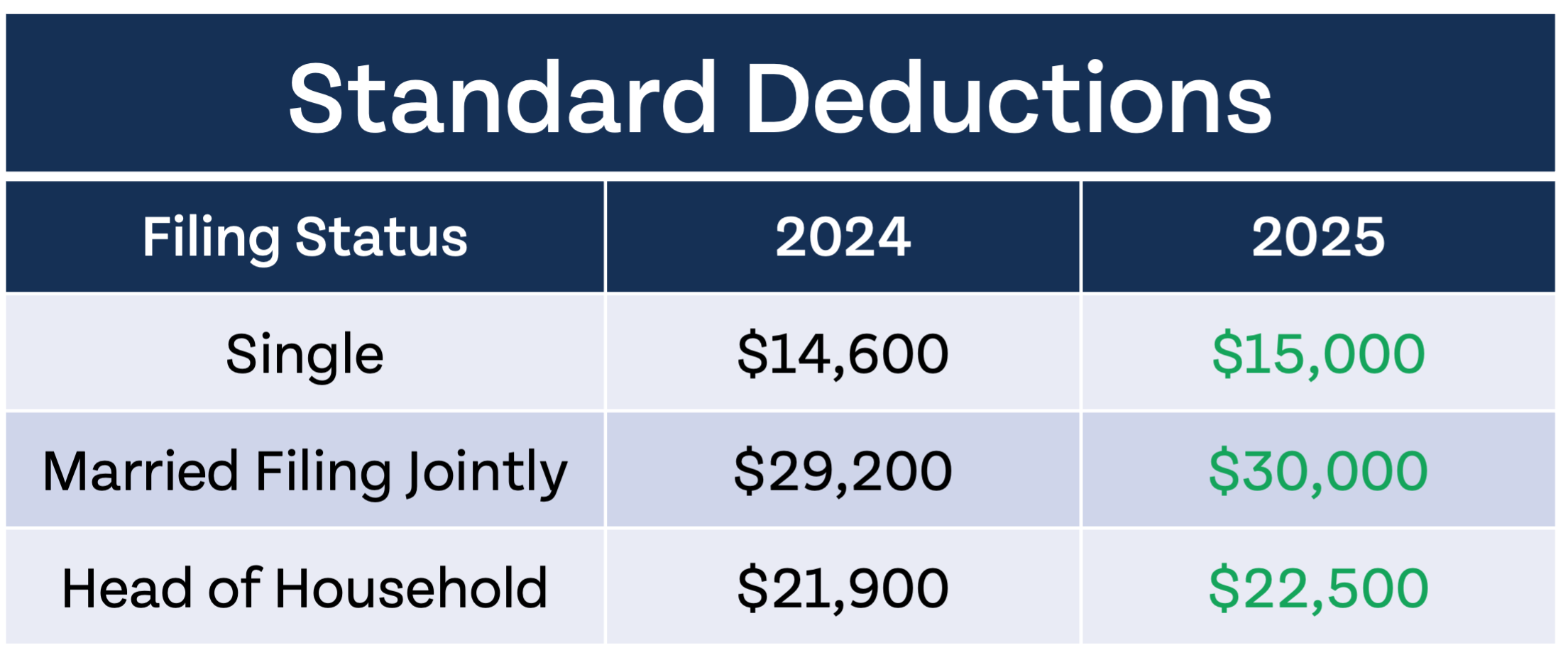
The most significant hurdle for taxpayers seeking to deduct donations in 2025 is the distinction between the standard deduction and itemized deductions. For the vast majority of Americans, taking the standard deduction is more financially beneficial than tracking individual expenses. However, if your total itemized deductions—including mortgage interest, state and local taxes (subject to the $10,000 cap), medical expenses exceeding 7.5% of AGI, and charitable gifts—exceed the standard deduction for 2025, itemizing becomes the superior choice.
For the 2025 tax year, the standard deduction amounts increased to reflect inflation:
- Single or Married Filing Separately: $15,000
- Married Filing Jointly: $30,000
- Head of Household: $22,500
If your total 2025 donations, combined with other deductible expenses, do not cross these thresholds, your charitable giving will not result in a lower tax bill. This "all or nothing" approach means that casual donors who give a few hundred dollars a year rarely see a direct tax benefit unless they are already close to the itemization threshold through other expenses.
Identifying Qualified Organizations
To claim a deduction, the recipient of your gift must be a "qualified organization" under IRS guidelines. Not every nonprofit or "good cause" meets this criteria. Generally, qualified organizations include:
- 501(c)(3) Organizations: These are religious, charitable, educational, scientific, or literary organizations. This includes most well-known national charities, local food banks, and museums.
- Religious Institutions: Churches, synagogues, temples, mosques, and other recognized religious organizations are generally considered qualified, even if they have not formally applied for 501(c)(3) status.
- Governmental Bodies: Donations made exclusively for public purposes to federal, state, or local governments (such as a gift to a public park or library) are deductible.
- Volunteer Fire Companies and Civil Defense Organizations: These must be non-profit and organized for public safety.
What does NOT qualify? It is a common mistake to assume that any act of generosity is deductible. You cannot deduct contributions made to specific individuals, regardless of their need. This includes GoFundMe campaigns for medical bills, gifts to homeless individuals, or money sent to a family in crisis. Furthermore, political contributions, dues paid to labor unions, and donations to for-profit hospitals or social clubs are not tax-deductible. Always use the IRS "Tax Exempt Organization Search" tool to verify a charity's status before assuming a gift is deductible.
Limits on Charitable Deductions in 2025
The IRS imposes ceilings on how much you can deduct in a single tax year, based on a percentage of your Adjusted Gross Income (AGI). These limits exist to prevent high-income earners from completely wiping out their tax liability through massive donations in a single year.
- Cash Contributions: For donations made by cash, check, or credit card to public charities, the limit is generally 60% of your AGI.
- Non-Cash Assets: If you donate property, such as clothing, household items, or appreciated stocks, the limit is typically 30% of your AGI if the assets were held for more than one year.
- Private Foundations: Donations to private non-operating foundations often carry lower limits, usually 30% for cash and 20% for non-cash assets.
If your total contributions in 2025 exceed these AGI limits, you are not necessarily losing the deduction. The IRS allows you to "carry over" the excess amount and deduct it on your tax returns for up to the next five years, subject to the same percentage limits each year.
Valuing and Deducting Non-Cash Contributions
Many taxpayers support charities by donating physical goods. In 2025, the rules for these "in-kind" donations remain strict regarding both condition and valuation.
Clothing and Household Items
To be deductible, clothing and household goods must be in "good used condition or better." A deduction for an item that is in poor or worn-out condition may be disallowed unless the deduction claimed is more than $500 and you include a qualified appraisal with your return. The value of these items is their Fair Market Value (FMV)—essentially what a buyer would pay for the item at a thrift store or consignment shop, not the original purchase price.
Appreciated Securities (Stocks and Mutual Funds)
Donating appreciated stock that you have held for more than a year is one of the most tax-efficient ways to give. When you donate the shares directly to a 501(c)(3), you can deduct the full Fair Market Value of the stock on the date of the gift, and you avoid paying capital gains tax on the appreciation. This "double benefit" makes it a preferred strategy for high-net-worth donors.
Vehicles, Boats, and Airplanes
If you donate a car in 2025, your deduction is usually limited to the gross proceeds from the sale of the vehicle by the organization. The charity must provide you with Form 1098-C, which discloses the sale price. There are limited exceptions if the charity makes "significant intervening use" of the vehicle or provides it to a needy individual for a discounted price.
Substantiation and Documentation Standards
In the event of an audit, the IRS will disallow any charitable deduction that is not properly documented. The burden of proof lies entirely with the taxpayer.
| Donation Amount/Type | Documentation Required |
|---|---|
| Cash (Any Amount) | Bank record (statement/canceled check) or written communication from the charity. |
| Cash ($250 or more) | A "contemporaneous written acknowledgment" from the charity stating the amount and whether any goods or services were provided in exchange. |
| Non-Cash (Under $500) | A receipt from the charity showing the name, date, location, and a detailed description of the property. |
| Non-Cash ($500 - $5,000) | All the above, plus you must file IRS Form 8283 (Section A). |
| Non-Cash (Over $5,000) | All the above, plus a qualified appraisal and Form 8283 (Section B) signed by an appraiser. |
The "contemporaneous" requirement is vital. You must have the acknowledgment in hand by the date you file your 2025 tax return (or the due date of the return, including extensions). You cannot wait until you are audited to request a receipt from a charity for a gift made in 2025.
Strategic Giving: QCDs and Donor-Advised Funds
For those who find it difficult to exceed the 2025 standard deduction, two specific strategies can provide tax relief.
Qualified Charitable Distributions (QCDs)
Taxpayers aged 70½ or older can transfer up to $105,000 (indexed for inflation in 2025) directly from their Traditional IRA to a qualified charity. This is known as a QCD. While you don't get a double deduction, the amount transferred is excluded from your taxable income. This is particularly beneficial because it reduces your AGI, which can lower the amount of Social Security benefits subject to tax and potentially reduce Medicare Part B premiums. Furthermore, for those 73 and older, a QCD counts toward their Required Minimum Distribution (RMD).
Donor-Advised Funds (DAFs) and "Bunching"
Bunching is a strategy where a taxpayer concentrates two or more years of charitable giving into a single tax year to surpass the standard deduction threshold. For example, rather than giving $10,000 in 2025 and $10,000 in 2026, a donor might give $20,000 in 2025. By using a Donor-Advised Fund, the donor can claim the entire $20,000 deduction in 2025 but recommend grants from the fund to their favorite charities over several years.
Common Pitfalls and Quid Pro Quo Contributions
A common error in 2025 tax filings involves "quid pro quo" contributions. This occurs when you receive something of value in exchange for your donation, such as a gala dinner ticket, a charity auction item, or a university athletic seating right.
You may only deduct the amount of your payment that exceeds the Fair Market Value of the benefit received. If you pay $500 for a ticket to a charity dinner, and the meal and entertainment are valued at $150, your deductible contribution is only $350. The charity is legally required to provide a written disclosure for any quid pro quo contribution over $75.
Frequently Asked Questions
Can I deduct the value of my time if I volunteer for a charity in 2025?
No, you cannot deduct the monetary value of your time or professional services. However, you can deduct unreimbursed out-of-pocket expenses directly related to your volunteer work. For the 2025 tax year, the charitable mileage rate is 14 cents per mile. You can also deduct the cost of uniforms or supplies required for your service, provided they are not for personal use.
I donated to a GoFundMe for a friend's surgery. Is that deductible?
No. Under IRS rules, gifts to individuals are never tax-deductible, regardless of how noble the cause or how dire the need. To be deductible, the money must be given to a qualified organization that has control over how the funds are used to further its exempt purpose.
What happens if I don't have a receipt for a $100 cash donation?
If you are audited, the IRS will disallow the deduction. For cash gifts of any amount, you must have either a bank record (like a credit card statement or canceled check) or a written receipt from the charity. For amounts over $250, a simple bank record is insufficient; you must have the formal acknowledgment from the organization.
Is there a limit to how many clothes I can donate for a deduction?
There is no limit on the quantity, but there are limits on the total value. If your total non-cash contributions exceed $500 for the year, you must file Form 8283. If you donate a large volume of items and claim a value exceeding $5,000 for a single item or a group of similar items, you will generally need a professional appraisal.
Can I deduct donations made to foreign charities?
Generally, no. Contributions must be made to organizations created or organized in the United States or its possessions. There are specific exceptions for certain Canadian, Mexican, and Israeli charities based on income tax treaties, but these are subject to very specific limitations and usually require the donor to have income from those countries.
Next Steps for Taxpayers
As you finalize your 2025 records during this 2026 tax season, your first step should be to calculate your total potential itemized deductions. Compare the sum of your charitable gifts, mortgage interest, and state/local taxes against the $15,000 (single) or $30,000 (married) standard deduction.
If you find that you are just below the threshold, look for overlooked expenses such as volunteer mileage or small recurring monthly donations. If you are well above the threshold, ensure you have gathered all necessary written acknowledgments for gifts over $250. If you find you are missing a receipt, contact the charity immediately; they are usually happy to provide a summary of your annual giving. For high-value non-cash gifts, double-check that your valuations are based on realistic FMV and that any required appraisals are attached to your return.
Disclaimer: This information is for educational purposes and does not constitute legal or tax advice. Tax laws are subject to change, and individual circumstances vary. Consult with a qualified tax professional or refer to IRS Publication 526 (Charitable Contributions) for specific guidance on your 2025 tax return.