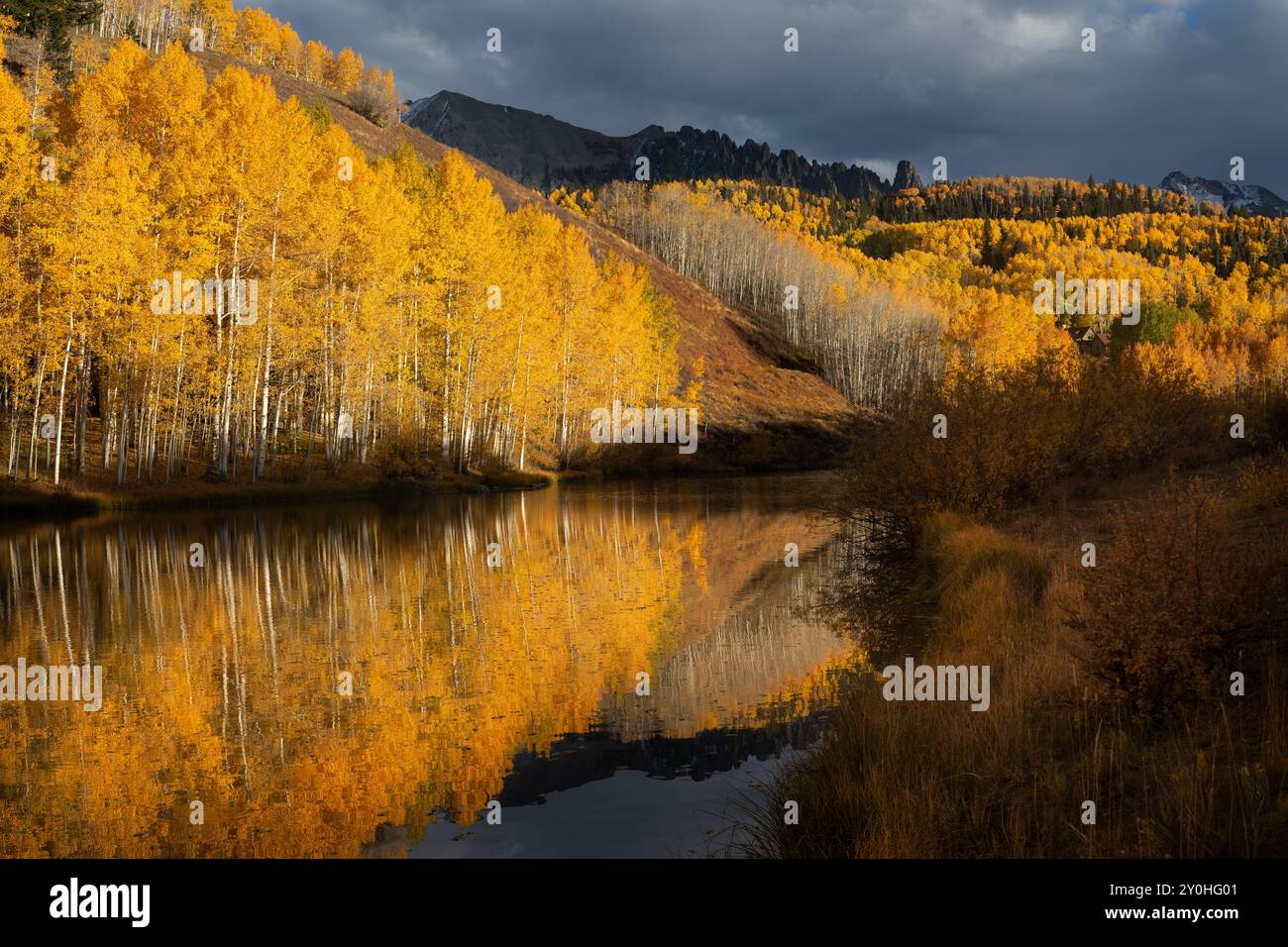
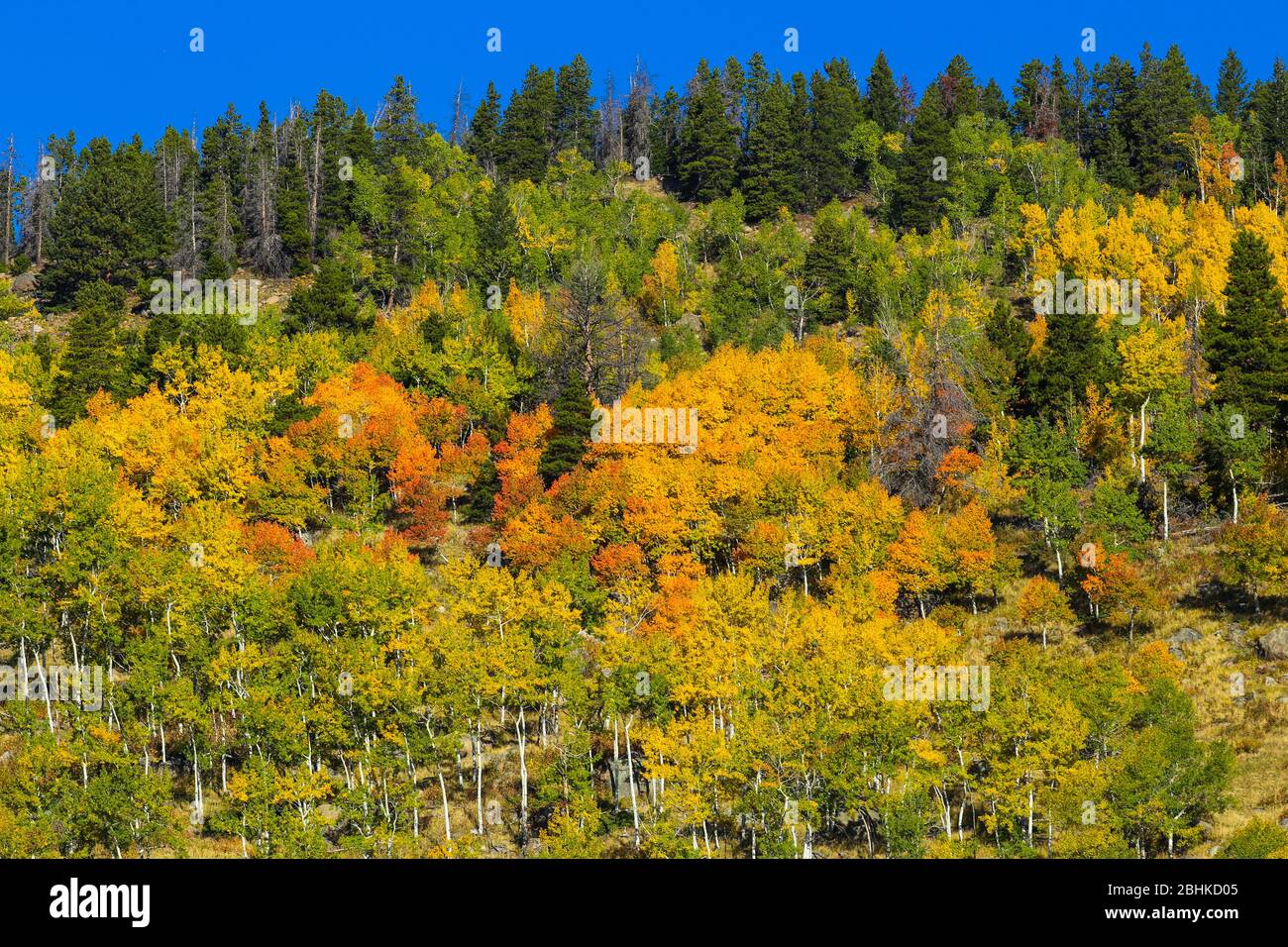
To experience the peak of Colorado’s aspen fall colors, you should plan your visit between mid-September and early October. The transformation begins at higher elevations in the northern mountains and cascades south toward the San Juan Range. Success depends on monitoring local weather patterns and securing necessary vehicle reservations for high-traffic corridors well in advance.
Understanding the Science of the Quaking Aspen
The aspen tree (Populus tremuloides) is the biological star of the Colorado autumn. Unlike many eastern hardwood forests that feature a diverse mix of maples, oaks, and birches, Colorado’s high-country displays are dominated by nearly pure stands of aspens. This creates the famous "sea of gold" effect that defines the Rocky Mountain fall.
Aspens are unique because they often grow in clonal colonies. A single seedling can spread via its root system to create an entire grove of genetically identical trees. This is why you will often see a specific patch of trees turn a brilliant orange while the surrounding trees remain lime green; the trees in that specific colony share the same DNA and respond to environmental triggers simultaneously.
As the days shorten and temperatures drop in 2026, the trees cease production of chlorophyll—the pigment responsible for green leaves and photosynthesis. As the green fades, the yellow and orange pigments (carotenoids), which were present all summer but masked by chlorophyll, are revealed. In rare instances involving specific soil chemistry and sudden temperature drops, some Colorado aspens will produce anthocyanins, leading to the sought-after "red" aspen leaves.
Timing the Peak: The 2026 Elevation Factor
Predicting the exact "peak" day is an exercise in tracking both latitude and altitude. In Colorado, the color change typically moves at a rate of roughly 1,000 feet of elevation per week. As we look at the 2026 season, travelers must differentiate between the three primary regions of the state.
The Northern Mountains (Mid-to-Late September)
This region includes Rocky Mountain National Park, Steamboat Springs, and the Flat Tops Wilderness. Because these areas are further north and often sit at high base elevations, the colors here are usually the first to turn. Expect the high-alpine tundra edges to show color as early as September 10, with the main valley floors peaking around September 22.
The Central Mountains (Late September to Early October)
This tier encompasses the iconic destinations of Aspen, Vail, Summit County, and Crested Butte. This is the heart of Colorado’s "Gold Rush." The Maroon Bells and the Boreas Pass area typically reach their zenith between September 24 and October 3. This region offers the greatest density of aspen groves, providing the most reliable viewing opportunities if your travel window is narrow.
The Southern Mountains (Early-to-Mid October)
The San Juan Mountains, including Telluride, Ouray, and Silverton, are the last to turn. The dramatic verticality of the San Juans means you can often find color at various stages of the cycle simply by driving up or down a mountain pass. Peak colors here often linger until October 15, provided a major early-season snowstorm doesn't strip the leaves prematurely.
Top Destinations for 2026 Fall Foliage
While almost any mountain road in Colorado will offer views during late September, several locations are globally recognized for their density and scenic backdrop.
Maroon Bells-Snowmass Wilderness
Located near the town of Aspen, the Maroon Bells are purportedly the most photographed peaks in North America. The reflection of the jagged, maroon-colored mudstone peaks in Maroon Lake, framed by golden aspens, is the definitive Colorado autumn image.
Access Requirements for 2026: Due to extreme popularity, the Maroon Bells Scenic Area requires advanced reservations for both the RFTA shuttle and personal vehicle parking. For the 2026 season, reservations typically open in the spring. If you visit during peak hours (8:00 AM to 5:00 PM), you must use the shuttle service departing from Aspen Highlands.
Kebler Pass and the Ohio Creek Road
Located just outside Crested Butte, Kebler Pass is home to one of the largest living organisms on Earth—a massive, interconnected aspen grove that rivals the famous Pando clone in Utah. The sheer scale of the gold here is staggering. The drive is primarily on a well-maintained gravel road, making it accessible to most passenger vehicles, though it can become washboarded during the high-traffic weeks of late September.
The Peak to Peak Scenic Byway
For those staying in Denver or Boulder, the Peak to Peak Highway (Highways 119, 72, and 7) offers the most accessible high-altitude viewing. Established in 1918, this is Colorado's oldest scenic byway. It provides a front-row seat to the changing colors of the Front Range, stretching from Black Hawk to Estes Park.
The Million Dollar Highway (US 550)
Connecting Ouray and Silverton, this stretch of road is not for the faint of heart, as it features steep drop-offs and no guardrails in several sections. However, the reward is unparalleled access to the San Juan National Forest's autumn display. The contrast between the dark evergreens, the golden aspens, and the red-tinted mountains creates a complex color palette that is unique to southern Colorado.
Comparative Overview of Foliage Regions
The following table provides a quick reference for planning your 2026 itinerary based on typical climatic trends and geographic data.
| Region | Primary Hubs | Typical Peak Window | Top Scenic Drive | 2026 Access Note |
|---|---|---|---|---|
| Northern | Estes Park, Steamboat | Sept 15 – Sept 25 | Trail Ridge Road | RMNP Timed Entry may apply |
| Central | Aspen, Vail, Breckenridge | Sept 22 – Oct 5 | Maroon Creek Road | Shuttle/Parking Reservations required |
| West-Central | Crested Butte, Gunnison | Sept 25 – Oct 8 | Kebler Pass (CR 12) | High clearance recommended but not required |
| Southern | Telluride, Ouray, Durango | Oct 1 – Oct 15 | Last Dollar Road | Best for 4WD enthusiasts |
Essential Logistics and Planning for 2026
Planning a trip to see the fall colors in Colorado requires more than just a camera. The popularity of the season means that services are often pushed to capacity.
Vehicle and Permit Requirements
In 2026, many visitors will benefit from the Keep Colorado Wild Pass, which is linked to Colorado vehicle registrations. If you are an out-of-state visitor renting a car, check if the rental includes the state park pass, as this covers entry to foliage hotspots like State Forest State Park or Golden Gate Canyon State Park.
For Rocky Mountain National Park (RMNP), be aware that the Timed Entry Reservation System has historically remained in effect through mid-October. You must secure a slot via Recreation.gov if you plan to view the colors along Bear Lake Road or Trail Ridge Road.
Accommodations and Costs
Lodging prices in mountain towns like Aspen and Telluride reach "peak season" rates during the last two weeks of September, often rivaling mid-winter ski prices.
- Budgeting: Expect to pay between $300 and $600 per night for mid-range hotels in prime foliage hubs.
- Alternatives: Consider staying in "gateway" towns such as Montrose (for the San Juans), Glenwood Springs (for Aspen), or Salida (for the Sawatch Range) to save 30-50% on lodging costs.
Weather Preparedness
September and October in the Colorado high country are transitional months. It is not uncommon to experience a 70-degree afternoon followed by a 20-degree night with several inches of snow.
- Layering: Bring moisture-wicking base layers, a fleece or down mid-layer, and a waterproof shell.
- Road Conditions: While most major passes remain open through October, an early storm can necessitate traction devices or 4WD. Always check COtrip.org (the Colorado Department of Transportation's official site) for real-time updates on mountain pass closures.
Photography Tips for Capturing the Gold
To capture the best images of the 2026 season, you must manage the high-contrast light typical of Colorado’s thin atmosphere.
- The Polarizing Filter: This is the most critical tool in your kit. A circular polarizer will remove the glare from the waxy surface of the aspen leaves, saturating the yellows and making the blue sky pop.
- Golden Hour and Blue Hour: The 30 minutes before and after sunrise and sunset are ideal. In the morning, the light "backlights" the translucent aspen leaves, making them appear to glow from within.
- Cloudy Days are Better: Do not be discouraged by an overcast day. Flat lighting is perfect for "forest floor" shots and intimate portraits of aspen trunks. It prevents the white bark from becoming "blown out" (overexposed) in your photos.
- Composition: Look for "leading lines" provided by fences, trails, or the white trunks of the trees to guide the viewer’s eye through the frame.
Environmental Stewardship: Leave No Trace
The influx of visitors during the fall season puts immense pressure on Colorado’s fragile ecosystems. The "quaking" aspen may look hardy, but its bark is surprisingly thin and susceptible to damage.
- Do Not Carve in Trees: Carving names or dates into aspen bark creates permanent wounds that leave the tree vulnerable to fungi, cankers, and insects. Because aspens share a root system, a disease in one tree can threaten the entire grove.
- Stay on Marked Trails: In popular areas like the Maroon Bells or Kenosha Pass, "social trails" (unauthorized paths) cause soil erosion and destroy the understory plants that provide habitat for local wildlife.
- Parking Safety: Only park in designated areas. Parking on dry grass on the side of a highway is a significant fire risk in the autumn, as hot exhaust systems can easily ignite parched vegetation.
Frequently Asked Questions
Will the colors be better or worse in 2026?
Foliage quality depends on the preceding weather. A wet spring followed by a summer with moderate rainfall typically leads to the most vibrant colors. Severe drought can cause leaves to turn brown and drop early, while a sudden "hard freeze" (temperatures below 25°F) can kill the leaves instantly, ending the season prematurely.
Are there any "hidden gems" away from the crowds?
If you want to avoid the crowds at Maroon Bells or Kenosha Pass, consider the Flat Tops Trail Scenic Byway between Meeker and Yampa. This area offers massive aspen coverage with a fraction of the traffic found closer to the I-70 corridor. Another excellent option is Grand Mesa, the world’s largest flat-top mountain, which features hundreds of high-alpine lakes surrounded by gold.
Can I see fall colors in Denver?
Denver and the Front Range plains typically peak much later than the mountains—usually mid-to-late October. However, the trees in Denver are mostly non-native maples and ashes planted in urban parks. For the true "Colorado Aspen" experience, you must drive west and ascend to at least 8,000 feet.
How long does the color usually last?
Once a specific grove "peaks," the leaves usually remain on the trees for 5 to 7 days. However, high winds—common in the Rockies—can strip a grove in a single afternoon. It is always better to arrive a few days before the predicted peak than a few days after.
Is 4WD necessary for viewing fall colors?
For the most famous paved routes like the San Juan Skyway or the Peak to Peak Highway, 4WD is not necessary. However, many of the best views are found on forest service roads (like those in the Ohio Creek Valley). While these are often dirt, they are usually graded and passable for standard SUVs, but a high-clearance vehicle provides more peace of mind.
Final Recommendation
For the best 2026 experience, prioritize the Central Mountains during the final week of September. This region offers the most robust infrastructure and the highest concentration of aspen groves. To ensure a stress-free trip, book your lodging and any required trail or shuttle reservations at least six months in advance. Always check the weather forecast 48 hours before departure to adjust your elevation targets; if a cold front is moving in, the colors will accelerate rapidly.