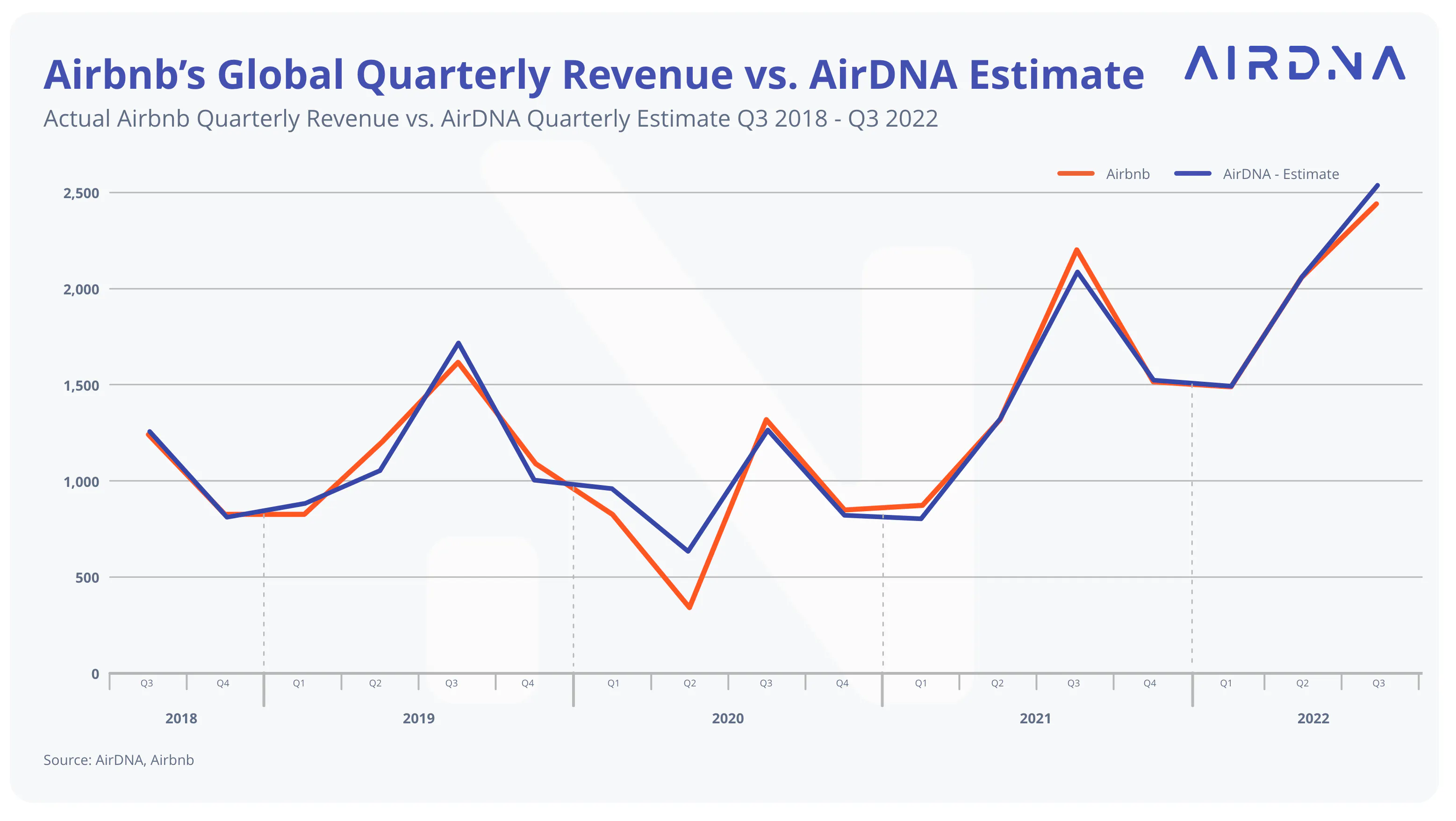
AirDNA is a leading market intelligence platform designed for short-term rental investors, property managers, and hosts to analyze data from platforms like Airbnb and Vrbo. By tracking millions of active listings worldwide, AirDNA transforms raw marketplace data into actionable performance metrics—such as occupancy rates, average daily rates, and projected annual revenues—enabling stakeholders to make data-driven investment decisions, optimize dynamic pricing strategies, and evaluate micro-markets across global destinations.
Understanding AirDNA: Core Purpose and Market Position
The short-term rental (STR) industry operates at a fast pace, driven by fluctuating travel trends, local regulatory changes, and shifting consumer expectations. Navigating this ecosystem requires more than intuition or guesswork; it demands granular, historical, and predictive data. AirDNA addresses this need by scraping, aggregating, and modeling data from major vacation rental distribution channels.
Founded to bring transparency to an otherwise fragmented lodging sector, AirDNA serves a diverse user base. Real estate investors utilize the platform to scout new markets and underwrite property acquisitions. Professional property managers rely on its comp-set tools to pitch new homeowners and optimize existing portfolios. Individual hosts use its insights to benchmark their performance against local competitors and adjust pricing strategies according to seasonal demand.
The platform's value proposition rests on its ability to democratize market intelligence. Historically, institutional hotel chains and large-scale real estate funds relied on proprietary research teams and expensive bespoke reports to evaluate hospitality assets. AirDNA bridges this gap, providing independent entrepreneurs and mid-sized enterprises with institutional-grade analytics through a software-as-a-service (SaaS) model.
Key Features and Analytical Tools
AirDNA structures its offerings around several primary modules, each tailored to specific analytical tasks within the short-term rental lifecycle. Understanding these features helps users determine which tools align best with their operational or investment objectives.
Rentalizer: Revenue Prediction and Investment Underwriting
The flagship tool within the AirDNA ecosystem is Rentalizer, a predictive valuation calculator designed to estimate the annual revenue potential of any address worldwide. Users input a specific property location, bedroom count, bathroom count, and maximum guest capacity. The algorithm then scans the surrounding geographic radius, analyzes comparable active listings with similar physical and amenity profiles, and generates a projected revenue forecast.
Rentalizer accounts for seasonality, historical performance data of local peers, and current booking pacing. While it cannot account for exceptional interior design or unique host hospitality, it provides a reliable baseline for underwriting real estate deals before submitting an offer. Investors can stress-test different purchase prices, down payment scenarios, and operating expense assumptions against Rentalizer's revenue outputs.
Market Minder: Macro and Micro-Market Research
For macro-level analysis, Market Minder serves as the primary dashboard for exploring specific geographic regions, ranging from entire countries and metropolitan areas down to specific zip codes and neighborhoods. Market Minder tracks core Key Performance Indicators (KPIs) over custom date ranges.
- Average Daily Rate (ADR): The average rental income per paid occupied room night over a given period.
- Occupancy Rate: The percentage of available nights that are booked by guests.
- RevPAR (Revenue Per Available Rental): A composite metric calculated by multiplying ADR by occupancy, measuring overall asset monetization efficiency.
- Supply and Demand Trends: Longitudinal tracking of how many new listings enter a market versus how many get deactivated.
This tool allows investors to identify supply gluts, saturation risks, and emerging travel destinations before they become mainstream. Furthermore, users can filter markets by property type (entire home, private room) and historical performance tiers (top 10% earners versus median performers).
Comp Sets and Dynamic Benchmarking
Optimizing a short-term rental requires continuous comparison against direct competitors. AirDNA enables users to build customized comparable sets (comp sets) of competing listings. Hosts can monitor their direct rivals' pricing changes, minimum stay requirements, review scores, and booking velocities. This granular visibility prevents operators from underpricing their assets during peak demand windows or leaving money on the table through rigid, static pricing models.
Data Sourcing, Methodology, and Accuracy
A critical consideration for any data-driven platform is the reliability of its underlying methodology. AirDNA collects public-facing data directly from booking channels like Airbnb and Vrbo on a daily basis.
The platform monitors calendar availability and pricing changes for millions of listings globally. If a calendar date changes from available to booked, the system records a reservation. However, because AirDNA does not have direct access to internal property management system (PMS) reservation logs, its metrics are modeled estimates rather than audited financial statements.
| Data Metric | Collection Method | Accuracy Consideration |
|---|---|---|
| Active Listings | Daily web scraping of platform search results | High accuracy for inventory counts, though ghost listings can occasionally skew totals. |
| Occupancy Rate | Inferred from calendar status changes (available to blocked) | High correlation with actuals, though owner blocks and direct bookings outside OTAs may introduce minor variance. |
| Average Daily Rate (ADR) | Scraped nightly rates adjusted for length-of-stay discounts | Reflects advertised rates; may not include cleaning fees or last-minute promotional discounts. |
| Annual Revenue | Modeled calculation derived from occupancy multiplied by ADR | Directionally reliable for market comparison, but individual property performance varies based on management quality. |
While third-party estimates may diverge from exact tax filings due to cancellations, offline bookings, or dynamic discounting, industry professionals widely accept AirDNA as the benchmark standard for directional market research and comparative analysis.
Pricing Models and Subscription Tiers
AirDNA operates on a tiered subscription model, accommodating everyone from casual researchers to enterprise-level property management firms. Understanding the pricing structure ensures users select a plan that matches their data requirements without overpaying for unused capabilities.
- Free Explorer Account: Provides high-level market scores (Investability, Rental Demand, Regulation) and basic supply/demand metrics for cities globally. Ideal for initial market screening.
- Market-Level Subscriptions: Priced per market on a monthly or annual commitment. Users gain full access to historical data, granular filters, and downloadable CSV datasets for a specific geographic area.
- Enterprise and Global Solutions: Tailored for institutional investors, tourism boards, and large property management enterprises requiring multi-market access, API integrations, and customized advisory support.
Subscription costs scale according to the geographic breadth of the data required. Investors exploring multiple scattered markets typically benefit from regional or global bundles rather than purchasing individual city markets piecemeal.
Common Limitations and Operational Challenges
Despite its comprehensive feature set, users must navigate certain inherent limitations when utilizing AirDNA for investment analysis:
- Regulatory Blind Spots: AirDNA tracks market supply and performance, but it does not replace legal counsel regarding local short-term rental ordinances, zoning laws, or homeowners association (HOA) restrictions. A market may show high revenue potential while simultaneously enforcing strict municipal bans.
- Expense Exclusion: The platform focuses almost exclusively on top-line revenue metrics. It does not automatically factor in property taxes, insurance, utilities, cleaning turnover costs, platform commissions, or local lodging taxes. Investors must layer these operating expenses into their own financial models.
- Data Lag and Seasonality Smoothing: Sudden macroeconomic shocks, local weather events, or high-profile local festivals can cause sharp variances that may take time to reflect fully in trailing twelve-month averages.
Frequently Asked Questions
How accurate is AirDNA revenue data compared to actual property performance?
AirDNA data is widely considered reliable for directional trends, market comparisons, and underwriting baselines. While individual property revenues can vary based on superior interior design, professional photography, and active revenue management, aggregate market trends and Rentalizer estimates generally align closely with actual audited performance across most mature short-term rental markets.
Can AirDNA track direct bookings and listings outside of Airbnb and Vrbo?
AirDNA primarily aggregates data from major online travel agencies like Airbnb and Vrbo. It does not natively capture unlisted direct booking websites, offline word-of-mouth reservations, or properties listed exclusively on niche regional booking platforms, though its algorithms account for standard market leakage.
Does AirDNA provide information on local short-term rental regulations?
AirDNA integrates regulatory risk scoring into its platform dashboards to help investors identify potential legal hurdles. However, because municipal ordinances change frequently, users must verify local zoning codes, licensing requirements, and tax collection laws directly with municipal government offices.
How often is AirDNA data updated?
The platform scrapes public listing calendars and pricing data on a daily basis. Monthly aggregated reports, market indices, and historical trend analyses are typically refreshed at the beginning of each calendar month to incorporate the previous period's finalized metrics.
Is AirDNA suitable for long-term rental or multifamily real estate analysis?
AirDNA is purpose-built for short-term and mid-term vacation rentals. While some real estate investors use its data to compare potential short-term yields against traditional long-term lease rates, dedicated long-term rental platforms or traditional multi-family underwriting tools are better suited for standard annual leasing analysis.
Conclusion and Strategic Next Actions
AirDNA remains an indispensable utility for anyone evaluating, operating, or scaling short-term rental assets. By translating millions of scattered calendar data points into structured, digestible insights, the platform removes much of the guesswork inherent in hospitality real estate investing. To maximize its value, combine AirDNA's macro-market research and Rentalizer forecasts with ground-level due diligence, including local regulatory checks, verified expense modeling, and direct consultations with local property managers. Start by testing free market scores on the platform, and scale your subscription tier as your geographic focus and investment criteria solidify.