The American Funds 2045 Target Date Retirement Fund (Class R6, Ticker: REHTX) is a professionally managed mutual fund designed for investors planning to retire or begin withdrawing assets around the year 2045. It utilizes an actively managed "fund-of-funds" structure, automatically shifting from a growth-oriented equity allocation to a more conservative, income-focused mix as the target date approaches.
Understanding the American Funds 2045 Target Date Strategy
Target-date funds (TDFs) have become the cornerstone of modern retirement planning, particularly within employer-sponsored 401(k) and 403(b) plans. The American Funds 2045 Target Date Retirement Fund is built on the philosophy that retirement planning should be simplified without sacrificing the benefits of active management. As we stand in 2026, an investor targeting a 2045 retirement is approximately 19 years away from their goal. This puts them in a critical "accumulation" phase where growth remains a priority, but the gradual introduction of stability becomes increasingly relevant.
The fund is managed by Capital Group, one of the world's oldest and most experienced investment management firms. Unlike passive target-date funds that track indices, American Funds leverages "The Capital System," a proprietary multi-manager approach. This system divides the fund’s assets among several experienced portfolio managers who work independently but within a unified framework, aiming to provide smoother returns and reduce the impact of any single manager's decision-making errors.
The "Through" Retirement Glide Path
A defining characteristic of the American Funds 2045 Target Date Retirement Fund is its "through" retirement glide path. In the world of TDFs, there are two primary schools of thought: "to" retirement and "through" retirement.
- "To" Retirement Funds: These reach their most conservative asset allocation exactly on the target date (2045).
- "Through" Retirement Funds: These continue to adjust their asset allocation for several years—often 20 to 30 years—past the target date.
The 2045 R6 fund follows the "through" approach. Capital Group argues that because many retirees will live 30 or more years past their retirement date, their portfolios still need significant equity exposure in their 60s and 70s to combat inflation and ensure the longevity of their capital. Consequently, an investor in REHTX in 2045 will still hold a meaningful percentage of stocks, which will only gradually decrease over the subsequent decades.
The Significance of the R6 Share Class (REHTX)
When analyzing American Funds, the share class is as important as the fund itself. American Funds offers numerous classes (A, C, R1, R2, R3, R4, R5, and R6), each with different fee structures.
The R6 share class (REHTX) is generally considered the most "pure" and cost-effective version of the fund. It is designed specifically for institutional investors and high-quality retirement plans. The primary advantages of the R6 class include:
- No 12b-1 Fees: These are marketing or distribution fees often found in other share classes. Their absence directly lowers the expense ratio.
- No Sub-Transfer Agency Fees: R6 shares do not pay service fees to third-party recordkeepers, ensuring that the management fee reflects the actual cost of investment management.
- Lower Expense Ratio: Because of the lack of embedded commissions or revenue-sharing agreements, REHTX typically boasts a significantly lower expense ratio than the R1 or R4 classes, often hovering around 0.30% to 0.35%.
- Fiduciary Alignment: Because R6 shares do not provide "kickbacks" to plan providers, they are often favored by fiduciaries who are legally required to act in the best interests of plan participants.
Asset Allocation and Underlying Holdings
As a "fund-of-funds," REHTX does not buy individual stocks like Apple or Microsoft directly. Instead, it invests in a curated selection of other American Funds. This provides a double layer of diversification. The portfolio is currently weighted heavily toward equities, reflecting the nearly two-decade horizon until 2045.
Equity Components
The equity portion of the fund is diversified across several styles, including:
- Growth: Funds like The Growth Fund of America focus on capital appreciation.
- Value and Income: Washington Mutual Investors Fund and The Investment Company of America provide stability through dividend-paying, large-cap companies.
- International: EuroPacific Growth Fund offers exposure to developed and emerging markets outside the United States.
Fixed Income Components
As the glide path progresses, the fund increases its stake in high-quality bonds and inflation-protected securities. Key underlying bond funds often include:
- American Funds Bond Fund of America: A core bond holding for stability.
- Capital World Bond Fund: Providing global fixed-income diversification.
- American Funds Mortgage Fund: Focused on income-generating mortgage-backed securities.
As of 2026, the 2045 fund typically maintains an equity-to-bond ratio of approximately 80/20 or 85/15. This aggressive stance is intentional, as the primary risk for a 2045 retiree is not short-term market volatility, but rather the risk of failing to accumulate enough capital to sustain a decades-long retirement.
Comparison with Market Competitors
To understand the value proposition of the American Funds 2045 R6 fund, it is helpful to compare it against other industry leaders like Vanguard and T. Rowe Price.
| Feature | American Funds 2045 (REHTX) | Vanguard Target 2045 (VTIVX) | T. Rowe Price 2045 (TRRHX) |
|---|---|---|---|
| Management Style | Active (Multi-manager) | Passive (Index-tracking) | Active |
| Glide Path Type | Through Retirement | Through Retirement | Through Retirement |
| Average Exp. Ratio | ~0.30% - 0.35% | ~0.08% | ~0.60% |
| Primary Holding | Active Mutual Funds | Index Funds | Active Mutual Funds |
| Risk Profile | Moderate-Aggressive | Moderate | Moderate-Aggressive |
While Vanguard is significantly cheaper, it offers no potential for "alpha" (outperforming the market). T. Rowe Price is a closer competitor in terms of active management, but American Funds' R6 class often holds a cost advantage over T. Rowe Price’s retail or advisor classes. The choice between these often comes down to an investor's belief in the value of active management and the specific options available within their employer's plan.
Risk Factors and Performance Considerations
Investing in the American Funds 2045 Target Date Retirement Fund is not without risk. Because the fund is heavily weighted toward equities in 2026, it is susceptible to significant market downturns.
1. Market Risk
The fund is subject to the ups and downs of the stock market. If a major recession occurs in the late 2020s, the 2045 fund will see its Net Asset Value (NAV) decline. However, since the retirement date is still far off, the fund has time to recover.
2. Active Management Risk
Unlike an index fund, REHTX relies on the skill of the managers at Capital Group. While they have a strong historical track record, there is always a risk that their active bets—such as being overweight in a particular sector or underweight in international stocks—could underperform the broader market indices.
3. Inflation Risk
While the fund moves toward bonds as 2045 approaches, there is a risk that the fixed-income portion will not keep pace with inflation. Capital Group mitigates this by maintaining a higher equity "tail" throughout retirement compared to more conservative "to" retirement funds.
4. Interest Rate Risk
The bond portion of the fund is sensitive to interest rate changes. If rates rise sharply, the value of existing bonds in the portfolio may decrease, which can drag on the fund's total return even if the equity portion is performing well.
Suitability: Is REHTX Right for You?
The American Funds 2045 Target Date Retirement Fund (R6) is primarily designed for a specific type of investor:
- The "Hands-Off" Investor: If you want a "set-it-and-forget-it" solution where the rebalancing and risk adjustments are handled for you, this fund is an excellent fit.
- Retirement Year 2040-2050: While 2045 is the target, anyone expecting to retire within five years of that date (roughly ages 46-51 in the year 2026) can find this fund appropriate.
- Institutional Participants: If your employer offers the R6 share class, you are accessing institutional-grade management at a retail-friendly price point.
- Believers in Active Management: If you believe that skilled managers can navigate volatile markets better than a static index, the Capital Group approach will resonate with you.
Conversely, this fund might not be suitable for investors who prefer to build their own "three-fund portfolio" of low-cost index funds, or for those who have a very different risk tolerance than the standard glide path suggests.
Frequently Asked Questions
What happens to the fund in the year 2045?
In 2045, the fund does not close or liquidate. Instead, it reaches the "target" point of its glide path, where the asset allocation is more balanced between stocks and bonds. However, because it is a "through" retirement fund, it will continue to become more conservative for several years after 2045 before eventually being folded into a "Retirement Income" or "Income" fund.
Can I lose money in a 2045 target-date fund?
Yes. Target-date funds are not guaranteed and are not FDIC-insured. They are composed of stocks and bonds, both of which can lose value. The fund’s value will fluctuate based on the performance of its underlying holdings. The "target date" refers to the timeline for investment, not a guarantee of principal or a specific return.
Why is the R6 share class better than the R4 share class?
The R6 share class is generally better for the investor because it has a lower expense ratio. R4 shares often include "revenue sharing" or 12b-1 fees that are used to pay for the administration of the retirement plan. R6 shares strip these costs away, meaning more of your money remains invested and compounding.
Is this fund appropriate for a taxable brokerage account?
While you can hold REHTX in a taxable account, it is most efficient within tax-advantaged accounts like a 401(k) or IRA. Because the fund-of-funds structure involves internal rebalancing and the underlying funds may distribute capital gains, holding it in a taxable account could lead to annual tax liabilities that you wouldn't face in a retirement account.
How often does the fund rebalance?
The managers at Capital Group monitor the asset allocation daily. They rebalance the portfolio as needed to stay aligned with the predetermined glide path and to manage the cash flows coming into and out of the fund. This relieves the individual investor of the burden of manual rebalancing.
How does the 2026 economic environment affect this fund?
In 2026, with the 2045 target still nearly two decades away, the fund remains focused on growth. However, the managers adjust the underlying holdings to reflect current market conditions, such as shifting between growth and value stocks or adjusting bond durations to account for the prevailing interest rate environment.
Practical Recommendation and Next Actions
If you are currently invested in or considering the American Funds 2045 Target Date Retirement Fund (Class R6), your first step should be to verify the share class available in your plan. If your plan offers R1, R2, or R3 classes, you may want to compare the total costs against a low-cost index alternative. However, if you have access to the R6 (REHTX) shares, you are utilizing one of the most efficient active management vehicles on the market.
Next Actions:
- Check Your Retirement Date: Ensure 2045 is still a realistic estimate for when you will need to begin withdrawals. If your plans have shifted to 2055, you may be taking on too little risk; if you now plan to retire in 2035, you may be taking on too much.
- Review Total Portfolio Fees: Look at your quarterly statement to confirm the expense ratio. For R6, it should be well below 0.40%.
- Assess Your Risk Tolerance: Despite the "automatic" nature of the fund, you should ensure that an 80-85% equity allocation (as of 2026) aligns with your ability to sleep at night during market volatility.
- Consolidate if Necessary: If you have old 401(k)s with various target-date funds, consider consolidating them into a single IRA or your current plan to simplify your glide path management.
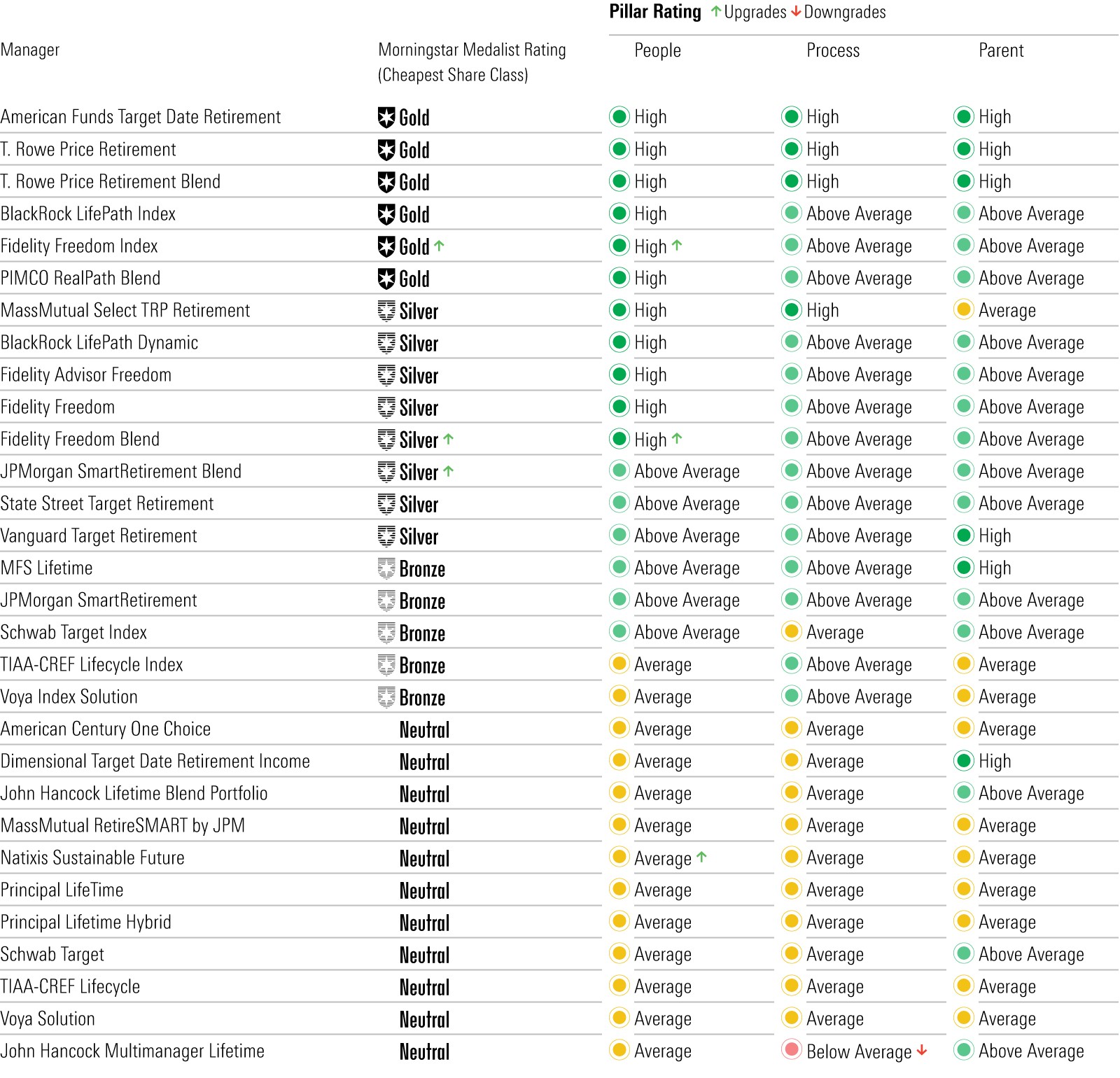
For further information, investors should consult the official prospectus provided by Capital Group or review the fund’s latest filings on the SEC EDGAR database. Independent analysis is also available via Morningstar, which frequently rates the American Funds target-date series for its management quality and fee structure.