Computer viruses have evolved from simple academic experiments into sophisticated tools for espionage and financial crime. Prominent historical examples include the Brain virus, which targeted boot sectors in 1986, and the Morris Worm, which nearly paralyzed the early internet in 1988. These milestones demonstrate the shift from harmless curiosity to global security threats.
The history of malicious software is not merely a timeline of technical glitches but a mirror of how humanity has integrated technology into every facet of life. As of 2026, we look back at these digital pathogens to understand the foundational vulnerabilities that still shape cybersecurity strategies today. A "virus" in the strictest sense is a program that replicates by attaching itself to other programs, but the term is often used broadly to include worms, trojans, and ransomware. Each major example in history marks a "first" in terms of delivery, impact, or technical ingenuity.
The Genesis of Self-Replication: Creeper and Brain
Before the internet became a household utility, the concept of a self-replicating program was mostly theoretical. The transition from theory to reality occurred in controlled environments before spilling out into the wild.
The Creeper: The First Experimental Prototype
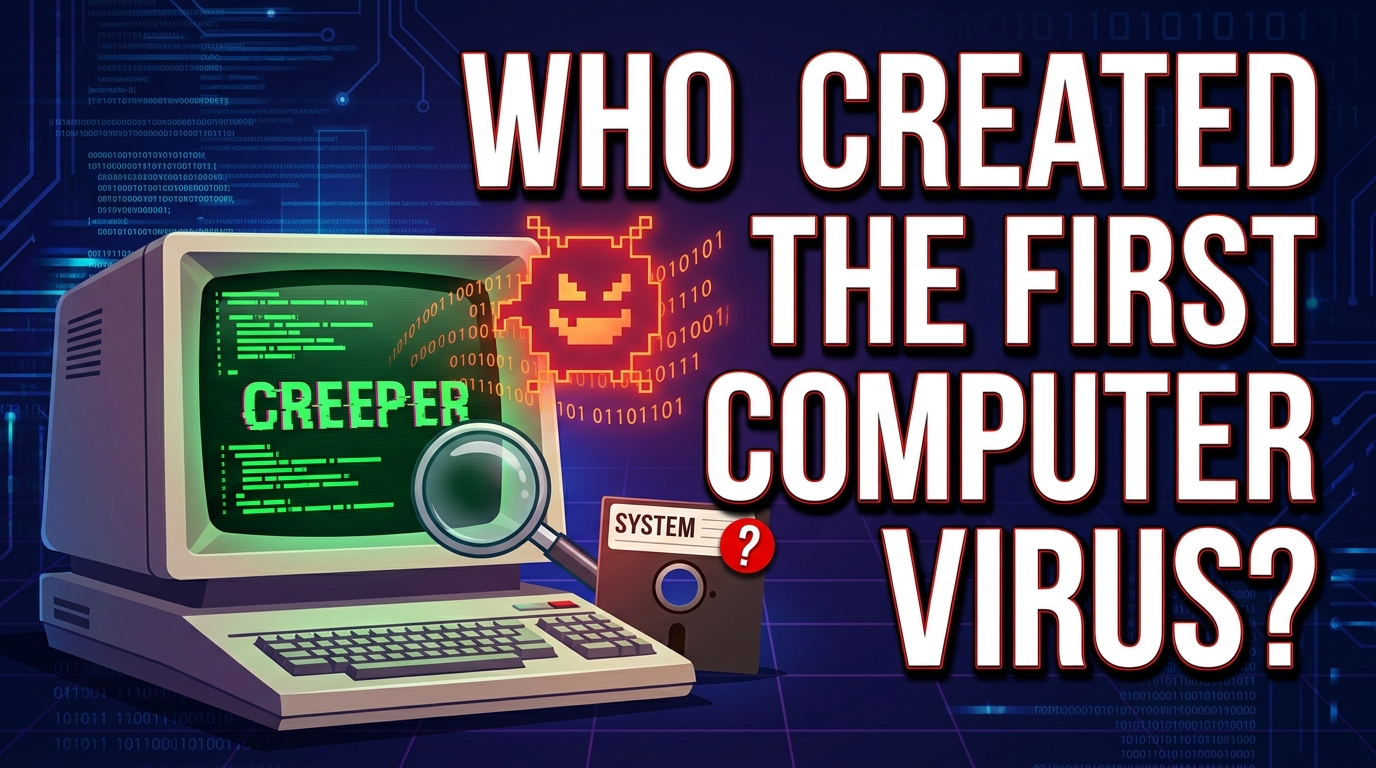
In 1971, Bob Thomas at BBN Technologies created Creeper, which is widely considered the first example of a computer virus (though technically it functioned more like a worm). It was not designed to be malicious; it was an experiment to see if a program could move between computers. It traveled through the ARPANET, the precursor to the modern internet, and displayed the message: "I'M THE CREEPER: CATCH ME IF YOU CAN."
While Creeper didn't delete files or steal data, it necessitated the creation of the first antivirus program, Reaper, designed specifically to find and delete Creeper. This established the "cat and mouse" dynamic that defines the cybersecurity industry in 2026.
Brain: The First IBM PC Virus
In 1986, the Brain virus (also known as the Pakistani Brain) became the first virus to target the IBM PC platform. Created by two brothers, Basit and Amjad Farooq Alvi, it was originally intended as a mechanism to track and discourage the illegal copying of their medical software.
Brain worked by replacing the boot sector of a floppy disk with a copy of itself. When a computer tried to boot from the infected disk, the virus loaded into memory and proceeded to infect any other floppy disks inserted into the machine. Interestingly, the virus contained the brothers' names, address, and phone number, as they didn't initially view their creation as a criminal act. However, the virus spread globally, proving how easily local software protection could transform into a worldwide epidemic.
The Morris Worm: When the Internet Stood Still
By 1988, the internet was still a relatively small network of academic and government institutions. This changed when Robert Tappan Morris, a graduate student at Cornell University, released the Morris Worm.
Technical Mechanism and Accidental Damage
Unlike a traditional virus, a worm does not need a host file to replicate. Morris designed his worm to exploit vulnerabilities in Unix systems, specifically targeting sendmail, fingerd, and weak passwords. His stated goal was to measure the size of the internet.
The disaster occurred because of a logic error in the code. To prevent multiple copies of the worm from running on a single machine, the worm would ask the computer if a copy was already present. Morris, fearing that system administrators would program their computers to "lie" and say a copy was already there, instructed the worm to replicate regardless of the answer 14% of the time. This caused computers to be repeatedly re-infected, consuming all system resources and causing thousands of machines to crash.
Long-term Security Implications
The Morris Worm was the first major wake-up call for network security. It led to the creation of the Computer Emergency Response Team (CERT) at Carnegie Mellon University. Furthermore, Robert Morris became the first person successfully prosecuted under the 1986 Computer Fraud and Abuse Act. In the 2020s, this event is still cited as the turning point where the "gentleman’s agreement" of trust on the internet ended.
The Era of Social Engineering: Melissa and ILOVEYOU
As email became the primary mode of communication in the late 1990s and early 2000s, malware authors shifted their focus from technical exploits to psychological manipulation, known as social engineering.
The Melissa Virus (1999)
The Melissa virus demonstrated how quickly a virus could spread through an address book. Created by David L. Smith, it was hidden in a Word document titled "List.doc," which supposedly contained passwords for adult websites. When a user opened the document, the virus used a macro to send itself to the first 50 contacts in the user's Outlook address book.
Melissa was so effective that it forced major corporations and government agencies (including Microsoft and Intel) to shut down their internal email systems to prevent their servers from being overwhelmed. It remains a primary example of how automation combined with human curiosity can bypass technical defenses.
The ILOVEYOU Virus (2000)
Just a year after Melissa, the ILOVEYOU virus (also known as the Love Bug) set a new record for speed and destruction. Originating in the Philippines, it arrived as an email with the subject line "ILOVEYOU" and a file attachment named "LOVE-LETTER-FOR-YOU.TXT.vbs."
The genius—and malice—of this virus was its use of a double file extension. Many Windows systems at the time were configured to hide known file extensions, so users only saw ".TXT," leading them to believe it was a harmless text file. In reality, it was a VBScript that, once executed, deleted files (including JPGs and MP3s) and emailed itself to the victim's entire contact list. It is estimated to have caused $10 billion in damages globally.
Destruction and Hardware Damage: CIH and Mydoom
While many early viruses were disruptive, some were designed specifically to destroy data or infrastructure.
CIH (The Chernobyl Virus)
Released in 1998, CIH was particularly feared because it was one of the first viruses capable of damaging hardware. On April 26th (the anniversary of the Chernobyl disaster), the virus would trigger its payload: it would overwrite the first MB of the hard drive with zeros and, more critically, attempt to overwrite the BIOS (Basic Input/Output System). If the BIOS was successfully overwritten, the computer would fail to boot entirely, requiring the physical replacement of the motherboard or the BIOS chip.
Mydoom (2004)
Mydoom holds the record for being the fastest-spreading email worm in history. At its peak, it was estimated that one in twelve emails worldwide was infected with Mydoom. Beyond its rapid spread, it was designed to conduct a Distributed Denial of Service (DDoS) attack against the website of the SCO Group. Mydoom illustrated how a massive "botnet" of infected computers could be weaponized to take down specific targets on the web.
The Shift to State-Sponsored Cyberwarfare: Stuxnet
The year 2010 marked a fundamental shift in the history of computer viruses with the discovery of Stuxnet. This was no longer about a hobbyist in a basement or a criminal seeking a quick payout; this was a highly sophisticated, state-sponsored cyberweapon.
Targeting Physical Infrastructure
Stuxnet was designed with a very specific purpose: to sabotage the nuclear program of Iran by targeting the Siemens PLC (Programmable Logic Controllers) used in uranium enrichment centrifuges. It was incredibly complex, utilizing four different "zero-day" vulnerabilities (vulnerabilities unknown to the software vendor) to spread.
Breaking the Air Gap
One of the most significant aspects of Stuxnet was its ability to bridge "air-gapped" systems—computers not connected to the internet. It spread via infected USB flash drives. Once inside the target network, it remained dormant until it identified the specific industrial configuration it was looking for. It then subtly altered the speed of the centrifuges, causing them to vibrate and eventually self-destruct, while simultaneously sending false data to the monitoring systems to show that everything was operating normally.
The Modern Crisis: Ransomware and WannaCry
In the decade leading up to 2026, the primary threat landscape shifted toward monetization through encryption. Ransomware became the weapon of choice for both criminals and state actors.
WannaCry (2017)
In May 2017, the WannaCry ransomware attack swept through 150 countries in a matter of hours. It exploited a vulnerability in Microsoft Windows known as EternalBlue, which had allegedly been developed by the U.S. National Security Agency (NSA) and subsequently leaked by a group called the Shadow Brokers.
WannaCry was particularly dangerous because it combined ransomware with worm-like capabilities. Once it infected one computer on a network, it could automatically spread to every other vulnerable computer on that same network without any human intervention. Its impact was most visible in the UK's National Health Service (NHS), where it grounded ambulances, cancelled surgeries, and locked doctors out of patient records. The attack ended only when a researcher, Marcus Hutchins, accidentally discovered a "kill switch" in the code.
Summary of Key Historical Viruses
The following table summarizes the most impactful examples of computer viruses and worms throughout history, highlighting their primary methods and the types of systems they targeted.
| Year | Name | Type | Primary Vector | Significance / Impact |
|---|---|---|---|---|
| 1971 | Creeper | Experimental Worm | ARPANET | The first self-replicating program; led to the first antivirus (Reaper). |
| 1986 | Brain | Boot Sector Virus | Floppy Disks | First IBM PC virus; showed the potential for global spread via physical media. |
| 1988 | Morris Worm | Network Worm | Unix Vulnerabilities | First major internet-scale disruption; led to the creation of CERT. |
| 1999 | Melissa | Macro Virus | Email (Word Docs) | Demonstrated the danger of email-based social engineering and macro exploits. |
| 2000 | ILOVEYOU | Script Virus | Email (VBScript) | Massively destructive; highlighted the danger of hidden file extensions. |
| 2004 | Mydoom | Worm / Botnet | Fastest spreading worm in history; used for massive DDoS attacks. | |
| 2010 | Stuxnet | Cyberweapon | USB / Network | First virus to cause significant physical damage to industrial infrastructure. |
| 2017 | WannaCry | Ransomware Worm | EternalBlue Exploit | Global ransomware crisis; proved the danger of leaked government-grade exploits. |
Technical Mechanisms: How Viruses Have Evolved
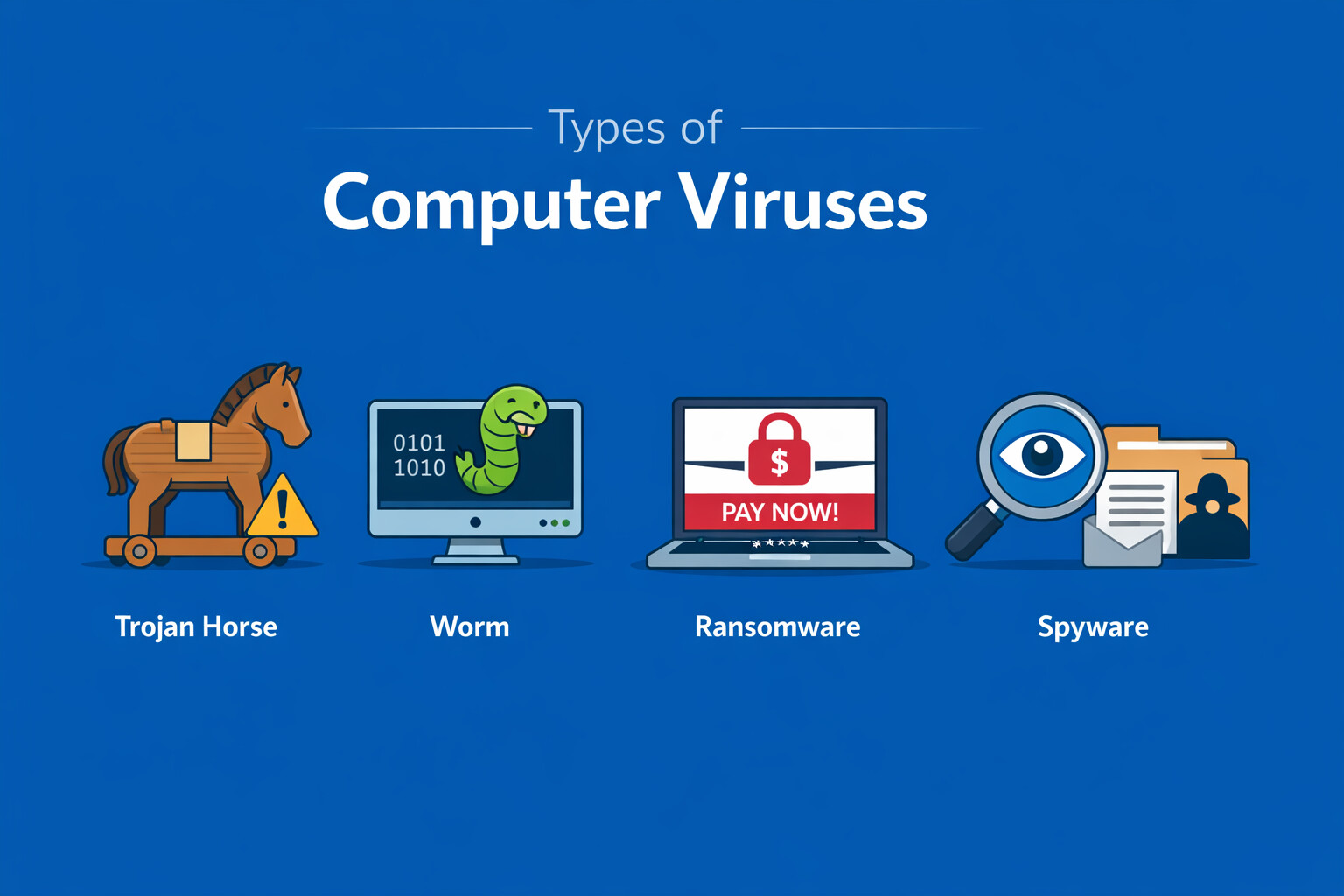
To appreciate these examples, one must understand the technical shift in how these programs operate. Historically, viruses relied on infectors, where they would prepend or append their code to an existing executable file (.exe or .com). When the user ran the legitimate program, the virus code ran first.
By the early 2000s, the focus shifted to memory-resident viruses. These do not necessarily need to alter files on the disk; instead, they hide in the computer's RAM (Random Access Memory), making them harder for traditional scanners to find.
Modern threats in 2026 often utilize fileless malware. These attacks use legitimate system tools, like PowerShell or Windows Management Instrumentation (WMI), to execute malicious commands. Because no "malicious file" is ever saved to the hard drive, traditional antivirus software that looks for file signatures often fails to detect them. This evolution mirrors the history of the viruses mentioned above: moving from the obvious and physical (floppy disks) to the invisible and systemic (network protocols and memory).
Frequently Asked Questions
What is the difference between a computer virus and a worm?
A computer virus requires a host file or human action to spread (like running a downloaded program), whereas a worm is a standalone piece of software that can replicate and spread across networks automatically without human intervention. The Morris Worm and WannaCry are classic examples of worms.
Can a computer virus physically damage hardware?
Yes, though it is rare. The CIH (Chernobyl) virus damaged the BIOS, rendering motherboards useless. Stuxnet is the most famous example of a virus causing physical destruction by manipulating industrial control systems to spin centrifuges until they broke.
Who was the first person arrested for creating a computer virus?
Robert Tappan Morris was the first person to be convicted under the Computer Fraud and Abuse Act in the United States following the 1988 Morris Worm incident. He was sentenced to three years of probation and a fine, though he later became a successful professor at MIT.
Why was the ILOVEYOU virus so successful?
It exploited a combination of human psychology (the desire to be "loved" or noticed) and a technical flaw in Windows that hid file extensions. Users thought they were opening a safe text file when they were actually executing a malicious script.
Are viruses still the biggest threat in 2026?
While "viruses" exist, the broader category of malware—specifically ransomware and AI-driven phishing—is the dominant threat. Modern security focus has shifted from just blocking files to "Zero Trust" architectures and behavioral analysis, as traditional virus signatures are no longer enough to stop sophisticated attacks.
Practical Recommendations for Protection
Historical examples teach us that the most successful viruses exploit either unpatched software or human trust. To protect your systems in 2026, follow these expert guidelines:
- Prioritize Patch Management: Most historical outbreaks, including WannaCry and the Morris Worm, exploited vulnerabilities for which patches were already available but not yet installed. Enable automatic updates for all operating systems and critical applications.
- Verify File Extensions: Never trust a file based on its icon or its name alone. Ensure your system is configured to show all file extensions so you can identify suspicious files like
invoice.pdf.exe. - Implement Multi-Factor Authentication (MFA): Since the era of Melissa and ILOVEYOU, social engineering has only become more complex. MFA provides a critical second line of defense even if a virus or phishing attack successfully steals your credentials.
- Use Behavioral Antivirus (EDR): Move beyond simple signature-based antivirus. Use Endpoint Detection and Response (EDR) tools that look for suspicious actions (like a document suddenly trying to encrypt your entire hard drive) rather than just matching files against a database of known threats.
By understanding the history of these digital threats, users and organizations can better anticipate the tactics of future malware and build more resilient digital environments.