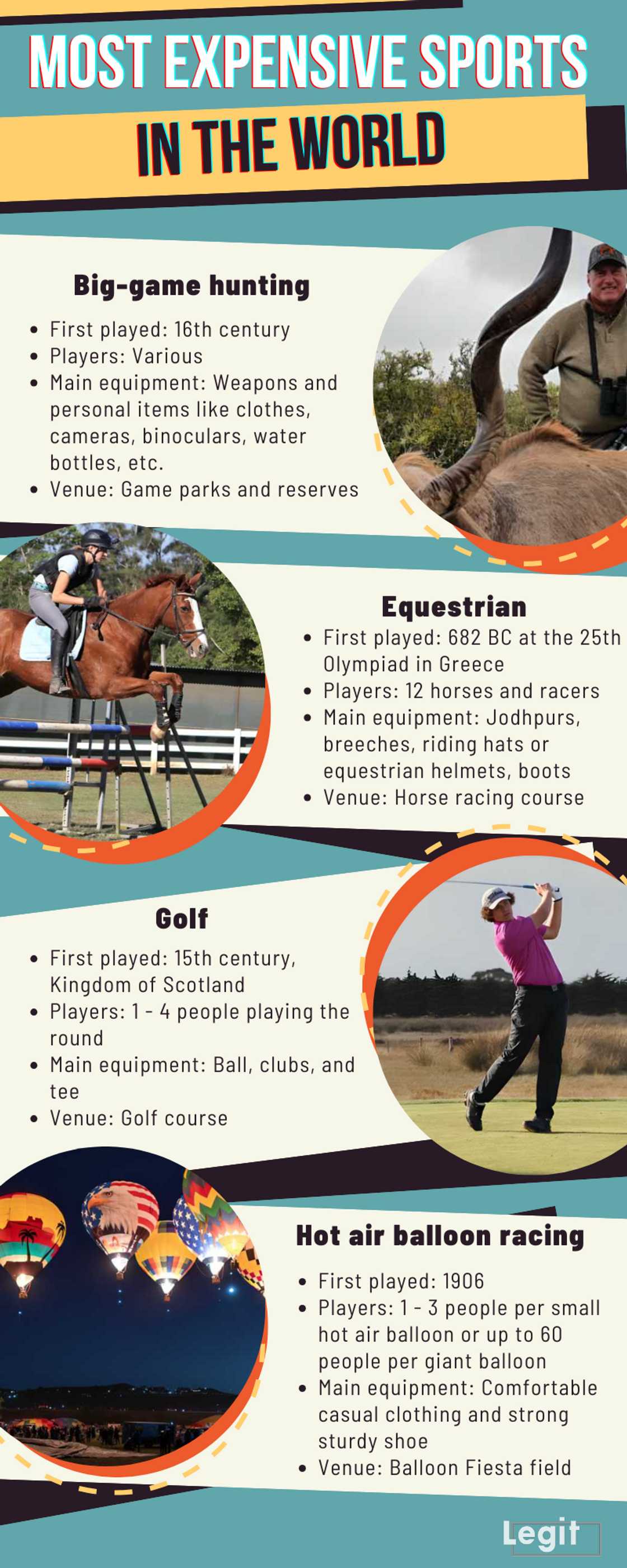
Participating in a high-end sport requires more than just physical talent; it demands significant financial capital for specialized equipment, elite training, and international logistics. From the billion-dollar engineering of Formula 1 to the lifelong maintenance of world-class equestrian bloodlines, these disciplines represent the pinnacle of athletic and financial investment globally.
The term an expensive sport is often used broadly to describe any activity with high barriers to entry, but in professional and luxury circles, it specifically refers to "capital-intensive" disciplines. These are sports where the cost of the hardware (cars, boats, horses) and the infrastructure required to support them far exceed the personal training expenses found in traditional athletics. As of 2026, the financial landscape of these sports has evolved due to advancements in carbon-fiber technology, sustainable fuel mandates in motorsports, and the rising costs of global specialized transport.
The Hierarchy of Athletic Investment
To understand why a sport becomes prohibitively expensive, one must look at the three pillars of sporting expenditure: Initial Asset Acquisition, Operational Maintenance, and Logistical Reach.
In a sport like marathon running, the asset acquisition (shoes) is minimal. In contrast, in competitive sailing or motorsports, the asset is a multimillion-dollar machine that requires a team of engineers to operate. Furthermore, many of the world's most expensive sports are seasonal and geographic, requiring participants to move entire stables or engineering bays across continents to follow the competitive circuit. This "nomadic luxury" is a primary driver of the high price tags associated with elite competition.
Formula 1: The Billion-Dollar Grid
Formula 1 remains the undisputed leader of expensive sports. In 2026, the sport has undergone a major regulatory shift, introducing new power unit standards that emphasize electrical power and 100% sustainable fuels. While the FIA Financial Regulations (commonly known as the cost cap) attempt to level the playing field, the actual expenditure of a top-tier team remains astronomical.
The Cost of Innovation
Even with a cost cap hovering around $135 million for "regulated" expenditures, many items are excluded. Driver salaries, the pay of the three highest-paid employees, and marketing budgets sit outside this limit. For a driver entering the sport via the "pay driver" route or through a junior academy, the path to the seat often costs between $10 million and $20 million in karting, Formula 4, Formula 3, and Formula 2 fees.
Technical Requirements
The 2026 power units are complex hybrid systems. The research and development (R&D) for a single front-wing iteration can cost upwards of $150,000, and a single crash can result in millions of dollars in damages. For the enthusiast, simply attending a "Paddock Club" experience at the Monaco or Las Vegas Grand Prix can cost between $10,000 and $30,000 for a single weekend.
Equestrianism: The Infinite Cost of Living Beings
Unlike a car, a horse requires 24-hour care, specific nutrition, and medical attention regardless of whether it is competing. This makes equestrianism, specifically Show Jumping and Dressage, one of the most consistently expensive sports to maintain over time.
Purchasing Elite Bloodlines
A horse capable of competing at the Grand Prix level (5-star events) can cost anywhere from $500,000 to over $10 million. In 2026, the market for warmbloods with proven Olympic pedigrees has reached new heights. The "asset" in this sport is fragile; a minor ligament injury can instantly reduce a multi-million dollar investment to zero.
Monthly Operational Costs
- Stabling and Care: Elite boarding facilities in hubs like Wellington, Florida, or Oomschot, Netherlands, can cost $2,000 to $5,000 per month per horse.
- Veterinary and Farrier Services: Maintaining the hooves and joints of a performance animal involves specialized shoeing every six weeks and regular regenerative therapies (like IRAP or shockwave), adding thousands to the annual bill.
- Grooms and Training: A professional rider usually employs a full-time groom for every three horses, ensuring they are exercised, cleaned, and monitored.
Sailing and Yacht Racing: Engineering Against the Elements
Competitive sailing, particularly the America’s Cup and the Vendée Globe, represents the intersection of aerospace engineering and maritime skill. It is often cited as the "Formula 1 of the Seas."
The Price of Foiling Technology
Modern racing yachts now utilize "foils"—underwater wings that lift the hull out of the water to reduce drag. Developing a competitive AC75 (the class used in the America’s Cup) requires a budget of approximately $100 million to $150 million. This covers the design team, the construction of the carbon-fiber hull, and the sophisticated hydraulic systems that control the sails.
Logistics and Crew
A racing yacht requires a highly skilled crew of 10 to 20 people, including "grinders" (athletes providing power) and tactical navigators. The cost of transporting these vessels across the ocean on specialized cargo ships, combined with the support boats and chase teams, makes a single season of high-level yachting a multi-million dollar endeavor. Even at the amateur level, owning a competitive 40-foot racing boat involves annual dockage, insurance, and sail replacement costs that can easily exceed $100,000.
Polo: The "Sport of Kings" Logistics
Polo is uniquely expensive because it requires multiple "assets" per match. A single player does not use one horse; they use a "string" of ponies (typically 4 to 6) to ensure the animals are not overworked during the high-intensity "chukkas" (periods of play).
The String of Ponies
To play at a medium or high-goal level, a player needs at least six polo ponies. Each pony costs between $20,000 and $200,000. Because polo is a contact sport, the risk of injury is high, meaning a player must constantly rotate and replace horses in their string.
Tournament Fees and Patronage
In the world of professional polo, many teams are funded by a "Patron"—a wealthy individual who pays the salaries of professional players (often Argentinian 10-goalers) to play alongside them. This patronage can cost between $500,000 and $2 million per season, covering the professionals' fees, the transport of 20+ horses, and entry fees for prestigious tournaments like the Queen’s Cup or the U.S. Open Polo Championship.
Comparative Annual Costs of Expensive Sports (2026 Estimates)
The following table compares the estimated annual costs for a high-level amateur/semi-professional participant versus the professional team entry requirements.
| Sport | Entry-Level Professional Asset Cost | Annual Operating Budget (Pro) | Typical Amateur Annual Spend |
|---|---|---|---|
| Formula 1 | $15M - $20M (Junior Career) | $135M+ (Team Budget) | $50,000 (Karting/Track Days) |
| Equestrian (Jumping) | $500,000 - $5M per horse | $200,000 - $1M | $40,000 - $100,000 |
| Sailing (Cuppers) | $80M - $100M (Boat R&D) | $50M+ per cycle | $30,000 - $150,000 (Racing) |
| Polo | $150,000 - $500,000 (String) | $1M - $3M | $50,000 - $120,000 |
| Wingsuit Flying | $5,000 - $15,000 (Gear) | $50,000+ (Travel/Fuel) | $15,000 - $30,000 |
The "Hidden" Costs of Elite Sports
Beyond the obvious equipment and entry fees, several "invisible" costs significantly inflate the price of an expensive sport.
Specialized Insurance
Insuring a $5 million racehorse or a $2 million vintage racing car is complex. Premiums are high because the assets are used in high-risk environments. In equestrian sports, "Loss of Use" insurance—which pays out if the horse can no longer compete but is still alive—is notoriously expensive and difficult to obtain.
Geographic Displacement
The most prestigious events in these sports are spread globally. The Federation Equestre Internationale (FEI) calendars and the F1 schedule require constant travel. For an equestrian, this means paying for "equine air travel," where horses are flown in specialized containers. Shipping a single horse across the Atlantic can cost $10,000 to $20,000 per trip.
Professional Support Staff
At the elite level, you are not just an athlete; you are the CEO of a small enterprise. You require coaches, physical therapists, specialized mechanics or grooms, and often a manager to handle logistics. The payroll for this support staff often matches or exceeds the cost of the equipment itself.
Why Do People Choose Expensive Sports?
Despite the staggering costs, these sports continue to grow. The primary drivers are exclusivity, technological fascination, and networking.
- Exclusivity: The high cost acts as a natural filter, creating a community of high-net-worth individuals. In sports like Polo and Yachting, the "clubhouse" is as important as the field of play for business networking.
- Technological Mastery: For many in motorsports and sailing, the appeal lies in the engineering. Being at the forefront of what is physically possible with carbon fiber, aerodynamics, and sustainable energy is a powerful draw.
- The Human-Animal Bond: In equestrian sports, the financial cost is often viewed as a secondary consideration to the unique partnership between human and horse, a factor that cannot be replicated in mechanized sports.
Common Mistakes When Entering an Expensive Sport
Newcomers to high-capital sports often underestimate the "tail" of the investment—the ongoing costs that follow the initial purchase.
- Buying the "Asset" but not the "Infrastructure": Purchasing a race car is the easy part. The mistake is failing to budget for the trailer, the tools, the specialized tires, and the mechanic's time required to keep it running.
- Underestimating Depreciation: Unlike real estate, most sporting equipment (with the exception of rare vintage cars) depreciates rapidly. A racing yacht from five years ago is often technologically obsolete and worth a fraction of its build cost.
- Ignoring Local Regulations: In 2026, environmental regulations have become stricter. Entering motorsports now requires compliance with noise and emission standards that may require additional investments in newer, "greener" technology.
FAQ
Which sport has the highest "cost per minute" of play?
Formula 1 generally holds this title. When you factor in the hundreds of millions spent on R&D for a season consisting of roughly 40-50 hours of actual race/qualifying time, the cost per minute exceeds $50,000. Wingsuit flying also has a high cost-per-minute due to the expensive travel and equipment required for a flight that lasts only a few minutes.
Can you participate in these sports on a budget?
Yes, but typically not at a competitive level. For example, "intercollegiate" polo allows students to play using school-owned horses, significantly lowering the cost. Similarly, "sim racing" has become a legitimate, low-cost gateway into motorsports, with some drivers transitioning from digital cockpits to real-world tracks.
Why is equestrian sport more expensive than car racing for some people?
While the top end of F1 is more expensive than the top end of horse jumping, the "floor" for equestrianism is often higher. A car can be parked in a garage for $0 a month; a horse requires food, water, and cleaning every single day, making it a perpetual financial commitment.
Has technology made these sports cheaper over time?
Generally, no. While technology makes equipment more efficient, it also raises the "arms race" bar. As soon as a cheaper material or process is found, teams spend the saved money on more advanced R&D to gain a competitive edge, keeping the total expenditure high.
What is the most expensive sport for a child to start?
Karting is widely considered the most expensive path for a child. To reach the professional "ladder" that leads to Formula 1, a family can expect to spend $100,000 to $200,000 per year by the time the child is 12 years old, covering international travel, professional tuning, and multiple chassis.
Final Recommendation
If you are considering entering an expensive sport in 2026, the first step is to conduct a "Life-Cycle Cost Analysis." Do not look at the sticker price of the horse, the boat, or the car. Instead, calculate the monthly "burn rate" of maintenance, storage, and insurance. For most, the most sustainable way to enjoy these disciplines is through fractional ownership or club-level participation, where the massive overhead costs are shared among a group of enthusiasts rather than shouldered by a single individual.