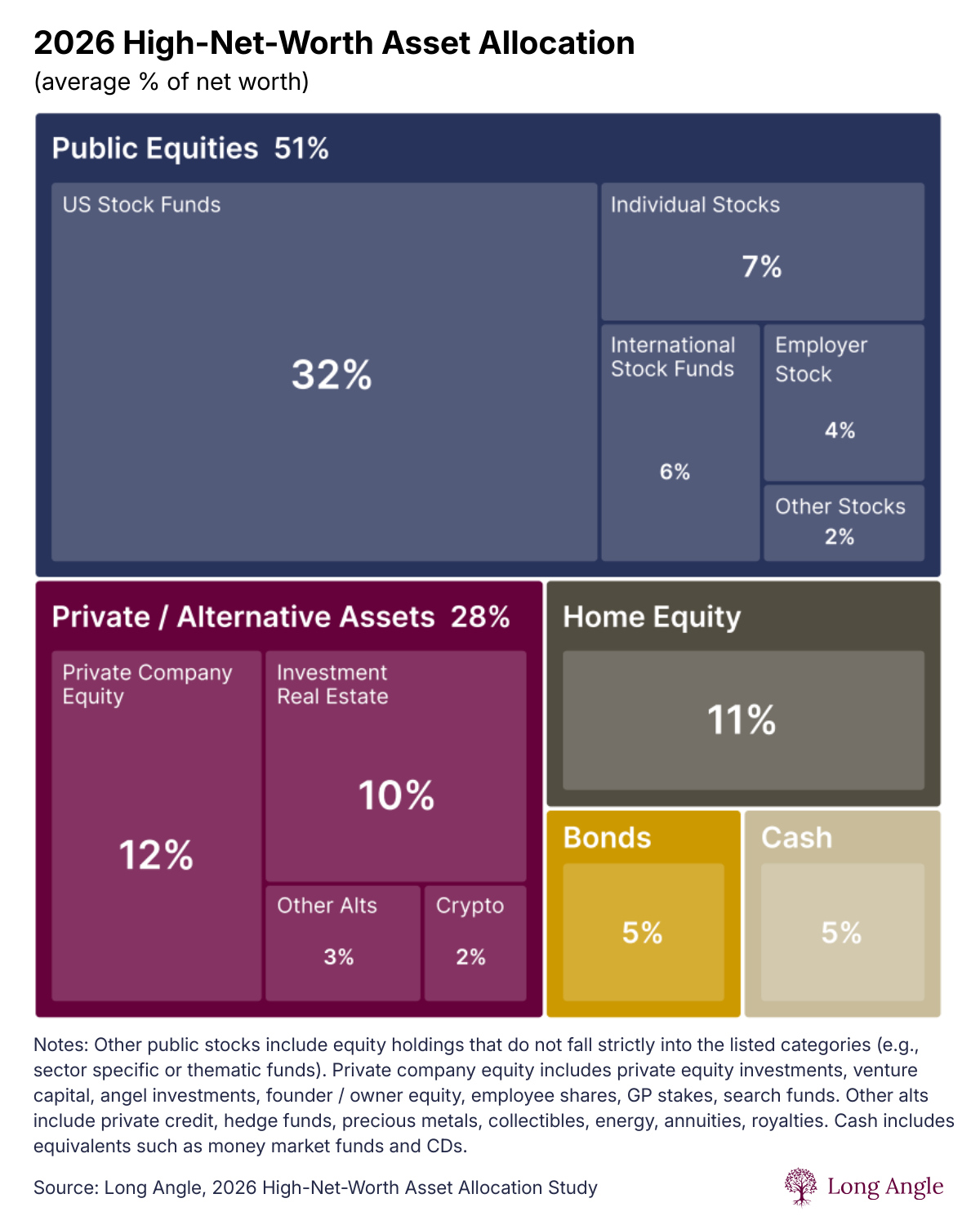
High-net-worth illiquid assets are investments that cannot be quickly converted into cash without a significant loss in value or a lengthy transaction period. Common examples include private equity, commercial real estate, fine art, and venture capital, which typically require holding periods of five to ten years or longer to achieve their targeted returns.
Understanding the Role of Illiquid Assets in Wealth Management
In the 2026 financial landscape, high-net-worth individuals (HNWIs) and institutional investors increasingly allocate a substantial portion of their portfolios to illiquid assets. The primary driver for this allocation is the liquidity premium—the potential for higher returns as compensation for the inability to access capital quickly. While a standard brokerage account allows for "T+2" (trade plus two days) settlement for stocks and bonds, illiquid assets may take months or even years to liquidate.
Illiquidity is not a defect but a structural characteristic. By "locking up" capital, fund managers can execute long-term strategies, such as restructuring a distressed company or developing a multi-use real estate project, without the pressure of daily market volatility or investor redemptions. For the high-net-worth investor, these assets serve as a stabilizer, often showing lower correlation with public equity markets.
The Mechanics of the Liquidity Premium
The liquidity premium exists because most market participants value the ability to exit a position instantly. Those who do not need immediate access to their full net worth can "sell" their liquidity to the market in exchange for higher expected yields. In 2026, with public markets experiencing high algorithmic volatility, the relative stability of appraised values in illiquid sectors remains a major draw for family offices and private wealth tiers.
Private Equity and Venture Capital
Private equity (PE) remains one of the most prominent examples of high-net-worth illiquid assets. Unlike public stocks, which represent shares in companies traded on exchanges like the NYSE or NASDAQ, private equity involves direct investment in private companies or the buyout of public companies to take them private.
The Commitment and Drawdown Structure
Investing in private equity is rarely a one-time transaction. Investors typically make a "capital commitment." Over the "investment period" (usually the first 3–5 years), the fund manager calls for portions of that capital as they identify specific acquisition targets.
- The Lock-up Period: Most PE funds have a lifespan of 10 years, with possible extensions. Investors are generally prohibited from withdrawing their capital during this time.
- The J-Curve Effect: In the early years of a PE investment, the net asset value often declines due to management fees and the initial costs of restructuring portfolio companies. Returns typically accelerate in the later years as companies are sold or taken public, forming a "J" shape on a performance graph.
Venture Capital (VC)
A subset of private equity, venture capital focuses on early-stage startups. These are arguably the most illiquid of all financial assets. A VC investment in a seed-stage technology firm in 2026 may require a decade to reach an "exit" via an Initial Public Offering (IPO) or an acquisition by a larger corporation. The risk of total loss is higher, but the potential for exponential returns serves as the incentive for the illiquid commitment.
Direct Real Estate Investment
While Real Estate Investment Trusts (REITs) offer liquidity through stock exchanges, direct ownership of commercial or luxury residential real estate is a classic illiquid asset for the wealthy.
Commercial Real Estate (CRE)
Commercial properties—including office buildings, industrial warehouses, and retail centers—require significant due diligence, environmental assessments, and complex financing.
- Transaction Friction: Selling a $50 million office tower in 2026 involves more than just finding a buyer. It requires legal inspections, title clearing, and often the assumption or restructuring of existing debt. The process rarely takes less than 90 to 120 days.
- Valuation Methodology: Unlike stocks, which have a "last traded price," real estate value is determined by appraisals based on comparable sales and discounted cash flow (DCF) analysis of rental income. This can lead to a "valuation lag," where the reported value of the asset does not reflect sudden shifts in the macro-economy until an appraisal is updated.
Luxury Residential Holdings
For HNWIs, a primary residence or a portfolio of secondary homes in high-demand locations (e.g., Aspen, the French Riviera, or Dubai) acts as a significant illiquid store of value. These properties are sensitive to niche market demands. Selling a $20 million estate requires a specific buyer pool, and "days on market" can stretch into years if the asking price does not align with the current appetite for ultra-luxury amenities.
Passion Assets: Fine Art, Collectibles, and Rare Commodities
"Passion assets" have matured into a recognized asset class for high-net-worth portfolios. These include fine art, classic automobiles, rare wine, and high-end horology (watches).
Blue-Chip Fine Art
The art market is notoriously illiquid due to its subjective nature and the high costs of transaction.
- Auction Cycles: The most prestigious auction houses, such as Sotheby's and Christie's, hold major sales only a few times a year. If an investor misses the "Spring Sales," they may have to wait six months to bring a piece to market.
- Transaction Costs: Commissions for buyers and sellers (the "hammer price" vs. the total cost) can range from 10% to 25%. These high friction costs mean an asset must appreciate significantly just for the investor to break even.
- Provenance and Verification: Liquidating art requires rigorous authentication. Any doubt regarding the provenance (the history of ownership) can render an asset unsellable, effectively freezing the capital indefinitely.
Rare Wine and Classic Cars
Similar to art, these assets require specialized storage (climate-controlled cellars or bonded warehouses) to maintain their value. Liquidation involves finding collectors or specialized dealers. In 2026, while digital marketplaces have improved price transparency, the physical transfer and inspection of these goods remain a barrier to instant liquidity.
Hedge Funds with Restrictive Clauses
While some hedge funds offer monthly or quarterly liquidity, many sophisticated strategies utilized by HNWIs involve "lock-ups" and "gates."
Lock-up and Notice Periods
A lock-up period is a window of time (often 1 to 3 years) during which an investor cannot withdraw any capital. After the lock-up expires, investors must still provide a "notice period"—often 60 to 90 days—before their redemption request is honored.
Side Pockets and Gates
- Side Pockets: If a hedge fund invests in a specific asset that becomes illiquid (like a private debt instrument or a distressed security), the manager may move that asset into a "side pocket." Investors cannot withdraw the portion of their investment tied to the side pocket until the underlying asset is sold.
- Gates: A gate is a provision that limits the amount of total capital that can leave a fund during a single redemption period. If too many investors try to exit at once, the fund "lowers the gate" to prevent a fire sale of assets, effectively turning a semi-liquid investment into an illiquid one overnight.
Comparison of High Net Worth Illiquid Assets
The following table compares the typical characteristics of these asset classes based on 2026 market standards.
| Asset Class | Typical Hold Period | Primary Valuation Method | Liquidity Exit Mechanism | Risk Factor |
|---|---|---|---|---|
| Private Equity | 7–12 Years | Quarterly NAV (GP Estimates) | IPO or M&A | Operational/Manager Risk |
| Commercial Real Estate | 5–10 Years | Third-party Appraisals | Secondary Market Sale | Interest Rate Sensitivity |
| Fine Art | 10+ Years | Comparative Auction Sales | Public or Private Auction | Subjectivity/Friction Costs |
| Venture Capital | 8–15 Years | Last Funding Round | IPO or Acquisition | High Failure Rate |
| Hedge Funds (Restricted) | 1–3 Years | Market Pricing (Daily/Monthly) | Scheduled Redemption | Market/Strategy Risk |
Strategic Management of Illiquid Assets
Managing a portfolio heavy in illiquid assets requires a sophisticated approach to cash flow. High-net-worth individuals often use "liquidity buckets" to ensure they can meet short-term obligations while their long-term capital is hard at work.
Asset Liability Matching
Financial advisors to the wealthy use asset liability matching to ensure that the "duration" of the assets matches the timing of the investor's goals. For example, capital intended for a child’s education in two years should never be placed in a 10-year private equity fund. Conversely, capital intended for multi-generational legacy planning is perfectly suited for timberland or long-term VC.
The Role of Private Credit
In 2026, private credit has emerged as a middle ground. While technically illiquid, these loans to private companies often pay regular coupons (interest payments). This provides a "yield" that can be used to fund lifestyle expenses or capital calls for other illiquid investments, mitigating some of the "cash-poor" risks associated with high-net-worth illiquidity.
Valuation and Tax Implications
The illiquidity of these assets often provides tax advantages. Because they are not marked-to-market daily, HNWIs can sometimes utilize "valuation discounts" for estate planning. For example, a minority interest in a private family-held business is worth less than the proportional value of the total business because it is difficult to sell. This lack of marketability can reduce the taxable value of an estate.
Frequently Asked Questions
Why do wealthy people buy assets they can't sell easily?
Wealthy individuals prioritize the liquidity premium and diversification. By investing in assets like private equity or real estate, they can achieve returns that often outperform the public stock market over long horizons. Additionally, illiquid assets do not fluctuate in value as wildly as stocks, which helps preserve capital during periods of market panic.
What is a "capital call" in the context of illiquid assets?
A capital call (or "drawdown") occurs when a private equity or venture capital fund manager requires the investor to provide a portion of the money they originally committed. High-net-worth individuals must keep enough liquid cash (or a line of credit) available to meet these calls, or they may face severe penalties, including the forfeiture of their existing interest in the fund.
Can you sell an illiquid asset before the lock-up period ends?
It is possible but often expensive. A "secondary market" exists for private equity and hedge fund interests, where specialized buyers purchase "LP (Limited Partner) interests." However, the seller typically has to accept a "haircut" or discount—often 10% to 30% below the current net asset value—to compensate the buyer for taking over the illiquid position.
How does the 2026 economic environment affect illiquid assets?
In 2026, higher-for-longer interest rates have made the "cost of carry" for illiquid assets more significant. Investors are more selective, favoring assets with strong cash-flow generation (like industrial real estate) over speculative growth assets. Furthermore, the rise of tokenization allows for fractional ownership, though it has not yet fully solved the underlying liquidity challenges of these large-scale assets.
What are the main risks of holding too many illiquid assets?
The primary risk is a liquidity mismatch. If an investor faces an unexpected financial obligation—such as a legal settlement, a tax bill, or a sudden market downturn—and their wealth is tied up in art and private equity, they may be forced to sell their liquid holdings (like stocks) at the worst possible time or take out high-interest loans against their illiquid assets.
Final Recommendations for Investors
If you are managing a high net worth or advising someone who is, the key to handling illiquid assets is proactive cash flow planning. Ensure that no more than 20% to 40% of the total portfolio is in truly illiquid vehicles, depending on the specific time horizon and income needs. Regularly stress-test the portfolio by simulating a scenario where no liquidations are possible for 24 months. By maintaining a robust "liquidity buffer" in money market funds or high-quality short-term bonds, an investor can enjoy the high-return potential of illiquid assets without the stress of a cash-flow crunch.