Arnold Schwarzenegger served as the 38th Governor of California from 2003 to 2011, entering office through a historic recall election. A moderate Republican known for his "post-partisan" approach, his tenure was defined by landmark environmental legislation, massive infrastructure investments, and significant fiscal challenges during the 2008 global financial crisis.
The Path to Power: The 2003 Recall Election
The governorship of Arnold Schwarzenegger began under circumstances virtually unprecedented in American politics. To understand his time in Sacramento, one must first analyze the 2003 California recall election. The state was grappling with an energy crisis, a massive budget deficit, and a general sense of political malaise under incumbent Governor Gray Davis. When the recall qualified for the ballot, Schwarzenegger—a world-famous bodybuilder and Hollywood action star—announced his candidacy on The Tonight Show with Jay Leno.
His campaign was a masterclass in celebrity politics and populist messaging. Utilizing his "larger-than-life" persona, he promised to "clean house" in Sacramento and "terminate" the influence of special interests. In a field of 135 candidates, Schwarzenegger stood out not just because of his fame, but because of his ability to bypass traditional media and speak directly to a frustrated electorate. On October 7, 2003, California voters ousted Gray Davis, and Schwarzenegger was elected with 48.6% of the vote.
This victory marked a significant shift in California’s political landscape. Schwarzenegger was a fiscal conservative but socially moderate, a combination that initially appealed to a wide swath of the "Purple" California electorate. His inauguration in November 2003 signaled the start of an era that promised to bridge the gap between Hollywood spectacle and legislative reform.
The Early Years: The Reformer and the Special Election
Schwarzenegger’s first two years were characterized by high approval ratings and a series of legislative victories. He successfully negotiated a worker’s compensation reform package and pushed through the Economic Recovery Bond Act to address the state's immediate debt. His "Join Arnold" rhetoric encouraged citizens to bypass the "encrusted" legislative process, leaning heavily on his personal popularity.
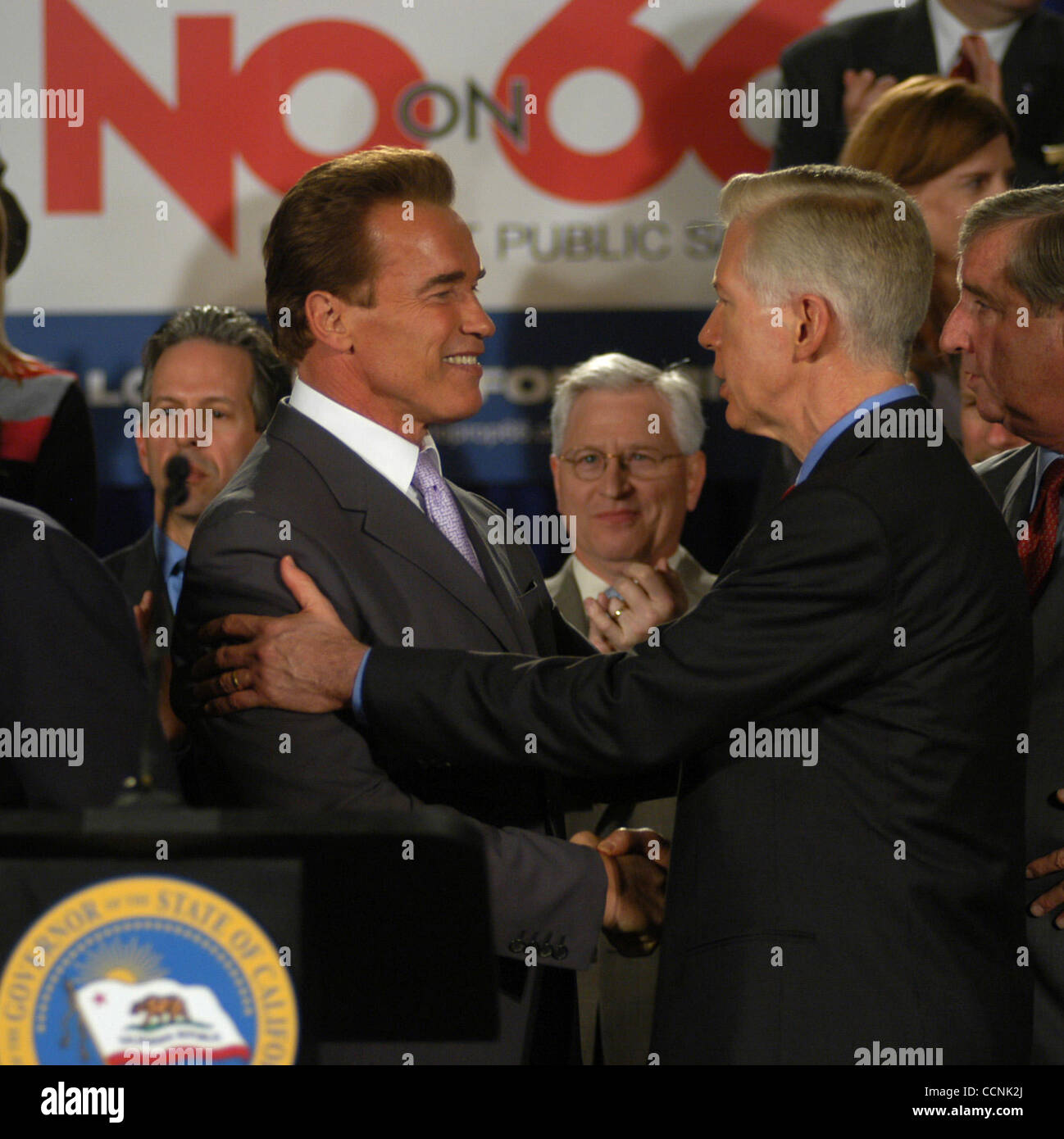
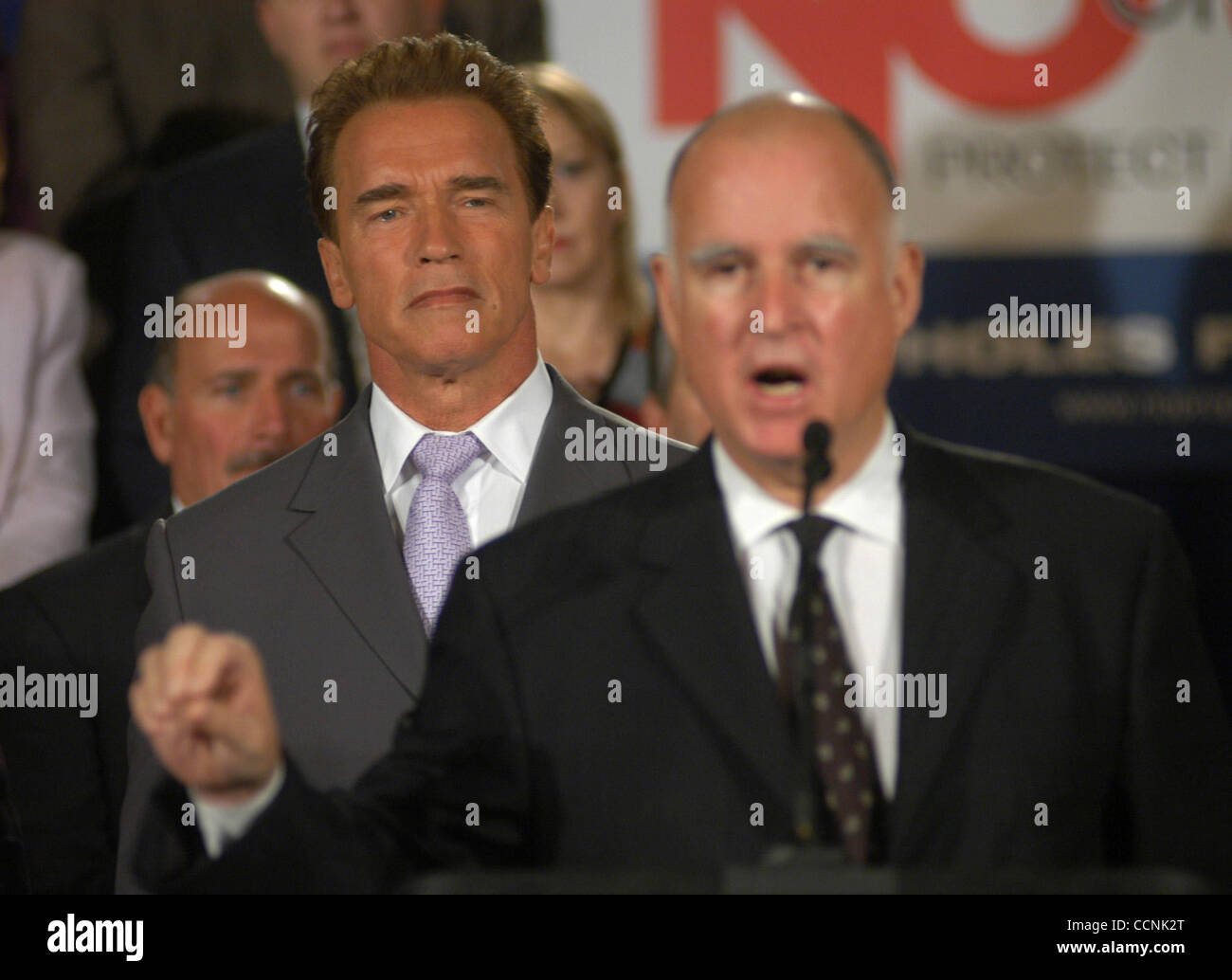
However, this aggressive approach led to a significant political miscalculation. In 2005, frustrated by legislative gridlock with the Democrat-controlled state assembly and senate, Schwarzenegger called for a "Special Election." He proposed four ballot initiatives aimed at capping state spending, changing teacher tenure, redistricting, and restricting union dues for political purposes.
The move backfired spectacularly. Powerful unions—representing teachers, nurses, and firefighters—launched a massive counter-campaign, painting the Governor as an out-of-touch celebrity attacking working-class professionals. All four of his initiatives were defeated at the polls. This failure was a turning point for Schwarzenegger, forcing him to pivot from a confrontational partisan to a collaborator. He famously apologized to the voters and shifted his strategy toward bipartisanship, famously hiring Susan Kennedy, a Democrat and former aide to Gray Davis, as his Chief of Staff.
Environmental Leadership: A Global Landmark
Perhaps the most enduring legacy of Arnold Schwarzenegger’s governorship is his work on climate change. Despite being a Republican in a party that was increasingly skeptical of climate science at the time, Schwarzenegger positioned California as a global leader in green policy.
In 2006, he signed the Global Warming Solutions Act (AB 32). This landmark legislation made California the first state in the nation to cap greenhouse gas emissions, requiring the state to reduce its emissions to 1990 levels by 2020. This was not merely a local policy; it set a blueprint for sub-national governments worldwide. Schwarzenegger argued that economic growth and environmental protection were not mutually exclusive, a philosophy he called "Green Conservatism."
His environmental agenda extended beyond AB 32:
- The Million Solar Roofs Initiative: Aimed at creating 3,000 megawatts of new, solar-generated electricity and providing solar energy systems on one million homes and businesses.
- The Hydrogen Highway: An ambitious plan to create a network of hydrogen fueling stations across the state to support zero-emission vehicles.
- Low Carbon Fuel Standards: An executive order establishing the world’s first greenhouse gas standard for transportation fuels.
By the time he left office, California’s aggressive environmental stance had forced the federal government and automotive manufacturers to take notice, eventually leading to stricter national fuel efficiency standards.
Infrastructure and the Strategic Growth Plan
Schwarzenegger viewed himself as a "builder," a trait likely influenced by his background in construction and real estate before his film career. He recognized that California’s infrastructure—its roads, bridges, and water systems—had been neglected for decades.
In 2006, he successfully campaigned for the Strategic Growth Plan, a massive bond package totaling nearly $43 billion. These funds were designated for:
- Transportation: Reducing congestion and improving the safety of highways and local roads.
- Education: Repairing aging schools and building new university facilities.
- Housing: Developing affordable housing and urban infill projects.
- Flood Control: Strengthening the levee system, particularly in the Central Valley.
These investments were critical for a state whose population continued to grow despite economic fluctuations. Schwarzenegger’s focus on "bricks and mortar" governance stood in contrast to the increasingly ideological battles occurring in Washington D.C., emphasizing the practical needs of state residents.
Economic Challenges and the Great Recession
The latter half of Schwarzenegger’s tenure was marred by the 2008 global financial crisis. California, with its heavy reliance on property taxes and high-income earners, was hit particularly hard by the housing market collapse. The state’s budget deficit ballooned to tens of billions of dollars, leading to a period of intense fiscal austerity.
Schwarzenegger found himself in a perennial battle with the legislature over how to close the gap. He refused to support broad-based tax increases for much of his term, preferring spending cuts and temporary revenue measures. However, the severity of the crisis eventually forced difficult compromises. The state saw significant cuts to higher education, healthcare services for the poor, and social safety nets.
During this period, Schwarzenegger’s approval ratings plummeted. The "Governator" who had promised to fix the state’s finances found himself presiding over "furlough Fridays," where state employees were forced to take unpaid days off to save money. This era highlighted the structural weaknesses of California’s budget process, including the two-thirds majority requirement (at the time) to pass a budget or raise taxes, which Schwarzenegger struggled to navigate.
Comparison of California Gubernatorial Eras
The following table compares key aspects of Arnold Schwarzenegger’s administration with his immediate predecessor and successor to provide context on his policy priorities and the economic environment.
| Feature | Gray Davis (1999–2003) | Arnold Schwarzenegger (2003–2011) | Jerry Brown (2011–2019) |
|---|---|---|---|
| Primary Party | Democrat | Republican | Democrat |
| Key Economic Event | Dot-com Bubble / Energy Crisis | Great Recession (2008) | Post-Recession Recovery |
| Environmental Focus | Early Renewable Standards | AB 32 (Cap-and-Trade) | Expansion of Green Mandates |
| Budget Strategy | Spending Growth / Deficits | Bond Borrowing / Austerity | Rainy Day Fund / Tax Increases |
| Major Achievement | Expanded Healthcare for Children | Infrastructure Bonds / Climate Policy | Budget Stabilization / High-Speed Rail |
| Ending Approval Rating | Low (approx. 24%) | Low (approx. 23%) | High (approx. 50%+) |
Social Policy and Judicial Appointments
Schwarzenegger’s social policy was often a mix of libertarian-leaning Republicanism and California liberalism. He was a staunch supporter of stem cell research, signing legislation that protected and funded the practice when it was under threat at the federal level.
In terms of judicial appointments, he was praised for his diversity. He appointed a significant number of women and minorities to the bench, often prioritizing legal competence over political ideology. His appointment of Tani Cantil-Sakauye as Chief Justice of California in 2010 was a landmark moment, as she was the first Asian-Filipina American to hold the position.
However, his record on criminal justice was mixed. While he acknowledged the need for prison reform and criticized the "overcrowding" of California's correctional facilities, the state's prison population remained at crisis levels for much of his term, eventually leading to federal court intervention.
The "Post-Partisan" Experiment
In his second term, Schwarzenegger championed the idea of "Post-Partisan" politics. He argued that the two-party system was broken and that the best solutions lay in the middle. This led to several significant political reforms in California:
- Independent Redistricting: He supported the creation of a citizen-led commission to draw legislative districts, removing the power from politicians who often engaged in gerrymandering.
- Top-Two Primary: He advocated for a primary system where the top two vote-getters, regardless of party, advance to the general election, aimed at moderating candidates.
These reforms were intended to reduce polarization and force legislators to appeal to a broader base of voters. While the long-term effectiveness of these changes is still debated by political scientists, they represent Schwarzenegger’s attempt to fundamentally change how California's government functions.
Final Years and Departure
Schwarzenegger left office in January 2011. His final months were overshadowed by a $28 billion budget deficit and a controversy regarding the commutation of the sentence of Esteban Núñez, the son of a political ally. This move was widely criticized and left a sour note on his departure.
Despite the low approval ratings at the time of his exit, history has been kinder to his policy achievements, particularly regarding the environment and infrastructure. He returned to private life, resuming his acting career and establishing the USC Schwarzenegger Institute for State and Global Policy, which focuses on the "post-partisan" solutions he championed as Governor.
Frequently Asked Questions
What was Arnold Schwarzenegger’s most significant law?
The most significant law passed under Schwarzenegger was Assembly Bill 32 (AB 32), the Global Warming Solutions Act of 2006. It established a comprehensive program of regulatory and market-based cost-effective mechanisms to reduce greenhouse gas emissions. It remains a foundational piece of environmental policy that continues to shape California's economy and energy sector in 2026.
Why was Arnold Schwarzenegger called the "Governator"?
The nickname "Governator" is a portmanteau of "Governor" and his famous film character, "The Terminator." The media and the public used it to highlight his transition from an action movie star to a powerful political figure. Schwarzenegger often leaned into the persona, using movie catchphrases like "I'll be back" in his political speeches.
Did Schwarzenegger improve California’s economy?
The results were mixed. He successfully passed major infrastructure bonds that created jobs and modernized the state. However, his tenure coincided with the devastating 2008 financial crisis. While he managed to prevent the state from complete bankruptcy through difficult cuts and borrowing, the state’s debt and unemployment levels were high when he left office, largely due to global economic forces beyond any governor's control.
Was Arnold Schwarzenegger a moderate or a conservative?
Schwarzenegger was a moderate Republican. He was fiscally conservative—opposing most broad tax increases and seeking to limit state spending—but socially liberal or moderate. He supported abortion rights, gay rights (though he vetoed same-sex marriage bills twice, citing that the issue should be decided by the courts or voters), and aggressive environmental protections.
How did the recall election change California?
The 2003 recall proved that a populist, celebrity-driven campaign could successfully bypass traditional party machinery in California. It also led to structural changes in the state’s election laws and spurred the "post-partisan" reforms that Schwarzenegger championed, such as independent redistricting and the top-two primary system.
Recommendations for Further Research
For those looking to understand the intricacies of California's political history during this era, several steps are recommended:
- Review the California State Archives: The official records of the Schwarzenegger administration provide primary source documents on executive orders and legislative negotiations.
- Study AB 32 Impact Reports: Organizations like the California Air Resources Board (CARB) provide extensive data on how Schwarzenegger’s environmental policies have performed over the last two decades.
- Analyze Redistricting Outcomes: Researching the "California Citizens Redistricting Commission" will show the practical effects of the reforms he championed in 2008 and 2010.
Arnold Schwarzenegger’s tenure serves as a complex case study in celebrity politics, environmental leadership, and the challenges of governing a massive, diverse state during a global economic downturn.