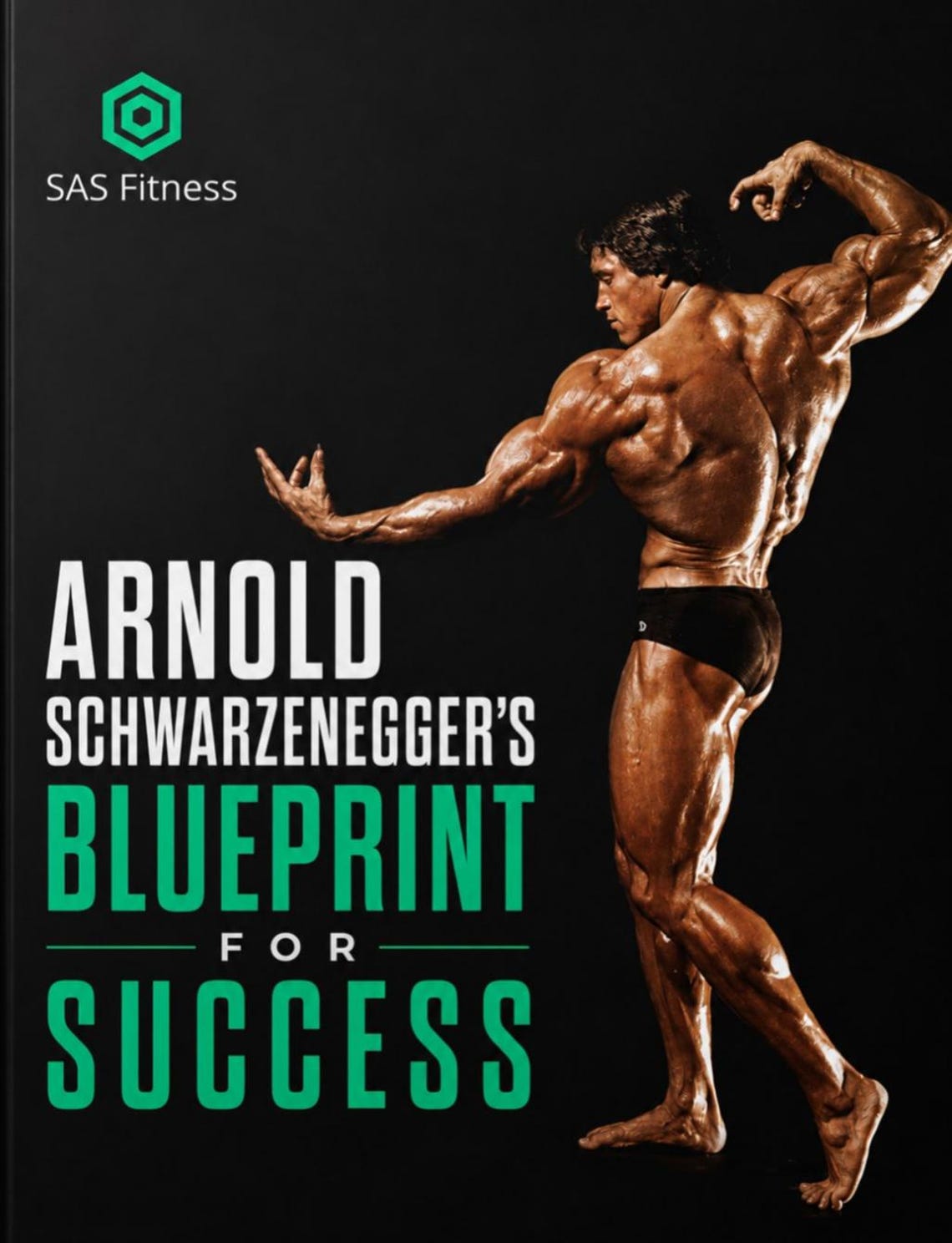
The Arnold Schwarzenegger Blueprint for Muscle Building is a high-volume, six-day training program designed to maximize hypertrophy through heavy compound movements and advanced intensity techniques. It emphasizes a twice-weekly body-part frequency, prioritizing fundamental lifts like the bench press, squat, and deadlift to build a classic, balanced "Golden Era" aesthetic.
Understanding the Philosophy of the Arnold Blueprint
To follow the Arnold Schwarzenegger Blueprint for Muscle Building effectively, one must first understand the core principles that guided the "Austrian Oak" during his seven-time Mr. Olympia reign. This is not a standard fitness routine; it is an exhaustive approach to physical transformation that demands significant time, mental fortitude, and recovery management.
The blueprint is built on the concept of high volume and high frequency. While modern "science-based" lifting often advocates for lower volume and more rest, Arnold’s method assumes that the body can handle extreme stress if fueled and rested correctly. By 2026, the fitness community has seen a resurgence in this high-volume approach for advanced trainees who have reached plateaus with traditional 3-day or 4-day splits.
The Mind-Muscle Connection
Arnold famously spoke about the "Mind-Muscle Connection." This is not merely a motivational phrase but a physiological focus. When performing a curl, for instance, you are not just moving a weight from point A to point B; you are visualizing the bicep peaking and contracting. From a technical standpoint, this involves maximizing motor unit recruitment by consciously focusing on the target muscle group during the concentric and eccentric phases of a lift.
The Concept of "The Pump"
In the Blueprint, "The Pump" is used as a diagnostic tool. If a muscle is engorged with blood, it signifies that the resistance and volume are sufficient to create metabolic stress—one of the primary drivers of muscle hypertrophy. The program uses high-repetition finishing sets specifically to drive blood into the fascia, potentially stretching the muscle sheath to allow for further growth.
The Structure of the Training Program
The Blueprint is typically divided into two distinct phases: Phase 1 (The Foundation) and Phase 2 (The Definition). As of 2026, most practitioners utilize Phase 1 for a minimum of 8–12 weeks to build a solid base of strength and size before transitioning into the higher-intensity Phase 2.
The 6-Day Split
The program follows a "double split" logic, though it is usually performed in a single, long session per day. The standard rotation is:
- Day 1 & 4: Chest and Back
- Day 2 & 5: Shoulders and Arms
- Day 3 & 6: Legs
- Day 7: Rest
This frequency ensures that every major muscle group is targeted twice a week, providing a 48-to-72-hour recovery window between sessions. For a detailed breakdown of the science behind muscle recovery windows, the National Strength and Conditioning Association (NSCA) provides extensive peer-reviewed data on hypertrophic recovery cycles.
Exercise Selection and the "Big Five"
Arnold’s blueprint relies heavily on "multi-joint" or compound movements. These exercises allow for the greatest amount of weight to be moved, triggering a systemic hormonal response (including increased testosterone and growth hormone production).
- Bench Press: For overall pectoral thickness.
- Squat: The "King of Exercises" for lower body development and CNS stimulation.
- Deadlift: For posterior chain strength and back thickness.
- Barbell Rows: Essential for the "width and depth" of the lats and rhomboids.
- Overhead Press: For capped, powerful deltoids.
Advanced Intensity Techniques
What sets the Arnold Schwarzenegger Blueprint for Muscle Building apart from generic bodybuilding programs is the inclusion of "Shocking Methods." These are designed to push the muscle past the point of failure.
The 1-10 Method
This is a brutal technique often used for movements like the barbell curl or bench press. You start with a weight you can only lift for one rep. Immediately after, you drop the weight slightly and perform two reps. You continue this "stripping" process until you reach 10 reps. There is zero rest between sets other than the time it takes to change the weight.
Supersets and Tri-sets
The Blueprint frequently pairs opposing muscle groups (antagonistic supersets). For example, pairing a Chest exercise with a Back exercise. This not only saves time but also ensures a massive blood flow to the entire upper torso, creating an incredible "pump" and preventing one side of the body from becoming over-dominant.
Stripping Sets (Drop Sets)
After reaching failure on a heavy set, you immediately reduce the weight by 20-30% and continue for as many reps as possible. This targets different muscle fibers (switching from Type IIx to Type IIa) and maximizes metabolic fatigue.
Nutritional Requirements for the Blueprint
You cannot build a "Golden Era" physique on a caloric deficit. The Blueprint requires a significant caloric surplus, particularly rich in high-quality proteins and complex carbohydrates.
Macronutrient Ratios
By 2026 standards, the recommended protein intake for a program of this intensity is roughly 1.2 to 1.6 grams of protein per pound of body weight.
- Proteins: Eggs, steak, chicken, fish, and dairy (Arnold was a proponent of whole milk for "hard gainers").
- Carbohydrates: Oats, brown rice, sweet potatoes, and fruit. Carbs are essential here to replenish muscle glycogen exhausted by the high-volume sets.
- Fats: Avocado, nuts, and olive oil to support hormonal health.
Supplementation Strategy
While Arnold's original era had fewer options, the modern Blueprint usually incorporates:
- Creatine Monohydrate: For ATP resynthesis and cell volumization.
- Whey Protein Isolate: For rapid post-workout amino acid delivery.
- Pre-workout Nitric Oxide Boosters: To enhance the "pump" and vasodilation.
- Casein Protein: Slow-digesting protein taken before bed to prevent catabolism during the 6-7 hours of sleep.
Comparison: Arnold Blueprint vs. Modern Training Splits
| Feature | Arnold Blueprint | Standard PPL (Push/Pull/Legs) | 5x5 Strength Program |
|---|---|---|---|
| Frequency | 6 Days/Week | 3-6 Days/Week | 3 Days/Week |
| Volume | Very High (20-30 sets per part) | Moderate (10-15 sets per part) | Low (5 sets per part) |
| Primary Goal | Hypertrophy & Aesthetics | General Fitness/Hypertrophy | Raw Strength |
| Intensity Tools | 1-10 Method, Supersets | Standard Rest Periods | Fixed Rest Periods |
| Target Audience | Advanced Bodybuilders | Intermediate Trainees | Beginners |
Common Mistakes and How to Avoid Them
The most common pitfall when starting the Arnold Schwarzenegger Blueprint for Muscle Building is ego lifting. Because the program demands high volume, attempting to use your 1-rep max for every set will lead to central nervous system (CNS) burnout or injury within the first two weeks.
Overtraining Signals
If you experience persistent joint pain, a lack of "pump" during workouts, or chronic insomnia, you are likely overtraining. Arnold’s blueprint is a "marathon, not a sprint." If the volume is too high, it is better to reduce the number of sets per exercise than to skip the workouts entirely.
Neglecting the Eccentric Phase
Many lifters focus only on the "push" or "pull" and let the weight drop quickly. Arnold emphasized the "negative" or eccentric portion of the lift. Controlling the weight on the way down creates more microscopic tears in the muscle fiber, which leads to greater growth during the repair process.
The Role of Recovery and Sleep
High-volume training is useless without adequate recovery. During the 2026 training cycle, recovery technology like percussive therapy (massage guns) and cold plunges have become popular additions to the Blueprint. However, nothing replaces 7-9 hours of deep sleep.
During sleep, the body releases the majority of its natural growth hormone. If you are following the 6-day split but only sleeping 5 hours a night, your cortisol levels will spike, which can lead to muscle wasting rather than muscle building.
Frequently Asked Questions
Is the Arnold Blueprint suitable for beginners?
No, it is generally not recommended for absolute beginners. The sheer volume (often exceeding 30 sets per workout) can cause severe DOMS (Delayed Onset Muscle Soreness) and potential rhabdomyolysis in untrained individuals. Beginners should start with a basic full-body routine or a 3-day split before attempting this program.
How long should each workout take?
Due to the high number of sets and the use of supersets, these workouts typically take between 75 and 120 minutes. If you are finishing in under an hour, you are likely not performing enough sets or your rest periods are too short to maintain the required intensity.
Can I do this program while trying to lose weight?
While possible, it is extremely difficult. The Arnold Blueprint is fundamentally a "mass building" program. The high volume requires a surplus of energy. If you are in a deep caloric deficit, you will likely find it impossible to recover between the frequent sessions.
What should I do if I miss a day?
If you miss a day, do not try to "combine" two workouts the next day (e.g., doing Chest, Back, Shoulders, and Arms in one go). Simply pick up where you left off and adjust your rest day. Consistency over months is more important than a single missed 24-hour window.
Does the program include cardio?
Arnold famously performed "active recovery," such as hiking or swimming. While the Blueprint itself is focused on resistance training, 20-30 minutes of low-intensity steady-state (LISS) cardio on rest days can help with heart health and metabolic waste removal without hindering muscle growth.
Final Recommendations for Success
To successfully execute the Arnold Schwarzenegger Blueprint for Muscle Building in 2026, you must treat your body like a high-performance machine. Start by tracking your lifts in a journal or digital app to ensure progressive overload. If you lifted 200 lbs for 10 reps last week, aim for 205 lbs or 11 reps this week.
Prioritize form over weight, especially on the "Shocking sets." Finally, listen to your body; if a specific movement like the behind-the-neck press causes shoulder impingement, substitute it with a standard overhead press. The "Blueprint" is a map, but you are the driver—adjust the route to fit your unique biomechanics.