Under federal law, you are entitled to review your credit data to ensure accuracy and protection against fraud. You can access your free credit reports from Equifax, Experian, and TransUnion through the official portal, AnnualCreditReport.com. As of 2026, these reports remain available weekly, allowing for consistent monitoring without damaging your credit score.
Understanding Your Legal Right to Free Credit Reports
The foundation of consumer credit rights in the United States is the Fair Credit Reporting Act (FCRA). Originally passed in 1970 and significantly updated by the Fair and Accurate Credit Transactions (FACT) Act of 2003, this legislation ensures that the information collected by credit bureaus is fair, accurate, and kept private. One of the most critical provisions of the FACT Act was the requirement for the three national credit reporting agencies—Equifax, Experian, and TransUnion—to provide consumers with a free copy of their credit report once every 12 months.
While the statutory requirement is an annual check, the landscape changed significantly during the early 2020s. In response to economic volatility and increased identity theft risks, the bureaus began offering free weekly reports. By 2026, this "weekly" access has transitioned from a temporary measure to a long-standing standard, reflecting the modern need for real-time financial oversight.
It is important to distinguish the official federal mandate from the marketing tactics of private companies. AnnualCreditReport.com is the only website authorized by the Federal Trade Commission (FTC) to fulfill these free requests. While many apps and banks offer "free credit monitoring," those services are often bundled with advertising or specific product requirements, whereas the official report is a raw data disclosure required by law.
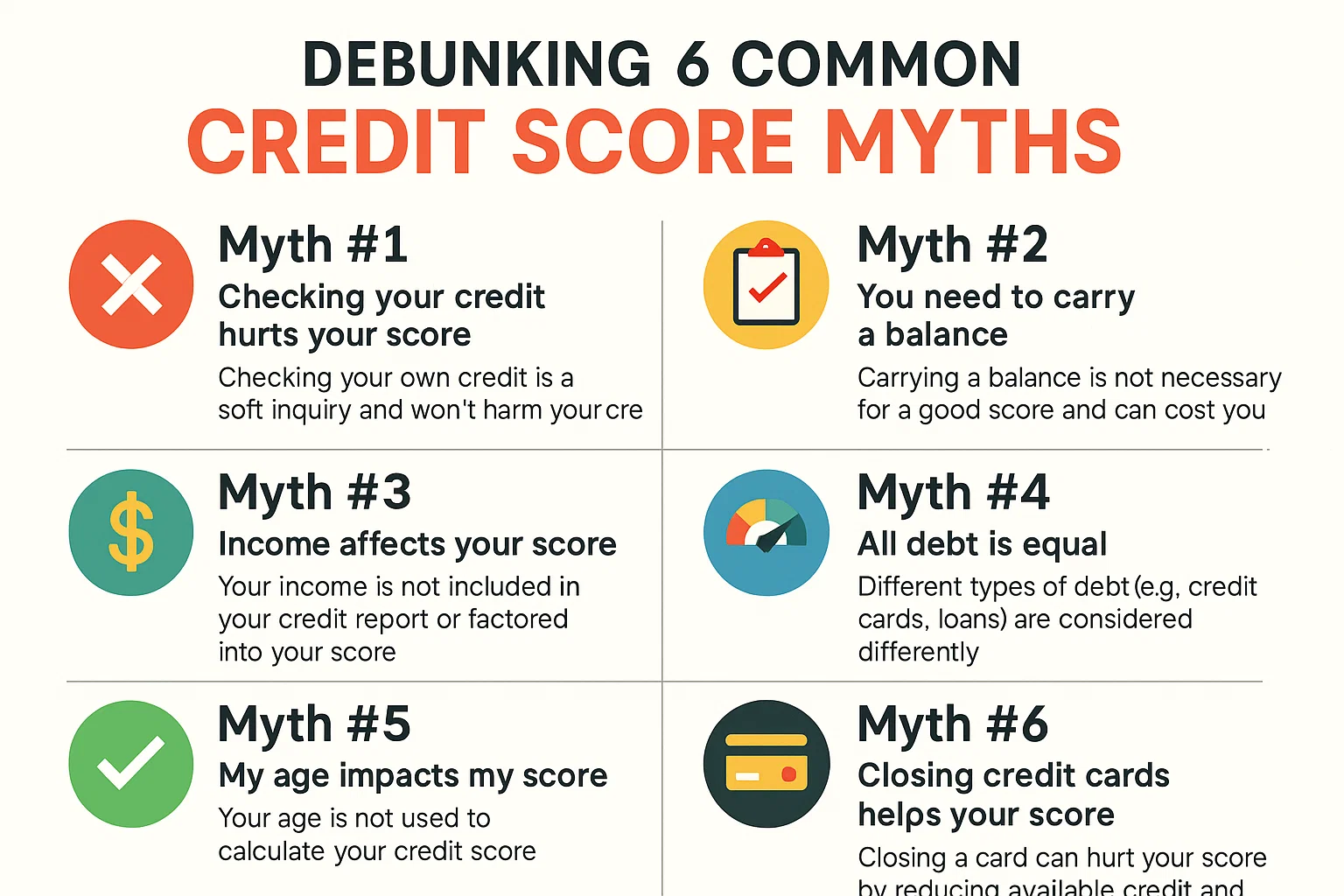
Myth 1: Checking Your Own Credit Report Lowers Your Score
Perhaps the most persistent myth in the financial world is that the act of looking at your own credit report will cause your score to drop. This misunderstanding stems from a failure to distinguish between hard inquiries and soft inquiries.
Hard Inquiries vs. Soft Inquiries
A hard inquiry (or "hard pull") occurs when a lender or creditor reviews your credit report to make a lending decision. This happens when you apply for a mortgage, a car loan, or a new credit card. Because you are seeking new credit, these inquiries are factored into credit scoring models like FICO and VantageScore as a potential risk indicator. A single hard inquiry might drop your score by a few points, though the impact diminishes quickly over time.
A soft inquiry (or "soft pull") occurs when your credit report is checked for reasons not related to a formal credit application. This includes background checks by employers, "pre-approved" credit card offers, and, most importantly, when you check your own report. In 2026, scoring models explicitly categorize self-checks as soft inquiries. They are visible only to you and have zero impact on your credit score. In fact, regular self-monitoring is viewed by financial advisors as a sign of healthy "credit hygiene," as it allows you to catch errors before they affect a future loan application.
Myth 2: Your Credit Report and Your Credit Score are the Same Thing
Consumers frequently use the terms "credit report" and "credit score" interchangeably, but they represent two different types of financial data. Think of the credit report as your academic transcript and the credit score as your Grade Point Average (GPA).
The Credit Report
Your credit report is a detailed history of your credit-related activity. It includes your identifying information, a list of current and past credit accounts (tradelines), your payment history, your current balances, and public records such as bankruptcies. It also lists everyone who has inquired about your credit in the last two years. The purpose of the report is to provide a factual record of how you handle debt.
The Credit Score
A credit score is a three-digit number calculated using the information in your credit report. Private companies like FICO or VantageScore use complex algorithms to weigh the data in your report to predict the likelihood that you will repay a loan.
Crucially, when you request your free annual credit report via the official federal portal, you are receiving the report, not necessarily the score. While some bureaus may offer to sell you your score or provide a version of it as an add-on, the federal mandate only covers the raw data report. By 2026, many consumers obtain their scores through their banking apps or credit card issuers, which often provide them for free as a value-added service.
Myth 3: You Must Provide Credit Card Info for a "Free" Report
Many people avoid official credit report sites because they fear "hidden" subscriptions or trial periods that require a credit card. This fear is justified by the existence of "imposter" sites that use the word "free" in their URLs but are actually lead-generation tools for credit monitoring subscriptions.
However, the official site—AnnualCreditReport.com—does not require a credit card or any payment information to provide your statutory report. The process involves verifying your identity through a series of "out-of-wallet" questions. These are questions that only you should know the answer to, such as:
- "Which of the following providers holds your current auto loan?"
- "In which year did you open your mortgage with Bank X?"
- "What was your monthly payment on a loan taken out in 2021?"
If a website asks for your credit card number to give you a "free" federal report, you are likely on the wrong site. In 2026, digital security has tightened, and the official portal continues to use strict authentication protocols without requiring financial commitments.
Myth 4: A Credit Report Includes Your Income and Net Worth
There is a common misconception that your credit report is a comprehensive snapshot of your entire financial life, including how much you earn and what you own. This is false. Your credit report tracks debt and repayment behavior, not wealth.
Specifically, your credit report does not contain:
- Your annual salary or hourly wage.
- The balance of your checking or savings accounts.
- Your 401(k), IRA, or other investment portfolio values.
- Your net worth.
- The value of your home or car (unless they are linked to an active loan/tradeline).
Lenders look at your credit report to see if you pay your bills on time. They look at separate documents, such as pay stubs or tax returns, to determine if you have the income to afford a new loan. Knowing this myth helps consumers realize that a high income does not automatically result in a high credit score; someone earning $200,000 a year can have a poor credit report if they are consistently late on credit card payments.
Myth 5: Disputing an Item Always Fixes the Problem
The right to dispute inaccurate information is a core pillar of the FCRA. However, many consumers believe the myth that "disputing a debt will make it go away" or that "credit repair" companies have a magic way to delete accurate but negative information.
The reality of the dispute process in 2026 is governed by strict verification rules. When you file a dispute, the credit bureau has 30 to 45 days to investigate. They contact the "furnisher" (the lender who reported the data). If the lender verifies that the information is accurate, it stays on your report.
Disputing is highly effective for:
- Identity theft: Accounts you never opened.
- Clerical errors: Payments marked late that were actually on time.
- Outdated info: Negative items that should have "aged off" after seven years (or ten for certain bankruptcies).
However, disputing legitimate, verified debt will not result in its removal. Furthermore, "frivolous" disputes—repeatedly disputing the same accurate item—can be dismissed by the bureaus without further investigation.
Accessing Your Reports: 2026 Comparison Table
Understanding where to get your information is vital to avoiding scams and managing your financial health effectively.
| Source | Cost | Frequency | Includes Score? | Best Use Case |
|---|---|---|---|---|
| AnnualCreditReport.com | $0 (Free) | Weekly | No | Legal verification & deep auditing. |
| Credit Card/Bank Apps | $0 (Free) | Daily/Weekly | Yes (FICO/Vantage) | Quick score tracking & alerts. |
| Credit Monitoring Sites | $15–$40/mo | Continuous | Yes | Identity theft insurance & dark web scans. |
| Direct from Bureau | Varies | One-time | Optional | Purchasing specialized "mortgage-ready" scores. |
How to Access Your Reports in 2026: Step-by-Step
Accessing your reports has been streamlined over the years to balance ease of use with robust security. You generally have three methods:
- Online (Fastest): Visit AnnualCreditReport.com. You will select which of the three reports you want (you can request all three at once or stagger them). You will fill out a form with your Social Security Number, date of birth, and address history.
- Phone: You can call the toll-free number (1-877-322-8228). After verifying your identity through automated prompts, your reports will be mailed to you within 15 days.
- Mail: You can download the Request Form from the FTC or the official site and mail it to the Annual Credit Report Request Service in Atlanta, GA. This is often the preferred method for those who have been victims of identity theft and have an existing "file freeze" that makes online verification difficult.
A note on the "Security Freeze": If you have frozen your credit (a recommended practice in 2026 to prevent unauthorized account openings), you do not need to "thaw" or unfreeze your credit to access your own report through the official portal. The freeze only prevents third parties from seeing your data.
Why Regular Monitoring is Critical in 2026
By 2026, the sophistication of data breaches and synthetic identity theft has made regular credit monitoring a necessity rather than a luxury. Reviewing your free reports weekly or monthly allows you to spot "phantom" accounts or address discrepancies that could lead to higher interest rates later.
Furthermore, lenders increasingly use automated underwriting systems. A single mistake—such as a medical bill incorrectly sent to collections—can trigger an automatic denial for a mortgage or auto loan. Catching these errors through your free annual (now weekly) access ensures that your data represents your actual financial behavior accurately.
Frequently Asked Questions
Does the "Free" report include all three bureaus?
Yes. The official portal allows you to access reports from Equifax, Experian, and TransUnion. You are not required to request them all at the same time. Many experts recommend checking one bureau every few months to maintain a constant "pulse" on your credit, though with the 2026 weekly availability, checking all three simultaneously for a comprehensive audit is also common.
What should I do if I find an error?
If you find an error, you must file a dispute with the credit bureau that issued the report. Most bureaus provide an online dispute tool directly through the report interface. You should also contact the lender that reported the incorrect information to ensure they update their records, preventing the error from reappearing in the future.
Can checking my report too often hurt me?
No. There is no limit to how many "soft inquiries" you can have on your report. Whether you check your report once a year or every single day, it will never impact your credit score or your ability to get a loan.
Why was I denied my free report online?
The most common reason for an online denial is "failed authentication." If you answer the security questions incorrectly (even one of them), the system will lock you out of online access for security reasons. If this happens, you are not permanently barred; you simply need to request the report via mail using the standard request form.
Does a free report show my "Credit Mix"?
Yes. Your free report will show the different types of credit you have, such as "revolving" (credit cards) and "installment" (mortgages, student loans, auto loans). This is useful because credit scoring models look for a healthy mix of different types of debt.
Practical Recommendation
For the best results in 2026, set a recurring calendar reminder to visit AnnualCreditReport.com every three to six months. While weekly checks are available, a quarterly deep-dive is usually sufficient for most consumers to catch errors or signs of fraud. Always save a PDF copy of your reports so you can compare changes over time. If you are planning a major purchase like a home, perform this check at least six months in advance to allow time for the 30-to-45-day dispute window if errors are found.