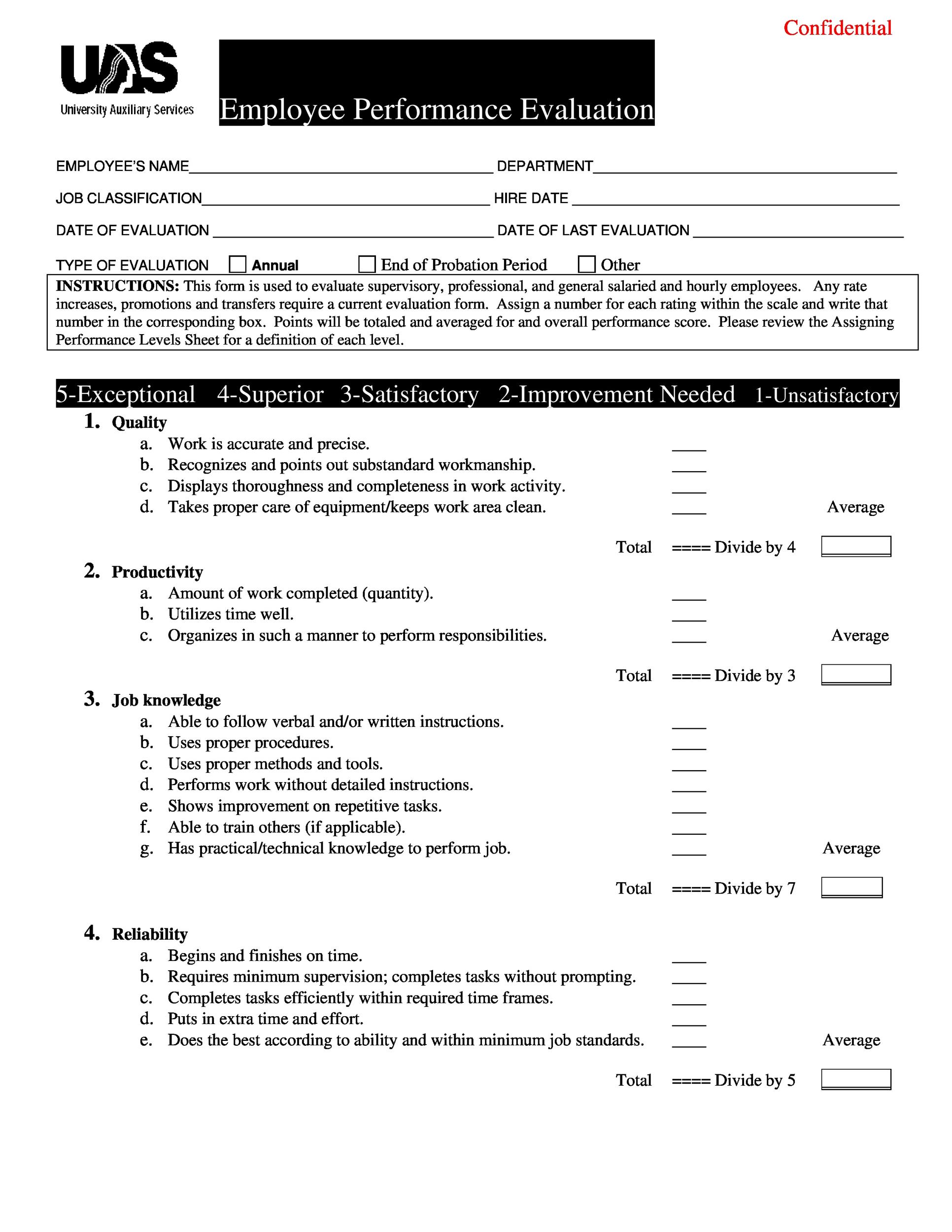
Annual performance review examples provide a structured framework for evaluating employee contributions, identifying professional development needs, and aligning individual output with organizational objectives. Effective reviews combine objective data with qualitative observations to create a balanced assessment of an individual’s strengths, areas for growth, and future potential within the company.
Performance reviews are no longer just a checkbox exercise in 2026; they are a critical component of talent retention and strategic workforce planning. As organizations navigate increasingly complex hybrid work environments and AI-integrated workflows, the language used in these evaluations must be precise, actionable, and constructive. Whether you are a manager drafting a report for a direct report or an employee preparing a self-assessment, using specific examples ensures that the feedback is grounded in reality rather than generalities.
The Importance of Performance Review Phrasing
The impact of an annual review often hinges on the specific phrasing used. Vague praise like "good worker" provides no roadmap for continued excellence, while blunt criticism like "lacks focus" can destroy morale without offering a solution. In the modern workplace, feedback must be evidence-based.
Using standardized competencies allows for a fair comparison across teams. These usually include communication, leadership, technical proficiency, problem-solving, and adaptability. By anchoring feedback in these categories, managers can provide a comprehensive view of the employee's "whole-office" impact. Furthermore, as we look toward the 2027 planning cycle, these reviews serve as the primary documentation for promotions, salary adjustments, and performance improvement plans (PIPs).
Examples by Performance Level
To write an effective review, it is helpful to categorize feedback based on the level of performance. These examples demonstrate how to articulate different degrees of achievement across common workplace competencies.
1. Exceeds Expectations (High Performer)
Employees in this category often act as force multipliers, improving the performance of those around them while consistently delivering high-quality results.
- Communication: "Sarah consistently facilitates clear communication between the technical and marketing teams. In 2026, her ability to translate complex data into actionable insights led to a 15% increase in project delivery speed. She does not just report information; she ensures it is understood and utilized."
- Leadership: "David has demonstrated exceptional mentorship this year. He spearheaded the peer-learning initiative which reduced onboarding time for junior developers by three weeks. His leadership style fosters an environment of psychological safety and high accountability."
- Innovation: "James proactively identified a redundancy in our cloud-storage protocols. By implementing a new automated archival system, he saved the department $12,000 in annual recurring costs for the 2026 fiscal year."
2. Meets Expectations (Solid Performer)
The majority of a healthy workforce falls into this category. These employees are reliable, competent, and fulfill their job descriptions consistently.
- Reliability: "Mark is a dependable member of the accounting team. He consistently meets all monthly closing deadlines and maintains a high degree of accuracy in financial reporting. He follows established protocols and rarely requires intervention from senior management."
- Collaboration: "Elena works well within the design team and contributes regularly during brainstorming sessions. She is receptive to feedback and incorporates changes quickly. In the coming year, I encourage Elena to take the lead on a small-scale project to further develop her project management skills."
- Technical Proficiency: "Robert demonstrates a solid understanding of our current software suite. He completes tasks within the expected timeframe and maintains the standard quality level required for client-facing deliverables."
3. Needs Improvement (Underperformer)
Feedback for underperforming employees must be direct and focused on specific behaviors and metrics, providing a clear path for remediation.
- Time Management: "While the quality of Kevin’s work is high, he missed four major project deadlines in the second half of 2026. This has caused bottlenecking for the rest of the production team. To improve, Kevin needs to utilize our project management software for daily task tracking and provide status updates 48 hours prior to deadlines."
- Professionalism: "There have been several instances where Amanda’s communication with clients was described as abrupt or dismissive. This has impacted our client retention scores in Q3. Moving forward, Amanda will participate in a professional communication workshop and work closely with her supervisor on client email drafts."
- Adaptability: "Since the migration to the new CRM platform in June 2026, John has struggled to maintain his previous output levels. He has shown resistance to the new workflow. We will schedule additional training sessions to ensure he becomes proficient with the updated tools by the end of Q1 2027."
Performance Review Examples by Job Function
Specific roles require specific metrics. A sales professional cannot be evaluated using the same criteria as a software engineer. Below are examples tailored to distinct functional areas.
Sales and Business Development
In sales, performance is often tied to quantifiable targets, but the "how" is just as important as the "how much."
- Quantitative: "Exceeded 2026 sales quota by 12%, generating $1.4M in new business revenue."
- Qualitative: "Shows excellent resilience in long-cycle negotiations. Successfully re-engaged three dormant accounts by identifying new pain points and offering tailored solutions."
Technical and Engineering
For technical roles, focus on code quality, system uptime, documentation, and the ability to solve complex problems.
- Quality: "Maintains one of the lowest bug-reentry rates in the department. His commitment to thorough unit testing has significantly improved the stability of the core application."
- Documentation: "Consistently updates the internal Wiki and API documentation, ensuring that the broader engineering team can build upon her work without unnecessary delays."
Management and Leadership
Managers should be evaluated on the health and productivity of their teams, as well as their strategic alignment with the company.
- Team Development: "Maintained a 95% retention rate within her department during 2026. Successfully coached two team members toward internal promotions."
- Strategic Alignment: "Effectively cascaded company goals down to the individual contributor level, ensuring every team member understood their role in achieving our 2026 expansion targets."
Comparison Table: Performance Rating Scale
Most organizations use a numerical or tiered rating system. The following table illustrates how different ratings correlate with specific employee behaviors.
| Rating | Designation | Description of Behavior |
|---|---|---|
| 5 | Exceptional | Consistently exceeds all goals; drives innovation; mentors others; proactively solves problems before they escalate. |
| 4 | Exceeds Expectations | Frequently exceeds goals; performs at a high level with minimal supervision; highly collaborative and reliable. |
| 3 | Meets Expectations | Consistently meets goals and job requirements; reliable contributor; performs tasks with standard quality. |
| 2 | Needs Improvement | Occasionally misses goals; requires frequent supervision or corrections; output is inconsistent. |
| 1 | Unsatisfactory | Regularly fails to meet basic job requirements; negative impact on team productivity; immediate intervention required. |
The STAR Method for Performance Feedback
To ensure examples are impactful, many HR professionals recommend the STAR method (Situation, Task, Action, Result). This structure provides the "evidence" needed for a fair review.
- Situation: Describe the context. "In Q3, our primary server experienced an unexpected outage."
- Task: Describe the challenge. "We needed to restore service without data loss and identify the root cause."
- Action: Describe what the employee did. "You worked through the night to implement a failover protocol and then conducted a full forensic analysis."
- Result: Describe the outcome. "The server was back online in four hours, and your analysis led to a permanent hardware upgrade that has prevented any recurrence since."
By using this format, the manager moves away from subjective opinions ("You are a hard worker") and toward objective facts ("You worked through the night to implement a failover"). This is significantly more useful for the employee's professional record.
Self-Assessment Examples for Employees
The annual review is a two-way conversation. Employees are often asked to write a self-assessment. This is an opportunity to highlight achievements that a manager might have overlooked.
- Highlighting Achievements: "In 2026, I successfully managed the transition to our new vendor, resulting in a 10% reduction in supply costs. I also volunteered to lead the diversity and inclusion committee, organizing four quarterly events that reached 80% of staff."
- Acknowledging Growth Areas: "I recognize that my public speaking skills are an area for growth. While I am comfortable in small team settings, I found presenting to the executive board in October challenging. I plan to join a professional speaking group in 2027 to address this."
- Goal Alignment: "My goal for the coming year is to transition into a senior analyst role. I have already begun the necessary certification process and hope to complete my advanced data visualization training by June 2027."
Common Pitfalls in Performance Reviews
Even with the best intentions, certain biases and errors can undermine the review process. Awareness of these is crucial for maintaining an equitable workplace.
- Recency Bias: This occurs when a manager focuses only on the employee’s performance in the last month or two, ignoring the rest of the year. To avoid this, managers should keep a "performance log" throughout the year.
- Halo/Horn Effect: This is the tendency to let one positive or negative trait influence the entire evaluation. For example, a person who is very likable might receive high scores in technical areas where they are actually lacking.
- Central Tendency: This happens when a manager rates everyone as "average" (a 3 on a 5-point scale) to avoid conflict or the effort required to justify higher or lower ratings. This fails to reward high performers and fails to signal a need for change to underperformers.
- Leniency/Strictness Bias: Some managers are naturally "easy" or "hard" graders. Calibrating with other managers before finalizing reviews can help ensure consistency across the organization.
Looking Ahead: Setting Goals for 2027
The final section of any annual performance review should be forward-looking. Using the SMART goal framework—Specific, Measurable, Achievable, Relevant, and Time-bound—ensures that the employee has a clear mission for the upcoming year.
An example of a 2027 SMART goal might be: "By December 31, 2027, complete the Project Management Professional (PMP) certification and lead at least one cross-departmental project with a budget exceeding $50,000."
This gives both the manager and the employee a clear metric for success in the next review cycle. It shifts the focus from what was done in the past to what can be achieved in the future, turning the performance review into a powerful tool for career growth.
Frequently Asked Questions
What should I do if I disagree with my performance review?
If you disagree with an assessment, remain professional and ask for a follow-up meeting. Prepare a list of specific examples and data points that support your perspective. Most HR policies allow for a formal rebuttal to be added to your personnel file if an agreement cannot be reached. It is helpful to focus on facts and outcomes rather than emotions.
How often should performance reviews happen?
While the "Annual" review is the traditional standard, many modern companies in 2026 are moving toward a continuous feedback model. This includes quarterly check-ins or monthly 1-on-1s. The annual review then becomes a summary of these ongoing conversations rather than a once-a-year surprise. According to Harvard Business Review, frequent feedback significantly improves employee engagement and performance.
Can a performance review be used as legal documentation?
Yes. Performance reviews are official company records and can be used in legal proceedings related to terminations, promotions, or discrimination claims. This is why it is vital for managers to be objective, stick to job-related criteria, and avoid any language that could be interpreted as discriminatory or biased.
How do I write a review for a remote employee?
Evaluating remote employees requires a focus on outputs and communication effectiveness rather than "desk time." Use metrics from project management tools, digital collaboration platforms, and feedback from peers. Ensure you are evaluating their ability to remain visible and engaged in a virtual environment.
What is the 360-degree feedback model?
A 360-degree review includes feedback from an employee's manager, peers, direct reports, and sometimes even clients. This provides a holistic view of the employee's performance and interpersonal dynamics that a single manager might not see. It is particularly effective for evaluating leadership and teamwork.
Final Recommendation
To maximize the value of an annual performance review, treat it as a collaborative strategy session rather than a top-down interrogation. Use the examples provided above as a starting point, but always customize the language to reflect the unique contributions and challenges of the individual. Clear, honest, and data-backed communication is the most effective way to drive performance and foster a culture of continuous improvement in 2026 and beyond.