You can obtain your free credit report from Equifax by visiting AnnualCreditReport.com, the only website authorized by federal law for this purpose. While the Fair Credit Reporting Act (FCRA) guarantees one free report annually, Equifax continues to offer weekly online access in 2026 to help consumers monitor their financial health and detect identity theft early.
Understanding your Equifax credit report is a fundamental aspect of modern financial literacy. As one of the "Big Three" nationwide consumer reporting agencies, Equifax gathers data on millions of consumers, which lenders then use to determine creditworthiness for mortgages, auto loans, and credit cards. In 2026, the speed of financial transactions and the prevalence of digital signatures make it more critical than ever to ensure the data Equifax holds about you is accurate, complete, and up to date.
The Legal Framework: Your Rights Under the FCRA
The ability to access your Equifax credit report for free is not a courtesy provided by the bureau; it is a right established by the Fair Credit Reporting Act (FCRA). This federal law was designed to promote accuracy, fairness, and privacy of information in the files of consumer reporting agencies.
Under the FCRA, Equifax is required to provide you with a copy of your information if you request it. While the statute originally focused on an "annual" requirement, the consumer landscape shifted significantly following global events in the early 2020s. By 2026, the major bureaus—Equifax, Experian, and TransUnion—have maintained the practice of providing weekly free reports online. This allows for near real-time monitoring of your credit file without the financial burden of a monthly subscription service.
Beyond just the "free" aspect, the FCRA grants you the right to:
- Request your credit score: Note that while the report is free, the score often requires a small fee unless provided through a separate promotional offer or your banking institution.
- Dispute inaccurate information: Equifax must investigate any information you claim is inaccurate, usually within 30 to 45 days.
- Limit "prescreened" offers: You have the right to opt out of receiving unsolicited credit and insurance offers based on your Equifax file.
What is Included in Your Equifax Credit Report?
An Equifax credit report is a detailed record of your financial history. It is important to distinguish this from your credit score; the report is the raw data, while the score is a mathematical interpretation of that data. In 2026, Equifax reports are divided into several distinct sections, each serving a specific purpose for lenders and for your own review.
Personally Identifiable Information (PII)
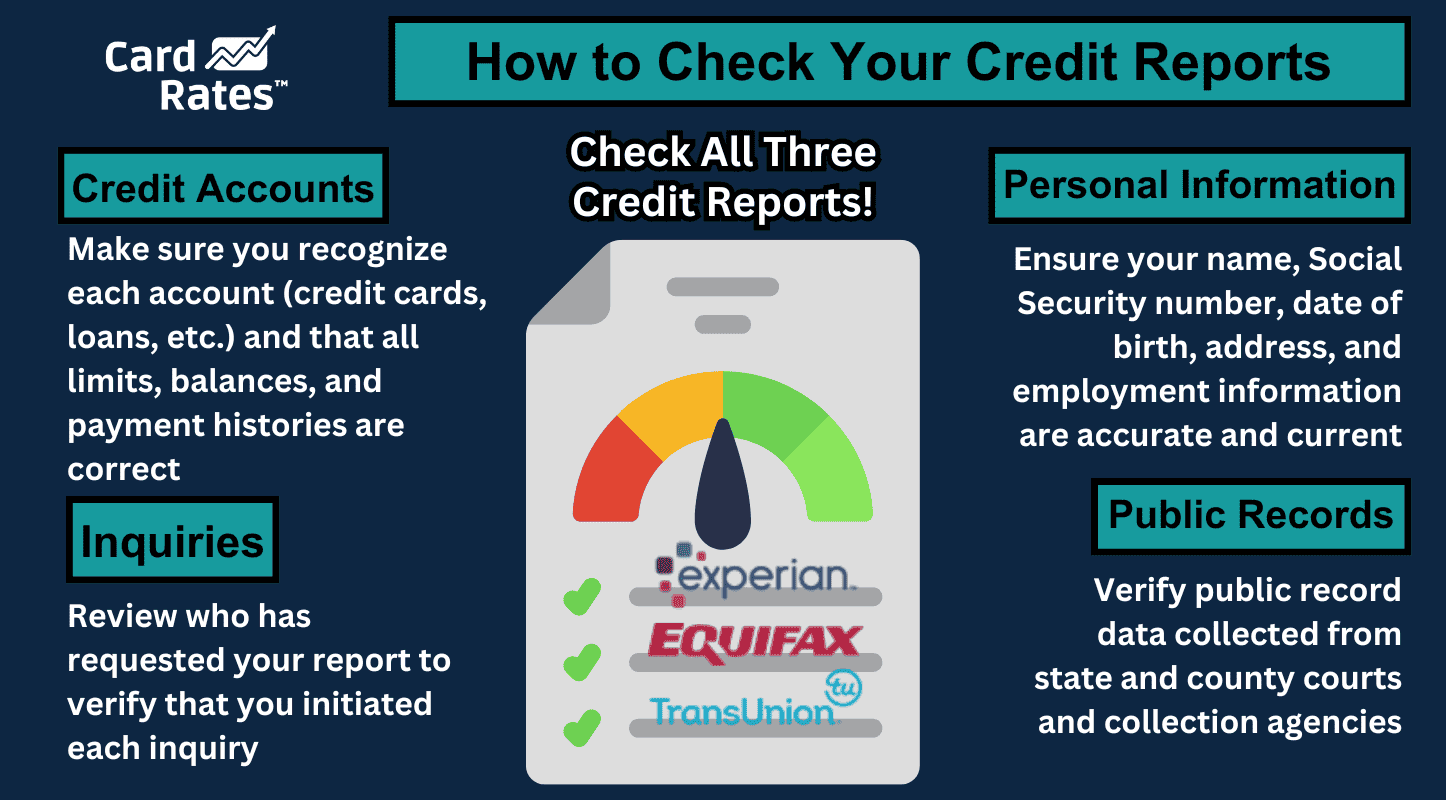
This section is used to identify you and distinguish your file from others with similar names. It includes your full legal name, any aliases or "also known as" (AKA) names, current and previous addresses, your Social Security number (usually truncated for security), and your date of birth. It may also list current and former employers. Errors in this section are often the first sign of "file merging" (where two people's records are mixed) or identity theft.
Credit Account Information (Trade Lines)
This is the core of the report. It lists every credit account reported to Equifax, including credit cards, mortgages, student loans, and auto loans. For each account, you will see the name of the creditor, the account number, the date it was opened, the credit limit or loan amount, the current balance, and your payment history. Accounts are typically categorized as "Open," "Closed," or "Collection."
Public Records
Equifax tracks certain legal events that have financial implications. In 2026, this primarily includes bankruptcy filings. While tax liens and civil judgments were largely removed from credit reports years ago due to the National Consumer Assistance Plan, bankruptcies remain a significant "negative" item that can stay on your Equifax report for 7 to 10 years, depending on whether it was Chapter 13 or Chapter 7.
Credit Inquiries
Whenever you apply for credit, the lender "pulls" your report, creating a "hard inquiry." These stay on your report for two years and can slightly lower your credit score. "Soft inquiries," such as those generated when you check your own report or when a lender checks your file for a pre-approved offer, are visible only to you and do not affect your score.
Step-by-Step Guide to Accessing Your Free Report
Accessing your Equifax report in 2026 remains a standardized process. While many third-party apps offer credit monitoring, the official legal channel remains the most secure and comprehensive method.
1. The Online Method (AnnualCreditReport.com)
This is the fastest way to receive your report.
- Visit the Site: Go to AnnualCreditReport.com.
- Fill Out the Form: Provide your name, birth date, Social Security number, and address. If you have lived at your current address for less than two years, you will need to provide your previous address.
- Select Equifax: You will be given the choice to see reports from all three bureaus. You can select only Equifax or all three at once.
- Security Questions: You must answer "out-of-wallet" questions to verify your identity. These might include the amount of your monthly mortgage payment or the name of a lender you had a loan with five years ago.
- View and Save: Once verified, your Equifax report will load. It is vital to download the PDF or print the report immediately, as your session will expire for security reasons.
2. Requesting by Phone
If you prefer not to use the internet or have trouble with the online verification questions, you can call the automated processing center at 1-877-322-8228. You will go through an automated verification process, and your Equifax report will be mailed to you within 15 days.
3. Requesting by Mail
For those who prefer a paper trail or have complex identity verification needs, you can download the Annual Credit Report Request Form from the official site. Fill it out and mail it to: Annual Credit Report Request Service P.O. Box 105281 Atlanta, GA 30348-5281
Comparing Access Methods for Equifax Reports
| Method | Delivery Time | Ideal For | Requirements |
|---|---|---|---|
| Online | Instant | Immediate review and digital storage | Valid email, stable internet, SSN |
| Telephone | 15 Days (via Mail) | Those uncomfortable with online forms | Touch-tone phone, personal details |
| 15 Days (plus transit) | Maximum security/Paper records | Printed form, postage stamp | |
| Equifax Site (myEquifax) | Instant | Ongoing Equifax-specific monitoring | Account creation on Equifax.com |
Why You Must Review Your Equifax Report Regularly
In 2026, the volume of data moving through Equifax’s systems is staggering. Even with advanced AI and machine learning used by bureaus, human and systemic errors occur. Regular review of your free report serves three primary defensive functions.
Identification of Inaccuracies
Lenders often misreport data. A credit card you closed might still show as open, or a late payment might be recorded for a month when you paid on time. Because your credit score is a reflection of this data, even small errors can cost you thousands of dollars in higher interest rates over the life of a loan.
Detecting Identity Theft
Identity theft has evolved in 2026, with "synthetic identity theft" (where fragments of real data are combined with fake data) becoming more common. By checking your Equifax report, you can see if unauthorized accounts have been opened in your name. If you see an inquiry from a car dealership you’ve never visited or a credit card you didn't apply for, you can take immediate action to freeze your credit.
Preparing for Major Purchases
If you plan to buy a home or a vehicle in the next six months, you should review your Equifax report now. This gives you time to clear up any discrepancies or "clean up" your credit profile before a lender sees it. Discovering an error during a mortgage application can delay your closing or lead to a rejection.
How to Dispute Errors on Your Equifax Report
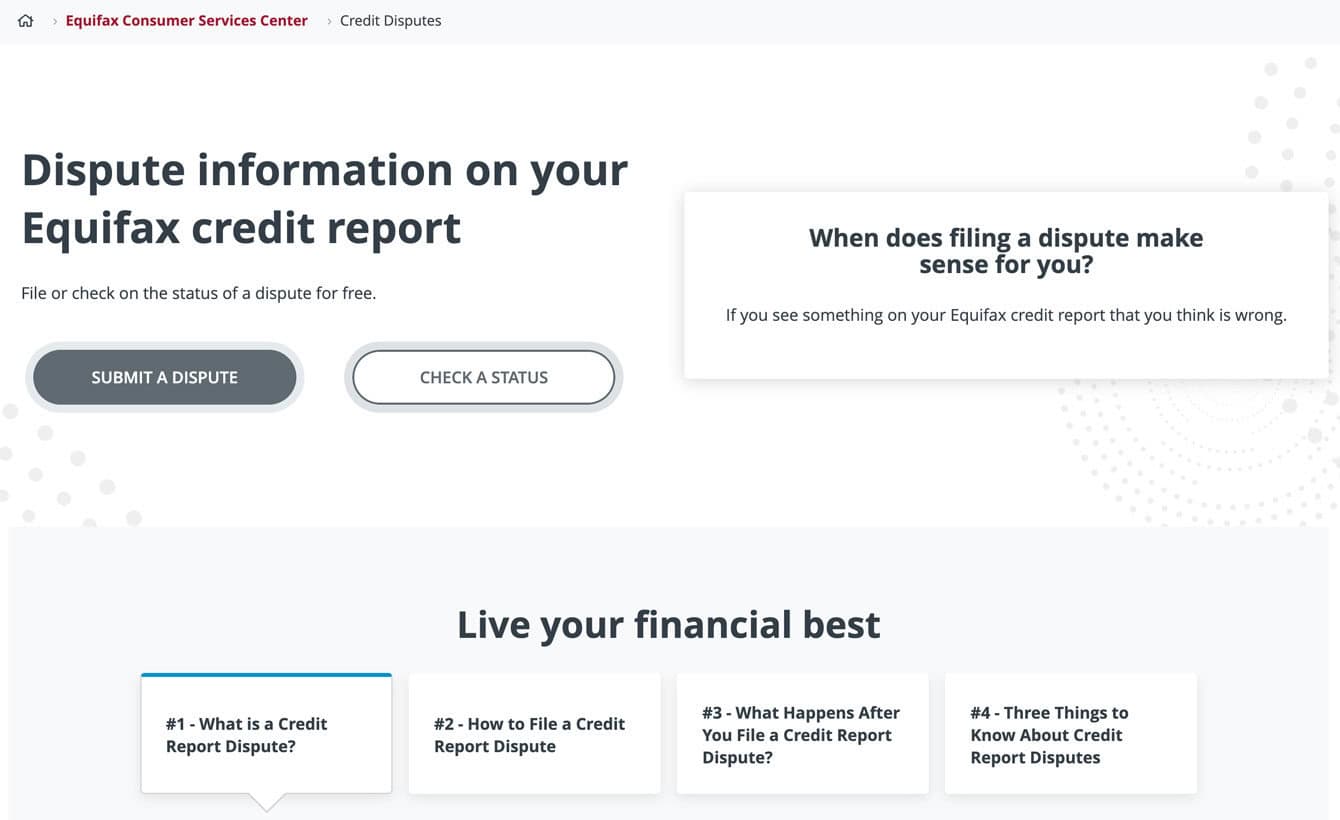
If you find an error on your free Equifax report, you have the legal right to dispute it. Equifax provides an online dispute portal, which is generally the most efficient route. However, for serious issues like identity theft, a written dispute sent via certified mail is often recommended to establish a legal paper trail.
The Dispute Process Steps:
- Gather Evidence: Collect bank statements, "paid in full" letters, or canceled checks that prove the information on the report is wrong.
- Initiate the Dispute: Visit the Equifax online dispute center or mail a letter detailing the specific item you are contesting.
- The Investigation: Equifax will contact the creditor that provided the data. The creditor has 30 days to respond.
- The Resolution: Equifax will notify you of the results. If the creditor cannot verify the accuracy of the information, Equifax must remove or update it.
- Follow Up: Once the error is corrected, request that Equifax send a notice of the correction to anyone who received your report in the last six months.
Security Freezes and Fraud Alerts
When you access your free Equifax report, you may also want to consider placing a security freeze on your file. As of 2026, credit freezes are free by federal law and are the most effective way to prevent identity thieves from opening new accounts in your name.
A freeze prevents Equifax from releasing your credit report to new creditors. If you apply for a loan yourself, you can "thaw" the freeze temporarily using a PIN or password through your Equifax account. A fraud alert is a less restrictive option that requires lenders to take extra steps to verify your identity before issuing credit, but it does not fully block access to your report.
Frequently Asked Questions
Is AnnualCreditReport.com really free?
Yes. It is the only website mandated by the U.S. federal government to provide these reports for free. While the site may contain links to paid services like credit scores or monitoring, the reports themselves are $0.00. You should be wary of any site that asks for a credit card number to provide a "free" report.
Does checking my own Equifax report lower my score?
No. When you check your own credit report, it is classified as a "soft inquiry." Soft inquiries are never shared with lenders and have zero impact on your credit score, regardless of how often you perform them.
What should I do if Equifax cannot verify my identity online?
This is a common issue if you have a "thin" credit file (not much credit history) or if you have recently moved. If the online system cannot verify you, you must use the mail-in request method. You will likely need to provide copies of documents such as your driver’s license, a utility bill, and your Social Security card to prove who you are.
Can I get my free credit score from Equifax too?
The federal mandate for free annual reports does not include a credit score. However, in 2026, many credit card issuers and banks provide a free Equifax-based score (often the VantageScore 3.0 or FICO Score 8) as part of their online banking dashboard. Check your bank's app before paying Equifax for a score.
How often can I get a free report in 2026?
While the law requires one free report every 12 months, the three major bureaus (Equifax, Experian, and TransUnion) have extended a policy of offering weekly free online reports. This policy is currently active in 2026 and can be accessed through the standard AnnualCreditReport.com portal.
Final Recommendation
To maintain optimal financial health in 2026, you should adopt a "rotation" strategy for your credit monitoring. Instead of pulling all three reports (Equifax, Experian, and TransUnion) at once, consider pulling one every four months. Start by pulling your Equifax report today via AnnualCreditReport.com. Carefully verify your personal information and account statuses. If everything is correct, set a calendar reminder to check your next bureau in four months. If you find errors, initiate a dispute immediately through the Equifax online portal to protect your credit standing and your future borrowing power.