Planning a spontaneous day out in Los Angeles requires balancing the city's vast geography, notorious traffic, and diverse cultural offerings into a single, cohesive itinerary. Whether you are a local looking to break out of a weekend routine or a visitor trying to maximize a 24-hour window, the key to experiencing LA tomorrow lies in geographic grouping, understanding operational hours, and securing advance reservations for high-demand landmarks. From iconic coastal stretches and world-class architectural marvels to historic food markets and cinematic landmarks, this guide outlines twelve curated, high-impact activities designed to help you make the most of your day in the entertainment capital of the world.
1. Catch the Morning Surf and Coastal Breeze in Santa Monica
Start your Los Angeles morning where the land meets the Pacific Ocean by heading west to Santa Monica. Arriving early—ideally before 9:00 AM—allows you to beat the heavy coastal traffic and enjoy the crisp ocean air while the beaches are relatively quiet.
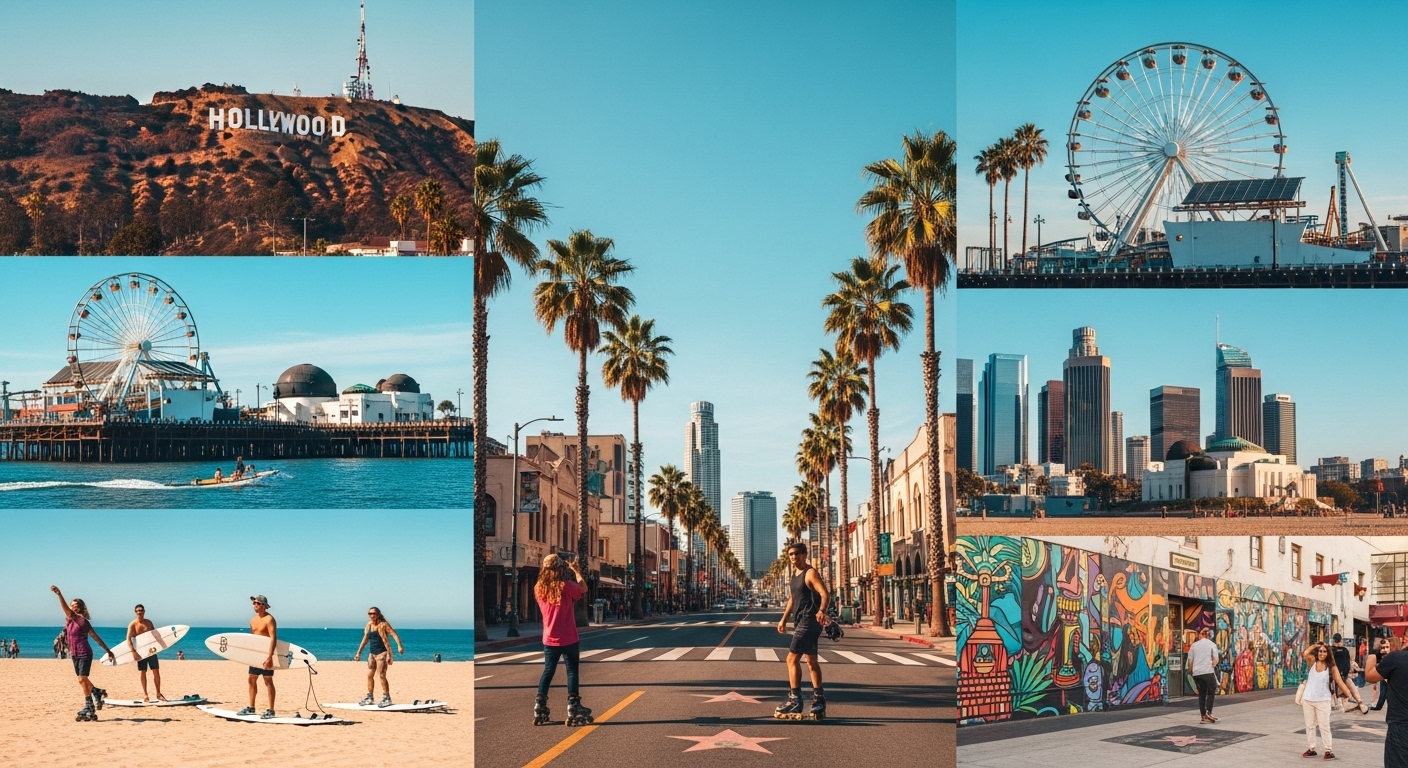
Take a brisk walk or rent a cruiser bike along the Marvin Braude Bike Trail (commonly known as The Strand), a 22-mile paved path that stretches along the shoreline. Make your way toward the historic Santa Monica Pier, which has stood as a Southern California landmark since 1909. While the Pacific Park amusement park rides typically open later in the morning, visiting early lets you stand at the official end of Route 66 without battling massive crowds. Grab a coffee and a fresh pastry at one of the local boardwalk cafes, watch early-morning surfers tackle the breaks near Tower 20, and take in the expansive views of the coastline stretching from Malibu down to Palos Verdes.
2. Explore the Architectural Splendor and Gardens of The Getty Center
Perched high in the Santa Monica Mountains, The Getty Center offers an exceptional blend of world-class art, striking modern architecture, and panoramic views of the Los Angeles basin. Designed by architect Richard Meier, the campus features travertine and white metal panels that catch the California sun in unique ways throughout the day.
- Logistics & Access: Admission to the museum is free, but you must reserve a timed-entry pass in advance on the official Getty website. Parking requires a fee, and visitors ascend to the hilltop via a fully automated computer-operated tram.
- Collections & Highlights: Explore European paintings, drawings, illuminated manuscripts, sculpture, and photography spanning from the Middle Ages to the present day. Do not miss the 134,000-square-foot Central Garden designed by artist Robert Irwin, featuring a floating maze of azaleas set within a natural ravine.
3. Indulge Your Senses at the Historic Grand Central Market
By lunchtime, head eastward into the heart of Downtown Los Angeles (DTLA) to experience culinary diversity at its finest. Operating continuously since 1917, Grand Central Market occupies the ground floor of the historic Homer Laughlin Building on Broadway and brings together dozens of food vendors, chefs, and merchants under one roof.
The market reflects the multicultural fabric of modern Los Angeles. You can sample classic egg sandwiches at Blythe & Burrows or Eggslut, dive into authentic Texas-style barbecue, or enjoy fresh pupusas, tacos, and sticky rice. Navigating the market during the peak 12:00 PM to 1:00 PM rush can be overwhelming, so arriving slightly before noon or after 1:30 PM ensures shorter lines and easier seating at the communal wooden tables. While in the area, step directly across the street to ride Angels Flight, the historic 1901 funicular railway known as the shortest operational railway in the world.
4. Discover Contemporary Art at The Broad
Just a few blocks away from Grand Central Market stands The Broad, a contemporary art museum founded by philanthropists Eli and Edythe Broad. The museum's "veil-and-vault" honeycomb building design is an architectural marvel in itself, providing diffuse natural light to the galleries within.
The permanent collection features nearly 2,000 works of postwar and contemporary art, including iconic pieces by Andy Warhol, Jean-Michel Basquiat, Jeff Koons, and Barbara Kruger. If you are fortunate enough to secure a reservation for Yayoi Kusama’s famous Infinity Mirrored Rooms—which require strict advance booking due to high demand—you will experience an immersive, dazzling optical illusion of endless space and light. General admission to The Broad is free, but advanced ticketing is strongly recommended to minimize wait times.
5. Walk Among Cinematic History at the Griffith Observatory
No trip to Los Angeles is complete without engaging with the city's cinematic and astronomical roots. Perched on the southern slope of Mount Hollywood, the Griffith Observatory offers unmatched views of the entire Los Angeles basin, the downtown skyscrapers, and the famous Hollywood Sign to the north.
- Exhibits & Planetarium: Explore the extensive halls of interactive space and science exhibits, examine the giant Foucault pendulum, and view the historic Samuel Oschin Planetarium dome.
- Hiking Integration: If you have extra energy, take the Ferndell Trail up to the observatory for a moderate 3-mile round-trip hike through shaded eucalyptus groves.
- Parking Caution: Parking directly at the observatory lot is notoriously limited and heavily congested, especially around sunset. Utilize the DASH Observatory bus service from the Sunset-Vermont Metro station or park further down the hill and walk up the remaining paved paths.
6. Stroll and Shop Along the Historic Venice Canals
As the afternoon sun begins to dip, travel back toward the coast to experience the tranquil beauty of the Venice Canal Historic District. Built in 1905 by developer Abbot Kinney—who envisioned an "American Venice" complete with imported gondolas—this neighborhood features picturesque pedestrian walkways flanked by historic and modern architectural homes, arched bridges, and calm waterways.
Take a peaceful, self-guided walking tour along Carroll, Linnie, Sherman, and Grand Canals. You will spot local wildlife, including turtles, herons, and koi fish swimming in the water. Because this is a residential neighborhood, visitors are encouraged to keep noise levels down and respect private property lines while capturing photographs of the charming footbridges.
7. Experience Retro Glamour on the Original Santa Monica Pier Carousel
While the broader Santa Monica Pier was covered earlier, a distinct, must-see historical gem deserves separate attention: the Looff Hippodrome. Located directly on the pier, this historic building houses a hand-carved carousel built by master carousel maker Charles I.D. Looff in 1922.
Featuring 44 hand-carved horses, musical instruments, and intricate painted panels, the carousel is a living piece of early 20th-century amusement history. It has been featured in numerous films, most notably the 1973 classic The Sting. Taking a quick spin on the wooden mounts provides a nostalgic break from the high-energy boardwalk atmosphere outside.
8. Unwind Amidst Desert Flora at the Huntington Library and Botanical Gardens
If your schedule allows for a deeper dive into the wider Los Angeles county area (specifically San Marino), spending a few morning or early afternoon hours at The Huntington Library, Art Museum, and Botanical Gardens offers an unmatched horticultural experience. Spanning 120 acres, the property features more than a dozen specialized botanical gardens.
Highlights include the expansive Desert Garden—one of the largest outdoor collections of mature cacti and succulents in the world—along with the serene Chinese Garden (Liu Fang Yuan) and the Japanese Garden with its historic Moon Bridge. Beyond the flora, the library houses rare historical manuscripts, including a Gutenberg Bible and original letters by George Washington, while the art galleries display notable British and European masterpieces.
9. Catch a Sunset and Stroll at the Los Angeles County Museum of Art (LACMA)
As evening approaches, head to the Miracle Mile district to visit the Los Angeles County Museum of Art (LACMA), the largest art museum in the western United States. While exploring the galleries requires a ticket, the outdoor public art installations are free to walk through and photograph.
The most iconic of these is Urban Light by artist Chris Burden, featuring 202 restored cast-iron antique streetlamps from the 1920s and 1930s arranged in a dense grid. Visiting Urban Light right at dusk, when the lamps automatically illuminate, creates a breathtaking visual atmosphere that has become one of the most photographed spots in Southern California. Nearby, you can also view Levitated Mass, a massive 340-ton granite boulder suspended over a concrete trench.
10. Dive into Hollywood History at the TCL Chinese Theatre
Step directly onto the famous sidewalk of the Hollywood Walk of Fame and visit the legendary TCL Chinese Theatre (formerly Grauman's Chinese Theatre). Opened in 1927, this landmark movie palace has hosted numerous academy awards, world premieres, and historic cinematic events.
Before entering to catch a movie in the world's largest IMAX auditorium, spend time looking down at the concrete forecourt. Here, you will find the handprints, footprints, and signatures of Hollywood legends spanning nearly a century, from Marilyn Monroe and John Wayne to modern film icons. Booking a guided walking tour of the theater's interior provides fascinating historical insights into its ornate, pagoda-inspired architecture and backstage lore.
11. Savor Late-Night Dining in Koreatown
Los Angeles boasts one of the most vibrant culinary scenes in the world, and Koreatown stands out as a 24-hour cultural hub. After a long day of sightseeing, wind down your evening by experiencing authentic Korean barbecue (KBBQ) or late-night comfort food.
Restaurants like Soowon Galbi, Kang Ho-dong Baekjeong, or Parks BBQ offer sizzling tabletop grills where marinated galbi, bulgogi, and pork belly are cooked to perfection right in front of you, accompanied by an array of traditional banchan (side dishes). Koreatown's lively, neon-lit streets remain active late into the night, making it the ideal place to reflect on your action-packed itinerary over a final meal or a cup of traditional tea.
12. Compare Your Options: Quick Activity Breakdown
To help you prioritize your time based on your specific travel style, budget, and logistical constraints, review the comparative breakdown of key featured locations below:
| Attraction / Activity | Neighborhood / Location | Approximate Cost | Advance Reservation Required? | Best Time to Visit |
|---|---|---|---|---|
| The Getty Center | Brentwood / Santa Monica Mountains | Free (Parking Fee Applies) | Yes (Timed-Entry Pass) | Morning (9:00 AM – 11:00 AM) |
| Grand Central Market | Downtown Los Angeles (DTLA) | Varies by Food Vendor | No | Pre-lunch (11:30 AM) |
| The Broad | Downtown Los Angeles (DTLA) | Free (Special Exhibits May Cost) | Recommended (Avoid Standby Lines) | Afternoon (1:00 PM – 3:00 PM) |
| Griffith Observatory | Griffith Park / Hollywood Hills | Free (Parking Fee / Paid Lots) | No (Tickets for Planetarium Shows) | Late Afternoon / Sunset |
| Venice Canals | Venice Beach | Free | No | Late Afternoon (Before Sunset) |
| LACMA Urban Light | Miracle Mile | Free to View Outdoors | No | Dusk (When Lights Turn On) |
Frequently Asked Questions
How should I navigate Los Angeles traffic between these locations?
Los Angeles is notoriously sprawling, and traffic congestion can significantly disrupt tight schedules. The most efficient strategy is to group your activities geographically. For example, bundle Downtown locations (Grand Central Market and The Broad) on the same half of the day, and coastal spots (Santa Monica and Venice Canals) on the other. Avoid driving during peak rush hours (7:00 AM to 9:00 AM and 4:00 PM to 7:00 PM) whenever possible, and consider utilizing rideshare services or the Metro rail system for Downtown transit.
Do I need to buy tickets for major Los Angeles museums ahead of time?
Yes, high-demand cultural institutions like The Getty Center, The Broad, and special exhibitions at LACMA require advance online reservations. Even when general admission is free, booking a timed-entry pass ensures you secure a spot and bypass the lengthy standby lines, protecting your limited time.
Is it safe to walk around Downtown Los Angeles at night?
While major tourist areas like Grand Central Market, The Broad, and the surrounding cultural corridor are generally safe during daylight and early evening hours, certain parts of Downtown LA experience high concentrations of unhoused individuals and property crime after dark. Exercise standard urban awareness, stick to well-lit pedestrian pathways, and use rideshare vehicles for direct door-to-door transit late at night.
What is the best way to see the Hollywood Sign without hiking?
If you do not have time for the multi-hour hike up Mount Hollywood, you can secure exceptional views and photographs of the Hollywood Sign from the lawn of the Griffith Observatory, from Lake Hollywood Park, or via designated viewing areas at the Hollywood & Highland (Ovation Hollywood) entertainment complex.
Can I rely on public transportation to see all these sights in one day?
While Los Angeles has expanded its Metro rail and bus network significantly—connecting Downtown to Hollywood, Koreatown, and Santa Monica via the Metro Expo (E) Line—relying solely on public transit for all twelve activities in a single day is extremely difficult due to the vast geographic distances. Renting a car or utilizing rideshare apps for longer cross-city hops will save you crucial hours.
Final Recommendation
To execute a successful 24-hour exploration of Los Angeles tomorrow, select three to four core activities from this list that align geographically rather than attempting to check off all twelve in a single day. Begin your morning with coastal views in Santa Monica, transition to Downtown for lunch at Grand Central Market and art at The Broad, and finish your evening watching the sunset over the city from the Griffith Observatory. Confirm all parking guidelines and secure any required timed-entry passes tonight so your tomorrow runs smoothly.