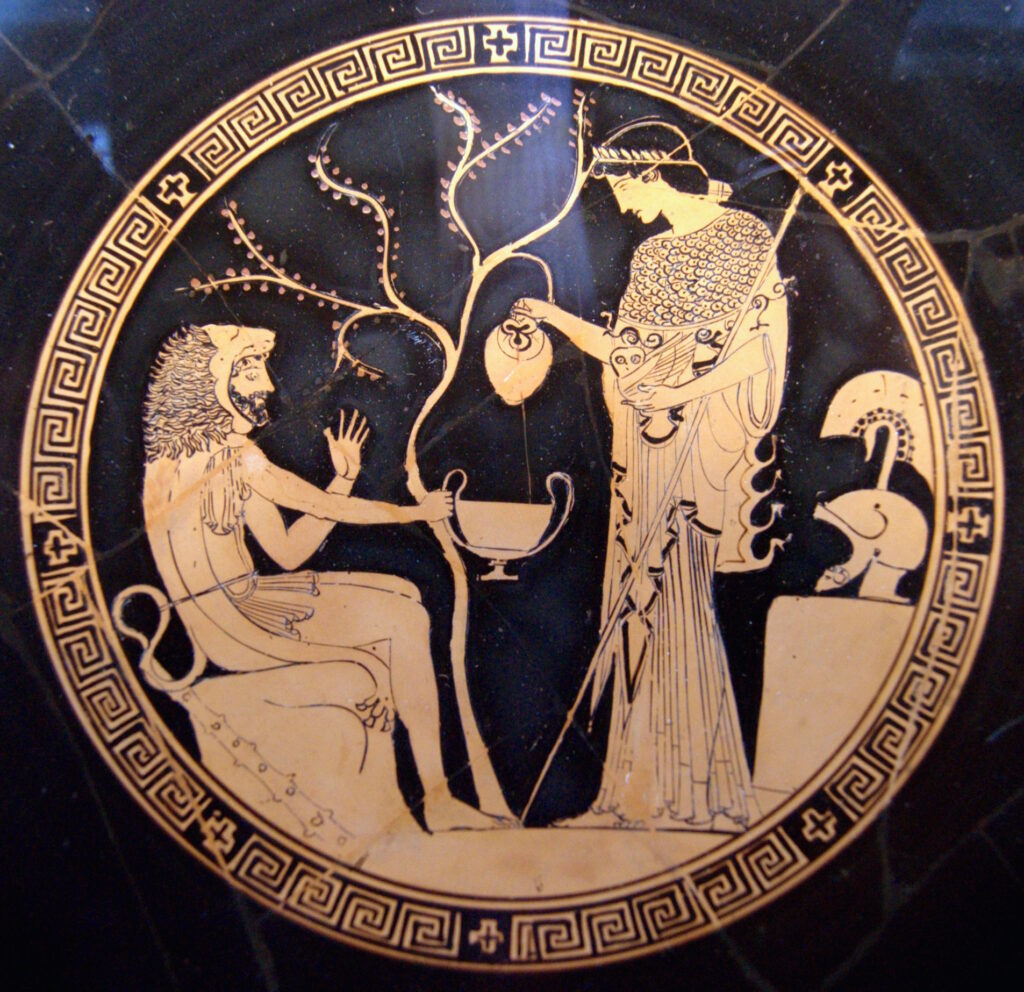
Athena, the ancient Greek goddess of wisdom, craft, and strategic warfare, played a decisive role in the Trojan War as the ultimate divine patron of the Achaeans (Greeks). Driven by personal humiliation from the Judgment of Paris, she manipulated mortal combat, mentored key heroes like Odysseus and Diomedes, thwarted divine rivals like Ares, and engineered Troy’s ultimate downfall.
The Catalytic Origins: The Judgment of Paris and Divine Enmity
To understand Athena’s relentless hostility toward Troy, one must look to the mythic origins of the conflict. The war did not begin merely with the abduction of Helen by Paris, the prince of Troy; its roots lay in a divine beauty contest known as the Judgment of Paris.
According to classical epic tradition, Eris, the goddess of discord, angered at being excluded from the wedding of Peleus and Thetis, cast a golden apple inscribed Kalliste ("To the Fairest") among the wedding guests. Three major Olympian goddesses claimed the prize: Hera, the queen of the gods; Athena, the goddess of wisdom and military strategy; and Aphrodite, the goddess of love and desire. Zeus declined to judge the divine beauty contest himself and entrusted the decision to Paris, a mortal Trojan prince living as a shepherd on Mount Ida.
Each goddess attempted to sway Paris with formidable bribes:
- Hera offered supreme political dominance, promising him dominion over all of Asia and Europe.
- Athena offered absolute military victory, supreme wisdom, and unmatched tactical brilliance in battle.
- Aphrodite offered the hand of the most beautiful mortal woman in the world, Helen of Sparta.
Paris chose Aphrodite, awarding her the golden apple and accepting Helen as his reward. In doing so, he earned the eternal hatred of both Hera and Athena. For Athena, whose identity was inextricably linked to intellectual superiority and strategic invincibility, Paris’s choice was not merely a personal slight—it was a rejection of wisdom and martial virtue in favor of physical passion. This divine insult forged Athena’s unyielding alliance with the Greek forces. Throughout the ten-year siege of Troy, her overarching objective remained clear: the total humiliation and destruction of Paris, his royal house, and the city of Troy.
Athena vs. Ares: Strategic Warfare vs. Chaotic Bloodlust
Within the Greek pantheon, warfare was not governed by a single deity. Instead, it was split between two polar opposites: Athena and Ares. The Trojan War served as the primary mythological arena where these competing visions of combat collided.
Ares represented the raw, unbridled violence of war—its chaos, slaughter, bloodlust (lyssa), and brutal physical force. He fought without long-term strategy, driven purely by the thrill of carnage, and frequently supported the Trojans. Athena, by contrast, embodied civilized, disciplined, and strategic warfare (metis). She represented defensive fortitude, battle formations, tactical intelligence, and the calculating mind that wins battles through planning rather than mindless violence.
- WARFARE IN GREEK MYTHOLOGY
- ATHENA
- Metis (Strategy)
- Tactical Discipline
- Defensive Fortitude
- Fought for Achaeans
- ARES
- Lyssa (Bloodlust)
- Chaotic Violence
- Unbridled Slaughter
- Fought for Trojans
- ATHENA
This ideological duel plays out dramatically across the pages of Homer’s Iliad. In Book 5, when Ares directly enters the fray to slaughter Greek soldiers, Athena steps in to restore balance. She dons the Aegis—her formidable shield bearing the head of the Gorgon—and climbs into the chariot of the Greek hero Diomedes. Rendering herself invisible via the helmet of Hades, Athena redirects Diomedes’ spear directly into Ares’ abdomen. Wounded by a mortal empowered by divine wisdom, Ares flees the battlefield to Mount Olympus, bellowing in pain.
A second major clash occurs in Book 21 during the Theomachy (the battle of the gods). Ares attacks Athena directly, striking her Aegis with his spear. Athena remains unfazed; she hurls a massive black boundary stone (cherson) at Ares, striking him in the neck and knocking him unconscious. As he lies sprawling across seven acres of land, Athena mocks his unthinking brute force, asserting the permanent superiority of intellect and tactical discipline over blind violence.
Direct Battlefield Interventions: Championing Achaean Heroes
Athena rarely fought as a mere combatant; instead, she operated as a force multiplier. She channeled her divine power through mortal champions, granting them physical strength (menos), strategic clarity, and battlefield protection.
- ATHENA'S DIVINE INTERVENTIONS
- DIOMEDES
- Granted divine vision
- Wounded Aphrodite & Ares
- ACHILLES
- Restrained from killing Agamemnon
- Deceived Hector in duel
- MENELAUS
- Deflected arrow by Pandarus to preserve war effort
- DIOMEDES
Mentoring Diomedes in Book 5 of the Iliad
In the early books of the Iliad, while Achilles sits in his tent refusing to fight, Athena elevates Diomedes, king of Argos, to center stage. She instills in him extraordinary courage and clears the mist from his eyes, allowing him to distinguish gods from mortals on the battlefield.
Under Athena's direct guidance, Diomedes performs an extended spree of military prowess (aristeia). When Aphrodite attempts to rescue her son Aeneas from the field, Diomedes—following Athena's explicit instruction—wounds Aphrodite in the wrist. Later, as detailed above, Athena joins Diomedes directly to drive Ares from the field. Through Diomedes, Athena demonstrates that mortal martial effort, when guided by strategic intellect, can overcome even divine opposition.
Restraining and Guiding Achilles
Athena’s relationship with Achilles, the greatest warrior of the Achaeans, highlights her role as the voice of strategic restraint. In Book 1 of the Iliad, when Agamemnon demands Achilles’ war prize, Briseis, Achilles draws his sword, intending to murder the king of Mycenae on the spot.
Athena descends from Olympus, invisible to all except Achilles, and grabs him by his golden hair. She advises him to restrain his violent temper, pointing out that rashly killing Agamemnon will ruin the entire Greek enterprise. She urges him to use words of reproach instead, promising that he will eventually receive threefold compensation for this insult. Achilles yields to her wisdom, demonstrating how Athena guides even the most volatile heroes toward tactical patience.
Athena’s intervention in Achilles’ story reaches its tragic climax in Book 22 during the final duel with Hector, the prince of Troy:
- As Hector flies around the walls of Troy, Athena deceives him by taking the form of his beloved brother, Deiphobus.
- Appearing beside Hector, she promises to stand by his side and face Achilles together.
- Convinced he has allies, Hector stops running and turns to fight Achilles.
- When Achilles throws his spear and misses, Athena invisibly retrieves the weapon and returns it to Achilles' hands.
- After Hector throws his spear and calls on Deiphobus for another, he turns around to find no one there. Realizing he has been tricked by divine illusion, Hector accepts his fate and is slain by Achilles.
Guarding Menelaus and Manipulating the Truce
In Book 4, a brief truce is established between the Greeks and Trojans, sealed by a single combat between Paris and Menelaus. When Aphrodite snatches Paris away from death, the war threatens to end in a negotiated settlement—an outcome that would leave Troy standing and Athena's revenge incomplete.
Under instructions from Zeus, who recognizes that Troy is fated to fall, Athena descends to the Trojan lines disguised as the warrior Laodocus. She approaches the Trojan archer Pandarus and convinces him to shoot an arrow at Menelaus, promising him fame and riches from Paris. Pandarus breaks the sacred truce by firing the arrow. However, Athena does not allow Menelaus to die; she acts like a mother brushing a fly away from a sleeping child, deflecting the arrow so it only grazes Menelaus' hip. The superficial wound breaks the truce, reignites full-scale combat, and secures the moral high ground for the Achaeans.
The Mastermind of Strategy: Athena and Odysseus
While Athena admired the martial strength of Achilles and Diomedes, her true soulmate in mortal intelligence was Odysseus, the king of Ithaca. Odysseus embodied metis—shrewdness, resourcefulness, tactical deception, and oratorical brilliance. Their partnership is central to both the Iliad and the Odyssey.
ATHENA AND ODYSSEUS: THE STRATEGIC PARTNERSHIP
THE PACIFICATION OF THE GREEK ARMY Athena empowers Odysseus to stop the panicked Greek retreat in Book 2 of the Iliad.
THE NIGHT RAID (DOLONEIA) Athena guides Odysseus and Diomedes on a night reconnaissance mission to kill Rhesus and steal his divine horses.
THE THEFT OF THE PALLADION Athena permits and assists the theft of her own sacred image, stripping Troy of its ultimate divine protection.
THE TROJAN HORSE Athena inspires Epeius to construct the wooden horse and directs Odysseus on the tactical infiltration of Troy's walls.
The Theft of the Palladion
One of the most vital strategic conditions for the fall of Troy involved the Palladion (or Palladium), a sacred wooden statue of Athena that had fallen from the heavens and was kept in the citadel of Troy. According to prophecy, as long as the Palladion remained safe inside the city limits, Troy could never be captured by force.
Recognizing this divine protection, Odysseus and Diomedes undertook a secret night mission to infiltrate the Trojan citadel. Disguised as beggars, they entered the city, located the sanctuary, and stole the Palladion, carrying it back to the Greek camp. By permitting—and covertly assisting in—the theft of her own sacred image, Athena formally withdrew her divine protection from Troy, clearing the way for its destruction.
The Trojan Horse Ruse
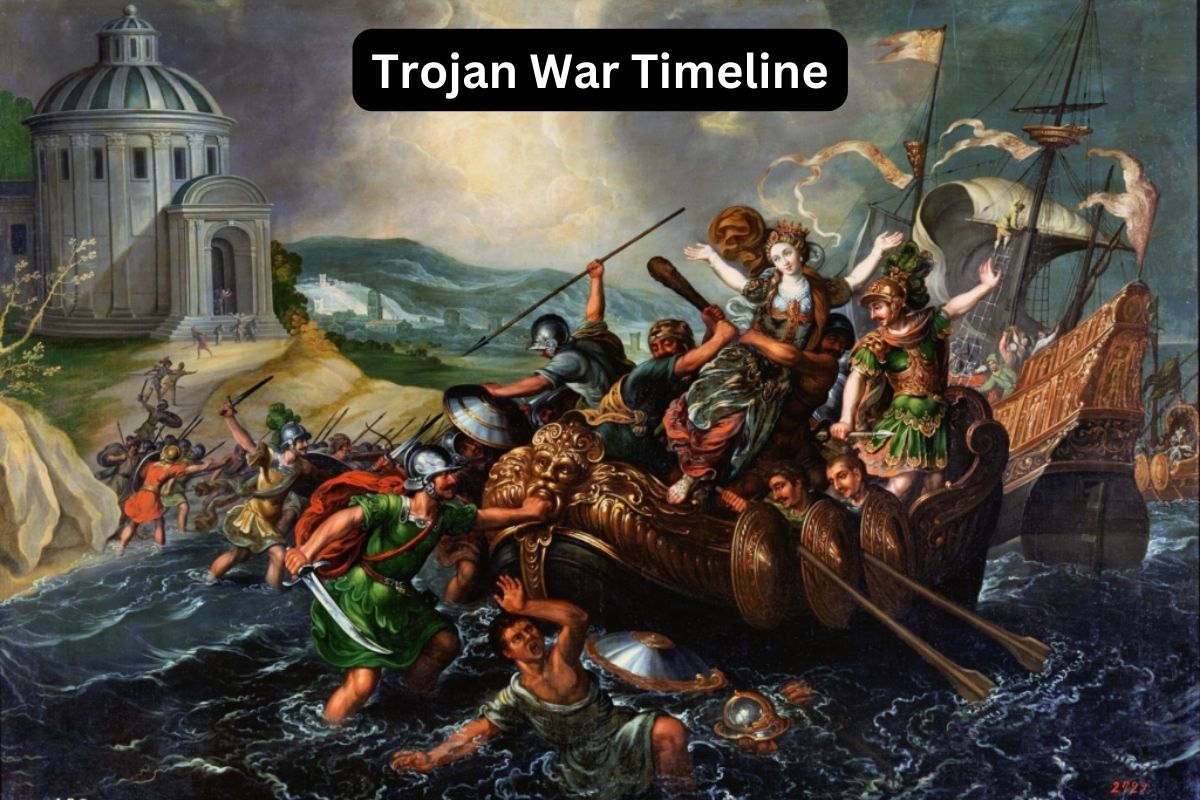
With the walls of Troy proving impregnable to direct assault for ten years, Athena inspired the ultimate trickery: the Trojan Horse.
As recounted in epic poetry and later synthesized in Virgil’s Aeneid, Athena inspired the craftsman Epeius to construct a massive, hollow wooden horse. She gave Epeius precise structural advice to ensure the hollow interior could hold fully armed soldiers while appearing to be an offering to the gods.
Odysseus organized the strategic operation:
- The main Greek fleet pretended to abandon the siege, sailing out of sight behind the island of Tenedos.
- They left the wooden horse on the shore, dedicated as an offering to Athena for a safe return home.
- Inside the horse hid an elite force of Greek warriors, including Odysseus, Menelaus, and Neoptolemus.
- The Greek agent Sinon remained behind to convince the Trojans that the horse was a sacred object designed to secure Athena's favor for Troy if brought within their city walls.
Despite warnings from the priest Laocoön ("I fear the Greeks, even when bearing gifts") and the prophetess Cassandra, the Trojans fell for the deception. When Laocoön threw his spear against the side of the wooden horse, Athena dispatched two giant sea serpents from the island of Tenedos to strangle Laocoön and his sons, interpreting this event for the watching Trojans as divine punishment for defiling a holy monument. The Trojans dragged the horse through their gates, breaching their own defenses to bring it inside.
The Fall of Troy and Athena’s Devastating Wrath
When night fell, the Greek warriors emerged from the horse, opened the gates to the returning army, and initiated the sack of Troy. However, the victorious Achaeans, blinded by bloodlust and greed, quickly committed atrocities that desecrated the very divine altars that had protected them.
The most horrific offense was committed by Ajax the Lesser (Locrian Ajax). During the destruction of the city, Cassandra, daughter of Priam, sought sanctuary at the altar in the temple of Athena, clinging to the sacred image of the goddess. Ajax dragged Cassandra away from the altar by force and violated her inside the holy sanctuary itself. The statue of Athena reportedly rolled its eyes toward heaven to avoid witnessing the desecration of her temple.
- VIOLATION OF SANCTUARY Locrian Ajax assaults Cassandra at Athena's altar in Troy.
- DIVINE RETRIBUTION Athena forms an alliance with Poseidon.
- THE CATACLYSMIC NOSTOI
- Storms at Cape Caphareus
- Destruction of the Greek fleet
- Drowning of Locrian Ajax
- Decades of wanderings for Odysseus
The Grecians failed to execute or punish Ajax for his sacrilege, fearing a rift in their leadership. This failure turned Athena's devotion into catastrophic fury:
- Divine Alliance: Athena approached Poseidon, the god of the sea who had previously favored the Greeks, and demanded joint retribution against the returning Achaean fleet.
- The Storms at Cape Caphareus: As the Greek armies set sail for home (their Nostoi), Athena unleashed violent tempests, gale-force winds, and lightning across the Aegean Sea.
- The Death of Ajax: Off the rocks of Gyrae, Athena struck Ajax’s ship with a thunderbolt. When Ajax scrambled onto a rocky crag and boasted that not even the gods could drown him, Poseidon struck the rock with his trident, splitting it in two and plunging Ajax into the sea to drown.
- Dispersal of the Heroes: The return of the surviving Greek leaders was marred by disaster. Menelaus was blown off course to Egypt for eight years, Agamemnon returned home only to be murdered by his wife Clytemnestra, and Odysseus was condemned to ten years of perilous wandering across hostile seas before finally returning to Ithaca.
Comparative Overview: Key Events of Athena's Involvement
The table below summarizes Athena’s direct interventions throughout the Trojan War cycle, detailing the mortals involved, her tactical actions, her divine opposition, and the primary classical literary sources.
| War Phase / Event | Key Mortals Involved | Athena's Strategic Action | Divine Opposition | Classical Source(s) |
|---|---|---|---|---|
| Judgment of Paris | Paris, Helen | Offered military glory and supreme wisdom; rejected by Paris | Aphrodite, Hera | Epic Cycle (Cypria), Euripides |
| Quarrel of Achilles & Agamemnon | Achilles, Agamemnon | Pulled Achilles’ hair to prevent Agamemnon’s murder, emphasizing restraint | None | Homer, Iliad (Book 1) |
| The Truce Violation | Pandarus, Menelaus | Incited Pandarus to shoot Menelaus, then deflected arrow to avoid fatal injury | Pandarus (tricked), Aphrodite | Homer, Iliad (Book 4) |
| Aristeia of Diomedes | Diomedes, Aeneas | Granted divine sight (menos); guided Diomedes’ spear to wound Ares | Ares, Aphrodite | Homer, Iliad (Book 5) |
| Theomachy (Battle of Gods) | N/A (Divine sphere) | Struck Ares with a giant boundary stone and knocked Aphrodite down | Ares, Aphrodite | Homer, Iliad (Book 21) |
| Duel of Achilles & Hector | Achilles, Hector | Disguised herself as Deiphobus to trick Hector; returned Achilles’ spear | Apollo (protecting Hector) | Homer, Iliad (Book 22) |
| Theft of the Palladion | Odysseus, Diomedes | Permitted infiltration of her sanctuary and removal of her protective icon | Trojan priesthood | Epic Cycle (Little Iliad) |
| The Trojan Horse | Epeius, Odysseus, Sinon | Inspired construction of the wooden horse; dispatched sea serpents against Laocoön | Poseidon (temporarily allied), Apollo | Virgil (Aeneid, Book 2) |
| The Sack & Aftermath | Locrian Ajax, Cassandra | Punished the Greeks for Ajax’s sacrilege by unleashing storms during their return | None (Allied with Poseidon) | Homer (Odyssey), Euripides (Trojan Women) |
Frequently Asked Questions
Why did Athena side with the Greeks instead of the Trojans?
Athena sided with the Greeks primarily because of the Judgment of Paris. When Paris, a prince of Troy, chose Aphrodite over Athena and Hera as the fairest goddess, he deeply offended Athena’s pride. Athena’s identity was built on intellectual superiority, strategic mastery, and martial excellence. Paris’s decision to value romantic beauty over wisdom and tactical power made Athena a sworn enemy of Paris, his family, and the entire city of Troy. Additionally, Athena was naturally drawn to the strategic intelligence of Greek heroes like Odysseus and Diomedes, whose attributes reflected her own values.
How did Athena influence the duel between Achilles and Hector?
In Book 22 of the Iliad, Athena directly brought about the death of Hector. When Hector was running from Achilles around the walls of Troy, Athena descended and assumed the form of Deiphobus, Hector’s brother. She tricked Hector into believing his brother was standing alongside him to fight Achilles, persuading him to stop running and turn around to fight. When Achilles threw his spear and missed, Athena invisibly retrieved it and handed it back to Achilles. After Hector threw his own spear and turned to ask Deiphobus for another, he discovered he was completely alone, realizing that the gods had doomed him.
What is the distinction between Athena's and Ares' roles in the war?
Athena and Ares represented two opposing dimensions of warfare in ancient Greek theology:
- Ares represented the chaotic, bloodthirsty, and irrational aspect of combat—slaughter, terror, and raw physical force (lyssa). He fought impulsively and often changed sides, supporting whichever battle provided the greatest bloodshed.
- Athena represented metis—strategic planning, tactical discipline, defensive warfare, and intellectual mastery of battle.
Whenever the two collided in the Trojan War, Athena defeated Ares, demonstrating the Greek cultural belief that strategic intellect will always overcome unbridled brute violence.
What was the Palladion, and why was it crucial to the Trojan War?
The Palladion was a sacred wooden statue of Athena that had fallen from heaven into the citadel of Troy. According to ancient prophecies, as long as the Palladion remained safe inside Troy’s walls, the city could not be captured by any army. Recognizing this divine shield, Odysseus and Diomedes embarked on a covert night mission, snuck into the city, and stole the statue. By permitting the theft of her own image, Athena formally withdrew her divine protection from Troy, enabling the Greeks to capture the city shortly thereafter.
Why did Athena turn against the Greeks after Troy fell?
Athena turned against the Greeks because they desecrated her sacred space during the sack of Troy. The Greek hero Ajax the Lesser (Locrian Ajax) dragged the Trojan princess Cassandra away from the altar of Athena, where she had sought divine sanctuary, and violated her inside the temple. Because the Greek leaders failed to punish Ajax for this act of sacrilege, Athena’s loyalty instantly vanished. She partnered with Poseidon to unleash violent storms against the returning Achaean fleet, sinking many of their ships and stranding survival leaders like Odysseus at sea for a decade.
The Legacy of Athena’s Dual Nature
Athena’s role in the Trojan War provides one of the most comprehensive character studies in classical mythology. She was not a passive deity offering mere spiritual encouragement; she was an active combatant, a master strategist, and an unyielding executioner of divine vengeance.
Through her partnerships with heroes like Diomedes and Odysseus, classical literature established the ideal of the warrior-intellectual—a mortal who triumphs not merely through physical strength, but through tactical patience, self-restraint, and cleverness (metis). Her victories over Ares served as a philosophical assertion that disciplined intellect will always triumph over chaotic violence.
Yet, Athena’s sudden transformation from the supreme protector of the Greeks to their most terrifying punisher highlights the strict boundaries of ancient Greek morality. Divine favor was never absolute; it depended entirely on mortal adherence to divine law, sacred oaths, and respect for holy sanctuaries. The moment the victorious Greeks let pride and violence cloud their judgment, the goddess of wisdom became the agent of their doom, proving that no mortal—no matter how heroic—is immune to cosmic justice.
For further exploration of primary classical texts on the Trojan War, researchers can consult the digitized translations of Homer's Iliad and Virgil's Aeneid hosted by the Perseus Digital Library at Tufts University.