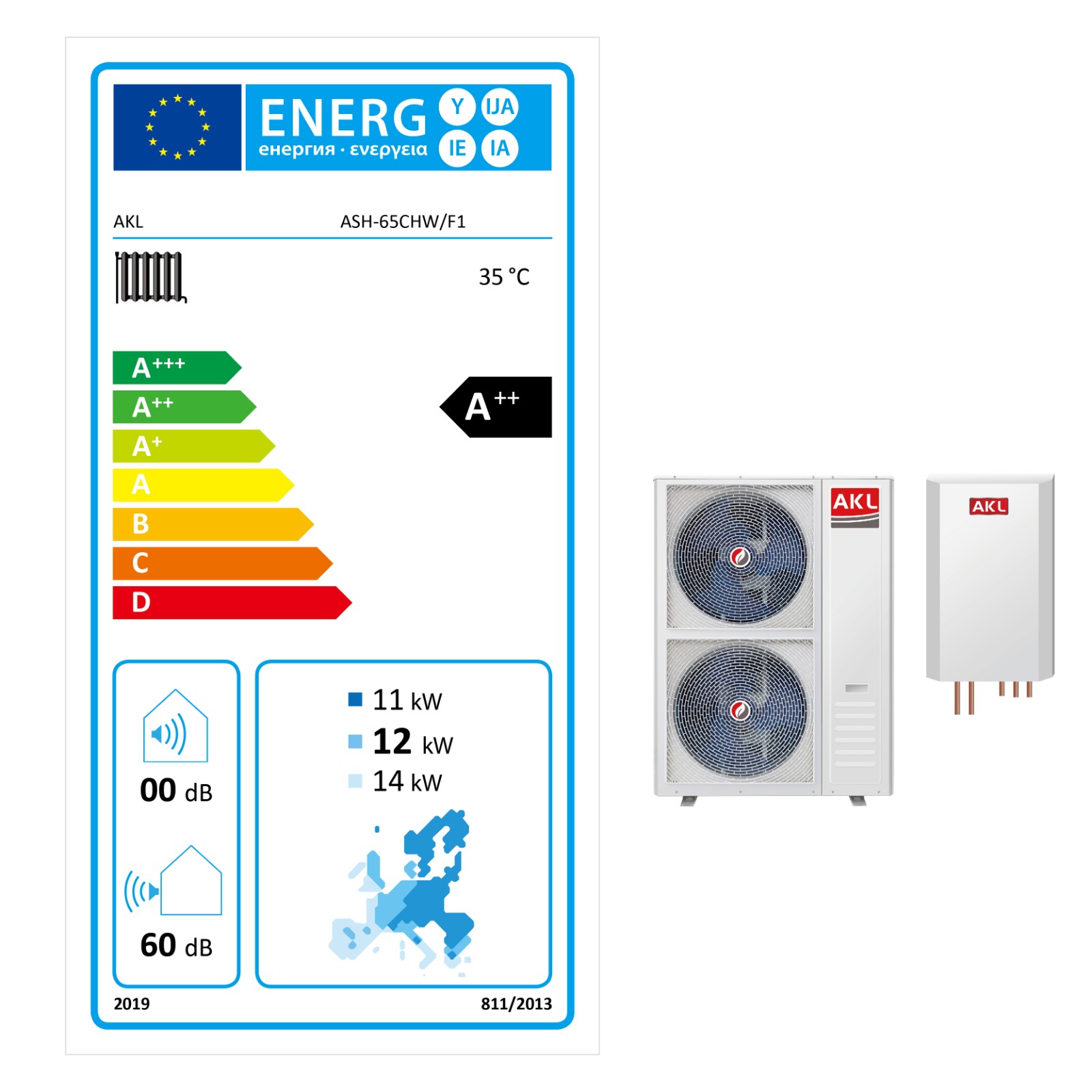
An air-to-water heat pump (AWHP) is a renewable energy system that extracts low-grade thermal energy from the ambient outdoor air and transfers it to a water-based heating circuit. This process provides sustainable space heating and domestic hot water for residential and commercial properties by utilizing a highly efficient refrigeration cycle.
Understanding the Fundamentals of Air-to-Water Heat Pumps
As we navigate the energy landscape of 2026, the transition toward electrified heating has solidified the air-to-water heat pump as the primary alternative to traditional combustion-based boilers. Unlike a furnace or a boiler, which creates heat by burning fuel, an AWHP moves existing heat from the environment into the home. This "transfer" rather than "creation" of heat allows the system to achieve efficiencies significantly higher than 100%, often reaching 300% to 500% under optimal conditions.
The ATHOC (Air-To-Water Heat pump Overview & Components) framework categorizes these systems based on their thermodynamic cycle and physical configuration. At its core, the system relies on the principle that even cold outdoor air contains thermal energy. By using a refrigerant with a boiling point far below zero, the system can evaporate this liquid into a gas using outdoor air, compress that gas to raise its temperature, and then release that heat into the building's water circuit.
The Thermodynamic Cycle: How Heat is Harvested
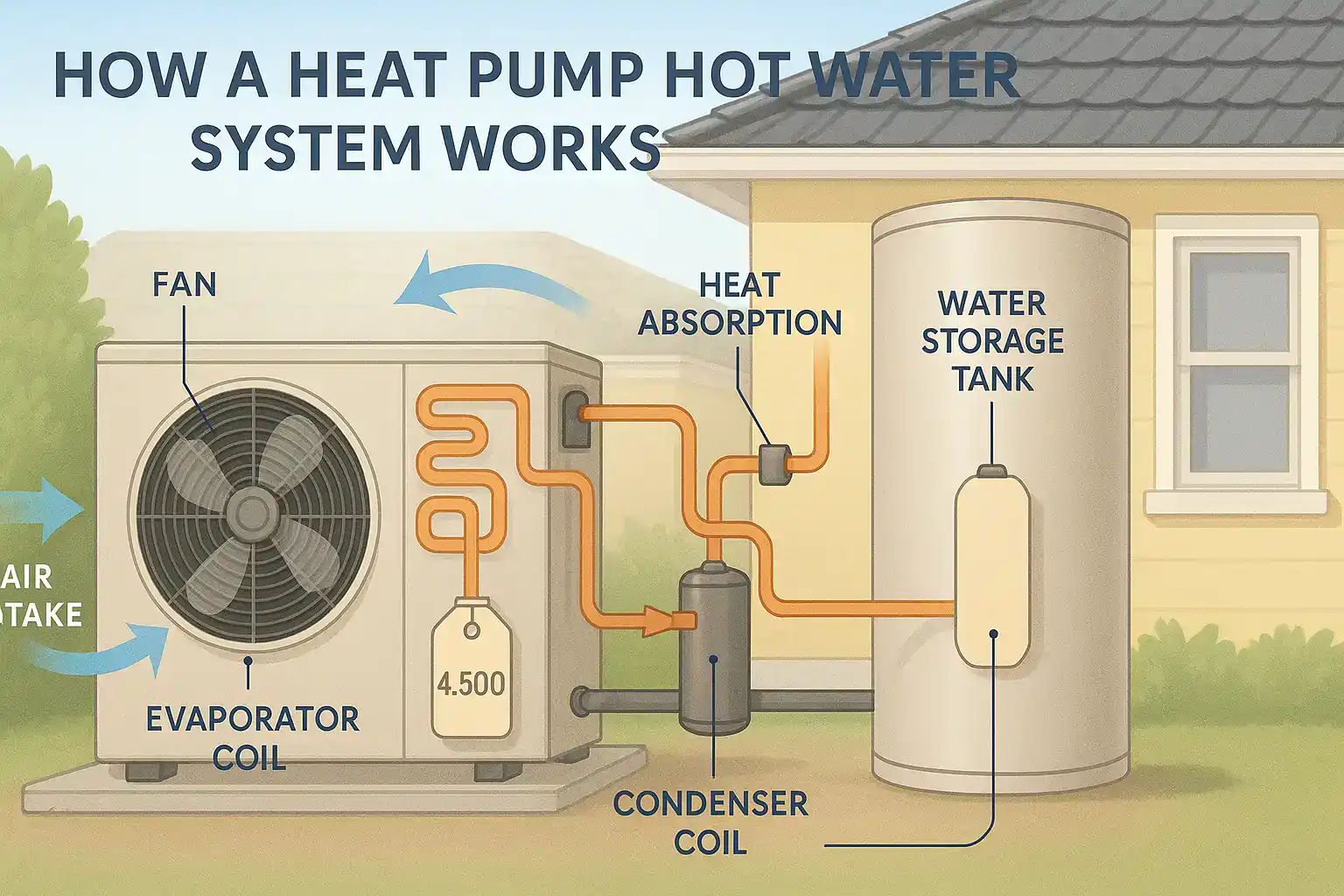
The operation of an air-to-water heat pump is governed by the laws of thermodynamics, specifically the vapor-compression cycle. This cycle consists of four primary stages that repeat continuously to maintain indoor comfort.
1. Evaporation
The cycle begins at the outdoor unit, where a fan draws ambient air across an evaporator coil. Inside this coil is a liquid refrigerant. Because the refrigerant has an extremely low boiling point, the heat from the outdoor air—even in temperatures as low as -20°C—is sufficient to cause the refrigerant to evaporate and turn into a low-pressure gas.
2. Compression
The gaseous refrigerant then travels to the compressor. By using electricity to power a scroll or rotary compressor, the system reduces the volume of the gas, which causes its temperature and pressure to rise dramatically. This is the stage where electrical input is required, and it is the only significant "cost" in terms of energy consumption.
3. Condensation
The high-temperature, high-pressure gas then enters a heat exchanger (the condenser). Here, the heat from the refrigerant is transferred to the water that circulates through the home’s radiators, underfloor heating, or hot water tank. As the refrigerant loses its heat to the water, it cools down and condenses back into a high-pressure liquid.
4. Expansion
Finally, the liquid refrigerant passes through an expansion valve. This valve rapidly reduces the pressure of the refrigerant, which also drops its temperature. The refrigerant, now a cold liquid again, returns to the evaporator to repeat the cycle.
System Configurations: Monobloc vs. Split Systems
When evaluating an air-to-water heat pump system, the physical configuration is a critical decision point for homeowners and installers. There are two dominant designs in 2026: Monobloc and Split systems.
Monobloc Systems
In a Monobloc configuration, all components of the refrigeration cycle—the compressor, evaporator, and heat exchanger—are contained within a single outdoor unit. The water pipes from the home's heating system are plumbed directly into this outdoor unit.
- Pros: Generally easier and faster to install; no need for refrigerant handling by the installer; saves indoor space.
- Cons: Requires pipe insulation to prevent freezing; slightly less efficient in extremely cold climates due to heat loss in the external water pipes.
Split Systems
A Split system divides the components between an outdoor unit and an indoor unit. The outdoor unit contains the evaporator and compressor, while the indoor unit contains the heat exchanger. These units are connected by refrigerant lines rather than water pipes.
- Pros: Higher efficiency in very cold climates because the heat exchange happens indoors; no risk of water pipes freezing outside.
- Cons: More complex installation requiring a certified F-Gas technician; occupies more space inside the home.
Technical Specifications and Efficiency Metrics
Understanding the performance of an AWHP requires familiarity with specific industry metrics. These figures determine the long-term cost-effectiveness of the system.
- Coefficient of Performance (COP): This is a measurement of efficiency at a single point in time. A COP of 4.0 means that for every 1 kW of electricity used, the system produces 4 kW of heat.
- Seasonal Coefficient of Performance (SCOP): This provides a more accurate picture of performance over an entire heating season, accounting for temperature fluctuations. It is the weighted average of the COP across the year.
- Flow Temperature: Air-to-water heat pumps typically operate most efficiently at low flow temperatures (35°C to 45°C). High-temperature heat pumps can reach 65°C or 70°C, making them suitable for older homes with traditional radiators, though at a slight cost to overall efficiency.
Comparison Table: System Performance by Type (2026 Estimates)
| Feature | Low-Temperature AWHP | High-Temperature AWHP | Hybrid AWHP System |
|---|---|---|---|
| Typical SCOP | 4.2 - 5.0 | 3.2 - 3.8 | Variable (System dependent) |
| Max Flow Temp | 45°C - 55°C | 65°C - 75°C | 70°C+ (via Boiler) |
| Best Application | New builds, Underfloor heating | Retrofits, Large Radiators | Poorly insulated homes |
| Refrigerant Type | R32 or R290 (Propane) | R290 (Propane) | R32 |
| Estimated Lifespan | 15–20 Years | 15–20 Years | 12–15 Years (Boiler dependent) |
Installation Prerequisites and Considerations
Transitioning to an air-to-water heat pump is not a "plug-and-play" process. It requires a holistic view of the building's thermal envelope.
Insulation and Airtightness
Because AWHPs work most efficiently at lower temperatures, the home must be able to retain heat effectively. In 2026, building regulations heavily emphasize "fabric first" approaches. If a home is poorly insulated, the heat pump will have to work harder, lowering its SCOP and increasing electricity bills. Cavity wall insulation, loft insulation, and high-quality double or triple glazing are often prerequisites for a successful installation.
Heat Emitters (Radiators and Underfloor Heating)
Traditional gas boilers often run water through radiators at 70°C. Because a standard AWHP runs more efficiently at 45°C, the surface area of the heat emitters usually needs to be larger to deliver the same amount of warmth to the room. Underfloor heating is the ideal partner for AWHPs because it covers a massive surface area, allowing for very low flow temperatures. If using radiators, they may need to be upgraded to "Type 22" or "Type 33" models, which have more fins and panels to increase heat transfer.
Domestic Hot Water (DHW) Integration
Most air-to-water systems require a dedicated unvented hot water cylinder. This cylinder contains a larger internal heat exchanger coil specifically designed for the lower flow temperatures of a heat pump. It is important to ensure there is physical space in the property for this tank, typically in a utility room or airing cupboard.
The Role of Refrigerants in 2026
The environmental impact of heat pumps has been further reduced by the phase-out of high GWP (Global Warming Potential) refrigerants. By 2026, R290 (Propane) has become the industry standard for many leading manufacturers. R290 is a natural refrigerant with a GWP of only 3, compared to the thousands associated with older synthetic gases. Furthermore, R290 allows for higher flow temperatures without the efficiency penalties seen in older R410A systems, making retrofitting easier than ever.
Economic Analysis: Costs, Grants, and Savings
The financial viability of an air-to-water heat pump depends on the initial capital expenditure versus the operational savings over time.
Capital Expenditure (CAPEX)
As of 2026, a standard residential air-to-water heat pump installation typically costs between $12,000 and $18,000 (£9,000 - £14,000). This price includes the outdoor unit, indoor cylinder, controls, and labor. While this is higher than a traditional boiler, various government incentives often offset a significant portion of this cost.
Operational Expenditure (OPEX)
The cost of running a heat pump is tied to the price of electricity. While electricity is generally more expensive per unit than natural gas, the high efficiency (SCOP) of the heat pump compensates for this difference. For example, if electricity is 3 times the price of gas, but the heat pump is 4 times more efficient than a gas boiler, the heat pump will be cheaper to run.
Maintenance Requirements
Maintenance for an AWHP is generally less intensive than for a combustion boiler. Annual checks typically focus on:
- Cleaning the evaporator fins to ensure unobstructed airflow.
- Checking the levels of antifreeze (glycol) in the water circuit.
- Verifying the pressure of the expansion vessel.
- Inspecting the electrical connections and sensor accuracy.
Common Myths and Misconceptions
Despite their prevalence in 2026, several myths persist regarding air-to-water heat pumps.
- "They don't work in the cold": Modern systems are designed to operate effectively down to -25°C. While efficiency drops as the temperature falls, they still provide sufficient heat for the home.
- "They are too noisy": Advanced fan blade designs and sound-dampening insulation in the compressor housing have reduced noise levels significantly. At a distance of 3 meters, most units are no louder than a quiet conversation or a background hum.
- "They are only for new homes": With the advent of high-temperature R290 units, even older Victorian or colonial-style homes can be successfully heated with an AWHP, provided basic insulation improvements are made.
Frequently Asked Questions
Can an air-to-water heat pump provide cooling in the summer?
Yes, many air-to-water heat pumps are "reversible." By reversing the refrigeration cycle, the system can extract heat from the indoor water circuit and dump it outside. However, this requires specific heat emitters, such as fan coil units or specialized underfloor cooling systems, to avoid condensation issues on traditional radiators.
How long does an air-to-water heat pump system last?
A well-maintained air-to-water heat pump typically has a lifespan of 15 to 20 years. This is slightly longer than the average lifespan of a modern condensing gas boiler, which is usually 10 to 12 years. The absence of a combustion process reduces the wear and tear on internal components.
Is a buffer tank always necessary for the installation?
A buffer tank is not always required, but it is often recommended. It acts as a thermal reservoir that ensures the heat pump has a minimum volume of water to circulate, preventing "short-cycling" (turning on and off too frequently). This extends the life of the compressor and improves overall system efficiency.
What happens if there is a power outage?
Since air-to-water heat pumps rely entirely on electricity, they will stop functioning during a power outage. However, because most heat pump homes are well-insulated, the building will retain its temperature for a significant period. In regions with frequent outages, some homeowners integrate their systems with battery storage or solar PV arrays.
Do I need planning permission for an outdoor unit?
In many jurisdictions in 2026, heat pumps fall under "permitted development" rights, meaning planning permission is not required as long as the unit meets certain size and noise criteria. However, if you live in a listed building or a conservation area, you should always check with local authorities before installation.
Final Recommendations for Implementation
The transition to an air-to-water heat pump system is a strategic investment in both property value and environmental sustainability. To ensure success, prioritize a Room-by-Room Heat Loss Calculation performed by a qualified engineer. This ensures the system is correctly sized—neither too small to heat the home on the coldest day, nor too large to operate efficiently during milder weather.
By focusing on the integration of high-quality insulation, appropriately sized heat emitters, and intelligent controls, homeowners can maximize the benefits of the ATHOC framework and enjoy a comfortable, low-carbon living environment for decades to come.