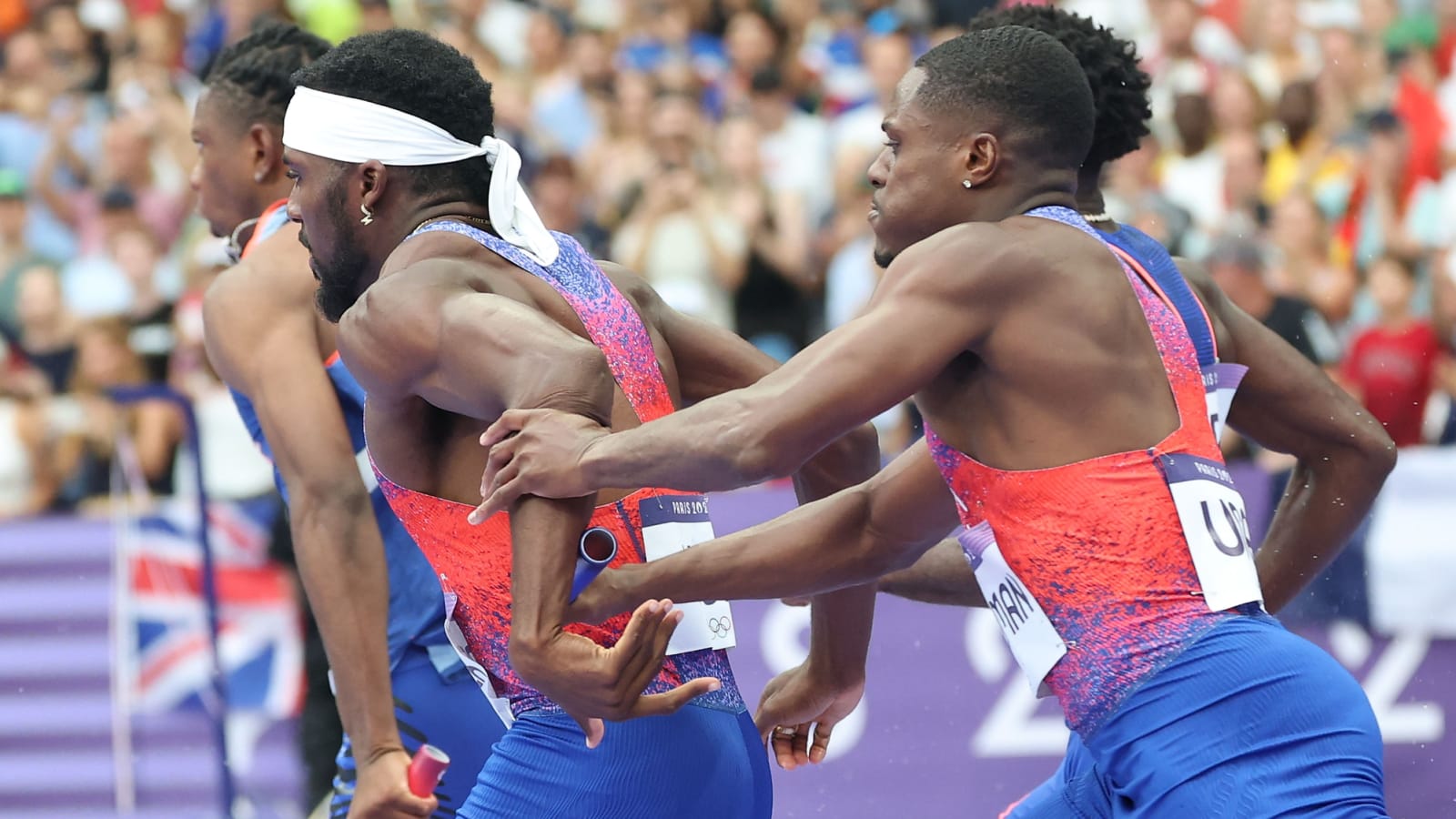
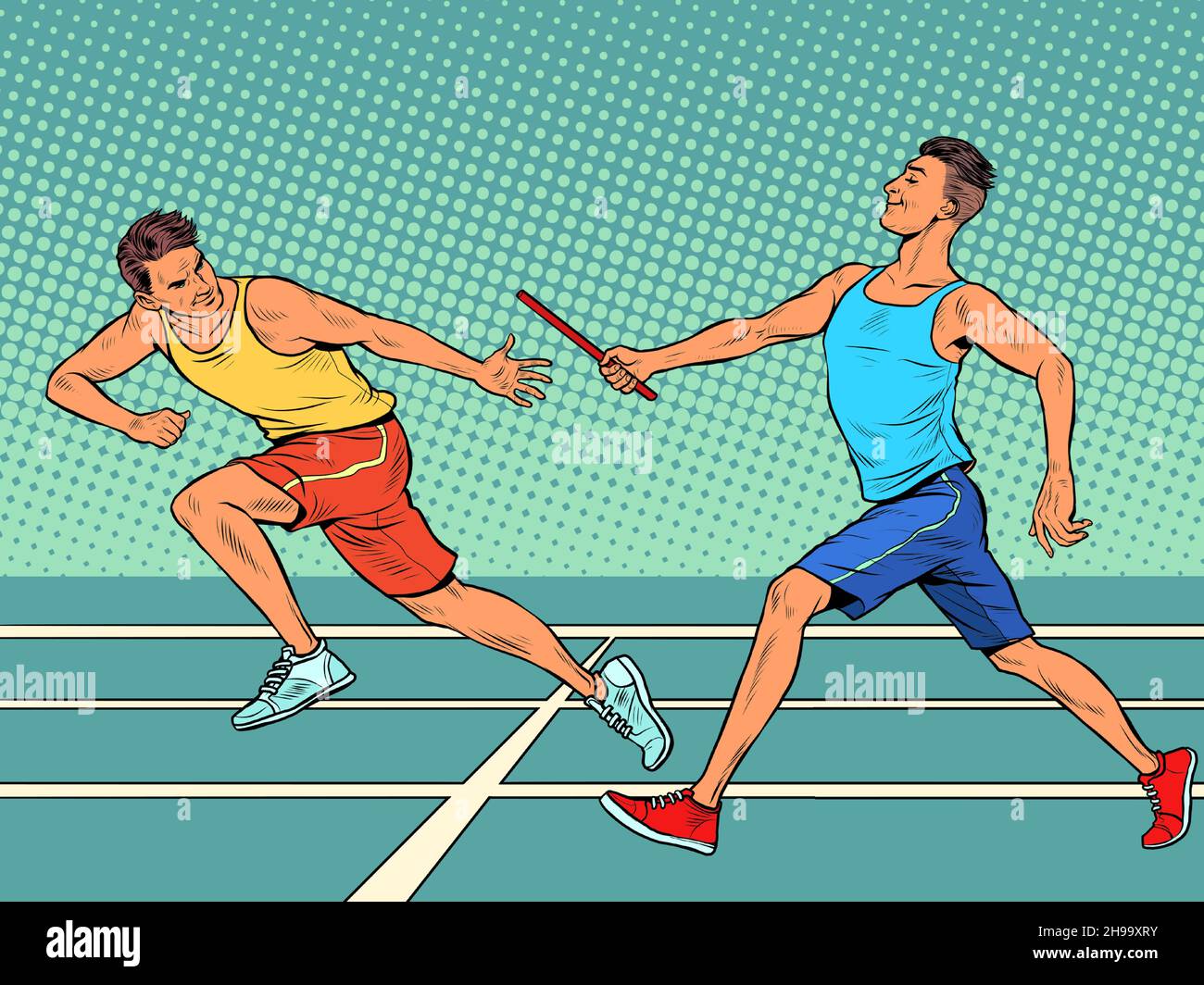
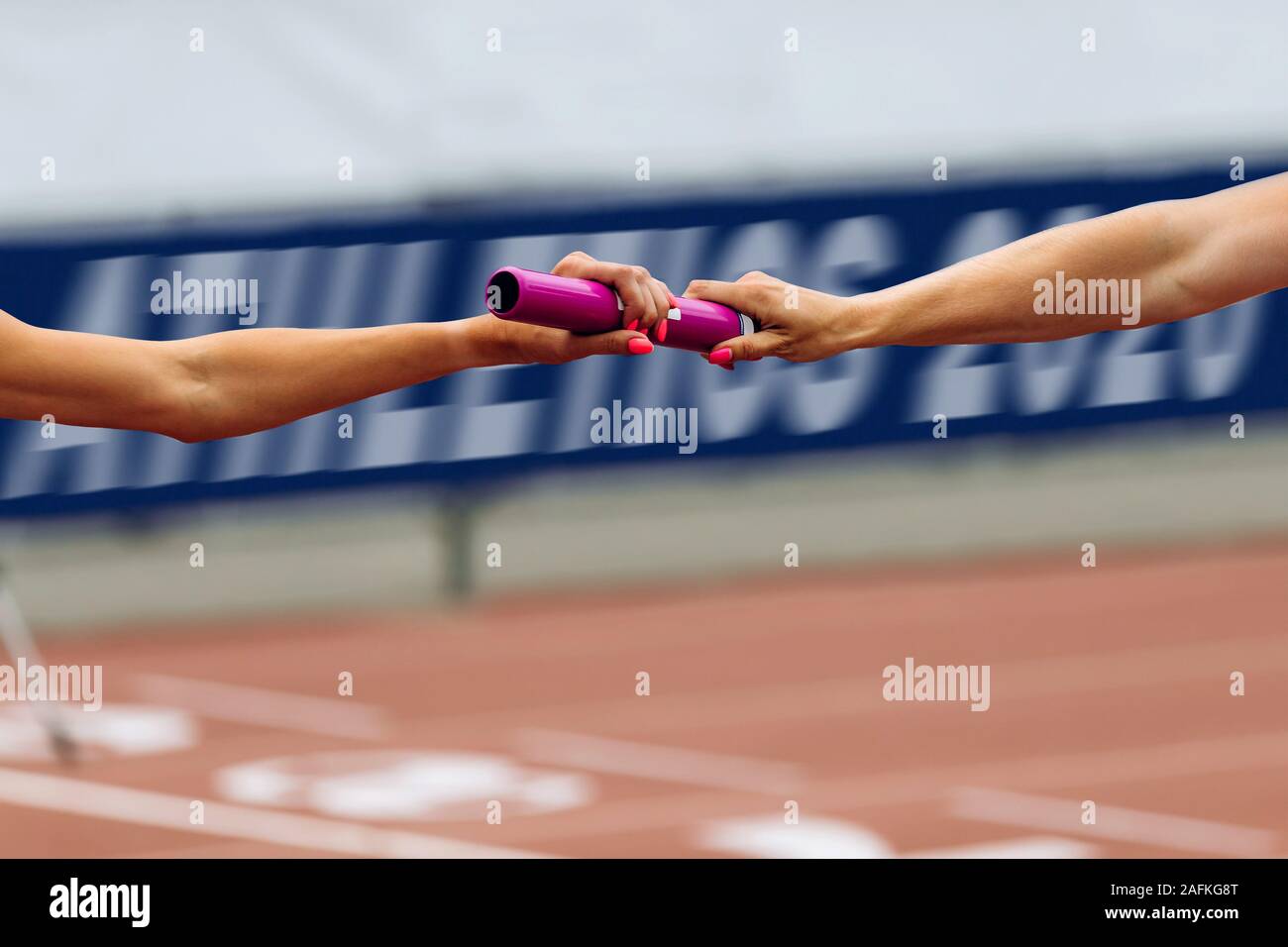
When an athlete hits another runner with a baton during a relay race, the outcome is governed by World Athletics Technical Rule 17 (formerly Rule 163) and Rule 24. If the official determines the contact was "willful" or caused significant "impedance," the offending athlete's team is typically disqualified. Incidental contact without gain or obstruction often goes unpenalized.
In the high-stakes environment of track and field, particularly during relay events like the 4x100m and 4x400m, the baton is more than just a piece of equipment—it is a potential source of controversy. While relay races are celebrated for their speed and teamwork, the physical proximity of runners in the exchange zone often leads to collisions. When that collision involves a baton striking an opponent, it triggers a complex set of official reviews to determine if the act was accidental, negligent, or a deliberate violation of sporting integrity.
The Regulatory Framework: World Athletics Technical Rules
The primary authority governing baton-related incidents is World Athletics (WA). Under the 2026 competition guidelines, several specific rules address physical contact and equipment handling. Understanding these is essential for coaches, athletes, and fans to interpret the chaos that often occurs during a baton exchange.
Technical Rule 17.2: Obstruction and Interference
This rule is the "umbrella" regulation for any physical contact on the track. It states that if an athlete jostles or obstructs another athlete so as to impede their progress, they (or their team) are liable to be disqualified. When a baton is used to "hit" another runner, it is viewed as an extension of the athlete’s body.
The key distinction for officials is the word impede. If a runner from Team A swings their arm and the baton strikes a runner from Team B, but Team B's runner maintains their stride and pace, a disqualification is less likely. However, if the strike causes the runner to stumble, lose their lane, or drop their own baton, the interference is clear.
Technical Rule 24.7: Improper Baton Handling
Rule 24 specifically addresses the relay races. It mandates that the baton must be carried by hand throughout the race. If an athlete uses the baton to push, strike, or otherwise interfere with an opponent, they are in violation of "proper handling" protocols. Furthermore, the rule specifies that athletes must remain in their lanes or maintain their positions after the handover to avoid obstructing other competitors. A "hit" often occurs when a runner who has just finished their leg fails to vacate the lane properly, swinging their baton-hand into the path of an incoming runner.
Intentional vs. Accidental Contact: The Referee’s Dilemma
In the heat of competition, the line between a crowded exchange and a deliberate foul is thin. As of 2026, Video Assistant Referee (VAR) technology in athletics has become the standard for major championships, allowing officials to dissect baton strikes from multiple angles.
Determining Willful Impedance
A "willful" strike is a serious breach of conduct that can lead not only to team disqualification but also to a personal suspension for the athlete under "Unsporting Conduct" clauses. Officials look for specific behavioral cues:
- The Path of the Arm: Does the athlete swing their arm in a natural running motion, or is there a lateral extension toward the opponent?
- Grip and Force: Is the baton held firmly during the strike, or does the impact appear to be a consequence of a stumble?
- Eye Contact: While difficult to prove, the direction of an athlete’s gaze can indicate whether they were aware of the opponent’s proximity.
The Dynamics of the 4x400m "Mosh Pit"
The 4x400m relay is notorious for physical contact because, unlike the 4x100m, runners do not stay in their lanes after the first break. As athletes converge on the pole line (Lane 1), the exchange zone becomes incredibly congested. In this "mosh pit" scenario, baton hits are frequently ruled as incidental. If three runners are trying to occupy the same two-meter space, a baton accidentally clipping an opponent’s shoulder is rarely seen as a disqualifiable offense unless it is exceptionally violent.
The Physicality of the Baton: Specifications and Impact
It is easy to underestimate the physical force of a relay baton. According to standard specifications, a relay baton is a smooth, hollow tube made of wood, metal, or another rigid material. It must be between 280mm and 300mm long, with a circumference of 120mm to 130mm, and weigh at least 50 grams.
At elite sprinting speeds—where athletes can reach velocities exceeding 40 km/h (approx. 25 mph)—a 50-gram rigid tube becomes a dangerous projectile. A strike to the ribs, face, or hands can cause:
- Bone Bruising: The high-velocity impact of aluminum or composite material against the skin.
- Lacerations: The ends of a baton, though rounded, can cause cuts if they strike at an angle.
- Broken Fingers: Runners often receive the baton with an open hand; a strike from an opponent’s baton during this vulnerable moment can easily fracture a finger.
Historical Context and Notable Incidents
While many relay disqualifications stem from dropping the baton or passing outside the zone, "hitting" incidents have left their mark on the sport.
In various regional and collegiate championships leading up to the 2024 Paris and 2025 World Championships, controversies have erupted where a runner appeared to "bat" away the hand of an opponent. One of the most famous historical examples of interference (though involving a trip rather than a baton strike) was the 1984 Olympic incident between Mary Decker and Zola Budd. In the relay world, the 2011 World Championships saw the U.S. men’s 4x100m team face disaster when Darvis Patton collided with a British runner, though the "hit" was a full-body collision rather than a specific baton strike.
By 2026, the focus has shifted toward the "blind handover." In the 4x100m, the outgoing runner does not look back. If an opponent from an adjacent lane drifts slightly into the path of that outgoing runner, the incoming runner (who is looking) may use their baton hand to "clear a path." This is where most modern "hitting" disqualifications occur.
Consequences and Penalties
When an official confirms that an athlete hit a runner with a baton, the penalties are tiered based on the severity and context.
| Infringement Level | Description | Typical Penalty |
|---|---|---|
| Incidental Contact | Minor contact in a crowded 4x400m lane without loss of momentum. | No penalty; result stands. |
| Negligent Obstruction | A runner swings their arm wildly after a pass, striking an opponent. | Disqualification (DQ) of the team. |
| Willful/Malicious Strike | Deliberately hitting an opponent to prevent them from passing. | DQ and potential ban for the individual athlete. |
| Forced Baton Drop | Striking an opponent’s hand, causing them to drop their baton. | DQ of the offender; potential re-run for the victim. |
The Right to Protest (Rule 8)
If a team believes their runner was hit by a baton, they must lodge a protest within 30 minutes of the official results being posted. This protest is typically filed by the team leader and involves a fee (often around $100 USD or equivalent), which is refunded if the protest is upheld. The Jury of Appeal reviews the footage. In rare cases, if the interference was massive and denied a team a certain medal or qualification, the Jury may order a "solo re-run" (as seen with the U.S. women’s 4x100m team in Rio 2016 after a different type of interference) or advance the team to the final by adding a lane.
Technical Analysis of the "Baton Strike" Motion
From a biomechanical perspective, the act of hitting someone with a baton usually occurs in the "Sweep" or "Overhand" pass.
In an overhand pass, the incoming runner brings the baton down into the palm of the outgoing runner. This downward arc is high-energy. If the outgoing runner from the neighboring lane is slightly out of position, they can be struck in the back of the head or the shoulder.
Coaches in 2026 emphasize "tight-lane discipline." To prevent accidental hits:
- The "Push" Pass: Runners are taught to push the baton forward rather than swinging it in a wide arc.
- Lane Positioning: Incoming runners are trained to run on the side of the lane furthest from the most likely point of contact (e.g., running on the outside of the lane if the hand-off is a right-to-left exchange).
How to Handle a Baton Incident as an Athlete
If you are a runner and you are hit by an opponent’s baton during a race, your immediate actions are critical for both your team's performance and any subsequent legal protest.
- Maintain Motion: Do not stop. Under WA rules, if you stop running, you may be seen as "abandoning" the race, which complicates a protest.
- Retain the Baton: If the hit causes you to drop your own baton, you must retrieve it yourself. You cannot be assisted by a teammate or official. If the baton leaves your lane, you may retrieve it as long as you do not shorten your race distance or interfere with other runners.
- Alert the Umpire: Immediately after crossing the finish line, or if the race is stopped, notify the nearest track umpire. Umpires stand at the corners and exchange zones with yellow and white flags.
- Medical Assessment: Because relay batons are rigid, hits to the hand or head should be assessed by the medical team immediately to rule out fractures or concussions.
Frequently Asked Questions
Can a team be disqualified if the baton hits the ground but not a runner?
Yes, but not for "hitting." A team is disqualified if they fail to recover a dropped baton or if the recovery involves a lane violation that interferes with others. If the baton hits the ground and is recovered legally without interference, the race continues, though usually with a significant time loss.
What happens if an athlete throws the baton at another runner?
Throwing the baton is an automatic disqualification under Rule 24.6. The baton must be carried in the hand. Throwing it at another runner is considered a "gross breach of sportsmanship" and would likely result in an immediate red card and further disciplinary action by the national governing body.
Does the material of the baton matter for penalty decisions?
No. Whether the baton is aluminum, carbon fiber, or plastic, the rules regarding contact remain the same. However, the rigidity of the material is often cited in medical reports if an injury occurs, which can influence the "severity" of the unsporting conduct assessment.
Can a race be re-run if a baton strike occurs?
Re-runs are extremely rare and are usually only granted if the interference was so significant that the "innocent" team was completely prevented from finishing or competing fairly. In most cases, the offending team is simply removed from the standings, and the other teams move up.
Is it a foul if I hit my own teammate with the baton?
No, hitting your own teammate is generally not a foul, as it provides no advantage and is considered a technical error within the team. However, if the hit is so violent that it endangers the athlete, officials might intervene on safety grounds, though this is virtually unheard of in professional athletics.
Strategic Recommendations for Teams
To mitigate the risk of baton-related incidents, elite teams in 2026 utilize spatial awareness training. This involves simulating crowded 4x400m exchange zones where runners must navigate "traffic" while maintaining a secure grip on the baton.
For Coaches: Ensure that athletes understand the "Post-Exchange Exit." Most hits happen because the athlete who just handed off the baton "spectates" instead of immediately vacating the track. Teaching a disciplined exit strategy (staying in the lane until the track is clear) reduces the risk of being the "hitter" or the "hit."
For Athletes: In the 4x100m, keep your "receiving" arm steady. If you feel contact from an opponent's baton, resist the urge to swat it away. Any reactive motion can be misinterpreted by VAR as you being the aggressor. Focus entirely on your lane and your incoming teammate.