The shifting dynamics in factory automation are characterized by a transition from rigid, single-purpose production lines to highly flexible, multi-functional robotic cells. ATI Industrial Automation leads this evolution by providing modular end-effectors, precision force/torque sensors, and robotic tool changers that enable robots to switch tasks autonomously, enhancing productivity and adaptability in high-mix manufacturing environments.
The Evolution of End-Effector Technology and ATI’s Market Position
The landscape of industrial robotics has undergone a fundamental transformation over the last decade. Historically, robots were deployed for high-volume, low-variety tasks where a single machine performed one repetitive action for years. Today, as of 2026, the global manufacturing sector demands high-mix, low-volume (HMLV) production capabilities. This shift has placed ATI Industrial Automation, a subsidiary of Novanta Inc., at the center of the factory floor's strategic redesign.
ATI’s role in these shifting dynamics is rooted in the concept of "robotic flexibility." By developing sophisticated end-effectors—the "business end" of the robot—ATI allows a single robotic arm to replicate the dexterity and versatility of a human worker while maintaining industrial-grade speed and precision. The acquisition of ATI by Novanta in 2021 catalyzed this growth, integrating ATI’s mechanical expertise with broader sensing and motion control technologies.
The modern factory is no longer a collection of static machines; it is a fluid ecosystem of interchangeable components. This modularity is driven by the need to reduce downtime during product changeovers. In the past, retooling a line could take days or weeks. In 2026, using ATI’s automated coupling systems, a robotic cell can transition from an assembly task to a finishing task in less than three seconds.
Key Drivers of Change in 2026 Factory Environments
Several critical factors are driving the current dynamics in factory automation, many of which rely directly on the hardware innovations pioneered by ATI.
The Rise of Software-Defined Manufacturing
While software and AI determine the "brain" of the robot, the physical interface remains the bottleneck. The industry has shifted toward software-defined manufacturing, where the robot's logic can be updated remotely. However, for this to be effective, the hardware must be capable of supporting diverse physical actions. ATI’s tool changers provide the physical "bridge" that allows software instructions to manifest in different mechanical operations, such as switching from a pneumatic gripper to a laser scanning probe.
Collaborative Robot (Cobot) Proliferation
The distinction between industrial robots and collaborative robots has blurred. Cobots now handle heavier payloads and operate at higher speeds when humans are not present (fenceless systems). ATI has adapted its product line to provide lightweight, high-safety end-effectors specifically designed for the ISO standards governing human-robot collaboration. This includes sensitive collision sensors and force-limiting interfaces that ensure safety without sacrificing the industrial "grit" required for heavy-duty manufacturing.
Precision Sensing and the "Sense of Touch"
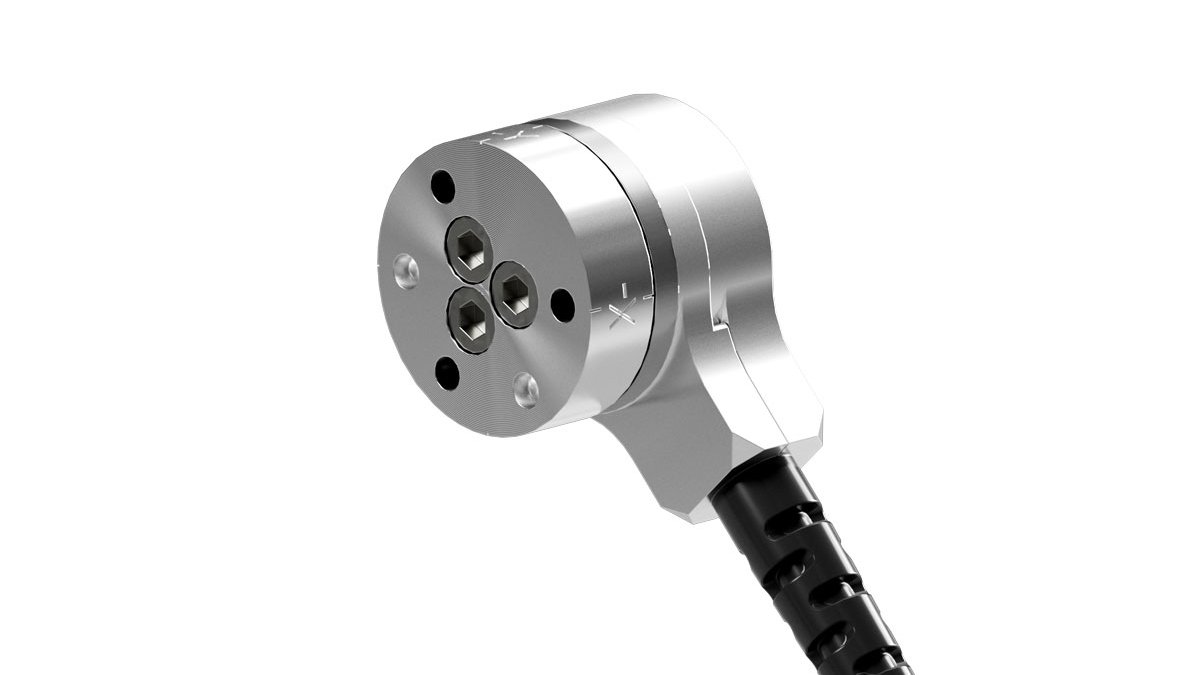
Artificial Intelligence in robotics is only as good as the data it receives. The shift toward autonomous precision assembly—such as fitting delicate electronic components or aerospace fasteners—requires haptic feedback. ATI’s Multi-Axis Force/Torque (F/T) sensors provide this "sense of touch," allowing robots to feel resistance and adjust their path in real-time. This dynamic is essential for tasks that were previously deemed "un-automatable."
ATI’s Core Technologies Shaping the Shift
To understand how ATI is influencing factory dynamics, one must examine the specific technical components that enable modern robotic workflows.
Robotic Tool Changers: Enabling Multitasking
The Robotic Tool Changer is perhaps the most significant contributor to factory floor flexibility. These systems consist of a Master side (attached to the robot) and a Tool side (attached to various end-effectors).
- Locking Mechanisms: ATI utilizes a patented fail-safe ball-lock mechanism. Even if pneumatic pressure is lost, the tool remains securely attached to the robot, preventing catastrophic drops and expensive downtime.
- Utility Pass-Throughs: Modern tool changers do more than just hold a tool. They pass through electrical signals, pneumatic air, hydraulic fluid, and high-speed data (such as EtherCAT or 10-Gigabit Ethernet). This allows the robot to maintain seamless communication with the tool it is currently using.
- Modular Design: In 2026, ATI’s QC (Quick Change) series has become highly modular, allowing manufacturers to "stack" different utility modules based on the specific needs of a production run.
Multi-Axis Force/Torque Sensors
As automation moves into the realm of delicate material handling and precision machining, the need for 6-axis sensing (measuring forces and torques along the X, Y, and Z axes) has become standard.
- Silicon Strain Gauge Technology: ATI’s sensors often employ silicon strain gauges, which offer high signal-to-noise ratios and extreme sensitivity compared to traditional foil gauges.
- Integration with AI: By feeding F/T data into machine learning models, robots can now perform "active compensation." For example, if a robot is sanding a curved surface, the sensor detects the slight variations in pressure and adjusts the arm’s position to maintain a constant force, ensuring a uniform finish.
Material Removal Tools: Automating the "Last Mile"
Finishing processes—deburring, grinding, and polishing—have traditionally been the most difficult to automate because they require a "feel" for the material. ATI’s line of compliant material removal tools addresses this by providing "compliance," which is the ability of the tool to move or "give" slightly when it encounters an unexpected bump or variation in the workpiece.
- Radial and Axial Compliance: Tools like the Flexdeburr or the RC (Radial Compliance) series allow the cutting bit to follow the edge of a part even if the part is slightly misaligned. This reduces the need for expensive, high-precision fixtures.
Comparison: Rigid vs. Flexible Automation Dynamics
The following table illustrates the shift in operational dynamics between traditional automation and the modern, ATI-enabled flexible approach.
| Feature | Traditional Rigid Automation | Modern Flexible Automation (2026) |
|---|---|---|
| Tooling Approach | Fixed, single-purpose end-effectors. | Interchangeable tools via Tool Changers. |
| Changeover Time | Hours or days (manual reconfiguration). | Seconds (automated via software). |
| Sensing Capability | Simple proximity or vision sensors. | 6-Axis Force/Torque haptic feedback. |
| Error Handling | Stop and alarm; requires human intervention. | Real-time adjustment via force sensing. |
| Product Variety | Optimized for one specific part. | Capable of "Batch Size One" production. |
| Safety Systems | Physical cages and light curtains. | Integrated collision sensors and cobot modes. |
| Data Integration | Isolated "dumb" hardware. | Smart modules with EtherNet/IP connectivity. |
Integrating ATI Solutions: Prerequisites and Implementation
Implementing these shifting dynamics requires more than just purchasing hardware; it necessitates a structural approach to robotic integration.
System Prerequisites
Before deploying an ATI-based flexible cell, engineers must ensure the robotic controller is compatible with the high-speed data requirements of modern end-effectors.
- Payload Calculations: Total payload must include the weight of the Master side tool changer, the Tool side, the actual end-effector, and the workpiece. Overlooking the weight of the tool changer is a common mistake in system design.
- Communication Protocols: Ensure the robot supports industrial Ethernet protocols (Profinet, EtherNet/IP, or EtherCAT) to take full advantage of ATI’s smart sensor modules.
- Air Quality: Most ATI tool changers and compliant tools rely on pneumatic power. The air supply must be dry and filtered to 5 microns or better to prevent internal seal wear.
Implementation Steps
- Define the Tool Matrix: List every tool the robot will need and ensure they all fit within the weight and utility constraints of the selected tool changer series.
- Design the Tool Stand: Automated tool changing requires a "tool stand" or "tool cradle" where the robot can park its unused tools. These stands must be precision-aligned to the robot's coordinate system.
- Calibrate Force Sensors: For F/T sensors, gravity compensation is critical. The system must be programmed to subtract the weight of the tool itself from the force readings so it only measures the force applied to the workpiece.
- Sequence Programming: Program the "pick and place" sequence for tool changing, including the verification of the "Lock/Unlock" sensor signals to ensure the tool is safely coupled before movement begins.
Common Challenges and Troubleshooting
Despite the efficiency gains, shifting to flexible automation introduces new complexities.
- Signal Noise in F/T Sensors: Electromagnetic interference (EMI) from nearby high-voltage motors can distort sensor data. Solution: Use shielded cabling and ensure the robot is properly grounded. ATI’s newer digital modules help mitigate this by converting signals to digital formats closer to the sensor head.
- Alignment Wear: If the robot is not perfectly aligned when picking up a tool, the locking pins can wear prematurely. Solution: Periodically inspect the alignment and use "compliance" modules if the robot’s repeatability is insufficient.
- Pneumatic Leaks: Small leaks in the tool changer lines can prevent the fail-safe mechanism from engaging or disengaging smoothly. Solution: Implement a routine maintenance schedule to check O-rings and seals every 500,000 cycles.
The Impact of Industry 5.0 on ATI’s Strategic Direction
By 2026, the transition from Industry 4.0 (connectivity and data) to Industry 5.0 (human-centricity and sustainability) has significantly impacted ATI’s strategic direction. The focus is no longer just on speed, but on resilience.
Factories are using ATI’s technology to create "resilient manufacturing cells" that can be repurposed within hours to meet shifting market demands or supply chain disruptions. Furthermore, the longevity of ATI components supports sustainability goals. Rather than replacing an entire robotic cell when a product changes, manufacturers simply swap the tool or update the sensor parameters, significantly reducing electronic and mechanical waste.
Frequently Asked Questions
How do ATI Tool Changers prevent a tool from falling if power is lost?
ATI Tool Changers utilize a patented mechanical locking mechanism (such as a ball-lock or cam-lock) that is physically held in the locked position by a spring or a specific geometric locking force. Even if the pneumatic air pressure or electrical power fails, the mechanical interface remains engaged. The "Unlock" command requires active pressure to overcome this mechanical fail-safe.
Can ATI Force/Torque sensors be used in wet or dusty environments?
Yes, many of ATI’s sensors are available with specific IP (Ingress Protection) ratings, such as IP60, IP65, or IP68. For applications involving water jets, grinding dust, or food processing, ATI provides "environmental protection" versions that use specialized seals and coatings to prevent contaminants from reaching the internal strain gauges.
What is "compliance" in robotic finishing, and why is it necessary?
Compliance is the ability of a tool to move slightly in response to external forces. In finishing tasks like deburring, a "rigid" tool would crash into a part if the part's dimensions varied by even a millimeter. A "compliant" tool, like those from ATI, has a built-in "floating" mechanism (pneumatic or spring-loaded) that allows the tool bit to follow the actual contour of the part, ensuring a consistent finish regardless of slight positioning errors.
Are ATI products compatible with all robot brands?
ATI designs its products to be robot-agnostic. They provide standard ISO bolt patterns for mounting to the most common robot flanges (such as those from FANUC, Yaskawa, ABB, KUKA, and Universal Robots). Additionally, they offer a wide range of interface plates and communication modules that translate ATI sensor data into the specific language required by various robot controllers.
What is the typical lifespan of a Robotic Tool Changer?
When maintained according to manufacturer guidelines—including regular cleaning and lubrication of the locking mechanism—an ATI Tool Changer is typically rated for millions of cycles. In high-duty cycle automotive environments, it is not uncommon for these units to last for several years of 24/7 operation before requiring a seal kit replacement or major overhaul.
Practical Recommendation
For organizations looking to leverage the shifting dynamics in factory automation, the first step is to conduct a tooling audit. Identify processes where a robot is currently underutilized or where manual changeovers are causing significant downtime.
Start by integrating a standard ATI QC-series Tool Changer on a single robotic cell to experiment with multi-functional workflows. Once the mechanical flexibility is established, introduce Force/Torque sensing to automate more complex, tactile tasks. This staged approach allows your engineering team to master the complexities of utility pass-throughs and haptic programming before scaling the technology across the entire factory floor.