For students seeking a head start on their degrees, the AP Personal Finance course serves as a rigorous bridge between high school graduation and university-level business studies. By mastering the principles of earning, investing, and risk management, students can secure college credit while gaining essential life skills that traditional academic tracks often overlook.
In 2026, the landscape of secondary education has shifted significantly toward functional literacy, specifically in the realms of economics and management. The College Board’s introduction and expansion of the AP Personal Finance course—often integrated into a broader "AP Business" track—responds to a nationwide push for financial competency. This course is not merely a lesson in balancing a checkbook; it is a high-level academic endeavor designed to mimic an introductory college finance course, offering a structured roadmap for students to earn transferable credits before they even step onto a university campus.
The Evolution of AP Business and Personal Finance in 2026
The demand for financial education has reached a critical mass, with more than 25 states now requiring personal finance instruction for high school graduation. In response, the AP Personal Finance framework was developed to provide a standardized, rigorous option for students who want more than just a foundational overview. In many school districts, this course is paired with AP Microeconomics or the newer AP Business Principles to create a comprehensive "AP Business" pathway.
This pathway is designed for students who intend to major in finance, accounting, or business administration. However, its utility extends far beyond future CEOs. Because the course covers the time value of money, insurance markets, and tax implications, it provides a universal academic advantage. In 2026, colleges have largely standardized their credit-acceptance policies for this course, recognizing that a student who passes the AP Personal Finance exam possesses the same quantitative and analytical skills as those who complete "Finance 101" at the undergraduate level.
Core Pillars of the AP Personal Finance Curriculum
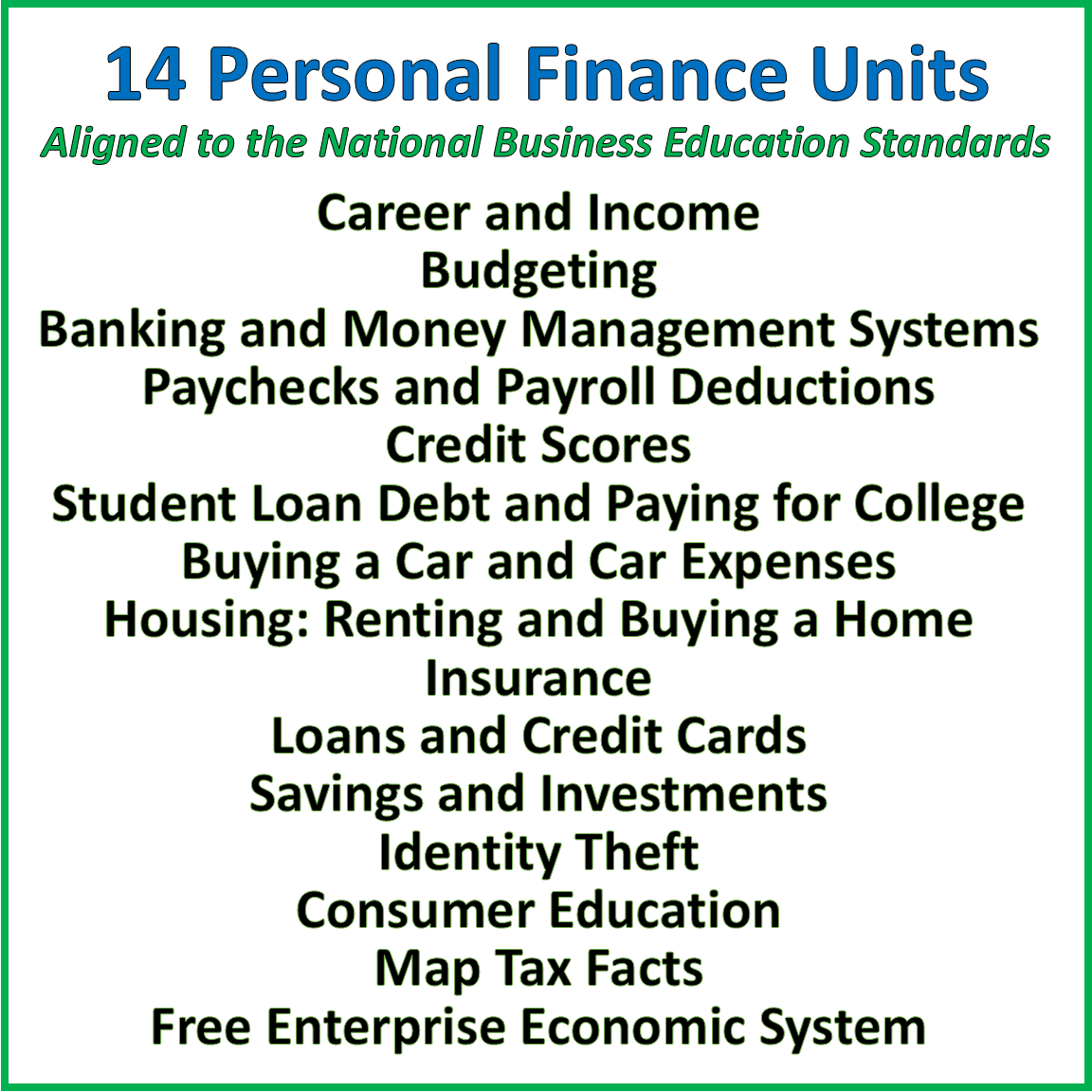
To understand how this course translates into college credit, one must first examine the complexity of its syllabus. The curriculum is divided into several "Big Ideas" that align with the Council for Economic Education (CEE) and Jump$tart Coalition standards.
1. Earning and Career Path Analysis
This section goes beyond listing jobs. Students analyze the relationship between education, human capital, and lifetime earning potential. They calculate net pay after various deductions, including FICA, federal, and state taxes, using current 2026 tax brackets. This level of analysis is a hallmark of college-level labor economics.
2. Spending and Strategic Saving
Students are required to develop sophisticated budgeting models that account for fixed and variable expenses. The course emphasizes the "pay yourself first" mentality but reinforces it with mathematical proofs regarding compound interest and the opportunity cost of consumption.
3. Credit, Debt, and Interest Math
A major portion of the roadmap involves understanding the cost of borrowing. Students learn to calculate the true cost of loans using different interest rates and terms. This includes analyzing mortgages, student loans, and credit card debt cycles. Mastery of these formulas is essential for the AP exam and is a direct substitute for coursework in many university business math modules.
4. Investing and Wealth Building
This is where the course mirrors an introductory investment class. Students explore the risk-return trade-off across various asset classes: stocks, bonds, mutual funds, and ETFs. They study the role of diversification and the impact of inflation on real returns. By the end of this module, students are expected to explain the mechanics of the stock market and the function of various retirement accounts like 401(k)s and IRAs.
5. Risk Management and Insurance
This pillar covers the economic theory behind insurance. Students analyze how individuals and businesses transfer risk to third parties. They learn the terminology of premiums, deductibles, and co-pays, while also evaluating the necessity of life, health, disability, and property insurance based on specific life stages.
The Roadmap to College Credit: Steps for Students
Navigating the path from high school enrollment to college credit requires a deliberate strategy. It is not enough to simply take the class; students must follow a specific sequence to ensure their hard work results in a lighter college tuition bill.
Step 1: Verify Course Availability and Prerequisites
Not every high school offers AP Personal Finance as a standalone course. In some cases, it is integrated into a year-long "AP Business" block. Students should check with their guidance counselors to see if the course is available and if there are prerequisites, such as Algebra II, which is often required due to the heavy emphasis on financial formulas.
Step 2: Mastery of the Quantitative Requirements
The AP exam is rigorous. To earn credit, most colleges require a score of 3, 4, or 5. Success depends on a student’s ability to use financial calculators (or approved scientific calculators) to solve for future value (FV), present value (PV), and annuities. Regular practice with College Board-released FRQs (Free Response Questions) is the most effective way to prepare for the 2026 testing cycle.
Step 3: Understanding the "Credit Equivalency" at Target Universities
Before the exam, students should use the College Board AP Credit Policy Search tool to see how their target schools treat the score.
- Public Universities: Often grant three credits for a "General Education" elective or a "Business Intro" course for a score of 3 or higher.
- Private/Elite Institutions: May require a 4 or 5 and might only use the score for "placement" (allowing a student to skip an intro course) rather than granting credit hours toward graduation.
Step 4: The AP Exam (May 2026)
The exam consists of a multiple-choice section and a free-response section. In 2026, most students will take this exam in a digital format. The free-response questions typically ask students to create a financial plan based on a case study or to calculate the impact of an economic change (like an interest rate hike) on a specific investment portfolio.
Comparing AP Business Pathways
Choosing the right course within the business umbrella is crucial for maximizing credit. Depending on the student's ultimate major, one course may be more beneficial than another.
| Feature | AP Personal Finance | AP Microeconomics | AP Macroeconomics | AP Business Principles |
|---|---|---|---|---|
| Primary Focus | Individual wealth and money management. | Firm-level decision making and market structures. | National income, price levels, and fiscal policy. | Entrepreneurship, marketing, and management. |
| Mathematical Rigor | Moderate (Formulas for interest/TVM). | High (Graphs and marginal analysis). | High (Multipliers and aggregate models). | Low to Moderate (Business plan metrics). |
| Typical College Credit | Finance 101 / General Elective. | Economics 101 (Micro). | Economics 102 (Macro). | Business 101 / Management Intro. |
| Best For | Everyone; specifically Finance majors. | Economics, Business, and Policy majors. | Economics, Political Science majors. | Management and Marketing majors. |
Synergy Between Personal Finance and Other AP Subjects
One of the most effective strategies for a "roadmap to credit" is stacking related AP courses. AP Personal Finance does not exist in a vacuum; it overlaps significantly with other disciplines.
For instance, students taking AP Statistics will find the probability and risk management sections of Personal Finance much easier to grasp. Similarly, the "consumer choice" module in AP Microeconomics provides the theoretical foundation for the practical spending decisions taught in Personal Finance. By taking these courses in tandem or in sequence, students create a "Business Core" in high school that mirrors the first year of a collegiate business school curriculum. This can potentially shave a full semester off a college degree, saving thousands of dollars in tuition and room and board.
Potential Challenges and How to Overcome Them
While the roadmap is clear, it is not without obstacles. Students often struggle with the transition from "common sense" finance to "academic" finance.
- The Math Hurdle: Many students enter the class expecting it to be a "soft" elective. When faced with logarithmic calculations for the "Rule of 72" or complex annuity formulas, they can become overwhelmed. Solution: Students should refresh their exponential math and interest rate knowledge early in the semester.
- Policy Variations: A common mistake is assuming every college treats AP scores the same way. Solution: Always check the specific registrar's page of the intended university. Some schools might categorize AP Personal Finance as a "Social Science" credit, while others place it under "Vocational" or "Business."
- Exam Fatigue: Taking multiple AP exams in May is taxing. Solution: Since Personal Finance is highly practical, students should use real-world applications (like tracking their own savings) to keep the material relevant and engaging throughout the year, reducing the need for "cramming."
Financial Implications of the AP Roadmap
In 2026, the average cost of a three-credit course at a four-year public university is approximately $1,200 to $1,500. For private institutions, this can exceed $4,000. An AP exam costs roughly $99 (though subsidies are often available). From a purely financial standpoint, the ROI (Return on Investment) of passing the AP Personal Finance exam is one of the highest in the education sector.
Furthermore, the "soft" ROI is even greater. Students who understand credit scores and the dangers of high-interest debt are less likely to fall into the common traps of the "starving student" during their college years. They enter adulthood with a strategic plan for their own human capital, which is the ultimate goal of any business-focused education.
Frequently Asked Questions
Can I get college credit if I take a regular personal finance class instead of the AP version?
Generally, no. While regular personal finance classes are valuable for life skills, they do not have a standardized national exam validated by the College Board. Most universities require an AP, IB, or Dual-Enrollment designation to grant college credit. AP Personal Finance is specifically designed to meet the rigor required for credit transfer.
Is AP Personal Finance harder than AP Economics?
"Harder" is subjective, but most students find the concepts in Personal Finance more intuitive because they apply to daily life. However, AP Economics (Micro and Macro) is often more abstract and graph-heavy. Personal Finance requires more formulaic calculations, whereas Economics requires more theoretical modeling. Both are considered rigorous college-level courses.
How does this course prepare me for a career in finance?
The course introduces you to the CFA (Chartered Financial Analyst) and CFP (Certified Financial Planner) frameworks. You learn about asset allocation, fiduciary duty, and market mechanics. For a student in 2026, this provides a massive head start on professional certifications and internships in the financial services industry.
Do I need to be "good at math" to succeed in this class?
You need to be comfortable with basic algebra and the use of a calculator. You don't need calculus, but you must understand how to manipulate variables in interest rate formulas. The focus is on the application of math to solve financial problems rather than abstract theorem proving.
Can I self-study for the AP Personal Finance exam?
Yes, it is possible to self-study, especially if your school does not offer the course. However, because it is a relatively new AP subject as of 2026, you must ensure you are using the most current CED (Course and Exam Description) from the College Board and that you register for the exam through a local participating high school by the fall deadline.
Final Recommendation for Students and Parents
The most effective next step for any student interested in an AP Business track is to download the current Course and Exam Description (CED) for AP Personal Finance. Review the unit weights and ensure you are comfortable with the mathematical requirements. If your high school does not currently offer the course, advocate for its inclusion or look into online AP providers. Earning college credit through this roadmap is not just about saving time and money—it is about building a foundation of financial agency that will serve you for the rest of your life.