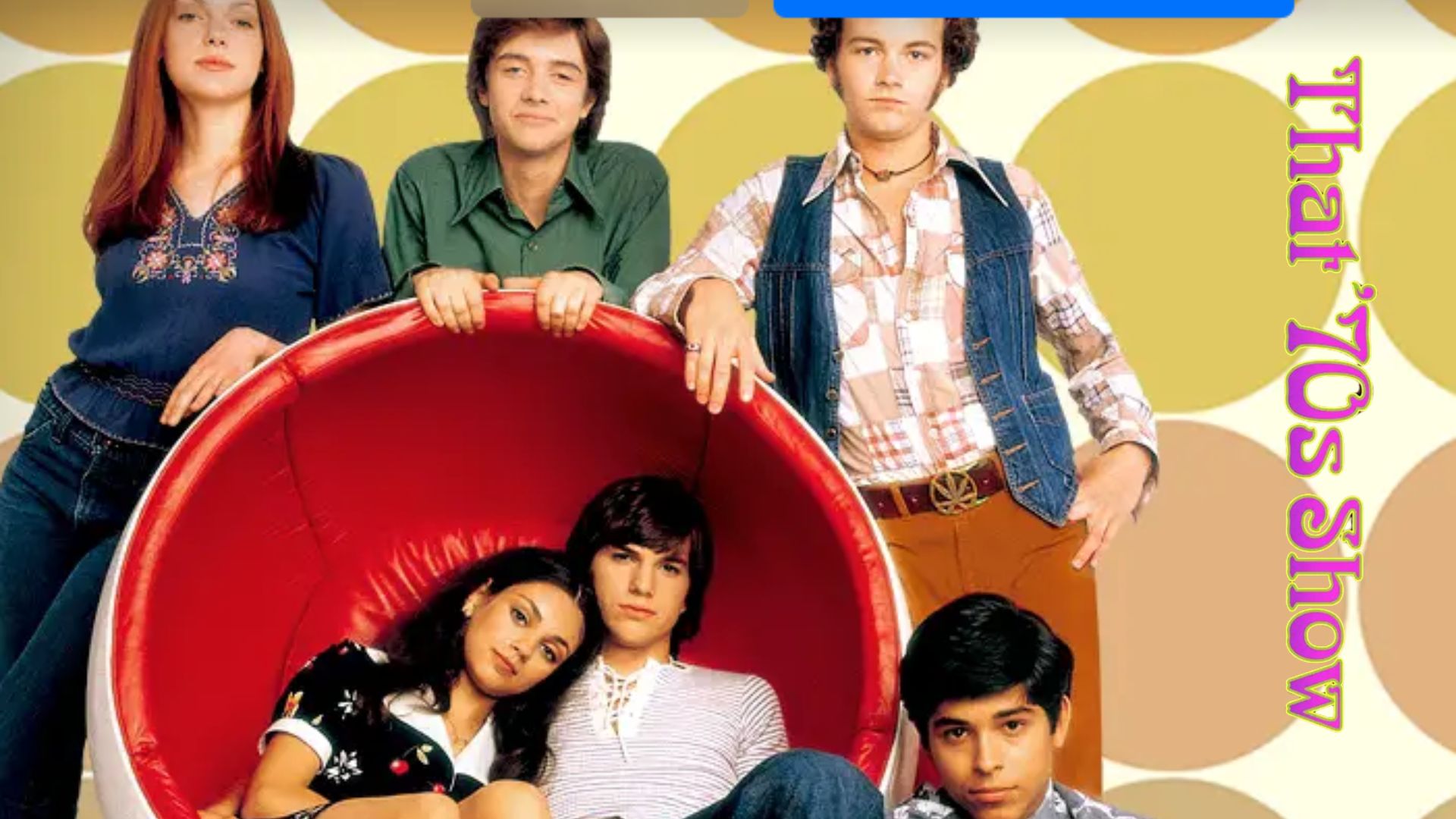
That '70s Show stands as one of the definitive sitcoms of the late 1990s and early 2000s, capturing the nostalgic aesthetic and cultural anxieties of suburban life in Wisconsin during the Nixon and Ford administrations. Running for eight seasons on Fox from 1998 to 2006, the series followed the lives of six teenagers—Eric Forman, Donna Pinciotti, Steven Hyde, Michael Kelso, Jackie Burkhart, and Fez—as they navigated the trials of adolescence in the fictional town of Point Place, anchored by Eric's parents, Red and Kitty Forman.
Beyond its rotating camera angles, iconic basement circle scenes, and sharp comedic writing, the series served as a major launching pad for Hollywood stars. Examining the backgrounds, on-set dynamics, and subsequent career trajectories of the ensemble reveals a wealth of trivia that deepens our understanding of how this retro comedy came together. The following five facts explore the lesser-known details, casting stories, and off-screen realities of the performers who defined a generation of television comedy.
1. Topher Grace and Ashton Kutcher Were Complete Novices Before Booking the Show
When the casting directors for That '70s Show began assembling the teenage ensemble in the late 1990s, they made a deliberate choice to search for fresh, largely unknown talent rather than relying on established child actors. This strategy yielded dramatic results, particularly in the discoveries of Topher Grace and Ashton Kutcher, both of whom stepped onto a professional television set for the very first time with this series.
Topher Grace, who played the central protagonist Eric Forman, was discovered by a co-creator's wife while performing in a high school musical in New York. Prior to landing the role, Grace had no professional acting experience, film credits, or television background. His natural awkwardness, sharp comedic timing, and relatable delivery made him the quintessential anchor for the show's adolescent perspective.
Similarly, Ashton Kutcher—cast as the dim-witted heartthrob Michael Kelso—was working as a model and studying biochemical engineering at the University of Iowa before moving to New York and auditioning for a role in a pilot then titled Teenage Wasteland. Kutcher had never acted professionally before his audition. His physical comedy and earnest delivery turned a potentially one-note caricature into one of the most memorable characters in modern sitcom history. The lack of prior experience among these young leads fostered a genuine camaraderie, as they effectively learned the mechanics of multi-camera television production together in front of a live studio audience.
2. Mila Kunis Lied About Her Age During the Audition Process
One of the most famous casting anecdotes in television history surrounds Mila Kunis, who secured the role of the spoiled, ambitious fashionista Jackie Burkhart. When casting calls went out for That '70s Show, the producers established a strict rule that all actors portraying teenagers must be at least 18 years old to comply with labor laws regarding working hours for minors on set.
Mila Kunis desperately wanted the part, but at the time of her audition, she was only 14 years old. When asked by the casting directors for her age during the initial screening, Kunis famously bypassed the truth by stating, "Well, I'm going to be 18 on my birthday." While technically vague enough to evade immediate disqualification, she conveniently omitted which birthday she was referring to.
Director David Trainer and the producers eventually realized her true age when they reviewed her paperwork, but by that point, her performance had proved so undeniably perfect for Jackie Burkhart that they kept her on the show anyway. Kunis spent her early years on set balancing her schoolwork with long production hours, eventually celebrating her actual 18th milestone while continuing her tenure on the long-running series.
3. Wilmer Valderrama Created the Iconic Voice and Backstory for "Fez"
Among the ensemble cast, the character of Fez—an exchange student whose actual country of origin is never explicitly revealed—stands out as a unique comedic creation. Much of the character's distinct persona, including his accent and enigmatic background, was engineered directly by actor Wilmer Valderrama during the audition and development phases.
When Valderrama auditioned for the role, he recognized that the script described the character simply as a foreign exchange student with an unspecified accent. To make the audition stand out, Valderrama invented a linguistic blend of various accents, phonetic rhythms, and cultural mannerisms that sounded exotic yet universally comedic. He later revealed that the name "Fez" itself originated as an acronym for "F.E.S.," standing for "Foreign Exchange Student," which the writers eventually turned into a running gag throughout the series' run.
Valderrama's commitment to the character extended to his physical comedy and vocal inflection, which he maintained consistently across eight seasons and 200 episodes. The mystery of Fez's homeland became a recurring comedic device, with the writers dropping subtle, contradictory clues in various episodes while actively refusing to pin down a specific nation, ensuring the joke remained fresh for viewers until the series finale.
4. Laura Prepon and Danny Masterson Shared a Surprising Off-Screen Music Connection
While the characters of Donna Pinciotti and Steven Hyde frequently sparred over politics, lifestyle, and philosophy on screen, the actors who portrayed them, Laura Prepon and Danny Masterson, shared a deep creative partnership off the set rooted in their mutual appreciation for underground and electronic music culture.
During the production hiatuses of That '70s Show, Prepon and Masterson immersed themselves in Los Angeles's burgeoning electronic music and DJ scenes. Masterson, who performed professionally under the DJ moniker "DJ Mom Jeans" (and later "DJ Donkey Punch"), introduced Prepon to the world of professional audio mixing and music curation. The two friends spent considerable time outside of working hours collecting rare vinyl records, attending underground club events, and exploring the technical mechanics of audio engineering.
This shared passion extended into their professional lives beyond the Fox sitcom. Both actors utilized their industry networks to support independent artists, and their off-screen friendship provided a stabilizing anchor during the high-pressure environment of shooting a hit network television show for nearly a decade. Their ability to maintain a strong professional rapport mirrored the complex dynamic of Eric Forman's circle, where friendships forged in basements often translated into lifelong bonds.
5. Kurtwood Smith and Debra Jo Rupp Brought Decades of Classical Training to the Forman Household
While the teenage actors captured headlines with their rapid ascents to stardom, the emotional and comedic backbone of That '70s Show rested securely on the shoulders of veteran actors Kurtwood Smith (Red Forman) and Debra Jo Rupp (Kitty Forman). Unlike their youthful castmates, both Smith and Rupp arrived on set with extensive backgrounds in classical theater, dramatic film, and television.
Kurtwood Smith was a respected character actor known for his chilling dramatic performances in major feature films such as RoboCop (1987) and Dead Poets Society (1989). Rather than playing Red as a one-dimensional grump, Smith utilized his classical training to infuse the suburban patriarch with a distinct sense of working-class dignity, generational anxiety, and subtle comedic timing. His delivery of threats regarding putting his foot in someone's rear end became a defining catchphrase of 1970s nostalgia television.
Debra Jo Rupp brought decades of New York theater experience and comedic prowess to the role of Kitty Forman. Her signature infectious laugh, emotional range, and ability to pivot instantly from comforting maternal warmth to fierce protective instinct elevated the character far above the standard sitcom matriarch archetype. The contrast between Smith's stern demeanor and Rupp's high-energy warmth provided the dramatic engine that kept the teenage antics grounded in realistic family dynamics.
Cast Overview and Career Trajectories
To understand the scope of the ensemble, the following table outlines the main cast members, their character names, and their primary status during the show's original run:
| Actor | Character Name | Seasons Active | Pre-Show Experience Level | Notable Post-Series Work |
|---|---|---|---|---|
| Topher Grace | Eric Forman | Seasons 1–7 (Guest 8) | None (Stage/High School) | Interstellar, BlacKkKlansman |
| Mila Kunis | Jackie Burkhart | Seasons 1–8 | Minimal (Commercials/Guest) | Black Swan, Friends with Benefits |
| Ashton Kutcher | Michael Kelso | Seasons 1–7 (Guest 8) | None (Modeling) | The Ranch, Two and a Half Men |
| Laura Prepon | Donna Pinciotti | Seasons 1–8 | Minimal (Modeling/Acting) | Orange Is the New Black |
| Wilmer Valderrama | Fez | Seasons 1–8 | Theater / Student Productions | NCIS, Encanto |
| Danny Masterson | Steven Hyde | Seasons 1–8 | Television Guest Roles | The Ranch |
| Kurtwood Smith | Red Forman | Seasons 1–8 | Extensive Film and Television | Patriot, The Ranch |
| Debra Jo Rupp | Kitty Forman | Seasons 1–8 | Extensive Theater and Television | The Ranch, WandaVision |
Frequently Asked Questions
Why did Topher Grace leave That '70s Show before the final season?
Topher Grace chose to depart the series at the end of season seven to pursue film opportunities, most notably landing the role of Eddie Brock / Venom in Sam Raimi's Spider-Man 3. While his absence changed the dynamic of the final season, he returned for a brief cameo appearance in the series finale to ensure Eric Forman's storyline achieved a satisfying conclusion alongside Donna Pinciotti.
Was Point Place, Wisconsin, a real town?
No, Point Place is a fictional municipality created by the writers and producers of the show. While the series is set in Wisconsin to reflect America's industrial midwestern heartland during the 1970s, all exterior scenes, neighborhood shots, and basement sets were filmed on soundstages in Los Angeles, California, utilizing classic set decoration and retro props to establish the period aesthetic.
How historically accurate was the clothing and music on the show?
The series leaned heavily into late-1970s pop culture iconography, though critics and historians note that some stylistic elements blended the early and late periods of the decade for comedic effect. The needle-drops featured classic rock anthems from bands like Led Zeppelin, Aerosmith, and The Who, while the costume design accurately captured the transition from flared trousers to early punk and disco influences.
Did the cast members actually hang out in the famous basement set?
Yes, much of the show's iconic basement scenes were filmed on a practical set where the actors spent long hours between takes. Cast members frequently noted in retrospective interviews that the camaraderie developed during these prolonged shooting schedules mirrored the actual friendships seen on screen, contributing to the authentic chemistry of the ensemble.
Final Recommendation
For enthusiasts looking to revisit the series or explore the broader cultural impact of late-90s television, the best next action is to examine the original pilot episode alongside the 2023 Netflix sequel series That '90s Show. Comparing the two productions highlights how casting philosophies, comedic styles, and nostalgic television formats evolved over a quarter-century while honoring the foundational work of the original Point Place ensemble.