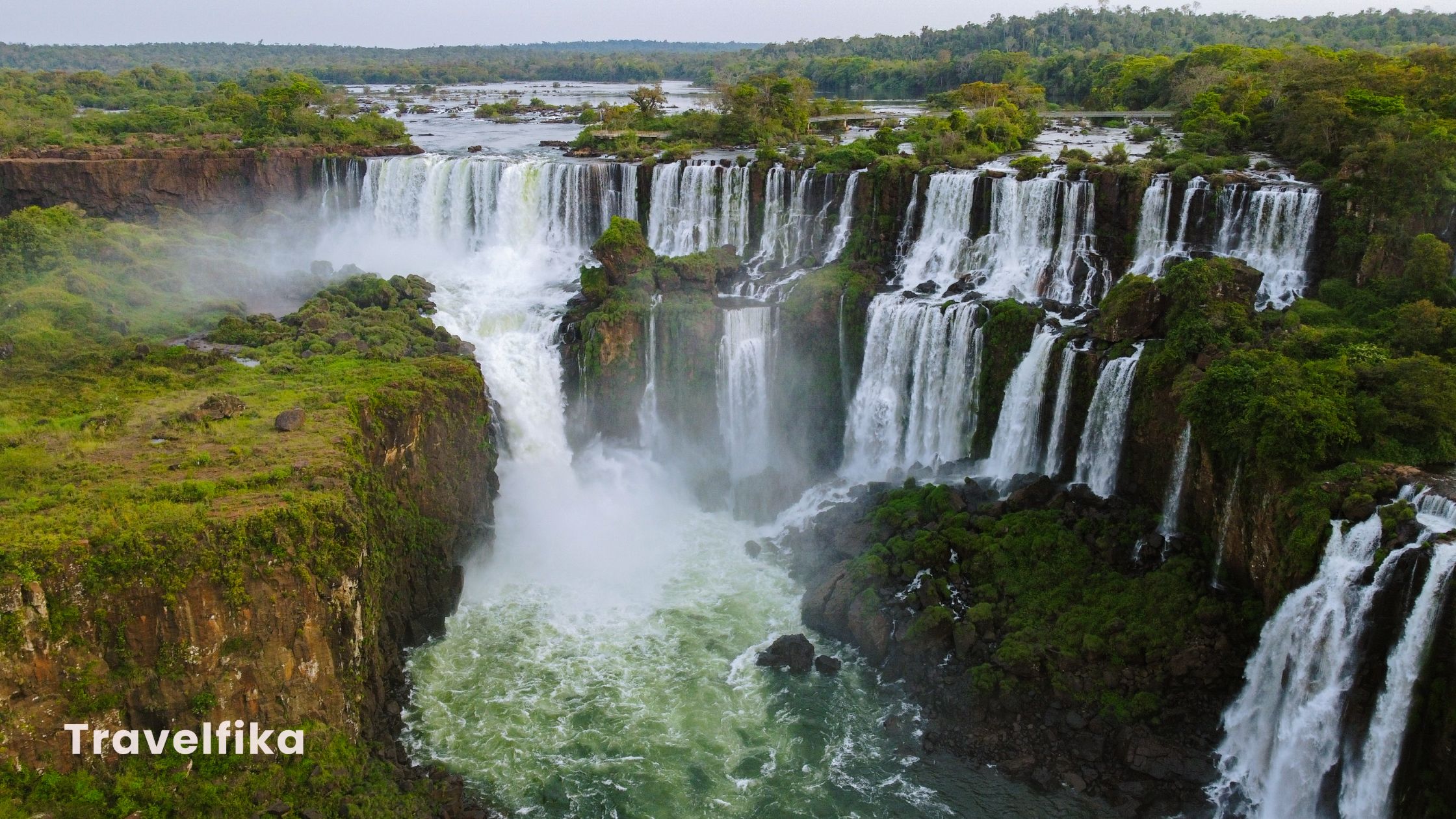
Argentina’s major landmarks represent a diverse tapestry of geological wonders, colonial history, and architectural brilliance, stretching from the subtropical border with Brazil to the rugged tips of Tierra del Fuego. Whether you are navigating the thunderous mists of Iguazú Falls or exploring the intricate acoustics of Buenos Aires’ Teatro Colón, these sites define the nation's identity.
To experience Argentina’s most iconic landmarks, travelers typically focus on three primary zones: the urban grandeur of Buenos Aires, the glacial landscapes of Patagonia, and the high-altitude deserts of the Northwest. Visiting these sites in 2026 requires strategic planning regarding internal flights, seasonal weather shifts, and updated entry permits for protected national parks.
The Northern Giants: Water and Earth
The northern regions of Argentina house some of the most visually arresting natural landmarks in South America. These sites are characterized by extreme climates—from the humid rainforests of Misiones to the arid, multi-colored canyons of Jujuy.
Iguazú Falls (Cataratas del Iguazú)
Located in the Misiones province, Iguazú Falls is arguably Argentina’s most famous landmark. Comprising 275 individual drops, it is wider than Victoria Falls and taller than Niagara. The centerpiece is the Garganta del Diablo (Devil’s Throat), a U-shaped chasm where roughly half of the river's flow plunges into a dense mist.
In 2026, the park infrastructure continues to prioritize sustainability and accessibility. The Upper and Lower Circuits provide distinct perspectives: the Upper Circuit offers panoramic views from above the falls, while the Lower Circuit brings visitors close to the base of the crashing water. Travelers should allocate at least two full days here—one for the Argentine side and another for the Brazilian side—to fully appreciate the scale of the UNESCO World Heritage site.
Quebrada de Humahuaca and the Hill of Seven Colors
In the northwestern province of Jujuy, the Quebrada de Humahuaca is a narrow mountain valley that has served as a major cultural crossroads for over 10,000 years. The most recognizable landmark here is the Cerro de los Siete Colores (Hill of Seven Colors) in the village of Purmamarca.
The hill’s distinct layers are the result of complex geological processes involving marine, lacustrine, and river sediments over the last 600 million years. To see the colors at their most vibrant, it is essential to view the hill during the first light of dawn. Beyond the aesthetics, the region is a bastion of Andean culture, where traditional music, indigenous languages, and ancient agricultural techniques remain part of daily life.
The Architectural and Cultural Heart of Buenos Aires
As the capital city, Buenos Aires serves as the gateway to the country and contains landmarks that reflect Argentina's "Golden Age" of the late 19th and early 20th centuries.
The Obelisk (El Obelisco)
Standing at the intersection of Avenida 9 de Julio and Avenida Corrientes, the Obelisk is the definitive symbol of Buenos Aires. Erected in 1936 to commemorate the 400th anniversary of the city's first founding, it occupies the spot where the Argentine flag was first flown in the city. While visitors cannot climb to the top, it serves as the primary meeting point for celebrations, protests, and cultural events. Its location on the world's widest avenue makes it an essential stop for understanding the city's massive scale.
Teatro Colón
Consistently ranked as one of the top five opera houses in the world for its acoustics, Teatro Colón is a masterpiece of eclectic architecture. The current building, opened in 1908, features Italian Marble, French stained glass, and a massive chandelier with 700 bulbs.
Guided tours are available daily in 2026, providing insights into the "Golden Room" and the intricate stagecraft required for world-class ballet and opera. For those interested in the technical side of culture, the theater’s underground workshops—where all costumes and scenery are produced—are occasionally open for specialized tours.
Recoleta Cemetery (Cementerio de la Recoleta)
While it may seem somber, Recoleta Cemetery is a premier landmark for art and history. It is a "city of the dead" featuring over 6,400 statues, sarcophagi, and marble tombs designed in styles ranging from Art Deco to Neo-Gothic. The most visited site is the tomb of Eva Perón (Evita), which remains a place of pilgrimage for many. The cemetery provides a concentrated look at the families who shaped Argentine history, with many tombs designated as National Historical Monuments.
Patagonian Wonders: Glaciers and Peaks
Southern Argentina, or Patagonia, contains landmarks defined by ice, wind, and vertical granite. These sites are the primary draw for adventure travelers and nature photographers.
Perito Moreno Glacier
Located within Los Glaciares National Park near El Calafate, the Perito Moreno Glacier is one of the few glaciers in the world that is currently in a state of equilibrium (neither retreating nor significantly advancing). It covers approximately 250 square kilometers and is famous for its "rupture" events, where the ice forms a natural dam across Lake Argentino until the water pressure causes a spectacular collapse.
Visitors in 2026 can choose between viewing the glacier from an extensive network of steel catwalks or participating in "Minitrekking" tours that allow for walking directly on the ice using crampons. The sheer wall of blue ice, rising 74 meters above the water line, makes it a rare accessible spectacle of the cryosphere.
Mount Fitz Roy (Chaltén)
For hikers, the jagged skyline of Mount Fitz Roy (also known as Cerro Chaltén) is the ultimate landmark. Located near the village of El Chaltén—Argentina’s trekking capital—the mountain is notoriously difficult to climb but highly accessible to view. The trek to Laguna de los Tres provides the classic postcard view of the granite peaks reflecting in a glacial pool. Because the weather in Patagonia is notoriously fickle, travelers are advised to spend at least three to four days in the area to ensure a clear view of the summit.
Historical and Archaeological Sites
Argentina’s landmarks are not limited to nature and modern cities; they also include significant archaeological and colonial sites that predate the modern republic.
Cueva de las Manos (Cave of the Hands)
Located in the Río Pinturas canyon in Santa Cruz province, this UNESCO site contains rock art dating back 9,000 to 13,000 years. The landmark is famous for the stenciled outlines of human hands, created by ancient hunter-gatherers using mineral pigments. The site also features depictions of guanacos (a relative of the llama) and hunting scenes. Its remote location requires a dedicated journey, but it offers a profound connection to the earliest inhabitants of South America.
The Jesuit Block and Estancias of Córdoba
In the heart of Córdoba, Argentina’s second-largest city, lies the Manzana Jesuítica (Jesuit Block). This landmark includes the University of Córdoba (one of the oldest in the Americas), the Church of the Society of Jesus, and the Monserrat College. These buildings, along with five agricultural estates (estancias) in the surrounding countryside, represent the religious, social, and economic experiment conducted by the Jesuits in the 17th and 18th centuries. They are impeccably preserved examples of Spanish colonial architecture blended with indigenous labor and influence.
Comparison of Major Argentine Landmarks
The following table provides a logistical overview of the primary landmarks to help travelers prioritize their itinerary based on the 2026 travel landscape.
| Landmark | Location | Primary Interest | Best Time to Visit | Accessibility |
|---|---|---|---|---|
| Iguazú Falls | Misiones (NE) | Nature / Waterfalls | Mar–May / Sep–Nov | High (Paved paths) |
| Perito Moreno | Santa Cruz (S) | Glaciology | Nov–March | High (Catwalks) |
| Teatro Colón | Buenos Aires | Arts / Architecture | Year-round | High (City center) |
| Fitz Roy | El Chaltén (S) | Trekking / Scenery | Dec–Feb | Moderate (Hiking required) |
| Quebrada de Humahuaca | Jujuy (NW) | Culture / Geology | April–June / Aug–Oct | Moderate (Altitude) |
| Cueva de las Manos | Santa Cruz (S) | Archaeology | Nov–March | Low (Remote/Gravel) |
| Talampaya Canyon | La Rioja (W) | Paleontology | May–September | Moderate (Guided 4x4) |
Logistical Considerations for 2026
Traveling between these landmarks requires an understanding of Argentina’s unique geography. The distance between Iguazú Falls in the north and the Perito Moreno Glacier in the south is roughly 3,500 kilometers (approx. 2,175 miles).
- Air Travel: Most travelers rely on Aerolíneas Argentinas or low-cost carriers like FlyBondi and JetSmart. In 2026, many "transversal" flights (connecting regions without stopping in Buenos Aires) have expanded, allowing for easier travel between Salta (Northwest) and El Calafate (Patagonia).
- Park Fees: Almost all major natural landmarks are located within National Parks (Parques Nacionales). As of 2026, entrance fees for non-residents are typically paid in Argentine Pesos at the gate or via the official APN (Administración de Parques Nacionales) website. Digital QR tickets are now the standard for entry.
- Currency and Payments: Argentina’s economy remains complex. While credit cards (Visa/Mastercard) are widely accepted and usually provide a favorable exchange rate (the MEP rate), carrying some physical cash is necessary for remote landmarks like Cueva de las Manos or smaller villages in Jujuy.
- Altitude Awareness: Landmarks in the Northwest (Jujuy and Salta) often exceed 3,000 meters above sea level. Travelers should acclimatize in Salta or Purmamarca before heading to higher points like the Salinas Grandes (Salt Flats).
Frequently Asked Questions
Which landmark is the best to visit if I only have one week?
If you have limited time, the most efficient combination is Buenos Aires and Iguazú Falls. There are multiple daily flights between the two, and you can see the primary urban highlights and the falls comfortably within 6-7 days. Patagonia generally requires a minimum of 5-7 days on its own due to travel time and weather variability.
Are the landmarks accessible for travelers with mobility issues?
Argentina has made significant strides in accessibility. Iguazú Falls features a "Rainforest Train" and flat, wheelchair-accessible catwalks to the Devil’s Throat. Similarly, the Perito Moreno Glacier has an elevator and specific paths designed for those with reduced mobility. However, mountain landmarks like Fitz Roy or the remote Cueva de las Manos remain challenging and require significant physical exertion.
When is the peak tourist season for these sites?
The peak season aligns with the Southern Hemisphere summer (January and February) and the winter holidays (July). During these months, landmarks like Perito Moreno and Iguazú Falls can be very crowded, and prices for accommodation are at their highest. For the best balance of weather and crowds, "shoulder seasons" (October–November and March–April) are highly recommended.
Do I need a visa to see these landmarks in 2026?
Visa requirements depend on your nationality. As of 2026, citizens of the US, Canada, UK, and most EU countries do not require a visa for stays under 90 days. However, you should always check the latest updates from the Argentine Ministry of Foreign Affairs or your local consulate, as reciprocity fees or electronic travel authorizations (ETA/AVE) can change.
Is it safe to visit these landmarks independently?
Yes, the major landmarks are well-traveled and generally safe. In cities like Buenos Aires, standard urban precautions apply (beware of pickpockets in crowded areas like Caminito). In National Parks, the primary risks are environmental—such as sudden weather changes in Patagonia. Always register your trekking plans with the local park ranger (Guardaparque) office.
Practical Next Actions
To begin planning your journey through Argentina’s landmarks, start by booking your internal flights at least three to four months in advance, especially for the El Calafate and Iguazú routes. Use the official Parques Nacionales portal to verify current entrance fees and operating hours, as these can change seasonally. For urban landmarks in Buenos Aires, such as Teatro Colón, check the performance schedule early to secure tickets for a show, which offers a much deeper experience than a standard guided tour.