The evolution of Apple computers spans five decades of hardware and software innovations, characterized by three major microarchitectural transitions: Motorola 68k to PowerPC (1994), PowerPC to Intel x86 (2006), and Intel to custom ARM-based Apple Silicon (2020). From Wozniak’s 1976 single-board Apple I to modern M-series Systems-on-Chip, Apple repeatedly redefined personal computing, graphical interfaces, industrial design, and system performance efficiency.
1. The Early Founding Era: Microcomputers and Early GUI (1976–1983)
Apple Computer, Inc. was founded in April 1976 by Steve Jobs, Steve Wozniak, and Ronald Wayne. The company’s earliest products laid the foundation for the personal computer industry by shifting microcomputing from an esoteric hobbyist endeavor into a commercial consumer appliance.
- 1976: Apple I (Board kit)
- 1977: Apple II (Expansion)
- 1980: Apple III (Business)
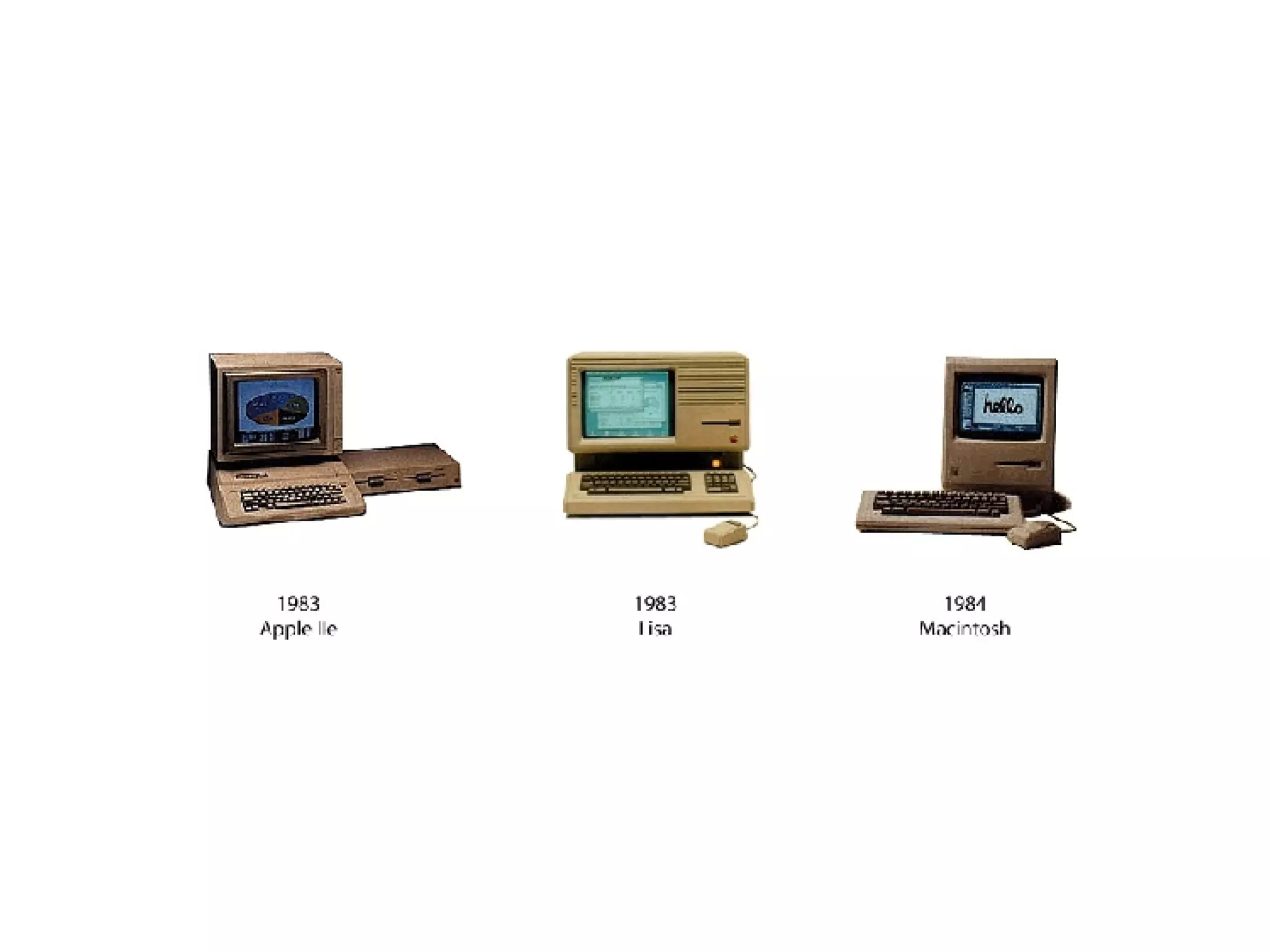
- 1983: Apple Lisa (First GUI)
The Apple I: Hand-Crafted Origins
Designed and hand-built by Steve Wozniak, the Apple I debuted in July 1976 at a sale price of $666.66. Sold primarily as an assembled circuit board, it required buyers to supply their own ASCII keyboard, power supply transformers, monitor, and enclosure. Powered by an 8-bit MOS Technology 6502 microprocessor running at 1.023 MHz with 4 KB of standard RAM (expandable to 8 KB or 48 KB via expansion cards), the Apple I utilized an integrated television terminal interface, eliminating the need for teletype printers common in earlier hobbyist kits like the Altair 8800.
The Apple II: The Commercial Breakthrough
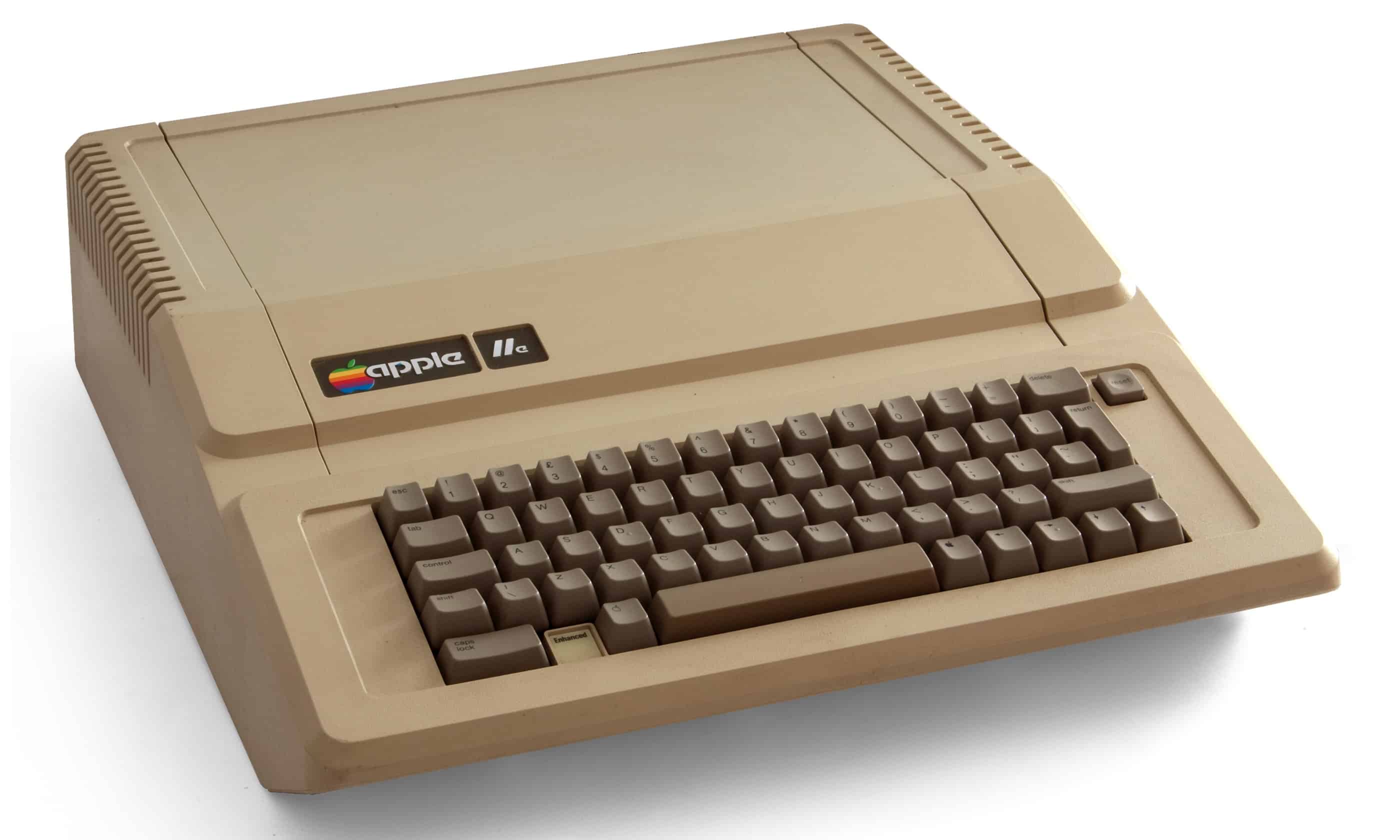
Released in June 1977, the Apple II transformed the personal computer market. Unlike its predecessor, the Apple II was packaged in an injection-molded plastic case with an integrated keyboard, power supply, and color graphics capability.
Key technical characteristics of the Apple II included:
- MOS 6502 CPU: Operating at 1.023 MHz.
- NTSC Color Display Output: Capable of displaying 4-color graphics at a resolution of 280x192 (or 16 colors at 40x48).
- Open Architecture: Eight internal expansion slots allowed third-party vendors to create custom interface cards, disk controllers, and memory expansions.
- Disk II Storage: Introduced in 1978, Wozniak's low-cost 5.25-inch floppy disk drive controller drastically improved data transfer rates and reliability over cassette tape storage.
The introduction of VisiCalc in 1979—the world’s first computer spreadsheet program—turned the Apple II into a business computing standard, driving hundreds of thousands of hardware sales across small businesses and academic institutions.
Apple III and the Lisa: Lessons in Design and Innovation
Following the massive success of the Apple II, Apple attempted to capture the enterprise corporate computing market with the Apple III (1980). However, thermal management flaws—caused by Jobs’ decision to omit a cooling fan to keep the machine silent—led to chip overheating and widespread component failures.
Concurrently, Apple shifted developmental resources toward graphical interfaces. Inspired by work seen during visits to Xerox PARC (Palo Alto Research Center), Apple developed the Apple Lisa (1983). The Lisa was one of the first commercial personal computers to feature a Graphical User Interface (GUI), bitmapped display, desktop paradigm, soft drop-down menus, and a desktop mouse peripheral. Operating on a 16/32-bit Motorola 68000 processor at 5 MHz with 1 MB of RAM, the Lisa was technically advanced but commercially restricted by its $9,995 launching price (equivalent to over $30,000 in modern inflation-adjusted terms).
2. The Macintosh Revolution: Graphical Interface for the Masses (1984–1993)
Recognizing the price limitation of the Lisa, Apple concentrated on creating a streamlined, lower-cost consumer GUI machine: the Macintosh.
- Macintosh 128K (1984)
- Motorola 68000 CPU
- System 1 (GUI)
- Macintosh II (1987)
- Color (QuickDraw)
- NuBus Expansion
- PowerBook 100 (1991)
- Trackball & Palmrest
- Modern Laptop Layout
The Macintosh 128K
Unveiled on January 24, 1984, during Super Bowl XVIII, the original Macintosh featured a compact, all-in-one enclosure housing a 9-inch monochrome monitor displaying crisp 512x342 bitmapped graphics.
- Processor: Motorola 68000 executing at 7.8336 MHz.
- Memory Constraints: 128 KB of RAM soldered directly to the logic board (which rapidly proved insufficient, prompting the quick release of the Macintosh 512K).
- Media Drive: 3.5-inch 400 KB micro-floppy disk drive engineered by Sony.
- Operating System: System 1, which introduced the Finder, menu bars, windows, trash bin icons, and overlapping window geometry supported by internal ROM routines known as the QuickDraw library.
The Macintosh enabled the birth of desktop publishing (DTP) when combined with the Apple LaserWriter (1985) and Adobe PageMaker, leveraging Adobe’s PostScript page-description language.
Expansion and Modernization: Mac II and Mac SE
By 1987, Apple addressed criticisms regarding the original Macintosh’s lack of internal expandability. The Macintosh SE added an internal SCSI hard drive bay and an expansion slot (Direct Slot). Simultaneously, the Macintosh II abandoned the all-in-one form factor for a modular desktop chassis. Built on a 32-bit Motorola 68020 CPU running at 16 MHz, the Mac II added native support for 24-bit color displays via color QuickDraw, multiple monitors, and six NuBus expansion slots.
Mobile Computing Pioneer: Macintosh Portable to PowerBook
Apple introduced the Macintosh Portable in 1989, featuring an active-matrix LCD panel and a lead-acid battery system. However, its 15.8-pound weight limited portability.
In October 1991, Apple redesigned its mobile platform, releasing the PowerBook 100, 140, and 170. Designed in partnership with Sony for assembly efficiency, the PowerBook series set the ergonomic layout standard for all modern laptops:
- Pushing the keyboard toward the screen hinge.
- Incorporating integrated palm rests.
- Placing a trackball centrally in front of the keyboard for ambidextrous pointing.
3. Transition #1: The PowerPC Era and NeXT Acquisition (1994–2005)
By the early 1990s, Motorola’s classic 680x0 Complex Instruction Set Computer (CISC) microprocessor architecture faced clock speed scaling limits compared to emerging Reduced Instruction Set Computer (RISC) architectures.
The PowerPC Transition (1994)
- Motorola 68040 (CISC)
- 68K Emulator
- PowerPC 601 (RISC)
- Key Technology: Dynamic microcode translation enabled back-compatibility
The AIM Alliance and PowerPC
To compete against Intel’s dominant x86 processor family used in MS-DOS and Windows PCs, Apple partnered with IBM and Motorola in 1991 to form the AIM Alliance. The partnership created the PowerPC processor family based on IBM’s POWER RISC architecture.
In March 1994, Apple launched the Power Macintosh 6100, 7100, and 8100, powered by the PowerPC 601 CPU operating at initial clock speeds of 60 MHz to 80 MHz. To preserve application compatibility, Apple implemented an extremely efficient 68k emulator directly into the Macintosh System Software (System 7.1.2), allowing legacy applications to run transparently on the new RISC hardware while native PowerPC software achieved dramatic speed gains.
Operating System Crisis and NeXTSTEP Acquisition
Throughout the mid-1990s, Apple’s proprietary operating system (System 7) lagged behind modern software engineering requirements. It lacked true preemptive multitasking, protected memory, and robust multi-threading capabilities, leading to frequent system crashes. Internal projects aimed at rewriting the operating system (such as Copland) failed to deliver a viable system.
In December 1996, Apple bought NeXT Computer for $429 million, acquiring its Unix-based NeXTSTEP operating system and bringing Steve Jobs back to Apple. NeXTSTEP’s Mach kernel, BSD subsystem, Object-Oriented application frameworks (Cocoa), and Display PostScript engine became the structural foundation for Mac OS X (launched commercially in 2001).
NeXTSTEP Architecture (1996) to Mac OS X / macOS (2001+)
- Cocoa / AppKit Frameworks to Aqua User Interface / Cocoa API
- Display PostScript Graphics to Quartz (PDF) Graphics Engine
- Mach Kernel + BSD Core Subsystem to XNU Kernel (Mach + BSD Unix)
| Category | Consumer | Professional |
|---|---|---|
| Desktop | iMac G3 | Power Mac G3 |
| Portable | iBook G3 | PowerBook G3 |
- iMac G3 (1998): Featuring a translucent "Bondi Blue" enclosure, built-in 15-inch CRT screen, and PowerPC G3 processor. The iMac G3 boldly dropped legacy legacy hardware standard connections—such as ADB ports, SCSI interfaces, and 3.5-inch floppy disk drives—in favor of universal adoption of USB ports and integrated 10/100 Ethernet.
- Power Mac G4 / G5 (1999–2003): Introduced high-performance vector processing via the Velocity Engine (AltiVec). The 2003 Power Mac G5 debuted a custom anodized aluminum enclosure with a dual-processor 64-bit architecture, requiring advanced internal thermal management and liquid cooling systems in high-end configurations.
- PowerBook G4 (2001–2003): Shifted mobile industrial design away from dark plastics toward titanium and anodized aluminum enclosures, introducing widescreen displays and backlit keyboards.
4. Transition #2: The Intel Switch (2006–2019)
Despite the compute capabilities of the PowerPC G5, IBM struggled to scale the processor’s microarchitecture to low-power envelope specifications required for laptop form factors without generating excessive heat and high battery drain.
The Intel Transition (2006)
- PowerPC G4 / G5 (RISC)
- Rosetta Translator
- Intel x86 (CISC)
- Key Advantage: Massive performance-per-watt efficiency gains for laptops
The x86 Architecture Shift
At WWDC 2005, Steve Jobs announced that Apple would transition its entire personal computer line from PowerPC to Intel x86 processors. Apple revealed that every release of Mac OS X had been secretly compiled for Intel x86 chips alongside PowerPC builds since the operating system's inception.
Beginning in early 2006—ahead of its original projected schedule—Apple released:
- iMac (Early 2006): Featuring Intel Core Duo processors.
- MacBook Pro (2006): Replacing the PowerBook branding, delivering up to 4x the performance speed of the PowerBook G4.
- Rosetta Translation Layer: A transparent dynamic translation software component in Mac OS X Tiger that allowed legacy PowerPC binaries to execute seamlessly on Intel x86 instruction sets without requiring manual user configuration.
Design Convergence, Unibody Aluminum, and Retina Displays
The Intel era allowed Apple to focus heavily on ultra-thin designs, mechanical engineering refinements, and visual clarity:
- Unibody Manufacturing Process (2008): Apple developed a precision machining technique where chassis structures were milled from a solid single block of aluminum, providing structural stiffness while reducing internal system thickness.
- MacBook Air (2008): Unveiled as the world's thinnest notebook computer, the original MacBook Air removed integrated optical disc drives (CD/DVD) and introduced non-removable solid-state drives (SSD) as standard storage across portable lineups in subsequent revisions.
- Retina Displays (2012): Starting with the 2012 MacBook Pro, Apple integrated high-density IPS displays (scaling up to 2880x1800 resolution), driving UI asset pixel density doubling so text and vector elements appeared pin-sharp.
- Modular Mac Pro Redesigns (2013, 2019): The 2013 Mac Pro ("Trash Can") prioritized a compact cylindrical unified thermal core, relying heavily on external Thunderbolt 2 ports for storage expansion. However, restricted internal thermal headroom made it difficult to upgrade internal dual GPUs. Apple addressed these workflow limitations in 2019 by returning to a functional, highly expandable tower layout featuring PCIe Gen 3 expansion slots and modular MPX GPU modules.
5. Transition #3: The Apple Silicon Era (2020–Present)
While Intel processors powered Mac platforms for over a decade, Intel's fabrication node delays (5nm/10nm processes) and thermal design power limitations eventually restricted performance gains and battery efficiency upgrades across Apple's mobile hardware portfolio.
The Apple Silicon Transition (2020+)
- Legacy Architecture: CPU to PCIe Bus to Discrete GPU + RAM
- Apple Silicon (SoC): Unified Memory Architecture (UMA) containing CPU Cores, GPU Cores, and Neural Engine
- Key Advantage: Zero-copy memory access, extreme thermal efficiency
Custom ARM Systems-on-Chip (SoC)
Building on a decade of experience designing in-house A-series processors for iPhone and iPad hardware, Apple announced its shift away from Intel x86 to custom ARM64-based Apple Silicon at WWDC 2020.
In November 2020, Apple launched the initial M1 chip, introduced in the MacBook Air, 13-inch MacBook Pro, and Mac mini. Rather than using discrete components connected via board traces across high-latency buses (CPU, Discrete Graphics Card, System RAM, I/O Controllers), Apple Silicon combined these separate functional units onto a single System-on-Chip (SoC) fabricated using advanced semiconductor sub-nanometer lithography node processes.
Key technical architectural features of Apple Silicon include:
- Unified Memory Architecture (UMA): High-bandwidth, low-latency RAM is integrated directly into the SoC substrate package. Both CPU, GPU, and Neural Engine access the same pool of unified memory simultaneously without needing to copy data back and forth across PCIe buses, drastically reducing processing latency.
- Heterogeneous Symmetric Multiprocessing (AMP): Combining High-Performance Cores (P-cores) for heavy compute workloads with High-Efficiency Cores (E-cores) for background task management, delivering high performance-per-watt ratings.
- Dedicated Hardware Accelerators: Integrated hardware-accelerated media engines designed for ProRes, H.264, and HEVC video encoding/decoding, alongside integrated Apple Neural Engine cores for hardware-accelerated machine learning operations.
- Rosetta 2 Translation: An updated dynamic binary translator that translates x86-64 instructions into ARM64 instructions during application installation or first execution, preserving seamless app compatibility for legacy Intel applications.
Scaled Compute: Pro, Max, Ultra, and Neural Compute
Following the foundational M1 chip, Apple scaled its microarchitecture into higher compute tier configurations:
- M-Series Base Chip
- M-Series Pro/Max (Wider Memory Bus)
- M-Series Ultra (UltraFusion Interconnect Packaging)
- Pro and Max Chips: Multiplied CPU/GPU core counts while scaling memory interface bus widths (up to 400 GB/s on Max variants).
- Ultra Chips: Connected two individual Max chips using a high-density, low-latency silicon interconnect bridge (UltraFusion), presenting double the core count and memory bandwidth to the operating system as a single unified logical chip.
- Generational Advancements: Iterations (M1 to M4 chip generations) integrated smaller transistor process nodes (3nm technology), hardware-accelerated ray tracing, mesh shading, and enhanced Neural Engines to process large language models and spatial computing workflows efficiently on-device.
6. Comprehensive Hardware Evolution Matrix
The table below outlines technical metrics, silicon architecture, operating system capabilities, and hardware standards across major structural eras of Apple personal computer design:
| Architectural Era | Representative Models | Core Processor Architecture | Memory & Bus Speeds | Primary Storage Media | Landmark OS Version | Major I/O Standards Introduced |
|---|---|---|---|---|---|---|
| 8-Bit Microcomputer (1976–1983) | Apple I, Apple II series, Apple III | MOS 6502 (8-bit CISC) @ ~1 MHz | 4 KB – 128 KB RAM; 1 MHz System Bus | Cassette Tape, 5.25-inch Floppy (Disk II) | Apple DOS / ProDOS | Integrated ASCII Keyboard, Expansion Slots, Composite Video |
| Early 68k Macintosh (1984–1993) | Macintosh 128K, Mac II, PowerBook 100 | Motorola 68000/68020/68030 (16/32-bit CISC) @ 8–33 MHz | 128 KB – 8 MB RAM; 8–16 MHz Bus | 3.5-inch Floppy, SCSI Hard Drives (20–80 MB) | System 1.0 to System 7 | ADB (Apple Desktop Bus), SCSI, Integrated Trackball |
| PowerPC RISC (1994–2005) | Power Mac 6100, iMac G3, Power Mac G5 | PowerPC 601/G3/G4/G5 (32/64-bit RISC) @ 60 MHz – 2.5 GHz | 16 MB – 8 GB RAM; Up to 1.25 GHz System Bus | IDE/ATA Hard Drives, Optical CD/DVD-ROM | Mac OS 7.1.2 to Mac OS X 10.4 (Tiger) | USB 1.1/2.0, FireWire 400/800, 100/1000 Ethernet |
| Intel x86 (2006–2019) | MacBook Pro, MacBook Air, Mac Pro (Tower/Trash Can) | Intel Core Duo, Core i5/i7/i9, Xeon (64-bit x86 CISC) @ 1.8 GHz – 4.4 GHz | 512 MB – 1.5 TB DDR2/DDR3/DDR4 RAM | SATA SSDs, PCIe NVMe SSDs (Up to 4 TB) | Mac OS X 10.4 (Intel) to macOS 10.15 (Catalina) | Thunderbolt 1/2/3, USB-C, Retina Display Scaling |
| Apple Silicon ARM (2020–Present) | MacBook Air (M-Series), Mac Studio, Mac Pro | Apple M1/M2/M3/M4 Series (64-bit ARM SoC) | 8 GB – 192 GB Unified Memory (UMA); Up to 800 GB/s Bus | High-Speed Integrated NVMe Flash (Up to 8 TB) | macOS 11 (Big Sur) to Current macOS | Thunderbolt 4 / USB4, Integrated Neural Engine, Wi-Fi 6E/7 |
7. Key Architectural & Technical Milestones
Across 50 years of personal computer design, Apple consistently pushed industrial engineering changes across multiple hardware modules:
1. Storage Standards Evolution
- Floppy Disks to SCSI (1978–1986): Apple shifted microcomputing away from magnetic audio cassette tapes to high-density 5.25-inch and 3.5-inch floppy disks, adopting high-speed external SCSI ports in 1986 for professional drive chaining.
- Optical Removal & Solid State Drive Transition (2008–2012): Apple led the computer industry in removing legacy spinning optical drives (CD-ROM/DVD SuperDrives). The company transitioned its entire notebook and desktop matrix to flash-based PCIe Solid-State Drives (SSDs) soldered or connected directly to internal board controllers, substantially accelerating boot and program loading speeds.
2. Display Technologies and Video Engine Pipelines
- Monochrome to Color QuickDraw (1984–1987): Early Macintosh displays utilized high-contrast black-and-white bitmapped arrays. The release of Color QuickDraw on the Mac II introduced system-level vector operations supporting 24-bit true color output.
- High-DPI Retina Displays (2012): Doubling physical horizontal and vertical pixel counts allowed vector interface elements to render smoothly, utilizing Quartz graphics rendering algorithms built deep into macOS.
- ProMotion & High Dynamic Range (HDR) (2021+): Integration of Mini-LED backlighting technology (Liquid Retina XDR) delivering over 1,000 nits of sustained brightness, accompanied by variable 120Hz dynamic refresh rates (ProMotion).
3. Peripheral Interconnects and Input Devices
- ADB to USB (1998): The original iMac eliminated proprietary Apple Desktop Bus (ADB) keyboard/mouse connectors and mini-DIN serial interfaces, driving universal industry adoption of the USB standard.
- FireWire to Thunderbolt (1999–2011): Apple co-developed FireWire (IEEE 1394) for high-speed digital video streams, later partnering with Intel to develop Thunderbolt technology, combining PCI Express protocol lanes and DisplayPort channels over standard high-speed interface cabling.
8. Frequently Asked Questions
What was the first official Apple computer ever made?
The first official computer built by Apple was the Apple I, designed and hand-soldered by Steve Wozniak in 1976. It was sold as a bare printed circuit board kit without a case, power supply, or keyboard, requiring users to assemble their own peripheral hardware.
Why did Apple switch from PowerPC to Intel processors in 2006?
Apple transitioned to Intel processors because PowerPC chips hit a "thermal wall." IBM and Motorola were unable to produce fast PowerPC G5 chips that ran cool enough for thin laptop designs, limiting portable performance gains. Intel’s x86 processor roadmap offered vastly superior performance-per-watt efficiency.
What is Apple Silicon, and how does it differ from traditional CPUs?
Apple Silicon refers to custom ARM-based Systems-on-Chip (SoC) designed directly by Apple. Unlike traditional PC architectures that place separate CPUs, discrete graphics cards, and system RAM module sockets across a motherboard, Apple Silicon integrates CPU cores, GPU cores, Neural Engine components, and Unified Memory onto a single piece of silicon. This delivers faster data access and lower power consumption.
What was Rosetta, and why were there two versions?
Rosetta is an operating system component that allows software written for older chip architectures to run on newer chip hardware. Rosetta 1 was launched in 2006 to dynamically translate legacy PowerPC software code for Intel x86 processors. Rosetta 2 was introduced in 2020 to translate x86 Intel software instruction sets into modern ARM64 instructions for Apple Silicon Macs.
How did the acquisition of NeXT save Apple in 1996?
By the mid-1990s, Apple’s original operating system (System 7) was outdated and prone to crashes due to its lack of preemptive multitasking and memory protection. Acquiring NeXT brought its Unix-based NeXTSTEP operating system to Apple. NeXTSTEP’s software core served as the system architectural foundation for Mac OS X, while also bringing Steve Jobs back to Apple.
Strategic Takeaways for Apple Hardware History
Understanding Apple’s computer evolution reveals a consistent underlying philosophy: Apple optimizes hardware and software integration by controlling the vertical computing stack.
Whenever an existing silicon architecture or technical constraint limits overall system performance or form-factor design—such as the thermal limits of the Motorola 68k, PowerPC, or Intel x86 processors—Apple executes architectural platform transitions to maintain software performance leadership.
For developers, historians, and buyers evaluating computing platforms, Apple's evolution demonstrates that long-term system performance is driven less by raw processor clock rates and more by cohesive hardware architecture, silicon efficiency, unified memory structures, and custom software integration.