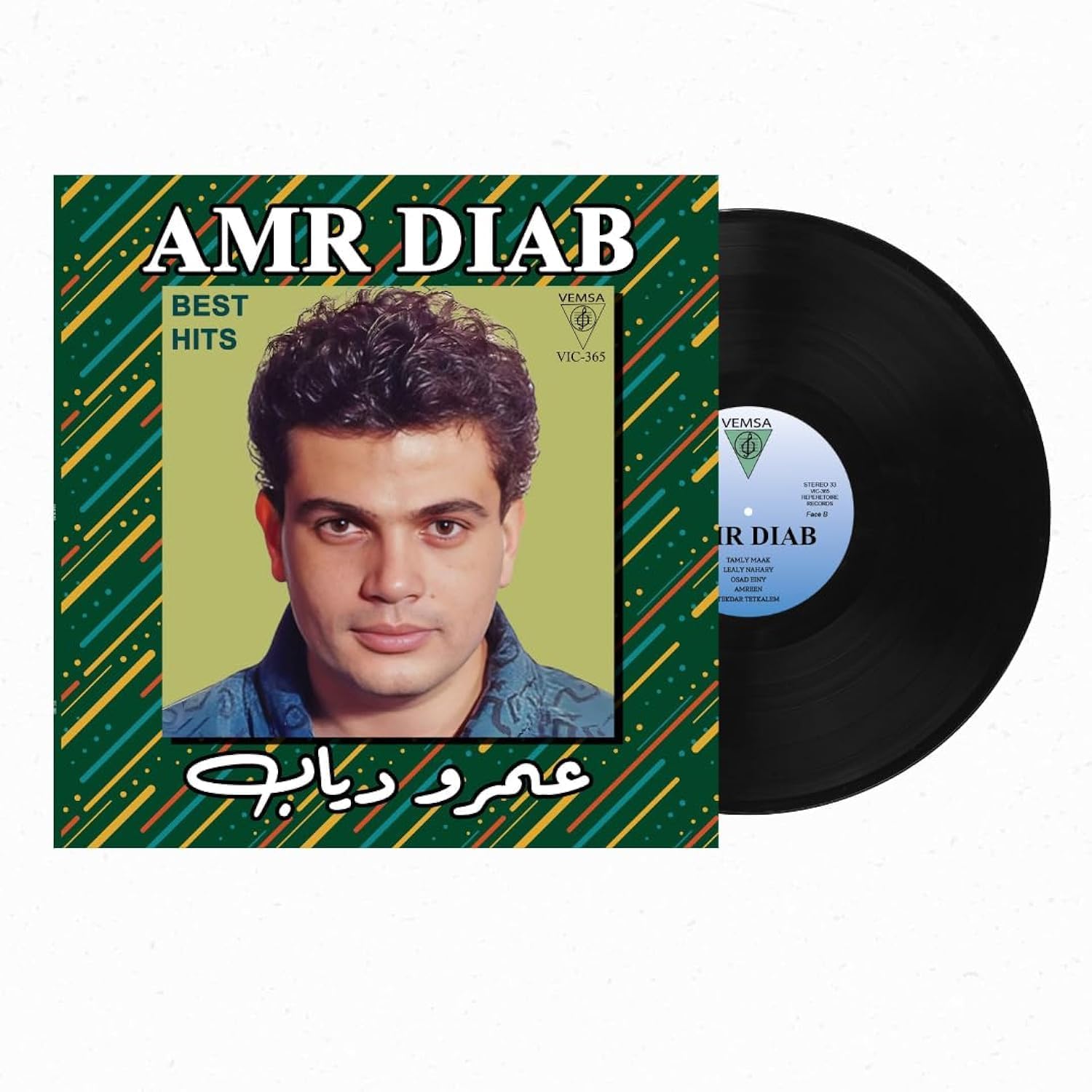
Amr Diab holds official Guinness World Records for the most World Music Awards for Best Selling Middle Eastern Artist and for being the first Arab artist to set a Guinness World Record for the most World Music Awards wins, cementing his status as a defining pioneer of Mediterranean music.
Introduction to Amr Diab's Global Musical Phenomenon
The trajectory of modern Arabic pop music is inextricably linked to the career of Egyptian singer, songwriter, and composer Amr Diab. Often referred to by fans and the media as the "Father of Mediterranean Music," Diab has spent more than four decades reshaping the sonic landscape of the Middle East and North Africa (MENA). His innovative approach to production seamlessly blends traditional Arabic modalities with Western pop arrangements, electronic beats, and Spanish instrumentation, creating a distinct style known internationally as Mediterranean music.
While his commercial success is reflected in multi-platinum album sales, sold-out stadium concerts from Cairo to Los Angeles, and a massive digital footprint, his legacy is also validated by formal international recognition. Chief among these honors are his official recognitions by the Guinness World Records. These milestones are not merely vanity metrics; they represent verifiable markers of a sustained career that bridged regional cassette-era markets with the modern era of global music streaming. Understanding these achievements requires examining the institutional awards he won, the specific categories in which he set global standards, and the structural impact he made on the international music industry.
The Historical Context of Arab Music on the Global Stage
Before examining Amr Diab’s specific record-breaking milestones, it is essential to understand the historical context of Arab music consumption on a global scale. For decades, Arabic-language music was predominantly consumed within the MENA region and the broader Arab diaspora. Distribution channels were localized, and international charts rarely featured artists recording in Arabic.
During the late 1980s and 1990s, however, the globalization of media and the advent of satellite television began to dismantle these geographic barriers. Amr Diab emerged as a central figure in this shift. His 1996 breakthrough album, Tamally Maak and its title track, along with earlier hits like Nour El Ain (1996), achieved unprecedented cross-border popularity. Nour El Ain, in particular, became an international club anthem, played in European and American venues, and demonstrated that Arabic pop could achieve commercial crossover appeal without losing its cultural identity.
This internationalization caught the attention of global music bodies, most notably the World Music Awards (WMA). Established in 1989 and based in Monte Carlo, Monaco, the World Music Awards recognized recording artists based on worldwide sales figures provided by the International Federation of the Phonographic Industry (IFPI). For an artist recording primarily in Arabic to compete on this global stage required a massive shift in distribution, copyright enforcement, and market visibility.
Breakdown of Amr Diab’s Guinness World Record Achievements
Amr Diab’s entry into the record books is closely tied to his dominance at the World Music Awards. His sustained commercial output throughout the 1990s, 2000s, and 2010s translated into a frequency of international awards that caught the attention of record authorities.
The Most World Music Awards for Best Selling Middle Eastern Artist
The core of Diab’s Guinness World Record recognition rests on his consecutive and cumulative victories at the World Music Awards. He has secured the award for Best Selling Middle Eastern Artist multiple times—a testament to physical album sales that routinely surpassed regional benchmarks.
| Award Category | Recipient | Key Milestones & Context | Verification Source |
|---|---|---|---|
| Best Selling Middle Eastern Artist | Amr Diab | Multiple WMA wins across decades | Guinness World Records / World Music Awards |
| First Arab Artist for Most WMA Wins | Amr Diab | Set benchmark for MENA region global sales | Guinness World Records |
| Longest-Reigning Arab Pop Star | Amr Diab | Continuous chart dominance from 1980s to present | IFPI / Regional Charts |
These victories reflected verified commercial sales data certified by international music industry bodies. Unlike regional charts that relied on local radio airplay, the World Music Awards required audited physical distribution numbers, establishing Diab's sales as a verifiable economic phenomenon.
Expanding the Definition of Regional Crossover Success
Setting a world record as an Arab artist in a Western-dominated award ecosystem carried significant symbolic weight. It proved that linguistic and cultural barriers in global pop music could be transcended through high-production values and persistent touring. Diab's success forced international labels and global music platforms to acknowledge the economic viability of the MENA music market, paving the way for subsequent generations of Arab artists to secure global distribution and streaming visibility.
Musical Innovations That Powered His Record-Breaking Run
Records are rarely broken by accident; they are the result of sustained artistic evolution and strategic market adaptation. Amr Diab's ability to maintain the commercial momentum required to continually win global sales awards can be attributed to several core musical and production choices.
The Birth of Mediterranean Music
Diab is widely credited with pioneering the "Mediterranean" genre in Arabic pop. By integrating Spanish guitars, accordion melodies, and Latin percussion into traditional Egyptian quarter-tone scales, he created a sound that felt simultaneously familiar to Arab listeners and accessible to European and Latin American audiences. Tracks like Nour El Ain utilized a flamenco-inflected rhythm that resonated immediately in Mediterranean European countries like Greece, Spain, and France, leading to numerous international cover versions and remixes.
Production Quality and Modern Arrangements
Throughout his career, Diab worked closely with top-tier Egyptian and international arrangers—such as Hamid El Shari, Fathy Salama, and Adel Hakki—to elevate the production standards of Arab pop. While early 1980s Egyptian music often relied on large, traditional orchestras playing in unison, Diab embraced synthesizers, programmed drum machines, and sophisticated digital mixing early on. This technical polish ensured that his tracks could compete sonically with Western pop releases on international radio stations and compilation albums.
Comparative Overview of Milestones and Industry Impact
To fully appreciate the scale of Diab's achievements, it is helpful to look at how his career trajectory compares to standard pop industry metrics and regional norms.
- Longevity: While many pop acts experience a commercial peak lasting five to ten years, Diab maintained chart-topping status across four distinct decades (1980s, 1990s, 2000s, 2010s, and into the 2020s).
- Independence and Control: Diab frequently maintained creative and financial control over his production and distribution through his own label, Nay for Media, allowing him to navigate shifting industry paradigms from physical cassettes to digital streaming with agility.
- Live Performance Draw: His record achievements are mirrored by his live capacities, regularly drawing hundreds of thousands of attendees across the Middle East, Europe, and North America.
Common Misconceptions Regarding Global Music Records
When discussing global records and regional music icons, several misconceptions often arise in public discourse and media reporting. Clarifying these points ensures an accurate understanding of Diab's achievements.
- Misconception: Records are based purely on streaming numbers.
- Fact: Diab’s primary Guinness World Records and major international accolades were built primarily on physical album sales (cassettes and CDs) certified during the peak era of the World Music Awards, long before the dominance of Spotify and Anghami.
- Misconception: He was the first Arab artist to sing in English.
- Fact: While Diab occasionally incorporated English phrases or released bilingual tracks, his record-breaking status is based entirely on his Arabic-language commercial sales volume, proving that an artist does not need to abandon their native language to achieve global recognition.
Frequently Asked Questions
What specific Guinness World Records does Amr Diab hold?
Amr Diab holds official Guinness World Records recognizing him as the first Arab artist to receive the highest number of World Music Awards for Best Selling Middle Eastern Artist, reflecting his unprecedented global sales volume.
How many World Music Awards has Amr Diab won?
Amr Diab has won multiple World Music Awards throughout his career, securing victories in 1998 for Nour El Ain, 2002 for Emelo, 2007 for El Leila Di, and 2014 in multiple categories including Best Egyptian Artist, Best Male Arab Artist, and World's Best Arab Male Act.
What was Amr Diab’s breakthrough international hit?
The single Nour El Ain (1996) is widely considered his major international breakthrough. Its fusion of Mediterranean and Arabic elements propelled it onto global charts and into European club scenes.
Are Amr Diab’s sales figures officially verified?
Yes. The sales figures that qualified him for international awards and subsequent record recognitions were audited and certified by the International Federation of the Phonographic Industry (IFPI) and the organizing bodies of the World Music Awards.
How has Amr Diab adapted to the modern streaming era?
Diab transitioned successfully from physical cassette and CD distribution to digital streaming platforms. He releases music independently through his own label, continues to break regional streaming records on platforms like Anghami and Spotify, and maintains massive stadium tour schedules.
Conclusion and Next Actions
Amr Diab’s world record achievements are the quantitative reflection of a career defined by musical innovation, commercial persistence, and cultural bridge-building. By elevating the production standards of Arabic pop and pioneering a globally accessible Mediterranean sound, he transformed regional success into international recognition. For researchers, music historians, and fans examining his legacy, studying his certified sales milestones, award histories, and production choices offers a clear masterclass in sustainable global artistry. To explore his impact further, examine certified IFPI sales reports from the 1990s or listen to the stylistic evolution from his 1983 debut album Ya Tareeq through his modern digital releases.