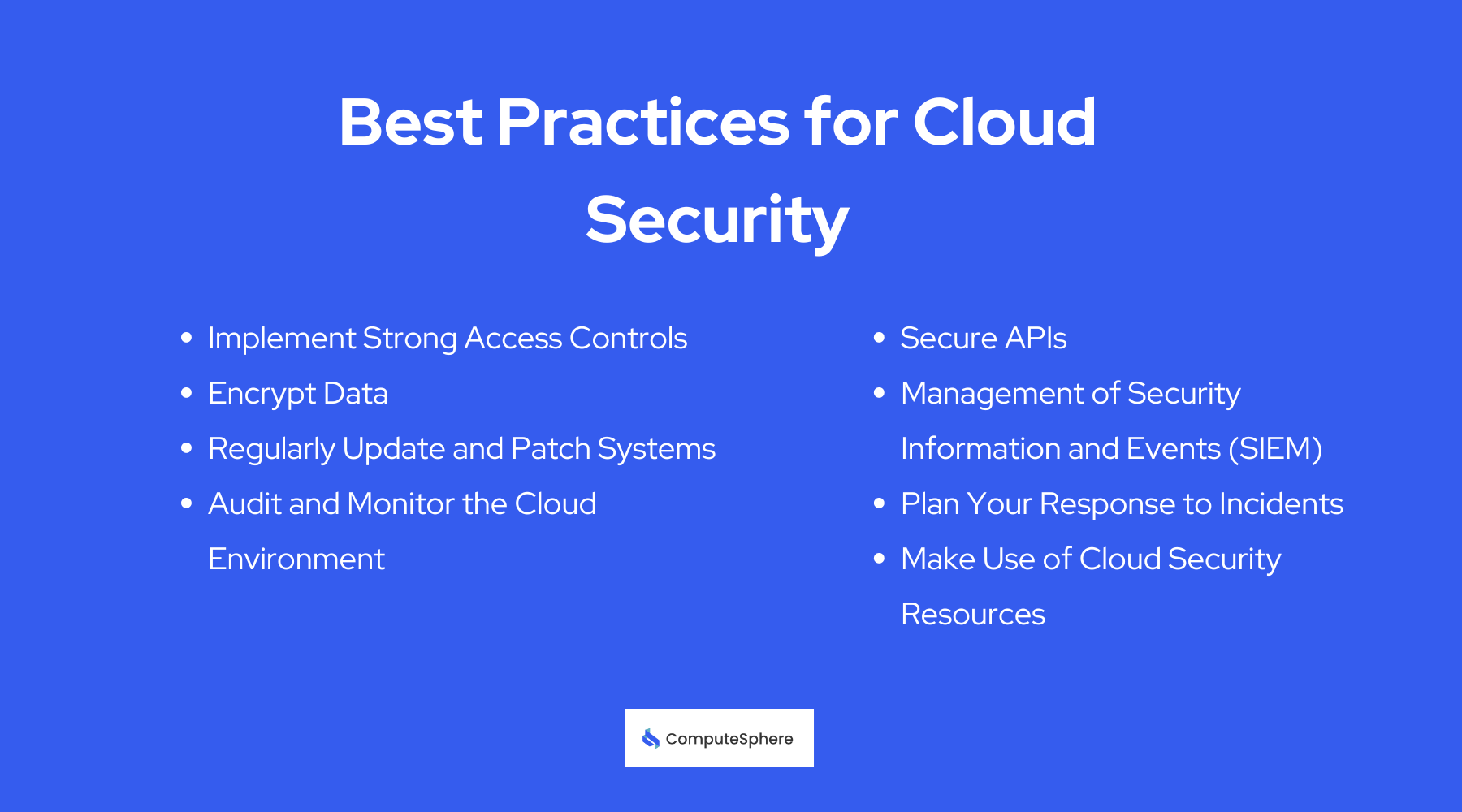
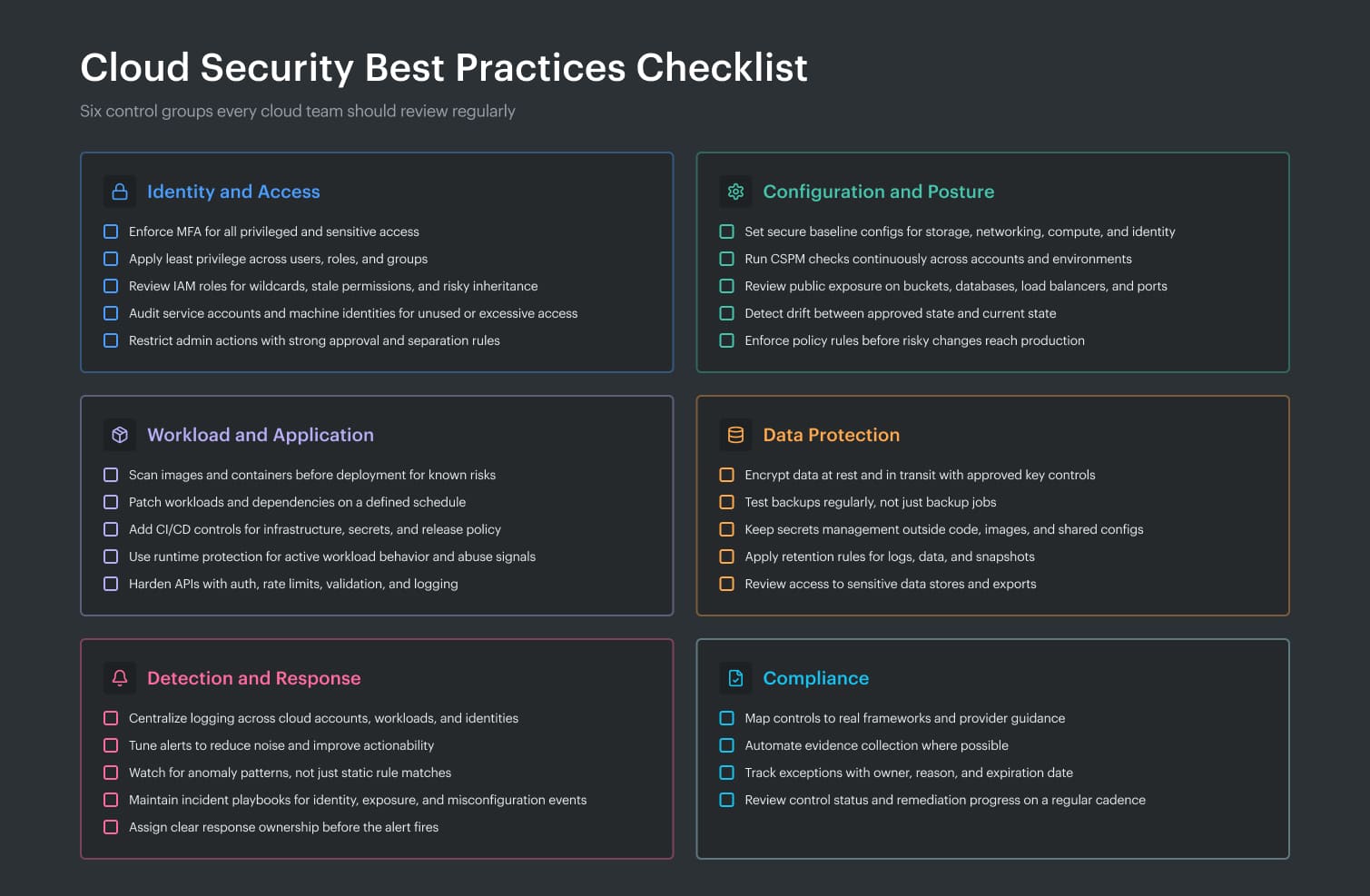
Applying best practices for application and cloud security requires integrating security throughout the entire software development lifecycle (SDLC) and cloud infrastructure management. By shifting security "left" into development, enforcing Zero Trust principles, automating identity management, and utilizing continuous monitoring tools like CSPM and CWPP, organizations can effectively mitigate risks in increasingly complex, AI-driven environments.
The Convergence of Application and Cloud Security
In 2026, the distinction between application security (AppSec) and cloud security (CloudSec) has largely evaporated. As organizations rely almost exclusively on cloud-native architectures—including serverless functions, microservices, and containerized deployments—the application and the infrastructure it inhabits are functionally inseparable. Securing this environment demands a holistic approach often referred to as DevSecOps, where security is treated as code and integrated into the delivery pipeline rather than being an afterthought.
The threat landscape of 2026 is characterized by sophisticated AI-automated attacks and complex supply chain vulnerabilities. Traditional perimeter-based defenses are no longer sufficient. Modern best practices focus on protecting data at the granular level, regardless of where the code resides or how it is accessed. To succeed, technical leaders must balance the speed of continuous integration and continuous deployment (CI/CD) with rigorous, automated security guardrails.
Shifting Left: Integrating Security into the Development Lifecycle
The most fundamental best practice in 2026 remains "shifting left." This means moving security testing and consideration to the earliest possible stages of the development process. When developers address vulnerabilities during the coding phase, the cost of remediation is significantly lower than fixing a breach in production.
Static and Dynamic Analysis (SAST and DAST)
Static Application Security Testing (SAST) involves scanning source code for patterns that indicate vulnerabilities before the code is even compiled. In 2026, modern SAST tools leverage machine learning to reduce false positives, which previously plagued development teams. Dynamic Application Security Testing (DAST) complements this by testing the application in its running state, identifying issues like cross-site scripting (XSS) and injection flaws that only appear during execution.
Software Composition Analysis (SCA) and SBOMs
Most modern applications are built using 70-90% open-source components. Software Composition Analysis (SCA) is essential for identifying known vulnerabilities in third-party libraries. A critical requirement in 2026 is the maintenance of a Software Bill of Materials (SBOM). An SBOM acts as a comprehensive "ingredient list" for software, allowing organizations to respond instantly when a new vulnerability (like a zero-day in a common library) is disclosed.
Implementing Zero Trust Architecture in the Cloud
The "trust but verify" model is obsolete. In its place, Zero Trust has become the gold standard for cloud security. Zero Trust operates on the assumption that the network is already compromised and that no user or device should be trusted by default, even if they are within the corporate network.
Identity as the New Perimeter
In a cloud-first world, the traditional network perimeter has been replaced by identity. Identity and Access Management (IAM) is the most critical control plane in cloud security.
- Least Privilege Access: Users and services should only have the minimum permissions necessary to perform their specific tasks.
- Multi-Factor Authentication (MFA): FIDO2-compliant, hardware-based, or biometric MFA is mandatory to prevent credential stuffing and phishing attacks.
- Just-In-Time (JIT) Access: Instead of permanent permissions, grant elevated privileges only when needed and for a limited duration.
Micro-segmentation
Cloud environments should be partitioned into small, isolated segments. By using micro-segmentation, security teams can limit "lateral movement." If an attacker gains access to one microservice, micro-segmentation prevents them from jumping to other sensitive parts of the cloud environment. This is typically achieved through security groups, VPC sharing policies, and service mesh configurations.
Securing the Software Supply Chain
The software supply chain encompasses everything that goes into making a piece of software, from the code and dependencies to the CI/CD pipeline and the registry where images are stored. Protecting this chain is a high priority in 2026.
- Pipeline Integrity: Ensure that the CI/CD pipeline itself is secure. This includes signing commits with GPG keys and ensuring that only authorized build servers can push images to production registries.
- Container Security: When using Docker or Kubernetes, images should be scanned for vulnerabilities at the registry level. Use "distroless" or minimal base images to reduce the attack surface.
- Infrastructure as Code (IaC) Scanning: Security should not just apply to the application code but also to the scripts used to provision the cloud (Terraform, CloudFormation, Bicep). Tools can scan IaC files for misconfigurations—such as publicly accessible S3 buckets or open SSH ports—before the infrastructure is even deployed.
Data Protection and Privacy Frameworks
Data remains the primary target for attackers. Protecting it requires a multi-layered encryption strategy and strict adherence to global privacy regulations like GDPR, CCPA, and their 2026 successors.
| Security Layer | Best Practice Action | Expected Outcome |
|---|---|---|
| Data at Rest | Use AES-256 encryption with Customer Managed Keys (CMK). | Data is unreadable even if the physical storage is compromised. |
| Data in Transit | Enforce TLS 1.3 for all communications between services. | Protection against man-in-the-middle (MITM) attacks. |
| Data in Use | Implement Confidential Computing (Enclaves). | Protects sensitive data while it is being processed in RAM. |
| Secrets Management | Use dedicated vaults (e.g., HashiCorp Vault, AWS Secrets Manager). | Prevents API keys and passwords from being hardcoded in scripts. |
Confidential Computing
A major development by 2026 is the widespread adoption of Confidential Computing. This technology uses hardware-based Trusted Execution Environments (TEEs) to encrypt data while it is being processed in memory. This is vital for highly regulated industries like finance and healthcare, ensuring that even the cloud provider cannot see the data while it is "in use" by the CPU.
Continuous Monitoring and Posture Management
Cloud environments are dynamic; a secure configuration today can become insecure tomorrow due to human error or "configuration drift." Continuous monitoring is essential for maintaining a strong security posture.
Cloud Security Posture Management (CSPM)
CSPM tools automatically monitor cloud environments for compliance with security best practices (such as the CIS Benchmarks). They identify misconfigurations, overly permissive IAM roles, and unencrypted resources in real-time. In 2026, many CSPM tools offer automated remediation, where the system can automatically revert a dangerous configuration change without human intervention.
Cloud Workload Protection Platforms (CWPP)
While CSPM focuses on the cloud control plane, CWPP focuses on the workloads themselves (VMs, containers, and serverless functions). CWPP provides runtime protection, detecting anomalous behavior that might indicate an active breach, such as unexpected outbound network connections or unauthorized process execution.
Common Challenges and Troubleshooting
Despite the availability of advanced tools, organizations frequently encounter obstacles when applying these best practices.
- Security Fatigue: Developers may become overwhelmed by the number of alerts generated by scanning tools. To solve this, prioritize vulnerabilities based on "reachability"—meaning, focus first on flaws that are actually exploitable in the current environment's configuration.
- Multi-Cloud Complexity: Managing security across AWS, Azure, and Google Cloud Platform (GCP) simultaneously is difficult. Use cross-cloud security platforms to maintain a single pane of glass for security policies.
- Performance Overhead: Extensive encryption and deep packet inspection can introduce latency. Performance-oriented security teams should leverage hardware acceleration and optimize service mesh configurations to minimize the impact on user experience.
Frequently Asked Questions
What is the most common cause of cloud security breaches in 2026?
Misconfigurations remain the leading cause of cloud breaches. Even with sophisticated tools, simple errors like leaving a database exposed to the public internet or failing to rotate access keys account for the majority of data exfiltrations. Automation through IaC scanning is the primary defense against these human errors.
How does AI impact application security?
AI acts as a double-edged sword. Attackers use generative AI to create more convincing phishing campaigns and discover zero-day vulnerabilities faster. Conversely, security teams use AI to analyze vast amounts of log data to identify patterns of attack that would be invisible to human analysts, allowing for predictive rather than reactive defense.
Should we prioritize AppSec or CloudSec?
Neither should be prioritized over the other; they must be integrated. An application with perfect code can be compromised if the cloud environment hosting it has an open firewall. Similarly, a perfectly hardened cloud environment cannot protect against a SQL injection flaw in the application code. A unified "Cloud-Native Security" strategy is the best approach.
Is traditional antivirus still relevant for cloud workloads?
Traditional, signature-based antivirus is largely ineffective against modern cloud threats. Instead, organizations use Endpoint Detection and Response (EDR) or Extended Detection and Response (XDR) systems that focus on behavioral analysis and telemetry to identify malicious activity in real-time.
How do we ensure compliance in a rapidly changing cloud environment?
Compliance should be treated as "Continuous Compliance." Instead of annual audits, use automated tools that map your cloud configuration to specific regulatory requirements (like SOC2, HIPAA, or ISO 27001) daily. This ensures that you are always audit-ready and that any deviation from compliance is flagged immediately.
Final Recommendations for Security Implementation
To effectively apply the best practices for application and cloud security in 2026, organizations must move away from manual checklists and embrace automated governance. Start by establishing a strong identity foundation using Zero Trust principles and MFA. Ensure that every piece of code and infrastructure script is scanned for vulnerabilities before it reaches production. Finally, implement a continuous monitoring strategy using CSPM and CWPP to detect and respond to threats in real-time.
Security is not a one-time project but a continuous cycle of improvement. Regularly update your threat models to account for new AI-driven attack vectors and ensure that your development and security teams are operating under a shared responsibility model where everyone is accountable for the safety of the organization’s digital assets.