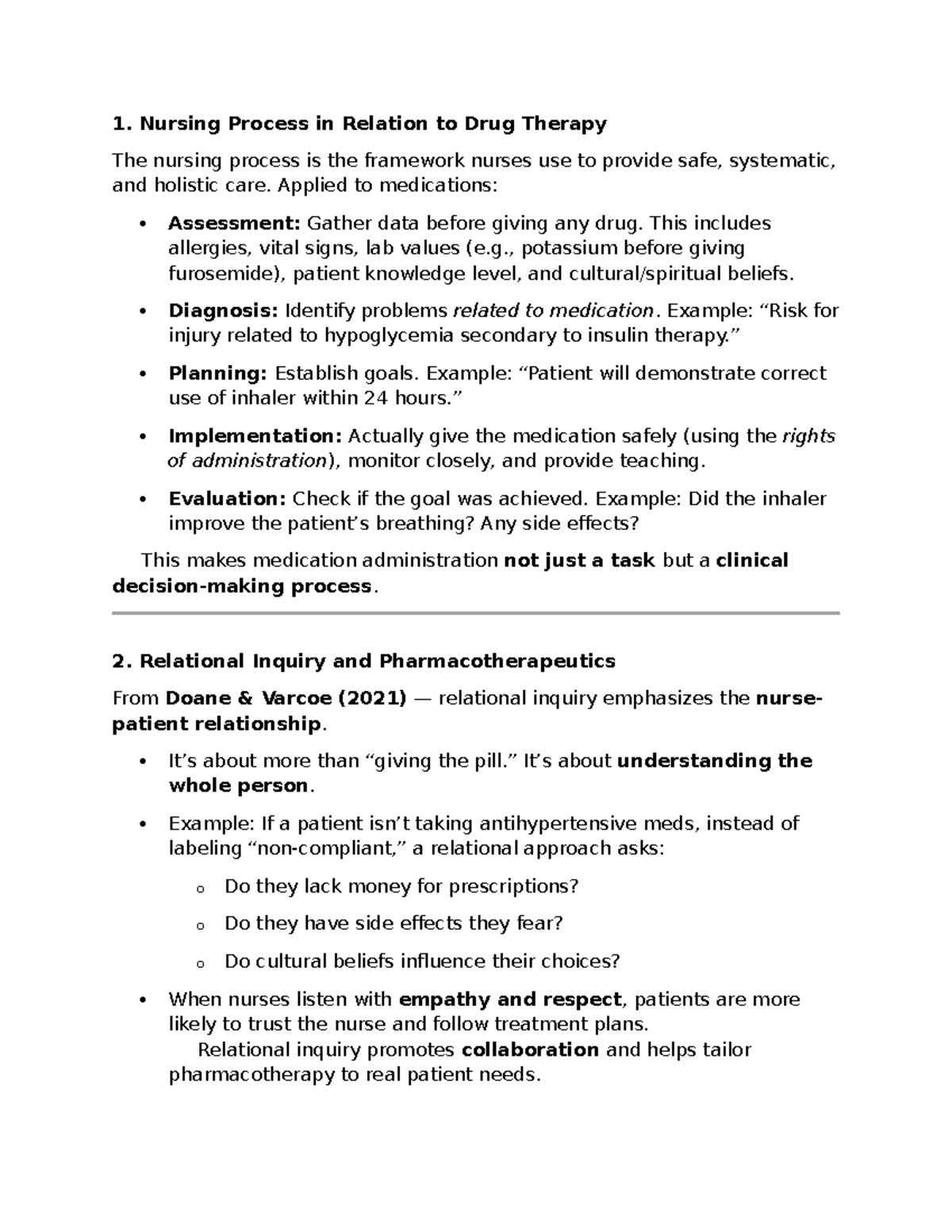
Nurses ensure safe drug therapy by integrating the five steps of the nursing process—Assessment, Diagnosis, Planning, Implementation, and Evaluation—with developmental physiology. This involves tailoring dosage, administration routes, and education to the unique pharmacokinetic and pharmacodynamic needs of patients ranging from neonates to the geriatric population to prevent adverse events.
Safe medication administration is not a static task; it is a dynamic clinical reasoning process that must adapt as a patient moves through different stages of life. In 2026, healthcare environments are increasingly complex, but the foundational nursing process remains the most reliable framework for mitigating risks associated with drug therapy. From the fragile physiological state of a premature infant to the complex polypharmacy of a centenarian, the nurse’s role is to act as the final safeguard in the medication use process.
The Foundation: Understanding the Nursing Process in Pharmacology
The nursing process serves as a systematic method for identifying, preventing, and treating actual or potential health problems related to drug therapy. When applied to pharmacology, this framework ensures that the nurse does not merely "give a pill" but instead manages a therapeutic intervention.
Assessment: The Data Collection Phase
Assessment is the critical first step where the nurse gathers subjective and objective data. In the context of drug therapy, this includes a thorough medication history (including OTC and herbal supplements), allergy history, and physical assessment findings. For life span issues, the assessment must specifically target age-related physiological changes. For example, assessing the renal function of an 85-year-old involves checking Glomerular Filtration Rate (GFR) rather than just serum creatinine, as muscle mass decline in the elderly can mask renal impairment.
Nursing Diagnosis: Identifying Risks
Based on the assessment, the nurse identifies nursing diagnoses. These are not medical diagnoses (like "Hypertension") but human responses to health conditions or life processes. Common pharmacology-related diagnoses include Risk for Injury related to side effects (such as dizziness from antihypertensives), Deficient Knowledge regarding a new medication regimen, or Non-adherence related to financial or cognitive barriers.
Planning: Goal Setting and Outcomes
During the planning phase, the nurse establishes SMART (Specific, Measurable, Achievable, Relevant, and Time-bound) goals. For a pediatric patient, a goal might be: "The parent will demonstrate the correct use of a calibrated oral syringe for antibiotic administration before discharge." This phase also involves prioritizing which medications are most critical and timing them to maximize efficacy and minimize interactions.
Implementation: The Act of Administration
Implementation is the "doing" phase. It involves the actual administration of the drug following the Rights of Medication Administration (Patient, Drug, Dose, Route, Time, Documentation, Reason, and Response). Beyond the physical act, implementation includes patient teaching and the use of specific techniques to ensure safety, such as crushing a tablet for a patient with dysphagia (only if the drug is not extended-release).
Evaluation: Monitoring the Response
Evaluation is a continuous process of checking the patient's response to the drug. Was the pain reduced? Did the blood pressure stabilize? Are there signs of toxicity? Evaluation leads the nurse back to assessment, creating a feedback loop that ensures the drug therapy remains safe and effective as the patient’s condition evolves.
Drug Therapy During Pregnancy and Lactation
Safe drug therapy begins even before birth. In pregnancy, the nurse must consider two patients: the mother and the fetus. Most drugs cross the placenta by simple diffusion, meaning the fetus is often exposed to whatever the mother ingests.
Pharmacokinetic Changes in Pregnancy
During pregnancy, physiological changes alter how drugs are processed. Increased blood volume and cardiac output can dilute drug concentrations, while delayed gastric emptying can slow the absorption of oral medications. The nurse must assess the mother’s stage of pregnancy, as the risk of teratogenesis (congenital malformations) is highest during the first trimester when organs are forming.
Implementation and Teaching
The nurse's role in implementation often focuses on education. In 2026, the use of the Pregnancy and Lactation Labeling Rule (PLLR) provides detailed narratives about risks rather than the old letter categories (A, B, C, D, X). Nurses must help patients understand these narratives. For lactating mothers, the nurse should teach the "pump and dump" method if a high-risk drug is necessary or suggest taking medications immediately after breastfeeding to minimize the drug concentration in the next feeding.
Pediatric Considerations: Growth and Development
Pediatric patients are not simply "small adults." Their physiology is vastly different, particularly regarding drug metabolism and excretion. The nursing process must account for these developmental variations to avoid catastrophic dosing errors.
Developmental Assessment and Dosing
Assessment in pediatrics focuses heavily on weight and surface area. Most pediatric doses are calculated in milligrams per kilogram (mg/kg). A minor decimal point error in this stage can result in a tenfold overdose. The nurse must also assess the child's developmental stage (e.g., Piaget’s stages of cognitive development) to determine the best way to communicate and administer the drug.
Pharmacokinetics in Neonates and Infants
- Absorption: Gastric pH is less acidic in neonates, which can affect the absorption of certain drugs. Intramuscular absorption is often erratic due to low muscle mass and peripheral circulation.
- Distribution: Infants have a higher percentage of total body water, requiring higher doses of water-soluble drugs per kilogram.
- Metabolism and Excretion: The liver and kidneys are immature at birth. This leads to a prolonged half-life for many drugs, increasing the risk of toxicity if doses are given too frequently.
Implementation Strategies for Children
Safe implementation in pediatrics requires creativity and safety protocols. Nurses should use oral syringes for accuracy rather than household spoons. To improve compliance, nurses can offer choices (e.g., "Do you want your medicine in a red cup or a blue cup?") but should never refer to medicine as "candy," as this creates a poisoning risk.
Safe Drug Therapy in the Adult Population
While adults are generally the "standard" for drug dosing, the nursing process still requires vigilance, particularly regarding lifestyle factors and chronic disease management.
Assessing Lifestyle and Comorbidities
For the adult patient, assessment should include questions about alcohol consumption, smoking, and the use of supplements like St. John’s Wort, which can induce liver enzymes and decrease the effectiveness of drugs like oral contraceptives or anticoagulants.
Diagnosis and Planning for Compliance
Adults often face barriers to adherence due to busy schedules or the cost of medications. A nursing diagnosis of Ineffective Health Maintenance might lead to a plan involving the use of digital health apps or pharmacy delivery services to ensure the patient does not miss doses of essential maintenance medications, such as statins or insulin.
Geriatric Nursing Care: Managing Complexity
The elderly population represents the highest risk group for adverse drug reactions (ADRs). This is due to a combination of physiological decline and polypharmacy (the use of multiple medications concurrently).
Physiological Decline in the Elderly
As humans age, the "Start Low and Go Slow" rule becomes the golden standard for drug therapy. The nurse must assess for:
- Reduced Liver Function: Decreased blood flow to the liver slows drug metabolism.
- Reduced Renal Function: Decreased GFR leads to drug accumulation.
- Changes in Body Composition: Increased body fat can lead to the storage of fat-soluble drugs (like diazepam), extending their effects and increasing the risk of sedation and falls.
The Beers Criteria and Safety
The nurse should be familiar with the Beers Criteria, a list of medications that are potentially inappropriate for older adults. During the assessment and diagnosis phases, the nurse should identify if a patient is taking drugs from this list, such as certain antihistamines or long-acting benzodiazepines, which significantly increase the risk of fractures and delirium.
Implementation: Sensory and Cognitive Support
Implementation for seniors involves overcoming sensory deficits. Large-print labels, easy-open caps (if no children are in the home), and pill organizers are essential tools. If a patient has cognitive impairment, the nurse must involve family caregivers in the planning and implementation phases to ensure doses are not doubled or missed.
Comparative Summary of Life Span Considerations
The following table summarizes the primary nursing concerns and interventions across the life span to ensure safe drug therapy.
| Life Stage | Primary Pharmacokinetic Concern | Key Nursing Assessment | Critical Implementation Strategy |
|---|---|---|---|
| Pregnancy | Placental transfer & teratogenesis | Gestational age & PLLR data | Time meds around breastfeeding; avoid known teratogens. |
| Neonates | Immature liver/kidney function | Weight in kg & GFR equivalents | Use calibrated oral syringes; double-check calculations. |
| Pediatrics | High body water percentage | Developmental stage (Piaget) | Mix meds with small amounts of food; offer age-appropriate choices. |
| Adults | Lifestyle & drug interactions | Alcohol/supplement use | Educate on chronic disease management and adherence. |
| Geriatrics | Polypharmacy & reduced clearance | Renal function (GFR) & Beers Criteria | "Start low, go slow"; use pill organizers; assess for falls. |
Applying the Evaluation Step: Monitoring for Toxicity
Evaluation is the final safeguard. Regardless of the patient’s age, the nurse must monitor for both therapeutic effects and adverse reactions.
In pediatrics, evaluation might involve monitoring the growth chart of a child on long-term corticosteroids. In the elderly, evaluation involves assessing for "prescribing cascades," where a new drug is prescribed to treat the side effect of an existing drug, mistakenly identified as a new medical condition.
For high-risk drugs like vancomycin or warfarin, evaluation includes monitoring laboratory values such as Peak and Trough levels or INR (International Normalized Ratio). If the nurse evaluates that a drug is reaching toxic levels or is not achieving the desired outcome, they must immediately return to the assessment phase and collaborate with the provider to adjust the plan of care.
Common Pitfalls and Troubleshooting in Life Span Drug Therapy
Even with a robust nursing process, errors can occur. Recognizing common pitfalls is essential for maintaining safety.
- Weight-Based Errors: In pediatrics, using an outdated weight for calculations. Nurses should ensure a current weight is used for every new prescription.
- Crushing Contraindications: Crushing an enteric-coated (EC) or extended-release (ER/XR) tablet for a patient with swallowing difficulties. This causes the entire dose to be released at once (dose dumping), leading to toxicity.
- Inadequate Medication Reconciliation: Failing to capture all medications an elderly patient takes, including those from different specialists. This is a primary cause of polypharmacy-related ADRs.
- Ignoring Non-Verbal Cues: In infants or cognitively impaired adults, the nurse cannot rely on the patient saying "I feel dizzy." Evaluation must rely on objective cues like increased heart rate, restlessness, or changes in sleep patterns.
FAQ: Frequently Asked Questions
What is the most important "Right" of medication administration for life span issues?
While all "Rights" are essential, Right Dose is particularly critical in life span issues. For pediatrics, the dose is dependent on precise weight; for geriatrics, the dose is dependent on organ function. A "standard" dose for an adult can be fatal for a neonate or toxic for a 90-year-old with renal failure.
How has the 2026 healthcare environment changed drug safety?
In 2026, the integration of AI-driven clinical decision support systems (CDSS) within Electronic Health Records has reduced mathematical errors. However, these systems can lead to "alert fatigue." The nurse’s role is to use their clinical judgment to validate these alerts rather than bypassing them mindlessly.
Why is the Beers Criteria so important for the nursing process?
The Beers Criteria provides a validated list of medications that pose a higher risk than benefit for older adults. Using this during the Assessment and Diagnosis phase allows the nurse to advocate for safer alternatives (e.g., suggesting a non-sedating antihistamine instead of diphenhydramine) before an adverse event like a fall occurs.
How do I assess drug safety in a breastfeeding mother?
Assess the drug's properties (molecular weight, lipid solubility, and half-life). Drugs with a short half-life and high protein binding are less likely to enter breast milk in significant quantities. Always consult a current lactation database (like LactMed) during the Planning phase.
Practical Recommendations for Nurses
To ensure safe drug therapy across the life span, nurses should adopt a systematic approach for every patient encounter. Start by verifying the patient’s age and weight, then cross-reference the prescribed medication with the patient's physiological status (e.g., pregnancy status or renal function). Always engage in "active" medication reconciliation, asking specifically about herbal teas, vitamins, and over-the-counter creams that patients often forget to mention. Finally, prioritize patient education; a patient (or caregiver) who understands the "why" and "how" of their medication is the best defense against errors once they leave the clinical setting.