Alan Dershowitz has never publicly released a verified IQ score, though his intellectual standing is historically quantified by his academic record. He graduated first in his class at Yale Law School and became the youngest full professor in Harvard Law history at age 28. While his cognitive abilities are rarely questioned, his public perception has transformed from a celebrated civil liberties advocate to one of the most polarizing figures in American legal discourse.
The Academic Foundations of Alan Dershowitz’s Intellect
To understand the discussion surrounding Alan Dershowitz’s IQ, one must look at the academic proxies that define high-level cognitive performance in the legal field. IQ, or Intelligence Quotient, is a measure of relative intelligence determined by standardized tests. While Dershowitz has not shared a specific number, his career trajectory provides a clear map of elite intellectual achievement.
Dershowitz’s journey began in Brooklyn, but his arrival at Yale Law School marked his entry into the upper echelons of the American meritocracy. Graduating first in his class is a feat that requires not just diligence, but a high degree of analytical capacity and rapid information processing—traits traditionally associated with a high IQ. Following law school, he clerked for Chief Judge David Bazelon and Supreme Court Justice Arthur Goldberg, roles reserved for the most intellectually rigorous law graduates in the country.
His appointment as a professor at Harvard Law School at the age of 25, and his promotion to full professor at 28, remains a benchmark of academic precocity. In the context of 2026, looking back at his decades-long tenure, his intellectual output remains vast, comprising over 30 books and hundreds of legal briefs. This level of prolificacy suggests a high level of "crystallized intelligence"—the ability to use learned knowledge and experience—and "fluid intelligence," which involves solving new problems and identifying patterns.
The Search for a Specific IQ Score: Reality vs. Speculation
Public fascination with the IQ of famous figures often leads to speculation, and Alan Dershowitz is no exception. Online forums and "celebrity IQ" databases frequently estimate his score to be in the 140 to 160 range (the "genius" or "near genius" category). However, these figures are speculative and lack empirical verification.
In the legal profession, high-stakes litigation and constitutional scholarship serve as a functional substitute for IQ testing. Dershowitz’s ability to navigate complex "gray areas" of the law—such as the nuances of the First and Fourth Amendments—requires a type of divergent thinking that IQ tests attempt to measure. Critics and supporters alike generally concede that his mental acuity is exceptional, even when they vehemently disagree with his legal or political conclusions.
The lack of a public IQ score highlights a broader truth about public perception: for a man of Dershowitz’s stature, his reputation is built on his visible intellectual "output" rather than a hidden psychometric "input." His arguments in cases like von Bülow or his defense of constitutional principles in the face of public outcry are the evidence the public uses to gauge his "smartness."
The Evolution of Public Perception: From Civil Libertarian to Pariah
The trajectory of Alan Dershowitz’s public perception is a study in the shifting tides of American political and social values. For much of the 20th century, Dershowitz was viewed as a hero of the American Civil Liberties Union (ACLU) wing of the Democratic Party. He was the "defender of the underdog," even when that underdog was a controversial figure.
The Era of the Civil Liberties Defender
In the 1970s and 80s, Dershowitz’s reputation was that of a principled constitutionalist. His defense of Anatoly Shcharansky (a Soviet dissident) and his work on the Pentagon Papers case cemented his image as a man who used his high IQ to fight state overreach. During this period, public perception was largely positive among liberals and academics. He was seen as a brilliant mind protecting the foundations of democracy.
The O.J. Simpson Trial and the Shift to "Celebrity Lawyer"
The 1995 O.J. Simpson trial marked the first major fracture in his public image. As a key member of the "Dream Team," Dershowitz utilized a strategy that focused on police misconduct and DNA evidence. While successful in court, the trial turned Dershowitz into a household name for reasons beyond academia. Part of the public began to view his intellect as "mercenary"—a tool used to help the wealthy and guilty escape justice. This shift from "principled defender" to "high-priced fixer" began to color his reputation in the late 90s.
High-Profile Cases and Their Impact on Modern Perception
As we evaluate his standing in 2026, it is clear that the last two decades of his career have been the most damaging to his traditional liberal reputation. His involvement in cases involving Jeffrey Epstein, Donald Trump, and various high-profile figures accused of sexual misconduct or political corruption has fundamentally altered how he is perceived by different demographics.
| Era/Case | Primary Public Perception | Intellectual Focus |
|---|---|---|
| 1960s-1980s: Civil Rights | Liberal Hero / Constitutionalist | First Amendment, Due Process |
| 1990s: O.J. Simpson Trial | Polarizing "Celebrity" Lawyer | Forensic Science, Procedure |
| 2000s: The Case for Israel | Zionist Advocate / Scholar | International Law, Middle East |
| 2010s-2020s: Epstein/Trump | Pariah to the Left / Conservative Ally | Executive Privilege, Impeachment |
| 2023-2026: Modern Commentary | Independent Contrarian / Media Critic | Cancel Culture, Free Speech |
The defense of Jeffrey Epstein in the late 2000s remains the most significant anchor on his modern reputation. While Dershowitz maintains he was acting as a constitutional lawyer ensuring a fair plea deal, the nature of Epstein’s crimes led to a massive public backlash. This was further compounded by accusations from Virginia Giuffre, which Dershowitz denied and eventually resolved through a settlement that included Giuffre acknowledging she "may have made a mistake" in identifying him. Nevertheless, the "court of public opinion" rarely waits for legal exoneration, and his perception suffered immensely.
The "Martha’s Vineyard" Effect: Social Ostracization and Cancel Culture
One of the most humanizing, yet divisive, aspects of Dershowitz’s public perception is his vocal reaction to being "shunned." In 2018, he famously complained that his long-time friends on Martha's Vineyard were ostracizing him due to his defense of Donald Trump during the first impeachment trial.
This narrative became a focal point for the debate on "cancel culture." To his critics, his complaints were a sign of elitist entitlement—an intellectual who couldn't handle the social consequences of his professional choices. To his supporters, it was a chilling example of how political tribalism can destroy decades of social fabric. This period solidified his image as a "contrarian." He began to position himself not as a Republican or a Democrat, but as a "civil libertarian" who was being punished for his consistency.
In 2026, this remains a core part of his identity. He often uses his platform to warn against the dangers of intellectual "echo chambers," arguing that a high-functioning society must be able to separate a lawyer’s personal politics from their professional duties.
Analyzing the Duality: Intellectual Respect vs. Moral Disapproval
A unique aspect of Alan Dershowitz’s public perception is the disconnect between the assessment of his brainpower and the assessment of his character. It is rare to find a critic who argues that Dershowitz is "unintelligent." Instead, the criticism is often that he is "too smart for his own good," using his vast IQ to construct sophisticated legal justifications for actions the public finds morally reprehensible.
This creates a duality in his reputation:
- The Brilliant Legal Scholar: Acknowledged even by his enemies for his grasp of constitutional law and his ability to debate complex topics without notes.
- The "Devil's Advocate": A perception that he seeks out controversy for the sake of intellectual exercise or vanity, often at the expense of victims or social progress.
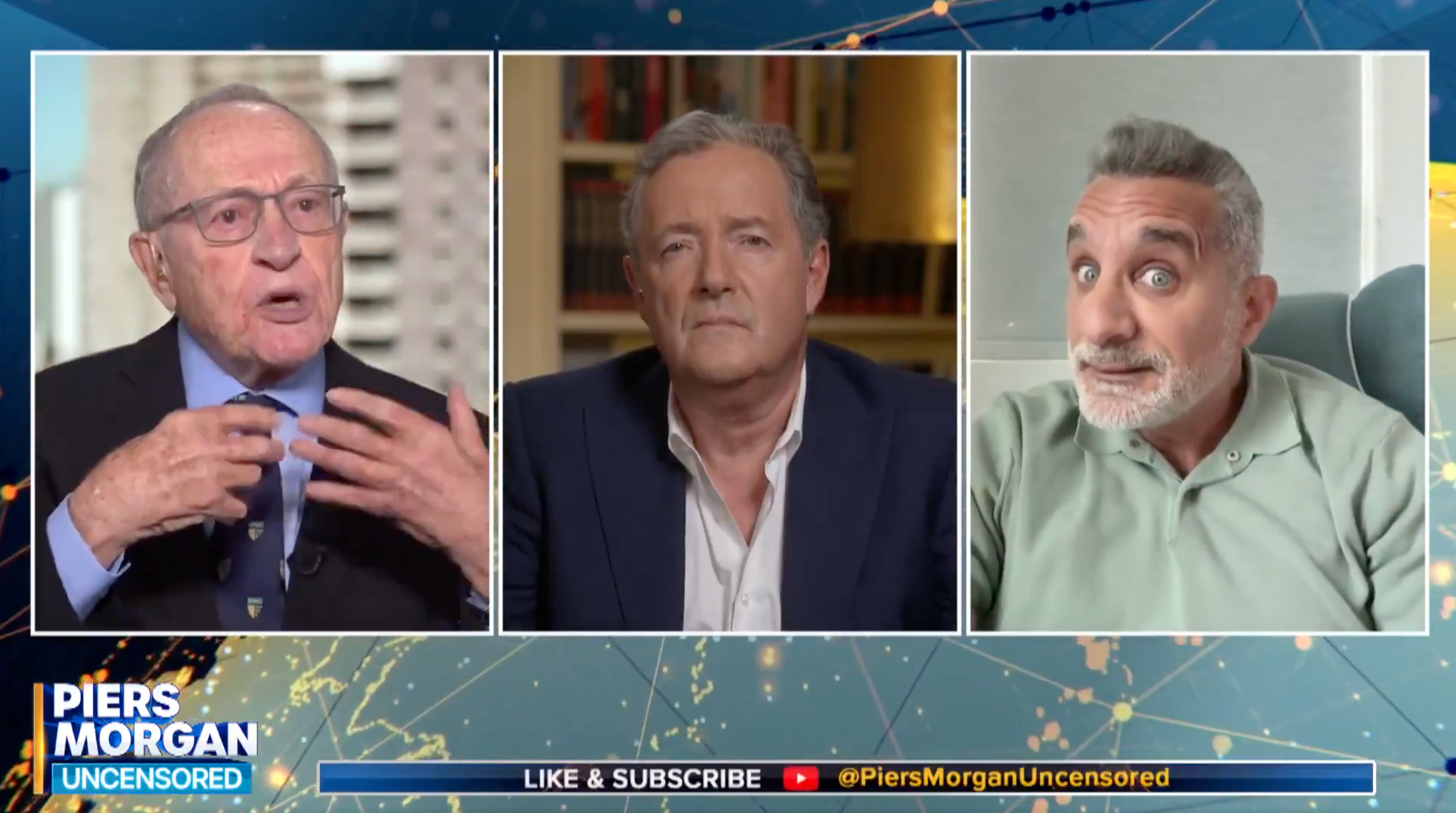
This duality is what makes him a mainstay in media. Television producers know that his presence will bring a high level of intellectual rigor to a debate, while simultaneously triggering a strong emotional response from the audience.
The Role of Media and Political Alignment in 2026
By 2026, the fragmentation of media has allowed Alan Dershowitz to curate a new type of public perception. While he may have lost his standing in the faculty lounges of Harvard or the dinner parties of the Upper West Side, he has gained a massive following in independent media, podcasts, and conservative-leaning news outlets.
In these spaces, his "IQ" is weaponized as a tool of authority. When he speaks on executive overreach or the weaponization of the justice system, his pedigree is used to lend credibility to arguments that his audience already finds appealing. Consequently, his public perception is now highly "siloed." To a viewer of legacy liberal media, he might be seen as a "fallen" academic. To a listener of independent legal podcasts, he is a "brave truth-teller" who sacrificed his social standing to defend the Constitution.
Frequently Asked Questions
Has Alan Dershowitz ever taken an official IQ test?
There is no public record of Alan Dershowitz taking an official, proctored IQ test like the Mensa exam or the WAIS. Most discussions of his IQ are based on his academic performance at Yale and Harvard, which historically correlates with a high IQ (often estimated in the top 1% of the population).
Why is Alan Dershowitz so controversial if he is so intelligent?
Intelligence and controversy are not mutually exclusive. Dershowitz’s high IQ allows him to take on the most complex and difficult cases, which are often the most controversial. His belief that every person—no matter how unpopular—deserves a rigorous legal defense naturally puts him at odds with public sentiment.
What is Alan Dershowitz’s current status at Harvard?
As of 2026, Alan Dershowitz is the Felix Frankfurter Professor of Law, Emeritus, at Harvard Law School. He retired from active teaching in 2013 but continues to write and comment on legal issues as an emeritus faculty member.
Did Alan Dershowitz’s reputation ever recover from the Epstein case?
Reputation "recovery" is subjective. While he settled his legal disputes and continues to be a frequent media commentator, his perception among the general public remains sharply divided. He has not regained the "universal" respect he held in the 1970s, but he maintains a significant and loyal audience.
How does Alan Dershowitz view his own public perception?
Dershowitz has written extensively about his own reputation, most notably in his book Guilt by Accusation. He generally views himself as a victim of "new-age McCarthyism" and maintains that he is willing to trade his popularity for his principles.
Practical Recommendation: Navigating the Dershowitz Discourse
When analyzing Alan Dershowitz’s impact on law and society, it is essential to separate his intellectual contributions from his public persona. To form an objective view:
- Read the Original Source: Instead of relying on social media clips, read his legal briefs or his academic books like The Best Defense or Genesis of Justice. His intellectual depth is most apparent in his long-form writing.
- Acknowledge the Role of the Advocate: Understand that in the American legal system, a lawyer’s job is not to be "liked," but to provide the best possible defense for their client. Dershowitz’s career is a lifelong commitment to this specific, often unpopular, role.
- Evaluate the Context: Recognize that public perception is often a reflection of the current political climate. What was seen as "principled" in 1980 might be seen as "traitorous" in 2026, even if the underlying legal logic remains the same.
By focusing on the mechanics of his legal arguments rather than the heat of the controversy, one can appreciate the high-functioning intellect that has made Alan Dershowitz a permanent fixture in American jurisprudence, regardless of whether his public perception is positive or negative.